
CXMT DDR5 Memory: High Frequencies, Low Predictability
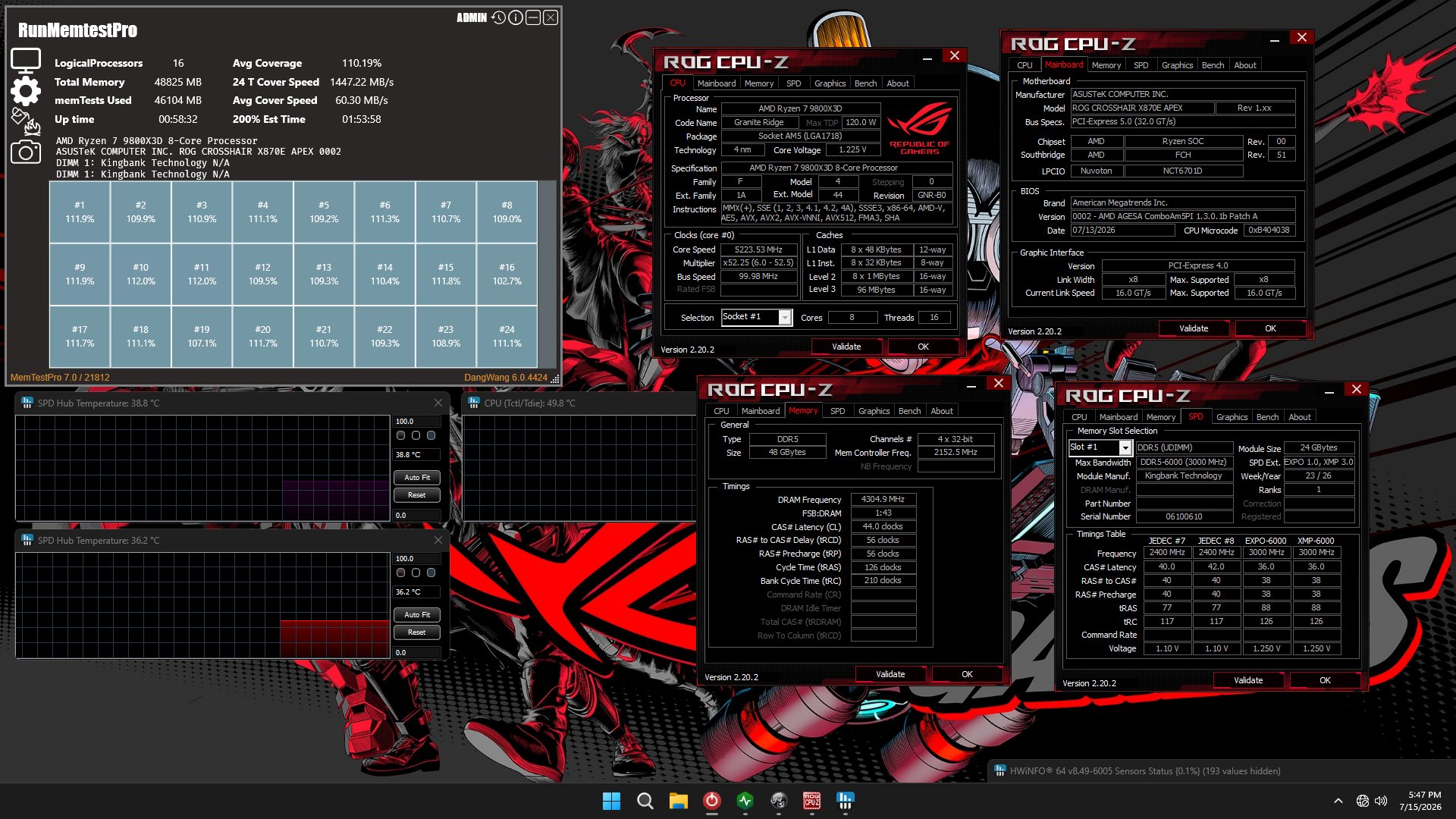
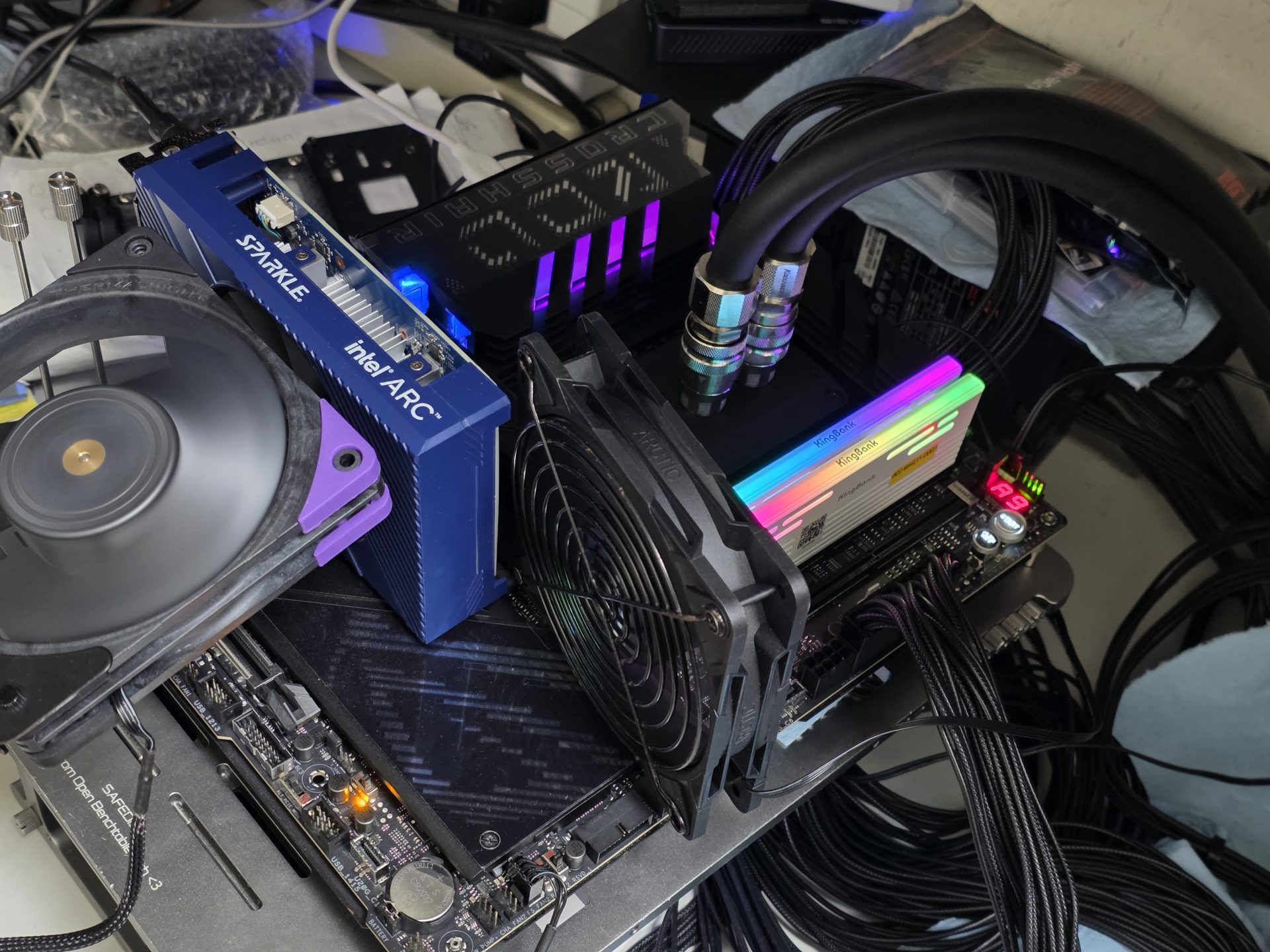
CXMT DDR5 memory refers to consumer-grade DDR5 DRAM chips produced by ChangXing Memory Technologies that can reach over 8,000 MT/s but display weak voltage scaling, limited timing flexibility, and large batch-to-batch silicon variance, making their overclocking behavior less predictable and often inferior to similarly clocked modules built on SK hynix dies. Those traits define how suitable CXMT DDR5 is for gaming rigs and content creation workstations where memory tuning and reliability matter more than headline data rates. The key takeaway is blunt: CXMT DDR5 is good enough for mainstream plug‑and‑play use, but it is a poor foundation for high‑end, overclocked builds. Testers have pushed a Kingbank 2x24 GB 6000 CL36 kit with CXMT 3 Gb dies on an ASUS board to 8,600 MT/s at CL44, proving frequency headroom exists. The problem is that everything around that frequency—voltage behavior, timings, and consistency—undercuts its value for enthusiasts who tune memory as hard as they tune CPUs and GPUs.
Voltage Scaling and Timing Tuning: Where CXMT DDR5 Falls Short
For PC memory tuning, voltage and timings are the primary tools. CXMT DDR5 gives you both, but neither behaves the way enthusiasts expect. Multiple evaluations agree that CXMT DDR5 exhibits poor voltage scaling, where raising DRAM voltage brings little benefit for achieving higher frequencies or tighter timings. Another test reports the same: CXMT modules do not scale with voltage, so extra volts do not unlock new stable settings. On top of that, manual optimization of secondary and tertiary timings delivers only limited gains, leaving users stuck close to stock settings. Overclockers note that CXMT DDR5 "doesn't respond well to tuning sub-timings," which effectively forces you to keep baseline CAS latency—often CL34–36—or even looser at very high clocks. In practice, that means CXMT DDR5 turns overclocking into a brute-force frequency exercise with minimal room for fine‑grained efficiency tuning.
Silicon Variance: The Silicon Lottery You Don’t Want to Play
Any memory buyer accepts some silicon lottery, but CXMT DDR5 pushes that gamble to uncomfortable levels. Overclocker Safedisk reports significant differences between production batches, implying that CXMT’s overclocking potential depends far more on luck than is typical for established suppliers. Other testing echoes this: different batches of CXMT-equipped memory behave quite differently, so results vary widely even for kits with identical labels. Another analysis bluntly concludes that silicon performance varies massively between DRAM batches. For high‑performance builds, that variance matters more than peak marketing speeds. When you are buying memory for a long‑term gaming PC or content creation workstation, you want predictable behavior—consistent timings, repeatable stability, and reliable voltage response. CXMT’s current silicon variance means you might get a decent kit, or you might end up with a temperamental set that refuses to match community‑shared overclocking or tuning profiles.
Identical Speeds, Different Results: CXMT vs SK hynix
The most damning verdict on CXMT DDR5 memory is simple: at the same speeds, it loses to SK hynix dies. One report claims comparable SK hynix DDR5 modules offer superior tuning flexibility and higher performance at identical operating frequencies. Another testing round observes that CXMT RAM carries inferior performance compared to similar SK hynix‑based options. A third source reinforces that, noting CXMT kits trail similarly spec’d SK hynix DRAM at the same clock speeds. This performance gap at identical speeds suggests deeper DRAM design differences, not just immature firmware or weak BIOS profiles. Meanwhile, motherboard vendors have strengthened BIOS support so CXMT modules can now surpass 8,000 MT/s, up from earlier limits around 6,800 MT/s. Hitting 8,600 MT/s CL44 on a tuned board proves the platform can run fast, but raw speed does not compensate for looser timings and lower real‑world throughput when compared against tighter SK hynix profiles.
Who Should Buy CXMT DDR5 Today—and Who Should Avoid It
CXMT’s growing DDR5 output is filling gaps in a market shaped by DRAM shortages and a shift by major makers toward high‑bandwidth memory for accelerators. CXMT began producing DDR5 in late 2025 without cutting‑edge EUV tools and has since expanded fast enough that many vendors now source its chips for consumer kits. OEMs such as Dell and HP use CXMT RAM in region‑bound systems, and well‑known component brands have also adopted CXMT modules. For those mainstream machines running memory at XMP or JEDEC stock, CXMT is acceptable. But if your build depends on tight timings and dialed‑in DDR5 overclocks—high‑refresh gaming, heavy content creation, or competitive benchmarking—CXMT DDR5 is the wrong foundation. The combination of DDR5 overclocking limits, large memory silicon variance, and weaker performance at identical speeds means performance‑focused users are better off prioritizing consistency over headline MT/s numbers. Until CXMT can match SK hynix in predictable tuning behavior, its role should remain mainstream, not high‑end.