
AMD’s Quiet Driver Leak Signals an Aggressive FSR Future
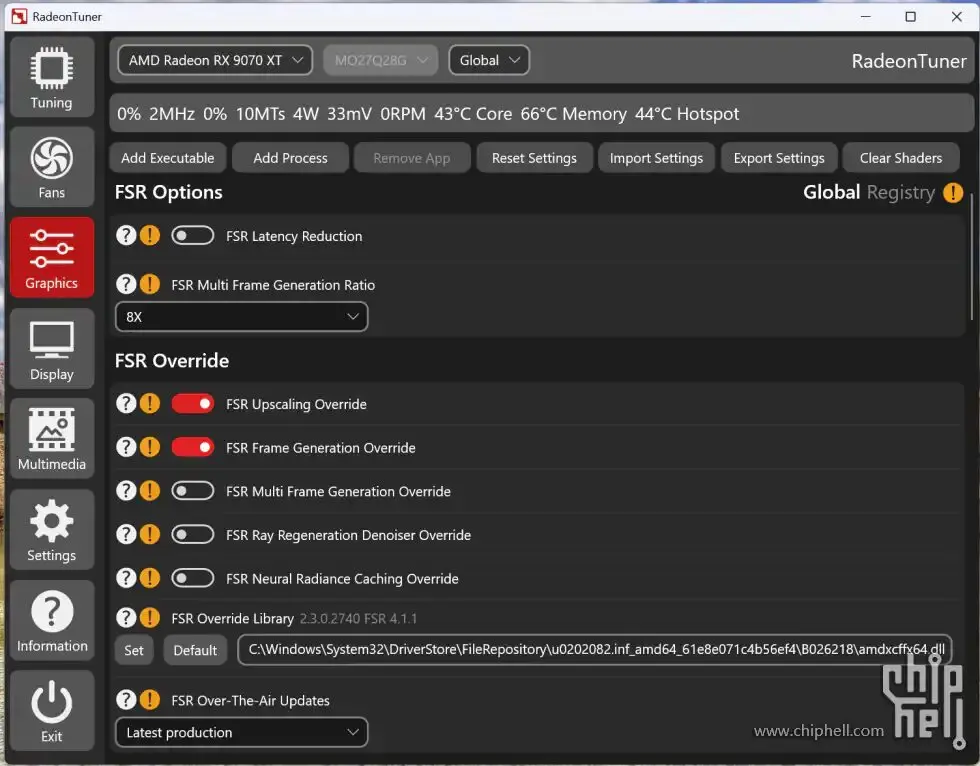
AMD FSR 8x multi-frame generation refers to experimental graphics driver settings that expose selectable frame multiplication ratios from 1x up to 8x, along with related ray regeneration and neural radiance caching override options, hinting at a significant upcoming evolution of AMD’s FidelityFX Super Resolution technology suite. The discovery matters because AMD did not announce these features; RadeonTuner, a tool that surfaces hidden Radeon GPU variables, unearthed Multi-Frame Generation, Ray Regeneration, and Neural Radiance Caching overrides inside the latest Adrenalin 26.6.2 drivers. This is AMD’s strategy laid bare: develop ambitious frame generation technology in public, but only for those willing to poke around in the driver settings. These options are non-functional today, but their presence alone is a declaration of intent — AMD wants FSR to compete on raw temporal reconstruction, not only upscaling.
What RadeonTuner Exposed: 8x MFG and a New FSR Stack
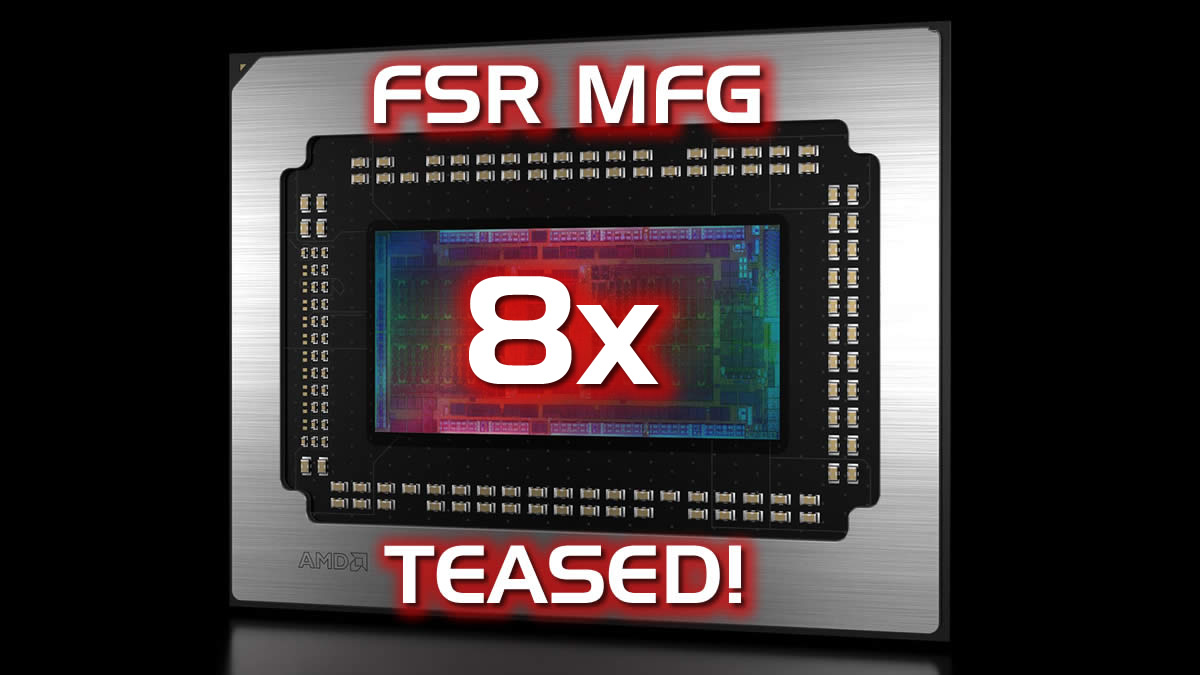
The most provocative detail inside Adrenalin 26.6.2 is the appearance of FSR Multi-Frame Generation ratios ranging from 1x to 8x. As one source puts it, “AMD’s FSR Multi-Frame Generation interface appears to have settings for 1x, 2x, 3x, 4x, 5x, 6x, 7x, and 8x. That’s enough to turn a base framerate of 60 FPS into 480 FPS.” Alongside this menu sit toggles for FSR Multi-Frame Generation Override, Ray Regeneration Denoiser Override, and Neural Radiance Caching Override, all exposed by running RadeonTuner against the 26.6.2 driver with the FSR 4.1.1 Override Library on a Radeon RX 9070 XT. AMD already offers FSR Override options for FSR 4.1 upscaling and ML Frame Generation today, so this leak is not a random experiment; it is the logical next layer of an expanding FSR stack that shifts more control into driver settings.
Why These Driver Settings Show a Phased, Ambitious Strategy
These hidden driver settings are not appearing in a vacuum. AMD has been laying groundwork for expanded FSR “Redstone” features for months, including preliminary Multi-Frame Generation support introduced into the ADLX FidelityFX SDK back in April, aimed at letting future Radeon GPUs choose different frame generation ratios for image quality versus performance. Since then, FSR 4.1.1 has arrived as the latest upscaling iteration, and now users are finding Multi-Frame Generation, Ray Regeneration, and Neural Radiance Caching references baked directly into Adrenalin. One source notes that these new hidden options first appeared with Adrenalin Edition 26.6.2 and remain non-functional, likely requiring experimental FSR DLLs or other internal components. That pattern — SDK hooks first, driver toggles second, public release later — points to a phased rollout rather than a speculative side project.
Competitive Implications: FSR as a Full AI Graphics Suite
The leak makes one thing clear: AMD wants FSR to be seen as an AI graphics platform, not a single upscaler. Current Override features already let supported RDNA 4 GPUs upgrade games to FSR 4.1 upscaling and ML-powered Frame Generation, while the new menu entries aim at RDNA 4 and newer hardware. Multi-Frame Generation up to 8x, Ray Regeneration, and Neural Radiance Caching together suggest AMD is building a complete temporal and lighting reconstruction stack rather than chasing one headline feature. According to one source, FSR could be in line for “one of its biggest updates yet later this year,” driven by these technologies. In other words, AMD is preparing FSR to stand on equal footing with any rival frame generation technology — not by copying, but by shipping a configurable, driver-centric approach.
What the Hidden 8x MFG Toggles Tell Us About the Road Ahead
It is important to remember what these driver settings are and what they are not. They are references to future capabilities, not usable features today: the Multi-Frame Generation ratios up to 8x and related overrides are fully non-functional and likely depend on internal FSR components not yet released. But their existence, alongside live FSR Override options for FSR Upscaling and FSR ML Frame Generation, signals that AMD is actively developing more ambitious AI graphics technologies, with updates across Multi-Frame Generation, Ray Reconstruction, and Neural Radiance Caching expected to add up to a major FSR refresh later this year. The message beneath the leak is blunt. AMD is done treating FSR as a secondary tool; by baking 8x multi-frame generation hooks into its drivers now, it is setting expectations that Radeon will have a decisive say in the next wave of frame generation technology.