
Airflow-First Cases: What Matters and Who Wins
High-airflow PC cases are enclosures engineered around thermal cooling design, using oversized or strategically placed fans, low-resistance vents, and efficient internal layouts to keep modern gaming and creator hardware running at lower temperatures with less noise than conventional chassis. In this comparison, five new designs — from maximalist flagships to budget mesh towers — target different airflow needs, and the right choice depends on whether you value sheer cooling, panoramic glass, dual-system flexibility, or price above all else. If you want the best airflow cases, the Cooler Master HAF II 500 leads for raw thermal performance, Thermaltake’s CAPO X is unmatched for multi-PC setups, DeepCool’s CG590 MESH 2F balances cooling and cost, while Cougar’s CFV220 RGB and the CPS C3 M500 focus on style-conscious builds that still move plenty of air.
Bottom line: heavy GPU and CPU workloads, long gaming sessions, and AI or rendering tasks benefit most from the strongest thermal architecture, while casual and aesthetic-first builds can trade some thermal headroom for glass, compact footprints, or lower prices.
Cooler Master HAF II 500: Flagship Airflow and Noise Control
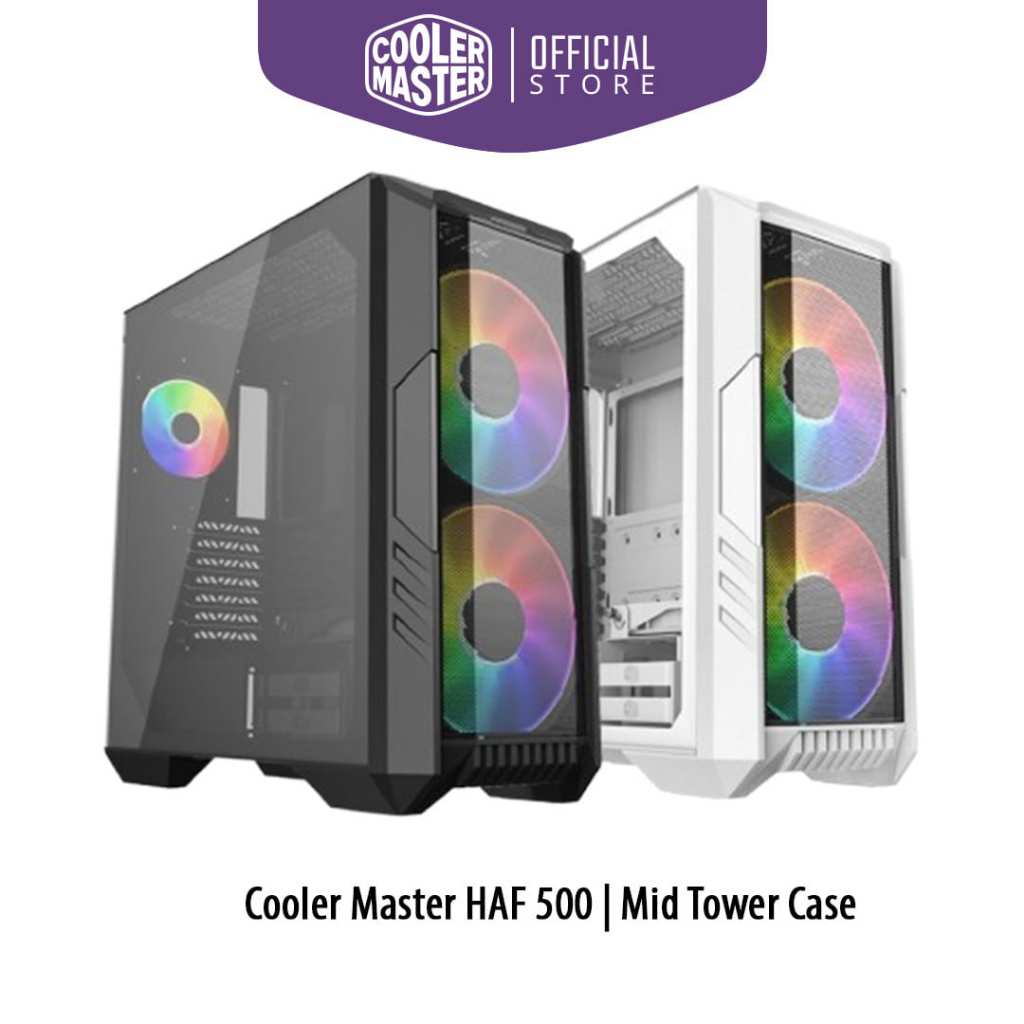
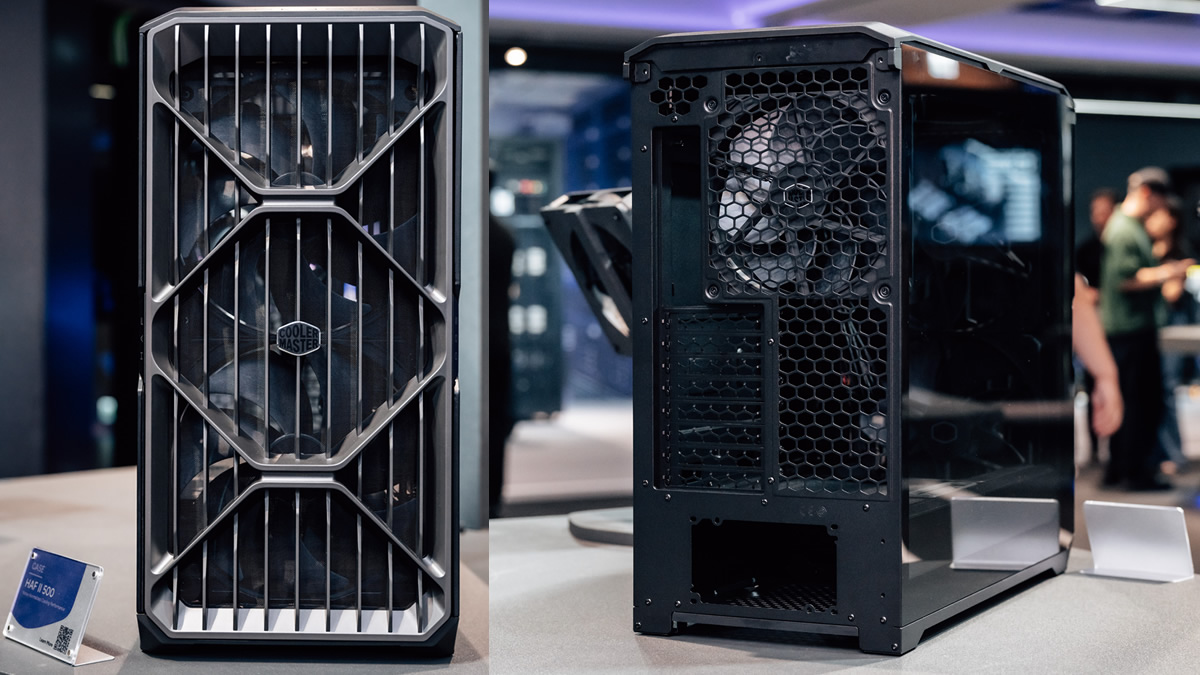
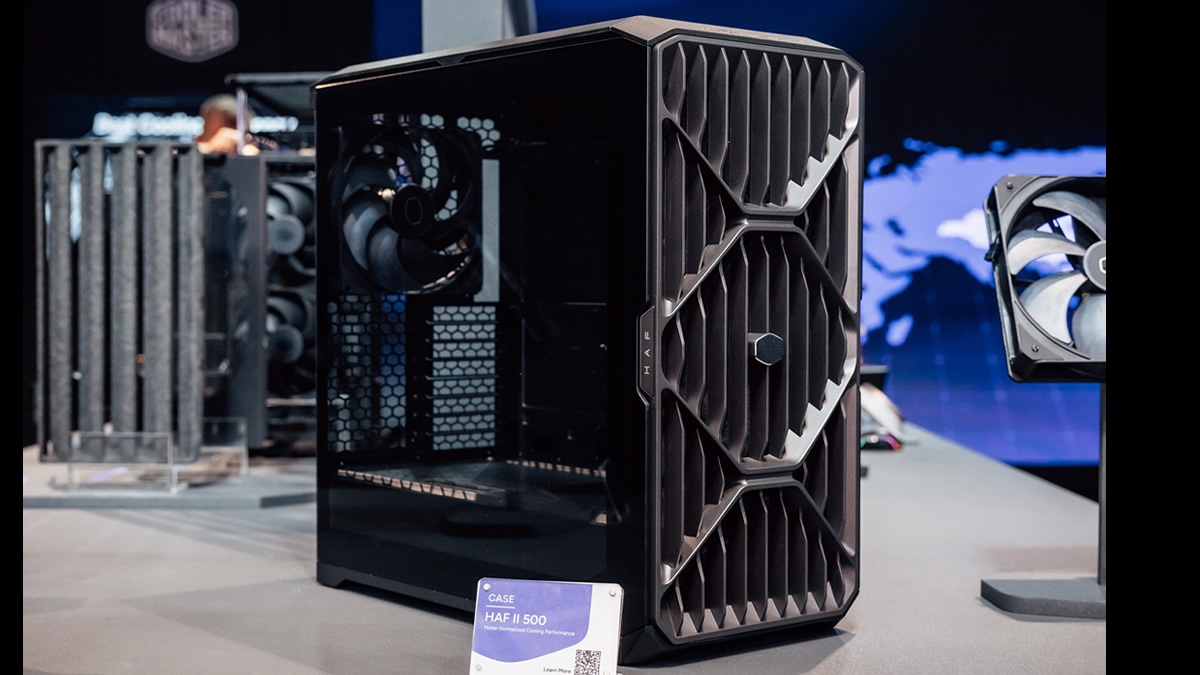
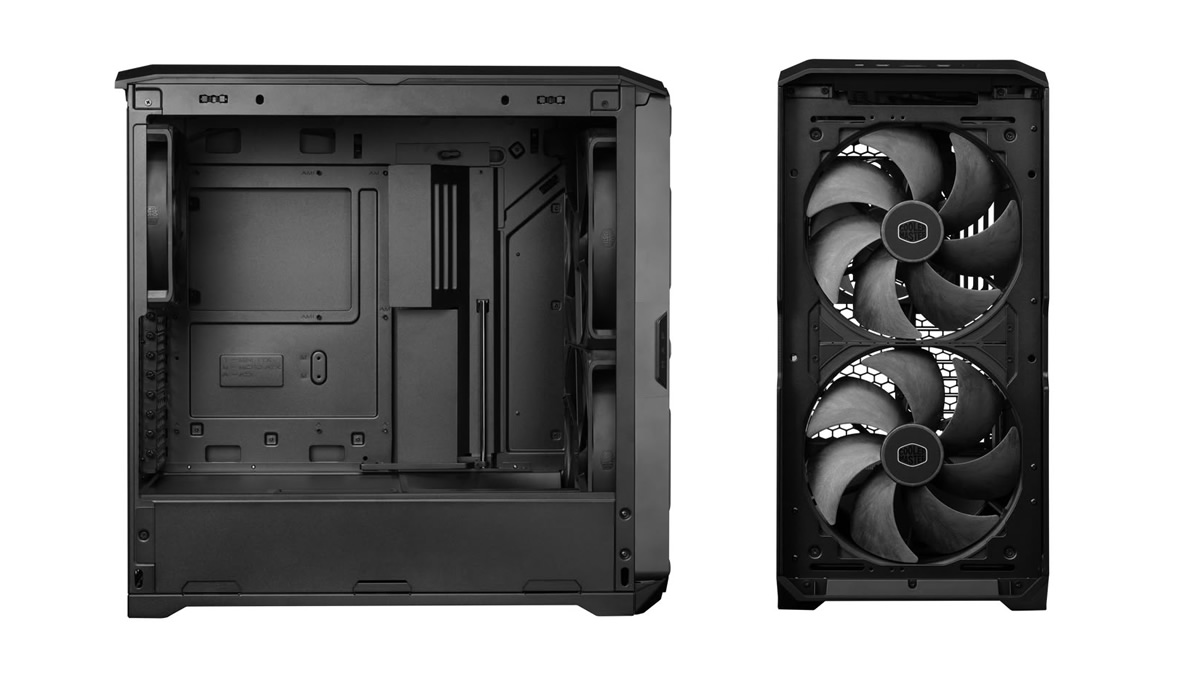
The Cooler Master HAF II 500 is the flagship choice if you want high-performance chassis cooling with minimal effort. It revolves around oversized extra-thick Mighty40 fans: two 220 × 40 mm intakes at the front and one 180 × 40 mm exhaust at the rear, an uncommon consumer configuration designed to move more air at lower RPMs for quieter operation. Its smooth airflow design uses large front and rear ventilation openings to reduce airflow resistance and chassis-induced interference, so those huge fans can push and pull air efficiently through the case. Internally, the split-level layout supports wide EATX motherboards and high-end GPUs while giving cables dedicated routing space, keeping the main chamber open for air. Priced at USD 199.99 (approx. ₱11,200) and €184.99, it sits at the premium end of this PC case comparison.
This is the best airflow case here if you are building a single, very demanding system: overclocked CPUs, multi-slot GPUs, and heavy creative workloads all benefit from its thermal cooling design that prioritizes balanced intake and exhaust over decorative extras. The trade-off is simple — you pay more and accept a large footprint, but you avoid the usual compromise between temperature and noise.
| Spec | Cooler Master HAF II 500 | DeepCool CG590 MESH 2F |
|---|---|---|
| Included front fans | 2 × 220 mm Mighty40 intake | 2 × 160 mm ARGB intake |
| Included rear fans | 1 × 180 mm Mighty40 exhaust | Supports up to 2 × 120 mm (user-installed) |
| Max GPU length | Large GPUs; supports up to wide EATX platforms | Up to 410 mm |
| Motherboard support | Up to EATX 310 mm wide | ATX / Micro-ATX / Mini-ITX |
| Approx. price | USD 199.99 (approx. ₱11,200); €184.99 | Approx. USD 89 (approx. ₱5,000) |
Cougar CFV220 RGB and CPS C3 M500: Panoramic Glass Meets Directed Airflow
If you want the hardware on display without turning your case into a thermal bottleneck, Cougar’s CFV220 RGB and the CPS C3 M500 aim squarely at that mix of looks and airflow. The CFV220 RGB is an ATX mid-tower that combines panoramic tempered glass panels with an airflow-focused internal layout and a distinctive floating airflow architecture. Its central intake chamber, lit by integrated ARGB, feeds fresh air directly toward the GPU and CPU, while a large ventilated lower compartment and sliding dust filter maintain intake pressure and ease cleaning. Out of the box, you get three 120 mm ARGB PWM fans — two in the intake chamber, one at the rear — with room for more fans and a 360 mm top radiator for liquid setups. It supports long GPUs up to 420 mm and tall air coolers up to 170 mm, plus modern front I/O including USB Type-C 20 Gbps.
The CPS C3 M500 similarly targets budget-conscious builders who still demand panoramic views without compromising airflow, but it will appeal most if you want an affordable high-airflow case that emphasizes the side and front glass experience rather than absolute thermal authority. Together, these two are ideal for clean-looking gaming rigs with moderate to high thermal loads; they are less suited to extreme overclocking or multi-GPU setups where the HAF II 500’s raw cooling and split-level cable management make a clearer difference.
Thermaltake CAPO X: Dual-System Power with Serious Cooling
The Thermaltake CAPO X is the most specialized high-performance chassis in this group, built for users who want two independent PCs in one enclosure without sacrificing airflow. Instead of pairing a full-size ATX board with a tiny Mini-ITX, it supports two Micro-ATX motherboards, giving both systems comparable expansion options and performance potential. A stacked internal layout places one system above the other, cutting down on footprint while preserving space for radiators and fans. Dual curved panoramic tempered-glass panels let both builds remain visible, and support for hidden-connector ecosystems such as ASUS BTF, MSI Project Zero, and GIGABYTE Project STEALTH helps keep cable clutter out of the main airflow path. Cooling has been carefully engineered: even with two full PCs inside, there is room for multiple 360 mm radiators and a large number of 120 mm fans to feed demanding gaming, rendering, AI inference, and livestreaming workloads.
In practice, the CAPO X is ideal for streamers running a dedicated capture and encoding machine alongside a gaming PC, teams sharing a chassis, or power users who split AI and workstation tasks between systems. It is overkill for a single mid-range rig, and its complexity and likely cost make more conventional best airflow cases such as the HAF II 500 or CG590 MESH 2F better value for one-system builds.
DeepCool CG590 MESH 2F: Dual-Chamber Mesh for Affordable Cooling
DeepCool’s CG590 MESH 2F targets builders who want strong thermal cooling design on a tighter budget. It is a mid-tower chassis focusing on airflow via a mesh front panel, a dual-chamber interior, and two pre-installed 160 mm ARGB intake fans that move a large volume of fresh air into the main compartment. The dual-chamber layout separates the power supply and storage from the motherboard area, creating a direct airflow path to the GPU and CPU while reducing cable congestion. Hardware support is generous for its class: GPUs up to 410 mm, CPU air coolers up to 160 mm, and power supplies up to 210 mm, with 45 mm of cable-routing clearance and support for rear-connector motherboard designs so most power cables hide behind the tray. According to DeepCool, the chassis offers extensive fan and radiator support, including up to 360 mm radiators at the top, side or bottom and multiple 120 mm mounting positions for custom cooling.
With an estimated price of approximately USD 89 (approx. ₱5,000), the CG590 MESH 2F delivers much of the HAF II 500’s airflow philosophy at less than half the cost, trading oversized 40 mm-thick fans for flexible mounting and mesh-based intake. It is the sensible choice for high-wattage single-GPU builds where budget matters but you still care about temperatures, especially if you plan to expand cooling over time with extra fans or radiators.
Buy if / Skip if
- Buy the Cooler Master HAF II 500 if you want the best airflow case for a single high-end system and will pay for flagship cooling.
- Skip the Cooler Master HAF II 500 if your build is mid-range, space-constrained, or you care more about glass aesthetics than oversized fans.
- Buy the Cougar CFV220 RGB if you want panoramic tempered glass and stylish ARGB with directed airflow for a gaming-focused mid-tower.
- Skip the Cougar CFV220 RGB if raw thermal performance or multi-GPU support matters more than three-sided glass and central intake lighting.
- Buy the Thermaltake CAPO X if you need two full Micro-ATX systems in one chassis with advanced radiator and fan support for heavy workloads.
- Skip the Thermaltake CAPO X if you only plan a single PC; its dual-system design adds complexity and cost you will not use.
- Buy the DeepCool CG590 MESH 2F if you want affordable mesh-based cooling, dual-chamber cable management, and room to grow your fan and radiator setup.
- Skip the DeepCool CG590 MESH 2F if you prioritize premium materials or extreme overclocking over value and flexible mid-tower airflow.
- Buy the CPS C3 M500 if you are budget-conscious but still want a panoramic view case that keeps airflow as a core design goal.
- Skip the CPS C3 M500 if you need flagship thermal headroom or dual-system support rather than an entry-tier panoramic chassis.