
Wearables Promise Precision, But Deliver Approximation
Wearable health accuracy describes how closely consumer devices like fitness trackers and smartwatches match gold‑standard clinical tools when they estimate heart rate, calories burned, and activity metrics, and it matters because people now use these numbers to judge progress, manage weight, and even interpret their overall health decisions.
If you pace your apartment at night to hit 10,000 steps, you are living proof that wearables have turned health into scorekeeping. That would be less of a problem if the numbers were as precise as the marketing implies. Our view, backed by hands‑on fitness tracker testing, is blunt: use wearables as trend indicators, not as diagnostic tools. When we compare wrist devices with clinical‑style controls, heart rate monitor accuracy can be decent, but calorie counts and headline goals like daily steps are far more slippery. The core problem is not that sensors are useless—it is that we ask them to do more than they were built to do.
Inside the Gym: How a Wrist Tracker Fared Against a Chest Strap
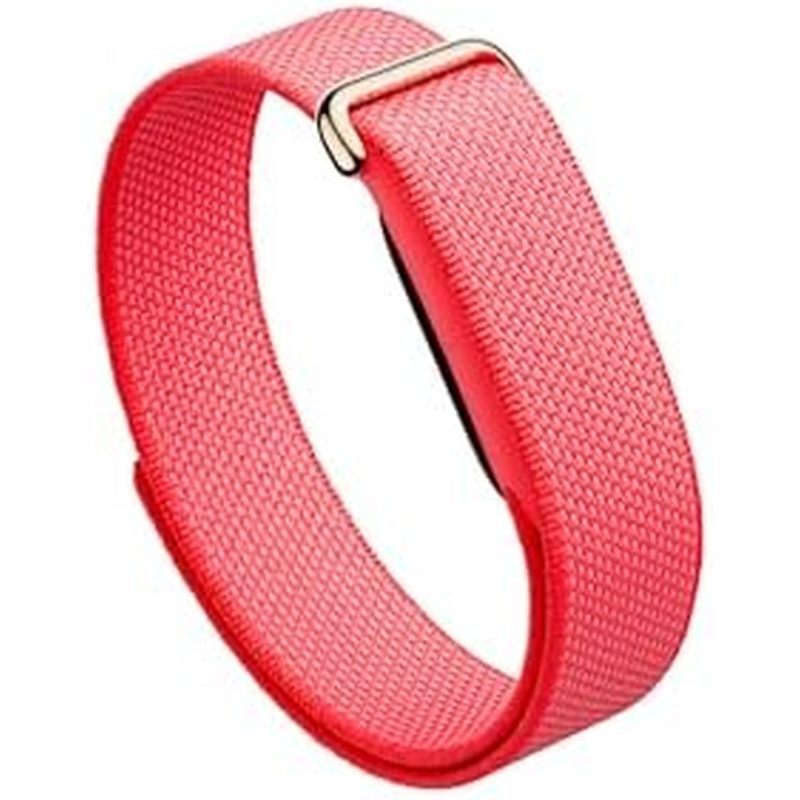
To see health sensor reliability in practice, one reviewer strapped on a Fitbit Air and a Polar H10 chest strap during a regular gym session, using the chest strap as a control. The workout covered both treadmill cardio and full‑body strength training—exactly how many people use their wearables day to day. The Polar H10 is not a hospital device, but one study found it showed “almost perfect agreement” with a reference Lead II ECG system, so it is often treated as a gold standard for heart rate monitor accuracy.
On the treadmill, the Fitbit Air lagged during sudden changes: when the chest strap saw 141 bpm as running began, the wrist tracker still showed 109 bpm. Over the full session, however, average heart rate was almost identical—124 bpm on the chest strap versus 122 bpm on the Fitbit, an error under 2%. Calories were another story: the Fitbit underestimated treadmill calories burned by nearly 12%. According to the reviewer, “two tests is not enough to draw strong conclusions on the overall accuracy of the Fitbit Air… this was an amateur test at my local gym — not a trial in a lab.”
| Metric (Treadmill) | Polar H10 | Fitbit Air | Difference | % Difference |
|---|---|---|---|---|
| Calories burned | 143 kcal | 126 kcal | -17 kcal | -11.90% |
| Avg. heart rate | 124 bpm | 122 bpm | -2 bpm | -1.60% |
| Min. heart rate | 96 bpm | 98 bpm | 2 bpm | 2.10% |
| Max. heart rate | 151 bpm | 150 bpm | -1 bpm | -0.70% |
Strength Training Exposes the Weak Spots in Sensor Data
The gaps in wearable health accuracy widened during strength work. In a session of lat pulldowns, dumbbell squats to presses, lateral raises, stability ball work, and hip abductor sets, the Polar H10 and Fitbit Air again tracked side by side. Average and minimum heart rate stayed close—100 bpm versus 101 bpm on average and only a 1–1.5% difference at the low end. But now the Fitbit missed more of the action at the top end: maximum heart rate hit 151 bpm on the chest strap while the wrist device topped out at 134 bpm, an 11.3% gap.
Calories were the real outlier. The chest strap estimated 152 kcal burned; the Fitbit Air reported 105 kcal—an error of -30.90%. The reviewer admitted they did not expect the device “to be 11% to 30% off in its calories burned estimations.” Why the difference? Wrist devices must infer energy expenditure from heart rate plus age, weight, sex, and activity intensity. Errors compound with every assumption. Short spikes during a heavy set are easy to miss at the wrist, so the device underestimates intensity and, therefore, calories. For users relying on this number for diet or weight management, that is not a minor detail; it is a structural flaw in how we treat these readouts.
| Metric (Strength) | Polar H10 | Fitbit Air | Difference | % Difference |
|---|---|---|---|---|
| Calories burned | 152 kcal | 105 kcal | -47 kcal | -30.90% |
| Avg. heart rate | 100 bpm | 101 bpm | 1 bpm | 1% |
| Min. heart rate | 66 bpm | 67 bpm | 1 bpm | 1.50% |
| Max. heart rate | 151 bpm | 134 bpm | -17 bpm | -11.3% |
When “10,000 Steps” Meets Messy Reality
Even our most beloved fitness metric—the 10,000‑step goal—shows how health sensor reliability can be over‑sold. The number did not emerge from a grand medical consensus; it came from a 1960s pedometer called the Manpo‑kei, marketed ahead of the Tokyo Olympics to push people from around 4,000 to 10,000 daily steps. More than 60 years later, it is still the default target on most trackers, turning a marketing idea into a global benchmark.
Current evidence is more nuanced. A review in The Lancet Public Health found that people walking around 7,000 steps per day see a clear drop in premature death, cardiovascular disease, dementia, and other chronic conditions, with benefits continuing but flattening out above that. Experts argue the number should be a steering metric, not a moral scorecard: if you usually hit 2,000 steps, 5,000 is already a major upgrade, and 7,000 to 10,000 is a sensible range for most healthy adults. As one lifestyle coach puts it, steps and minutes are not “magical thresholds”; sustainable habits beat arbitrary targets every time.
How to Read Wearable Data Without Being Misled
The lesson from all this fitness tracker testing is not to throw away your device—it is to downgrade its authority. Heart rate graphs, sleep scores, and step counts are helpful as trend lines, not as gospel. For heart rate, wrist trackers can be acceptable for checking general intensity, especially during steady cardio, but they will miss subtle and rapid changes because of their position on the body. As one reviewer noted, this leads to “a device that won't always capture the subtlest changes in heart rate or reflect them in your workout stats.”
Calories are where skepticism should be highest. It is difficult to calculate calories burned, and each tracker uses its own formula, so numbers can differ widely. If you are using a wearable for diet or weight management, treat calorie estimates as ballpark figures rather than objective truth. Use the numbers to see whether your activity is trending up or down, not to micromanage every meal. Most of all, remember the bigger picture: “We love turning health into numbers, but real health is messier than that, and it’s built on the habits you can repeat tomorrow, next week and years from now.” Wearables are tools; the work still comes from you.