
Cloud Video Collaboration Needs a Single Source of Truth
LucidLink’s Frame.io integration is a cloud storage workflow that unifies camera-to-cloud ingest, Frame.io review, and camera-to-timeline editing so distributed video teams can access all project assets in one real-time filespace without moving or duplicating media across platforms. This announcement matters because cloud video collaboration is stuck between two worlds: nimble creative tools and rigid enterprise storage. LucidLink, a provider of cloud-based file services, has introduced an enhanced Frame.io integration that gives globally distributed production teams unified access to their Frame.io projects and supporting media in separate cloud storage environments. The takeaway is blunt: if your video operation is still shipping drives or babysitting downloads, you are wasting both time and talent. A unified, streaming-first approach is no longer a nice-to-have; it is the baseline for modern production.
What Changed: Frame.io Meets Enterprise Cloud Storage
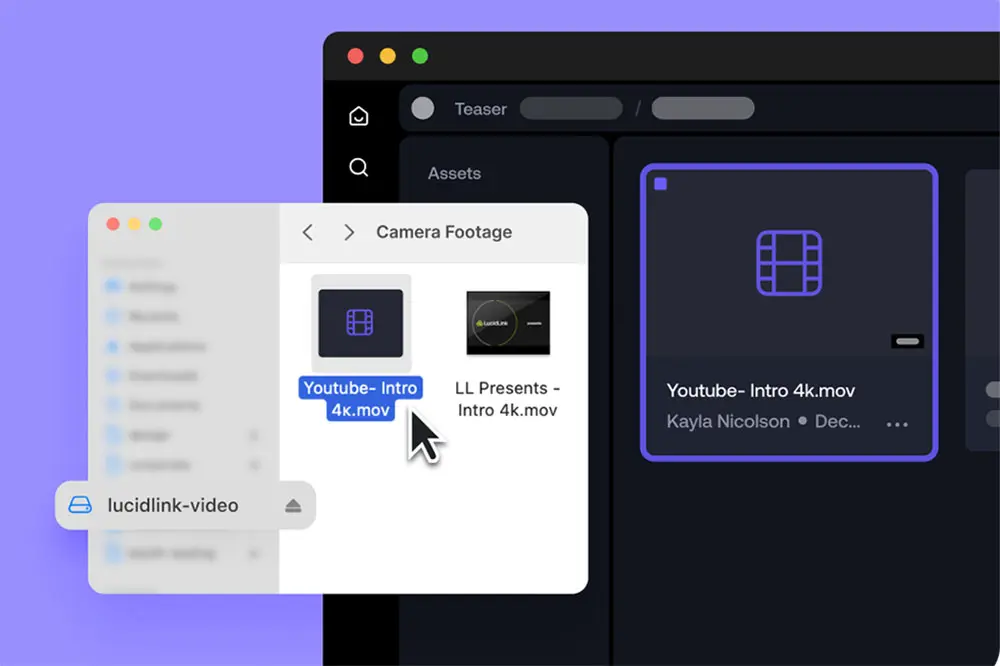
The key shift is that Frame.io integration now extends beyond its own storage and into the broader enterprise cloud stack. Powered by LucidLink Connect, files stored in environments like Microsoft SharePoint, Dropbox, Google Drive, Box and Amazon S3 appear instantly for the editor, with no data migration, downloads or file duplication, and existing cloud systems remain unchanged. In practice, footage uploaded to Frame.io flows straight into an immediate camera-to-timeline workflow: clips show up on the editor’s timeline as they are ingested, so teams move from capture to real-time editing without waiting for transfers or exports. According to LucidLink CEO Peter Thompson, customers can enjoy Frame.io’s review experience while LucidLink provides a persistent, tool-agnostic storage layer behind it. That combination turns scattered media repositories into one coherent cloud storage workflow.
Why It Matters Now for Distributed Video Teams
Remote and hybrid production is now the norm for episodic content, live sports and fast-turn social video, and those distributed video teams have hit a serious ceiling with application-specific storage. Vendor-tied storage can simplify narrow use cases but tends to create silos when content must move beyond a single platform. LucidLink Connect steps in as an enterprise-grade access layer across the whole production workflow, providing a single, real-time source of truth for assets used in Frame.io and other tools. Content under review and approval in Frame.io can be used at the same time by NLEs, finishing systems, MAMs or AI services without exports, syncs or manual handoffs. In blunt terms, this integration attacks the biggest bottleneck in cloud video collaboration: moving files around. By streaming media where it lives, it keeps teams focused on decisions, not downloads.
From Ingest to Edit: A Unified Cloud Storage Workflow
The integration is opinionated about one thing: every asset belongs in a single, tool-agnostic filespace. By extending the Frame.io ecosystem, LucidLink gives editors and producers access to Frame.io assets alongside all supporting media—B-roll, audio, graphics and archives—in one unified LucidLink filespace. This turns camera-to-cloud ingest into a true camera-to-timeline experience, with local-like, real-time performance applied to assets outside Frame.io across the rest of the workflow. Teams no longer hunt through disparate systems; B-roll, sound, and graphics from SharePoint, Dropbox or Amazon S3 live beside Frame.io media in one place. Crucially, there is zero file movement or duplication: data stays where it is, eliminating redundant export-and-reimport cycles along with egress costs and administrative overhead. Asset management, from ingest through post-production editing, finally behaves like one continuous process instead of a chain of fragile handoffs.
The Strategic Upside: Flexibility Without Storage Lock-In
Beyond workflow convenience, the deeper story is architectural freedom. As more vendors push their own integrated storage, media organizations are rethinking how to design their pipelines. LucidLink’s stance is clear: this integration is not about choosing one storage option over another; it gives customers flexibility to design workflows that match how they actually work. LucidLink Connect acts as a neutral, high-performance storage layer that lets Frame.io shine at collaboration while keeping assets ready for every next stage in production—from editing to AI services. Enterprise-ready orchestration features aim at IT and media infrastructure teams, who can automate asset access and scale global pipelines securely without extra infrastructure, data duplication or complex migrations. The conclusion is straightforward: if you want cloud video collaboration without being boxed into one vendor’s storage, this kind of integration is the path forward.