
Verdict First: A Great Gaming CPU in the Wrong Price Lane
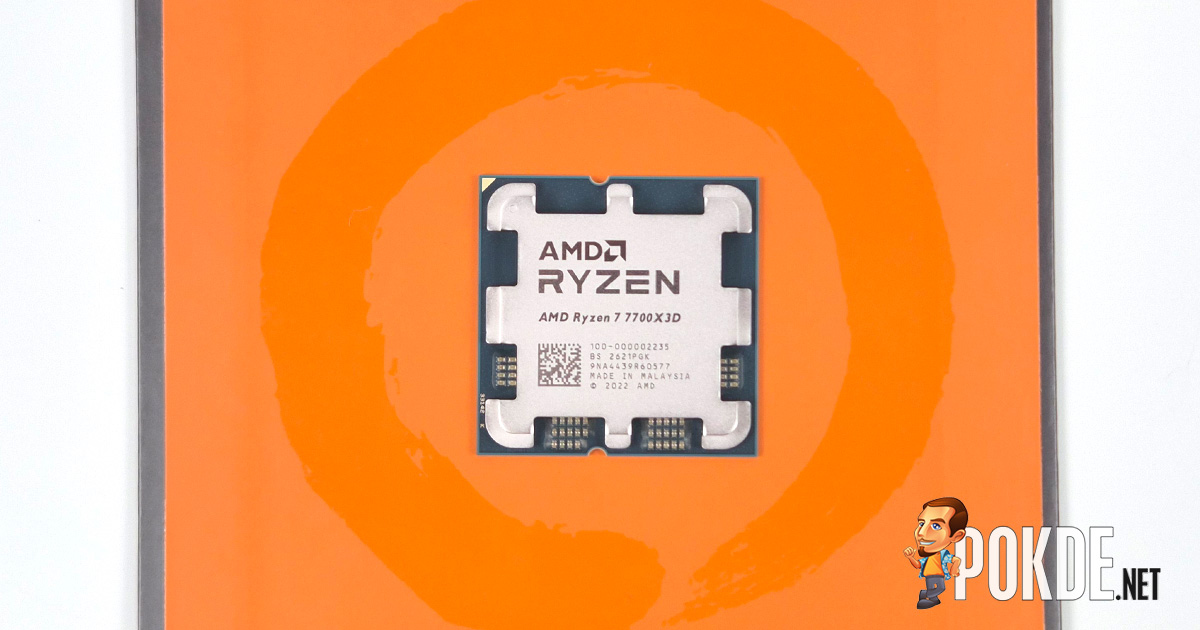
The AMD Ryzen 7 7700X3D is an 8‑core, 16‑thread Zen 4 desktop processor with 3D V‑Cache designed to deliver high gaming frame rates on the AM5 platform while undercutting AMD’s flagship X3D models in price and power use. At USD 330 (approx. ₱18,500), it offers excellent gaming performance and solid energy efficiency, but its value is undermined by how close it sits to the faster Ryzen 7 7800X3D and by strong mid‑range competition from Intel. If you only care about gaming and can find it meaningfully cheaper than a 7800X3D, it makes sense; if the price gap is small, it becomes a tough sell.
Specs, Features and What You Actually Get
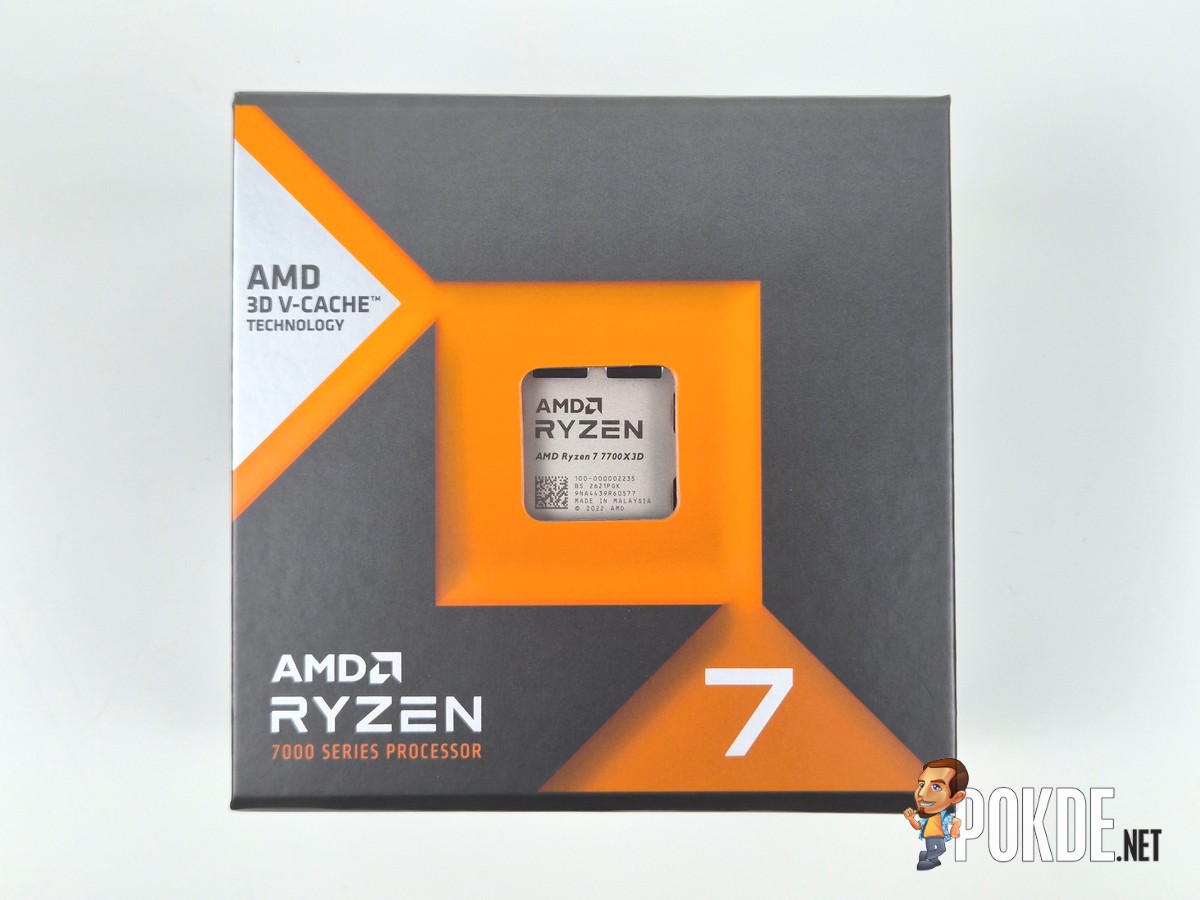
On paper, the Ryzen 7 7700X3D looks like a lightly downclocked 7800X3D built to hit a lower entry point into the X3D ecosystem. It uses the Zen 4 “Raphael” design on TSMC N5 with 8 cores and 16 threads on a single CCD, paired with 1 MB of L2 cache per core and 96 MB of shared L3 cache—32 MB on‑die plus 64 MB stacked as 3D V‑Cache. Base clock is 4.0 GHz with a 4.5 GHz boost, giving up 200 MHz base and 500 MHz boost versus the 7800X3D. TDP is 120 W, with a 89 °C temperature limit, and you also get dual‑channel DDR5 (up to 128 GB), a 28‑lane PCIe 5.0 root complex with 24 usable lanes, and basic RDNA2 graphics.
| Spec | Ryzen 7 7700X3D | Ryzen 7 7800X3D |
|---|---|---|
| Cores / Threads | 8 / 16 (1 CCD) | 8 / 16 (1 CCD) |
| Base / Boost Clock | 4.0 / 4.5 GHz | 4.2 / 5.0 GHz |
| L2 + L3 Cache | 8 MB + 96 MB 3D V‑Cache | 8 MB + 96 MB 3D V‑Cache |
| TDP | 120 W | 120 W |
| Price at launch | USD 330 (approx. ₱18,500) | USD 350 (approx. ₱19,600) |
| Socket / Memory | AM5, DDR5‑5200 dual‑channel | AM5, DDR5‑5200 dual‑channel |
Real‑World Performance: Fast Games, Weaker Multi‑Core Muscle
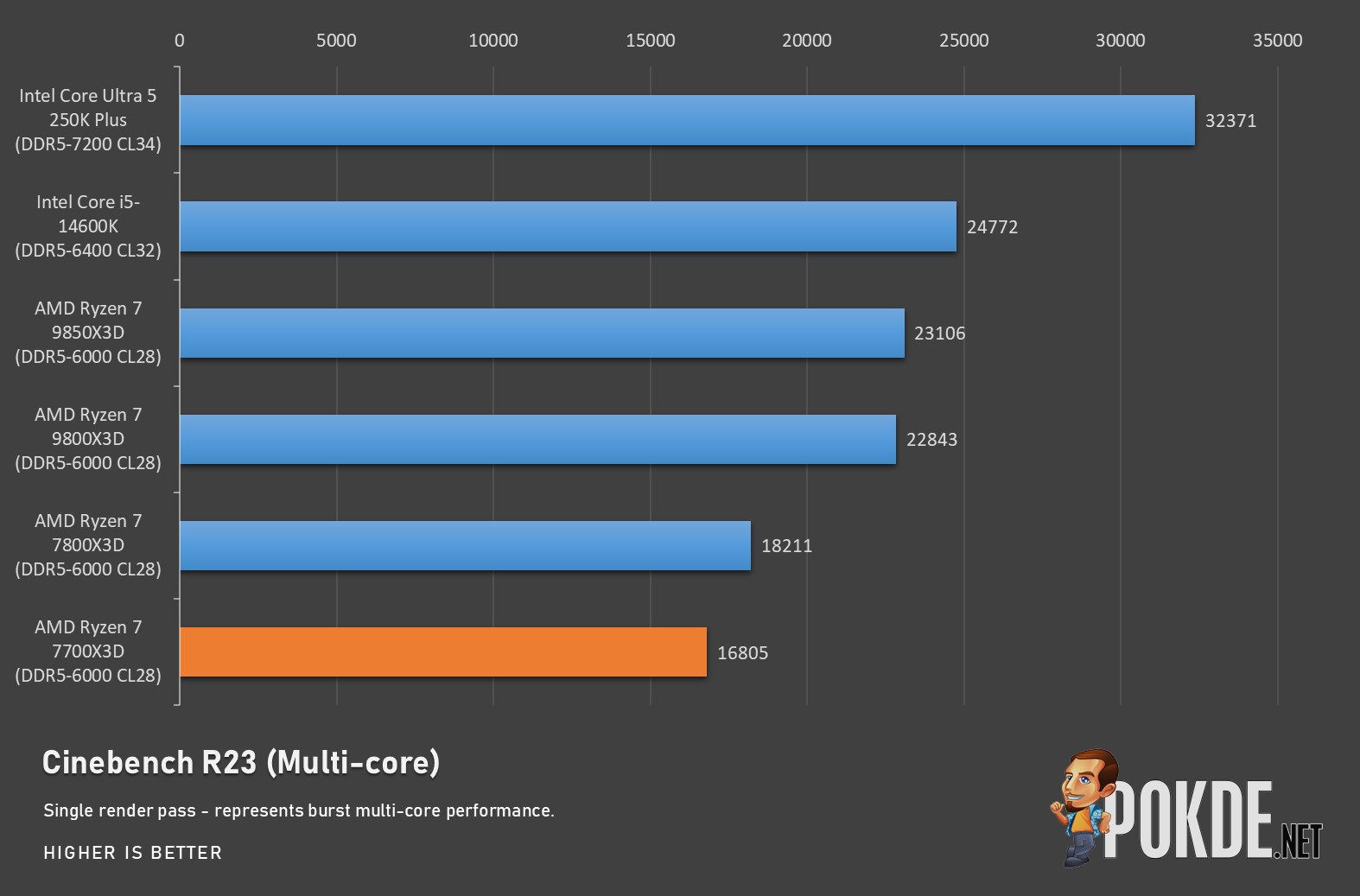
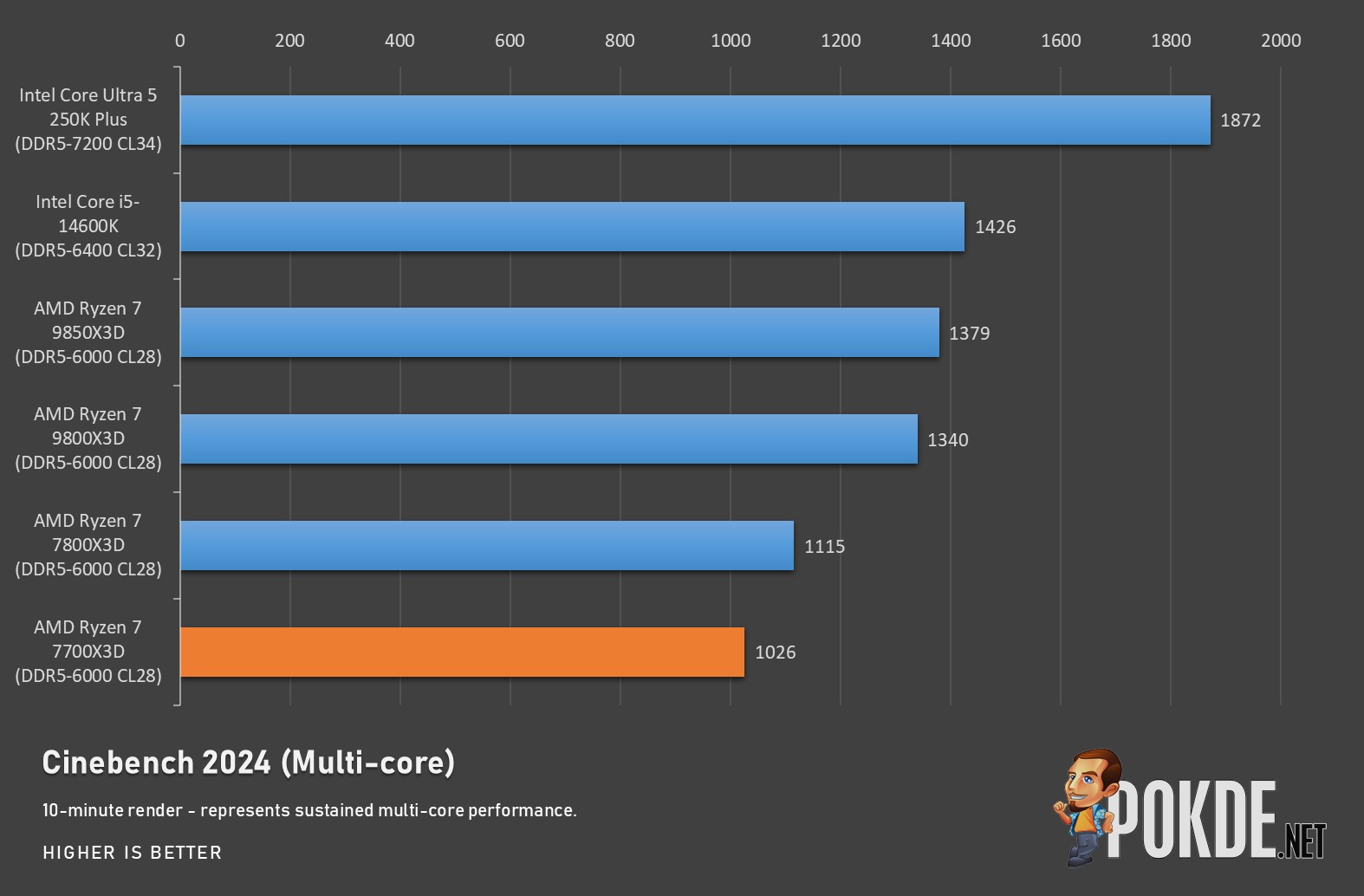
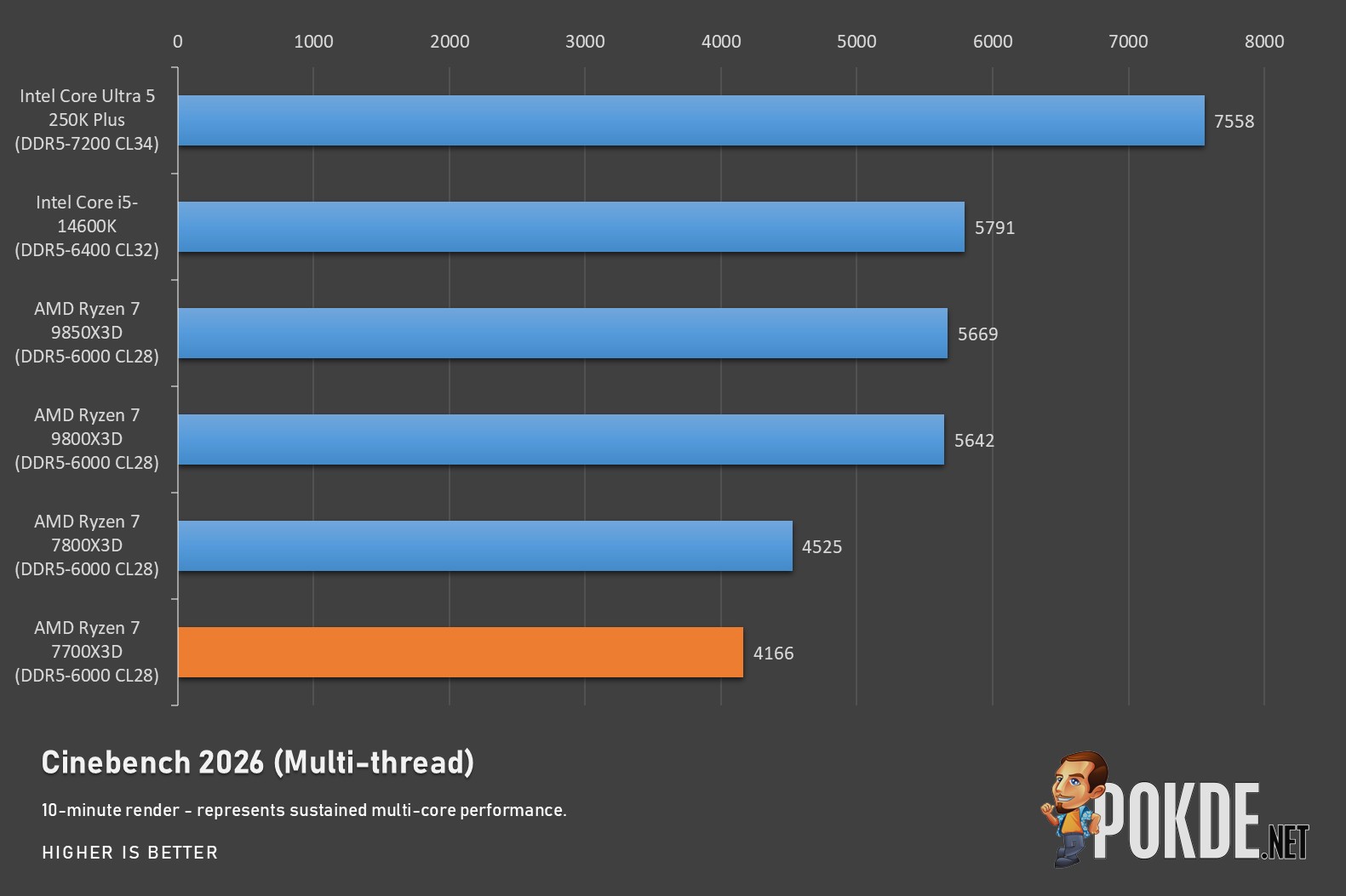
In multi‑threaded benchmarks like Cinebench, the cut‑down clocks show up clearly: reviewers measured about an 8% drop in multi‑core performance versus the 7800X3D across several Cinebench versions. Single‑core numbers fall by 6–13%, reflecting the 500 MHz lower boost clock and hinting at slightly worse performance in CPU‑bound 1080p gaming and latency‑sensitive tasks. According to one test suite, the 7700X3D trails the 7800X3D by only 1.76% in a HandBrake 4K encode, showing that in some workloads the gap is small despite the spec cuts. The bigger concern is outside the X3D family: the Intel Core Ultra 5 250K Plus can nearly double its multi‑core performance while costing significantly less, making the 7700X3D a poor choice if heavy productivity or rendering is part of your daily use.
Ryzen 7700X3D Gaming Performance and Power Use
Gaming is where the Ryzen 7 7700X3D earns its name. Despite its relatively low 4.5 GHz boost clock, the massive 96 MB 3D V‑Cache lets it consistently outperform Intel’s best current mid‑range gaming CPUs in many 1080p tests, with only one notable exception. That makes it a compelling option if you pair it with a high‑refresh monitor and powerful GPU, especially for cache‑sensitive titles and esports. At the same time, it remains efficient: reviewers highlight low power draw as a core strength, and the 120 W TDP is in line with other X3D parts. The AM5 platform also helps value long term: the chip works in all 600‑series and 800‑series AM5 boards, with USB BIOS flashback support easing upgrades, and you get a full 24 PCIe 5.0 lanes for GPUs and NVMe storage.
Where it shines
- Excellent Ryzen 7700X3D gaming performance thanks to 96 MB 3D V‑Cache at a lower entry point than flagship X3D chips
- Cheapest way to get 3D V‑Cache on AM5, improving the overall X3D CPU value comparison if you already own a board
- Low power draw for its class, with 120 W TDP and efficient Zen 4 cores
Where it disappoints
- Noticeably lower single‑core performance versus 7800X3D, which can hurt CPU‑bound 1080p gaming in some titles
- Multi‑core performance badly trails cheaper Intel alternatives, limiting its appeal for heavy productivity workloads
- Value feels weak at USD 330 (approx. ₱18,500) when the 7800X3D is only USD 20 (approx. ₱1,100) more.
Price, Positioning and the 7700X3D vs 7800X3D Question
The Ryzen 7 7700X3D launches at USD 330 (approx. ₱18,500), sitting just above Intel’s Core Ultra 7 270K Plus at USD 310 (approx. ₱17,400) and only USD 20 (approx. ₱1,100) below the Ryzen 7 7800X3D at USD 350 (approx. ₱19,600). It is also framed under newer, more expensive X3D parts like the Ryzen 7 9800X3D at USD 450 (approx. ₱25,200) and 9850X3D at USD 490 (approx. ₱27,400), which it undercuts while offering the same 96 MB cache size. This narrow 7700X3D vs 7800X3D price gap is the chip’s biggest problem: when the 7800X3D is readily available, reviewers consistently view it as the better value, thanks to its higher clocks and stronger multi‑threaded performance for only a small extra outlay. The 7700X3D only becomes attractive when 7800X3D stock dries up or discounts push it clearly below that older model.
From a user’s perspective, this creates an awkward positioning challenge. As long as the 7800X3D is within striking distance on price, the 7700X3D looks like a stopgap part keeping an X3D option on shelves rather than a clear‑cut recommendation. You are trading away up to 13% single‑thread performance and around 8% multi‑core speed for small savings, while Intel’s mid‑range chips offer nearly double the multi‑core performance at lower CPU cost in exchange for weaker cache‑driven gaming gains. As one reviewer summed it up, “Price will ultimately be the deciding factor: right now, we believe 7800X3D offers better value even if it costs slightly more.”
Buy if / Skip if
- Buy the Ryzen 7 7700X3D if you want strong Ryzen 7700X3D gaming performance with 3D V‑Cache on an existing AM5 build and the 7800X3D is significantly more expensive or unavailable.
- Skip the Ryzen 7 7700X3D if the Ryzen 7 7800X3D costs only a little more, since its higher clocks and better all‑round performance give you a clearer long‑term upgrade.
- Buy the Ryzen 7 7700X3D if you play mostly cache‑sensitive games at high refresh rates and prize energy efficiency over maximum benchmark scores.
- Skip the Ryzen 7 7700X3D if you run heavy multi‑threaded workloads like rendering, streaming, or encoding, where cheaper Intel CPUs can nearly double its performance.
- Skip the Ryzen 7 7700X3D if you are building a fresh system on a tight budget and care more about overall CPU speed than 3D V‑Cache gaming gains; better value exists lower down the stack.