

Zen 6: A Leaked Look at AMD’s Next-Gen Microarchitecture
AMD Zen 6 is the company’s upcoming sixth-generation x86 microarchitecture for future Ryzen, EPYC, and workstation processors, designed to improve performance, efficiency, and scalability over current Zen 5-based chips while debuting officially at a major Advancing AI conference in late July. The headline story is simple: leaked AMD Zen 6 benchmarks suggest a bigger generational leap than many expected, particularly in single-thread performance, and that matters more than any marketing slogan. With the “Medusa Point” engineering sample already showing double-digit gains, Zen 6 looks like a deliberate push to keep x86 front and center in both client and enterprise computing, not a side act to the company’s AI accelerators. Enthusiasts should see this leak as an early performance bar for the Ryzen processor launch rather than a final verdict on the platform.
Medusa Point Leak: 20%+ Single-Thread Gains Change the Story
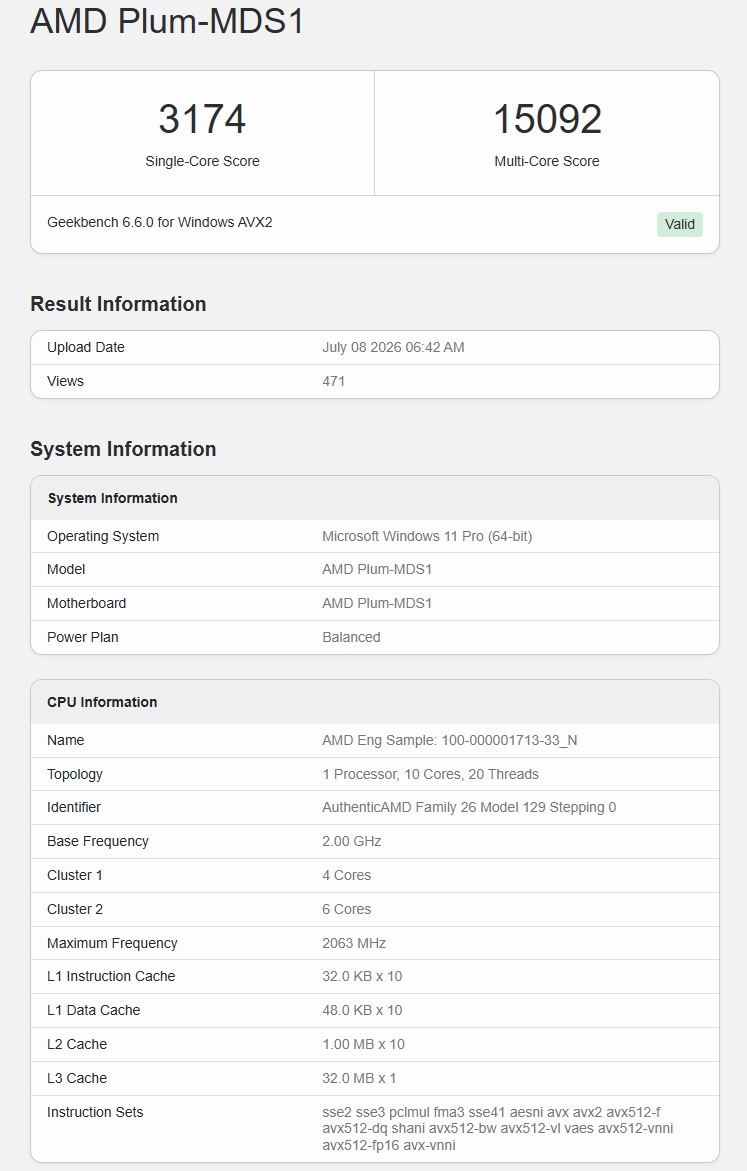
The leaked Geekbench 6.6 result for an AMD “Plum-MDS1” Medusa Point sample is the clearest data point we have so far on Zen 6 CPU performance. This 10-core chip combines four Zen 6 cores with six Zen 6c cores, mirroring the core count of the current Ryzen AI 9 HX 370 it appears set to replace. In that benchmark, the HX 370 scores 2605 in single-thread and 13397 in multi-thread, while the Medusa Point sample hits 3174 and 15092, respectively. That translates to a 21.8% single-thread and 12.6% multi-thread advantage—impressive numbers for early silicon rather than cherry-picked launch hardware. The L3 cache detection of 32MB versus 24MB on Strix Point adds another hint of architectural ambition, even if the exact cache reporting may be imperfect. For an engineering sample, these results suggest Zen 6 is not a minor refresh but a meaningful performance step.
Architecture Direction: x86 First, AI Companion Second
AMD’s own messaging around Zen 6 tells us as much about strategy as the leaked numbers do about raw performance. Executive Vice President and CTO Mark Papermaster confirmed that Zen 6 will debut at the Advancing AI 2026 conference on July 22–23, framing the launch inside an event focused on CPU, GPU, AI accelerator, and platform technologies. He underscored that x86 computing remains central to enterprise infrastructure and will stay at the core of AMD’s long-term plans, with customers having spent decades building software ecosystems around x86 processors. In other words, Zen 6 is being built to optimize standalone x86 workloads while complementing, not replacing, AMD’s AI-focused hardware. That stance matters: it signals that the next-gen microarchitecture is intended as a serious foundation for future Ryzen desktop chips, EPYC server CPUs, and workstation products rather than a token generational update.
What the Benchmarks Hint About Real-World Performance
Enthusiasts love to obsess over how much of a gain comes from clock speed versus architectural changes, and Zen 6 invites that debate. Earlier leaks have suggested higher clock speeds for the new generation, and the Medusa Point numbers leave open the question of how much of the 21.8% single-thread uplift is frequency and how much is improved core design. The benchmark also flags support for new instructions such as AVX-512-fp16, indicating that AMD is widening the instruction set and pushing more capable compute paths for demanding workloads. Regardless of the precise breakdown, a verified double-digit single-thread increase is the kind of change that affects how snappy applications feel, how well lightly threaded tasks run, and how competitive future Zen 6-based Ryzen CPUs look next to current Zen 5 parts. If retail chips exceed this engineering sample, Zen 6 could become the generational upgrade that moves users off older platforms rather than leaving them indifferent.
Advancing AI Launch: Setting Expectations for the Ryzen Era Ahead
With AMD confirming Zen 6’s debut at Advancing AI 2026, the leaked benchmarks set a performance baseline that the official keynote will have to either match or exceed. The event at Moscone Center West is expected to deliver more technical detail on the architecture and to outline where Zen 6 fits across client and server product families. The company has already signaled that Zen 6 will build on Zen 5 with improvements in performance, efficiency, and scalability, and is widely expected to underpin upcoming Ryzen desktops, EPYC servers, and workstations. The timing, amid intensifying competition in both client and server CPU markets, suggests AMD wants Zen 6 to be seen as a decisive step, not a marginal tick. If the Medusa Point engineering sample is any indication, the Ryzen processor launch built on Zen 6 has the potential to set a new bar for next-gen microarchitecture in mainstream and high-end systems.