
Classic portrait primes: what they are and who they suit
Classic portrait lenses are short telephoto primes around 85mm to 90mm that prioritize graceful rendering, subject separation, and consistent manual focus operation over convenience features such as autofocus or in-lens correction profiles, and they remain a favorite of serious photographers who value character and control more than speed of use or extensive automation in their portrait work.
If you mostly chase specs and autofocus speed, the Zeiss Otus 85mm and Voigtländer 90mm f/4 M-mount will look outdated. But if you care more about how a face is rendered than how fast the camera locks focus, these manual focus primes start to make sense. The original Zeiss Otus 85mm f/1.4 is remembered as producing images that felt “impossible to make a bad image” with, even compared to newer versions that look more clinical. The Voigtländer APO-Lanthar 90mm f/4 Close Focus, on the other hand, proves that a compact M-mount telephoto can still deliver serious optical refinement in a very small package. Together they show how timeless lens design can outlast several generations of autofocus bodies.
Zeiss Otus 85mm f/1.4: when image quality trumps convenience
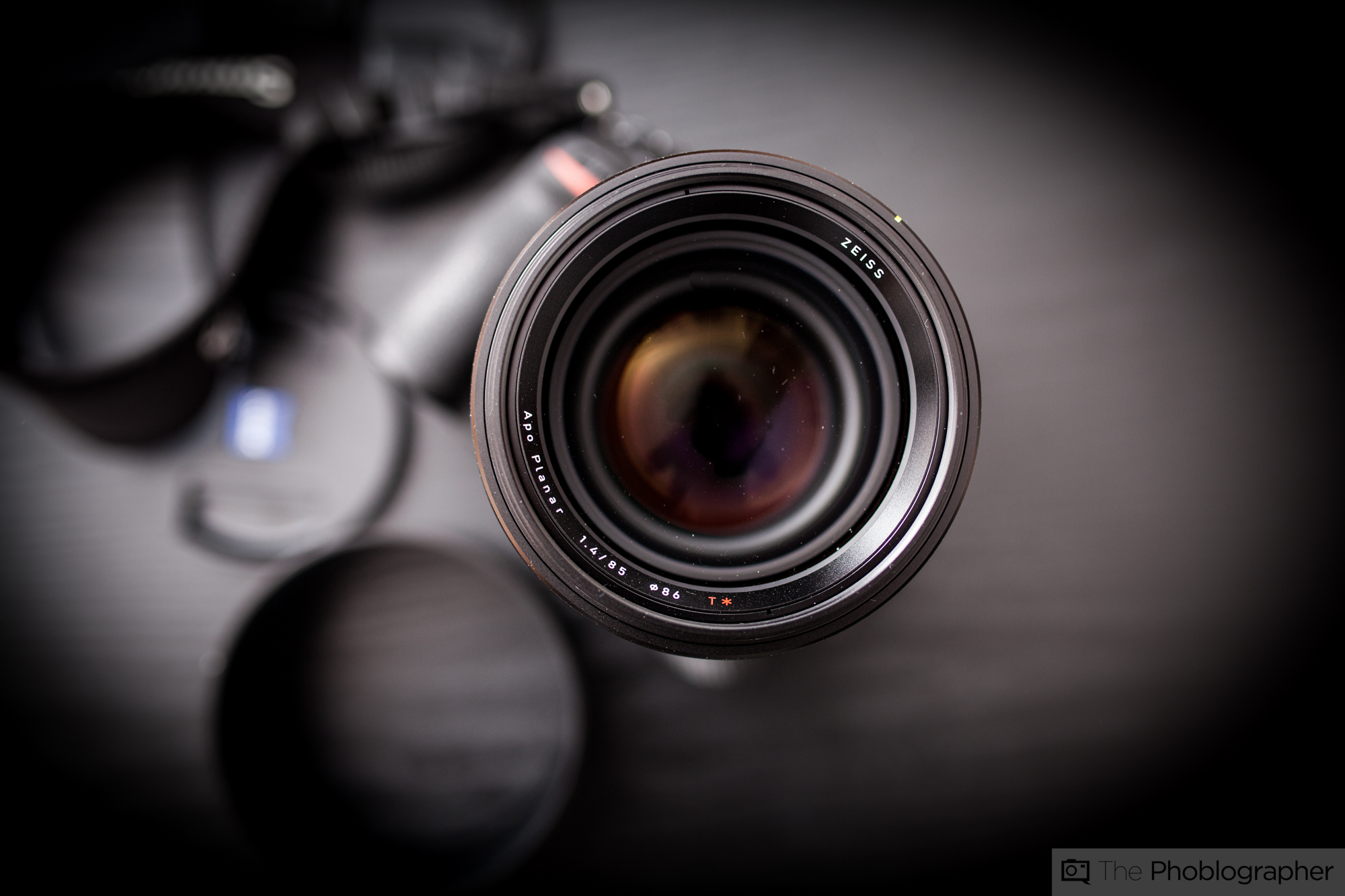
The original Zeiss Otus 85mm f/1.4 is the archetype of a classic portrait lens built with no regard for size or weight, only for image quality. It is big, heavy, and manually focused, yet photographers still look back at its rendering with affection. According to the reviewer, the original Otus produced files that felt so complete that many needed “little to no editing,” and the lens made it feel “impossible to make a bad image” compared with newer designs that seem more clinical and interchangeable.
This is the portrait prime for photographers who want medium-format-style tonality from a full-frame system and are willing to work for it. The manual focus throw encourages deliberate framing and careful plane-of-focus placement, especially wide open. That slows you down in a good way: you stop spraying and start directing. The trade-off is clear. If you depend on tracking children, events, or fast-moving subjects, the Otus will fight you. But for controlled portraits where expression and microcontrast matter more than speed, its reputation in the archives is the reward.
Voigtländer 90mm f/4 M-Mount: compact precision for rangefinders
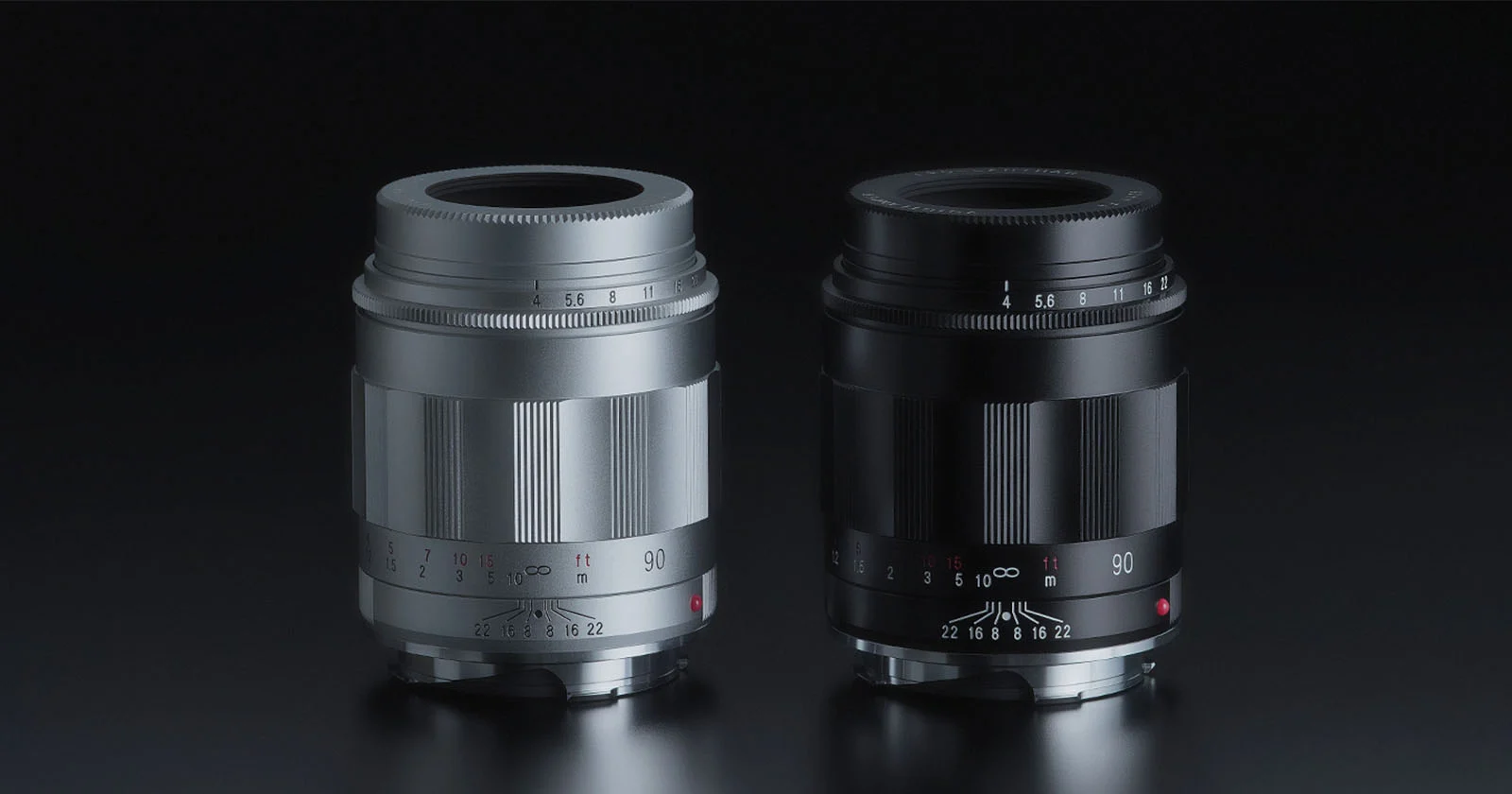
Where the Otus is about no-compromise optics in a huge barrel, the Voigtländer APO-Lanthar 90mm f/4 Close Focus aims for optical discipline in an astonishingly compact form factor. Longer 90mm primes often block the rangefinder window on M-mount cameras, but this lens keeps its diameter down to 53mm and its length to 54.8mm, with a weight of only 235g. That size makes it practical for rangefinder use and balanced on small mirrorless bodies via adapters.
Optically, the apochromatic design is built to “thoroughly eliminate” axial chromatic aberration by using abnormal partial dispersion glass in most of its eight elements across six groups. It also focuses down to 0.5m in live view with a 0.28x magnification ratio, nudging into close-up territory while remaining rangefinder-coupled to 0.7m. With a Japanese price of 103,320 yen, roughly USD 640 (approx. ₱36,000), it is positioned as a high-value specialist tool rather than a budget lens. If you prioritize packable gear, precise color correction, and thoughtful manual focus over blur quantity, this is the better fit than a faster but bulkier telephoto.
| Spec | Zeiss Otus 85mm f/1.4 | Voigtländer APO-Lanthar 90mm f/4 Close Focus |
|---|---|---|
| Focal length | 85mm prime portrait lens | 90mm telephoto prime for M-mount |
| Max aperture | f/1.4 (emphasis on shallow depth of field) | f/4 (emphasis on compactness and control) |
| Focus type | Manual focus prime, designed for deliberate use | Manual focus, rangefinder-coupled to 0.7m |
| Design goal | High-resolution, character-rich rendering that minimizes post-processing | Apochromatic correction and compact M-mount form factor |
| Close focus | Standard portrait distances, not optimized for close-up work (implied by use case) | 0.5m minimum focus, 0.28x magnification with live view |
| Weight / size | Described as big, heavy, and hard to use | Diameter 53mm, length 54.8mm, weight 235g |
| Price info | Often considered a premium investment; specific current price not given | 103,320 yen (around USD 640, approx. ₱36,000) in Japan |
Why manual focus portrait primes still outshine modern autofocus glass
Both of these lenses remind us that classic portrait lenses stay relevant because they change how you work. Manual focus primes remove autofocus complexity from the equation and force you to pre-visualize, direct your subject, and commit to a plane of focus instead of trusting a tracking algorithm. That discipline is part of why many photographers continue to revisit work shot on lenses like the original Zeiss Otus 85mm f/1.4 and remain “smitten with all the output” years later.
The Voigtländer 90mm f/4 M-mount shows that timeless lens design is not about nostalgia; it is about clear priorities. By delivering an apochromatic 90mm portrait tool in a 235g package that stays out of the viewfinder’s way, it proves you can modernize without surrendering the classic experience. Autofocus lenses will always win for speed and ease, but portrait photographers who care most about rendering and bokeh often accept slower handling in exchange for consistent, characterful results. When a lens makes you slow down, think, and leave less to post-processing, it can feel more modern in practice than the latest on-paper spec sheet.
Buy if / Skip if
- Buy the Zeiss Otus 85mm f/1.4 if you shoot deliberate portraits and want the kind of rendering that still holds up in your archives years later.
- Skip the Zeiss Otus 85mm f/1.4 if you rely on fast autofocus or need a lightweight travel kit for events and candid work.
- Buy the Voigtländer APO-Lanthar 90mm f/4 if you use M-mount or adapted mirrorless bodies and want an astonishingly compact, apochromatic 90mm with close-focus ability at 0.5m and 0.28x magnification.
- Skip the Voigtländer APO-Lanthar 90mm f/4 if you often shoot in very low light, need ultra-shallow depth of field, or rarely work with manual focus primes.
- Buy the Zeiss Otus 85mm f/1.4 if you prefer to do minimal editing and want files that already look polished out of the camera.
- Skip the Voigtländer APO-Lanthar 90mm f/4 if you expect a budget price; at 103,320 yen (around USD 640, approx. ₱36,000) in Japan, it is a considered purchase rather than an impulse buy.