
RTX 5070 and RTX 5090 laptops: what this battle is really about
RTX 5070 and RTX 5090 gaming laptops are high-end portable gaming workstations built around Nvidia’s latest mobile GPUs, and choosing between them means deciding whether you value slimmer, lighter designs with balanced performance or heavier, louder machines that prioritize maximum sustained frame rates and creator workloads over battery life and acoustic comfort. The core question is not whether they can play modern games—they can—but how much performance headroom, thermals, and portability you are willing to trade off for the way you actually game and work every day.
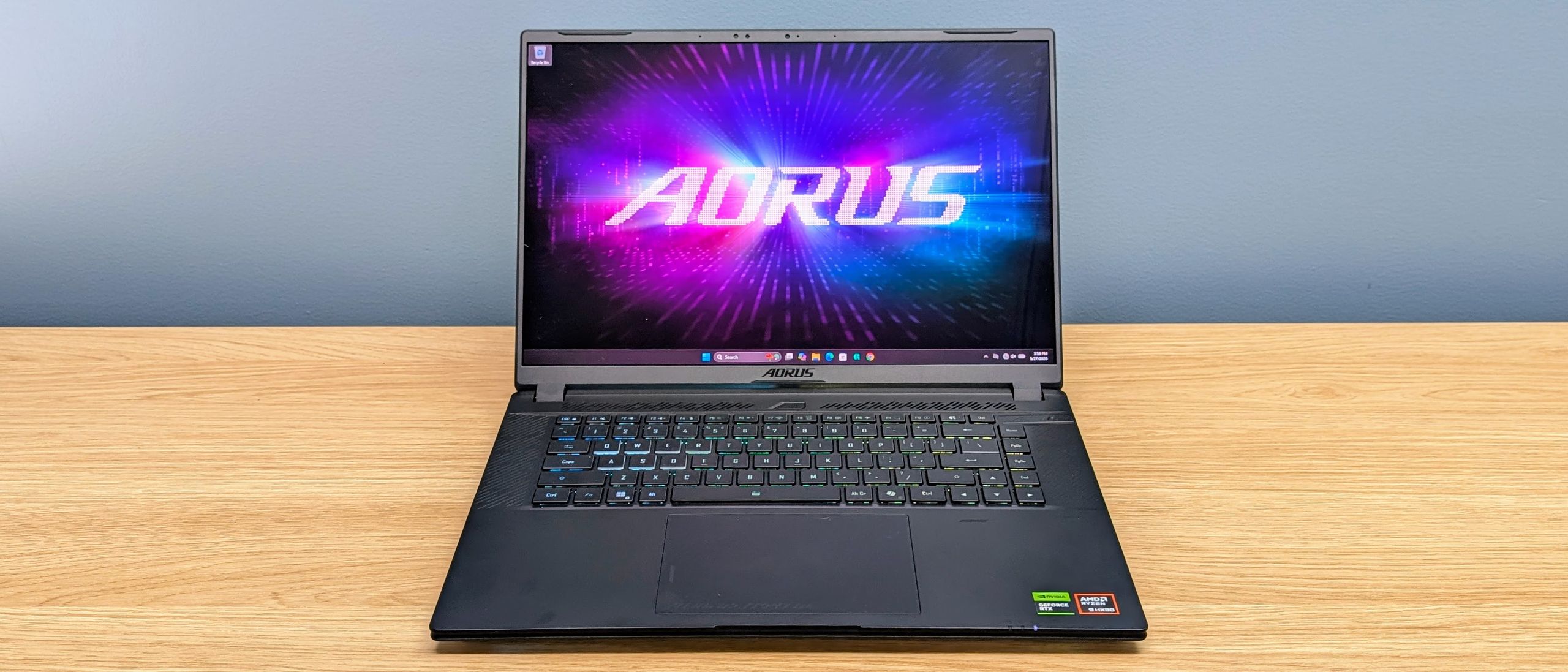
The Lenovo Legion 7a and the Gigabyte Aorus Master 16 Gen 2 sit on opposite ends of this spectrum. Lenovo’s refreshed Legion 7a pairs a GeForce RTX 5070 12GB with a Ryzen AI 9 HX 470 in a premium 16-inch chassis to deliver balanced RTX 5070 laptop performance that keeps thermals and portability in check while still hitting high settings in modern titles. On the other hand, the Aorus Master 16 Gen 2 straps a 175W RTX 5090, a Ryzen 9 9955HX3D, 32GB of RAM and a 1TB SSD into a slim but unapologetically power-hungry 16-inch shell to behave more like a desktop replacement than a casual couch machine. If you are shopping in this tier, you are not deciding whether to spend more—you are deciding where that money goes: battery life and comfort, or raw, desktop-class performance.
| Spec | Lenovo Legion 7a (RTX 5070) | Gigabyte Aorus Master 16 Gen 2 (RTX 5090) |
|---|---|---|
| GPU | GeForce RTX 5070 12GB GDDR7, up to 115W TGP with Dynamic Boost | GeForce RTX 5090 laptop GPU, up to 175W power limit |
| CPU | Ryzen AI 9 HX 470 (required for the RTX 5070 config) | Ryzen 9 9955HX3D |
| VRAM | 12GB GDDR7 | 24GB (RTX 5090 version) |
| RAM / Storage (tested) | Not specified in source | 32GB RAM, 1TB SSD |
| Display size | 16-inch class (Legion 7 16AGP11) | 16-inch OLED, 2560 x 1600, 240Hz |
| Price (tested config) | Not specified in source | USD 4,299 (approx. ₱241,000) / AU$6,599 |

Performance priorities: balanced RTX 5070 vs full-power RTX 5090
If your goal is high settings at 1440p or 1600p with headroom for the next few years, the Legion 7a’s RTX 5070 12GB configuration is the sane choice. Lenovo’s move to 12GB of GDDR7 VRAM and a TGP up to 115W with Dynamic Boost means this RTX 5070 gaming laptop can feed modern, VRAM-hungry engines without panic at ultra textures. The extra memory also benefits ray tracing and AI workloads, which increasingly spill over 8GB even at 1440p. In other words, this is the sweet spot for players who want strong performance but have no interest in lugging a pseudo-desktop around.
The Aorus Master 16 Gen 2, in contrast, is built for people who look at 1600p and see a minimum, not a target. Its RTX 5090 gaming laptop GPU runs up to 175W for extended periods without obvious throttling. According to the review, “compared with an RTX 5080 laptop, the Aorus is up to 35% faster for gaming,” with the biggest gains arriving when heavy ray tracing and thick texture packs meet its 24GB of VRAM. That makes it ideal for ultra settings, high refresh OLED panels, and demanding creator workloads where GPU time is money. But the trade-off is ruthless: fans that scream under load and a machine that behaves more like a tethered desktop than a travel companion.
Portability, thermals, and battery: the unglamorous trade-offs
High-end gaming laptops are no longer defined only by frame rates; they are defined by how gracefully they carry that performance around. The Legion 7a is positioned as a premium gaming laptop with pricing to match, but it aims for a balanced profile rather than sheer excess. Its RTX 5070 12GB runs at a sensible 115W TGP ceiling, which keeps heat and fan noise more manageable than the monsters at the top of the stack. You are still dealing with a serious 16-inch machine, but it fits better in the category of portable gaming workstations that can travel between home and office without feeling like a punishment.
The Aorus Master 16 Gen 2 takes a different approach: it squeezes flagship-class hardware into a chassis that is slimmer than typical desktop-replacement machines, measuring 35.7 x 25.5 x up to 2.4cm and weighing 2.39kg. On paper, that sounds very portable, and in a backpack it is reasonable for a powerful 16-inch system. In practice, its thermal and power profile exposes the limits of this form factor. The cooling system can keep the RTX 5090 at 175W but makes the Aorus “one of the loudest laptops” under full load, and battery life is dismal: under 2.5 hours of web browsing and under 4 hours of video playback even with the RTX 5090 disabled and only the iGPU active. This is the classic desktop replacement pattern disguised in a slimmer shell.
Price, value, and the reality of premium tiers
Both of these machines sit squarely in the high-end gaming laptops bracket, and neither pretends otherwise. Lenovo’s Legion 7a is described as a premium gaming laptop with high-end hardware and matching pricing, and the source even suggests that buyers focused on value may want to look at alternatives, including Lenovo’s own Legion 7i with a similar RTX 5070 12GB but potentially lower pricing depending on the market. That is the catch with the Legion: it is a balanced, capable portable gaming workstation, but you pay a noticeable premium for that balance and the brand’s styling rather than chasing the cheapest frames-per-dollar.
The Aorus Master 16 Gen 2 is explicit about its price ceiling. The RTX 5090 configuration tested is priced at USD 4,299 (approx. ₱241,000) and AU$6,599. There are cheaper configurations with RTX 5070 Ti and RTX 5080 GPUs, but the RTX 5090 model sits near the top of the range. The value argument here is performance density: if you want a 175W RTX 5090, Ryzen 9 9955HX3D, 240Hz OLED and a chassis that is still manageable in a bag, that premium is what it costs. However, fan noise and weak battery life stop the Aorus from feeling as premium as its price, which means buyers are paying primarily for speed, not polish.
Verdict: match the laptop to the life you actually live
Choosing between an RTX 5070 laptop and an RTX 5090 gaming laptop at this tier is about lifestyle, not bragging rights. The Legion 7a with RTX 5070 12GB is the rational choice for most players who want strong performance, solid thermals, and a 16-inch form factor that can move between desk, sofa, and backpack without turning every session into a power-socket hunt. The Aorus Master 16 Gen 2, meanwhile, is for people who treat their laptop as a movable desktop: always near a charger, headphones on, happy to trade noise and battery life for frame rates and render times.
- Buy if you want a balanced, premium 16-inch high-end gaming laptop with RTX 5070 laptop performance and 12GB of VRAM that can handle modern titles and AI workloads without excessive bulk or noise.
- Skip if you are chasing raw performance per dollar and are willing to sacrifice some portability, since there may be better-value alternatives even within Lenovo’s own range.
- Buy if you need a portable gaming workstation that runs a 175W RTX 5090, a Ryzen 9 9955HX3D, and a 240Hz OLED panel, and you are happy to plug in almost all the time.
- Skip if you care about long battery life, quiet operation, or a sense of premium refinement that matches a USD 4,299 (approx. ₱241,000) price tag, because fan noise and short runtimes are significant compromises.
In short, the Legion 7a is where most enthusiasts should land, whereas the Aorus Master 16 Gen 2 is a niche powerhouse for those who treat their laptop as an ultra-fast, semi-fixed workstation. Both prove that the future of high-end gaming laptops is less about whether they are fast—and more about how well they balance that speed with the realities of daily use.