
Verdict: A Late But Smart Gaming Play
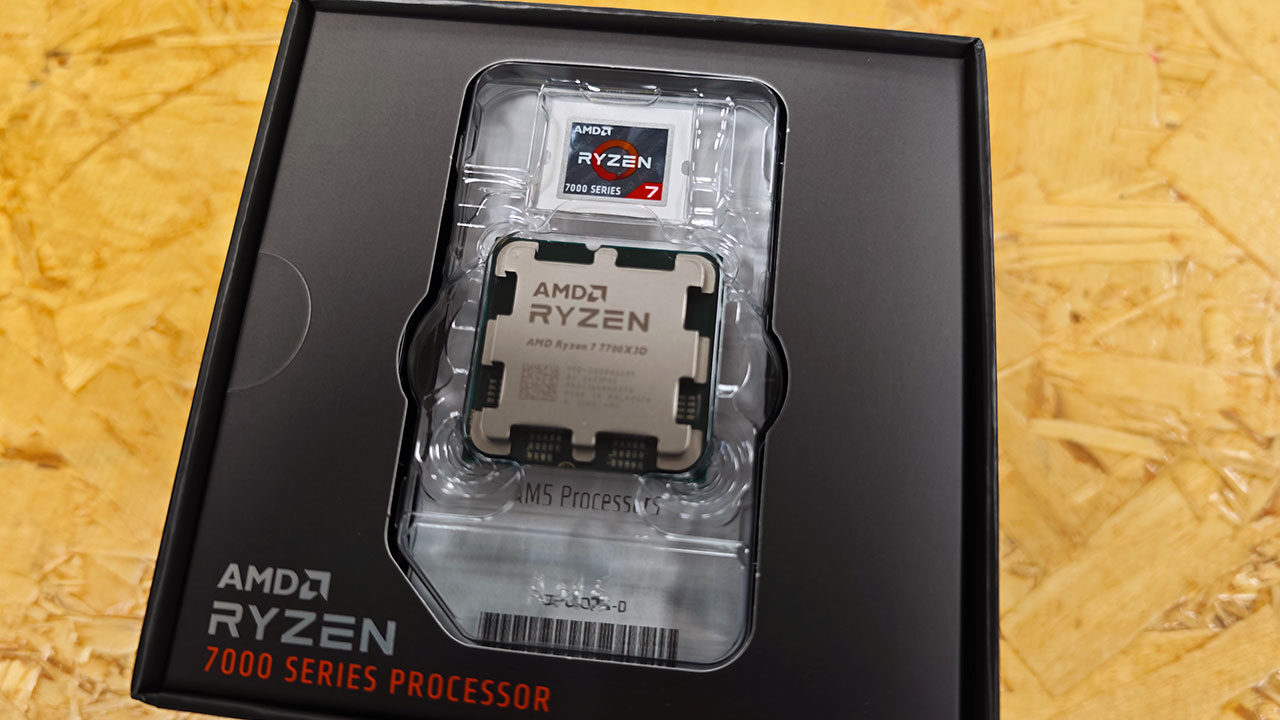
The AMD Ryzen 7 7700X3D is an eight-core Zen 4 desktop processor with stacked 3D V-Cache, designed to boost gaming CPU performance on the AM5 platform while accepting weaker results in broader productivity workloads at a midrange price point. Bottom line: this chip is good, and clearly built for PC gamers who care more about high frame rates than top-tier rendering or heavy content creation. At USD 329 (approx. ₱19,000) it undercuts newer 3D V-Cache rivals and some Intel alternatives while remaining compatible with a wide spread of AM5 motherboards. You should think of the Ryzen 7 7700X3D as a value-focused gaming upgrade option, not a general-purpose powerhouse; it trades raw Zen 4 compute grunt for cache-heavy responsiveness in modern titles and largely succeeds at that narrow mission.
Pros
- Excellent gaming CPU performance for the price, with big gains in cache-sensitive titles.
- Budget-friendly AM5 processor upgrade at USD 329 (approx. ₱19,000) with strong price-to-performance versus newer chips.
- Huge 96MB L3 3D V-Cache pool that benefits latency-sensitive games without changing core count.
Cons
- Older Zen 4 design and modest clocks leave it far behind modern CPUs in multi-core and rendering tests.
- Weak performance in some 1080p scenarios where raw CPU speed matters more than cache, such as Black Myth: Wukong.
- Not ideal for heavy workstation use; Blender, Cinebench and similar workloads fail to exploit 3D V-Cache.
Architecture, Specs and Platform Fit
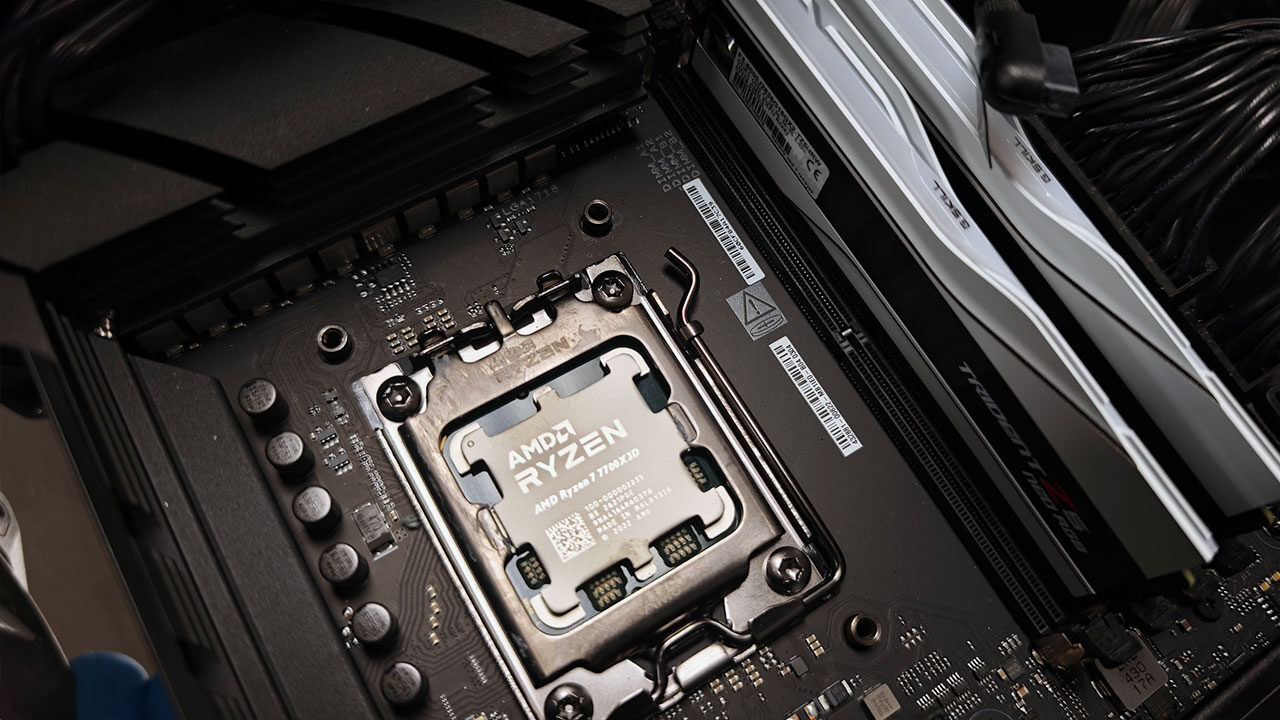
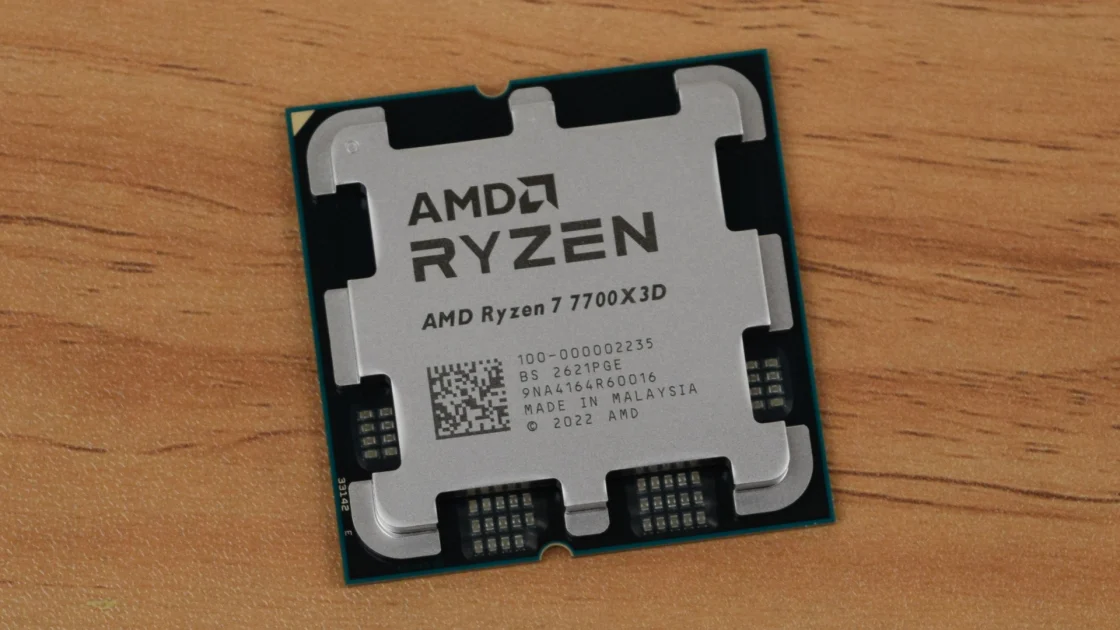
At its core, the Ryzen 7 7700X3D is a Zen 4-based CPU with 8 cores and 16 threads, running at a 4.0GHz base clock and up to 4.5GHz boost. It carries 512KB of L1 cache, 8MB of L2, and a hefty 96MB of L3 cache, for a total 104MB cache pool and a 120-watt TDP. This first-generation 3D V-Cache stack sits directly above the cores to keep more game data close to the processor, which helps workloads that are sensitive to latency. Memory support is dual-channel DDR5, officially up to 128GB, rated for DDR5-5200 at stock and with DDR5-6000 EXPO recommended as the sweet spot. Platform-wise, you get PCIe 5.0 with 28 total lanes (24 usable) and a tiny integrated Radeon GPU with two cores at 2,200MHz for basic display output. It drops into everything from A620 to X870E, making it easy to slot into existing or budget AM5 builds.
| Specification | Ryzen 7 7700X3D |
|---|---|
| Architecture | Zen 4 with first-gen 3D V-Cache |
| 0 | |
| Cores / Threads | 8 cores / 16 threads |
| Base / Boost Clock | 4.0GHz / up to 4.5GHz |
| Cache | 512KB L1, 8MB L2, 96MB L3 (104MB total) |
| TDP | 120W |
| Memory Support | DDR5, up to 128GB, DDR5-5200 official; DDR5-6000 EXPO recommended |
| Integrated Graphics | Radeon iGPU, 2 cores at 2,200MHz |
| PCIe Support | PCIe 5.0, 28 total lanes (24 usable) |
Gaming Performance: Where 3D V-Cache Shines
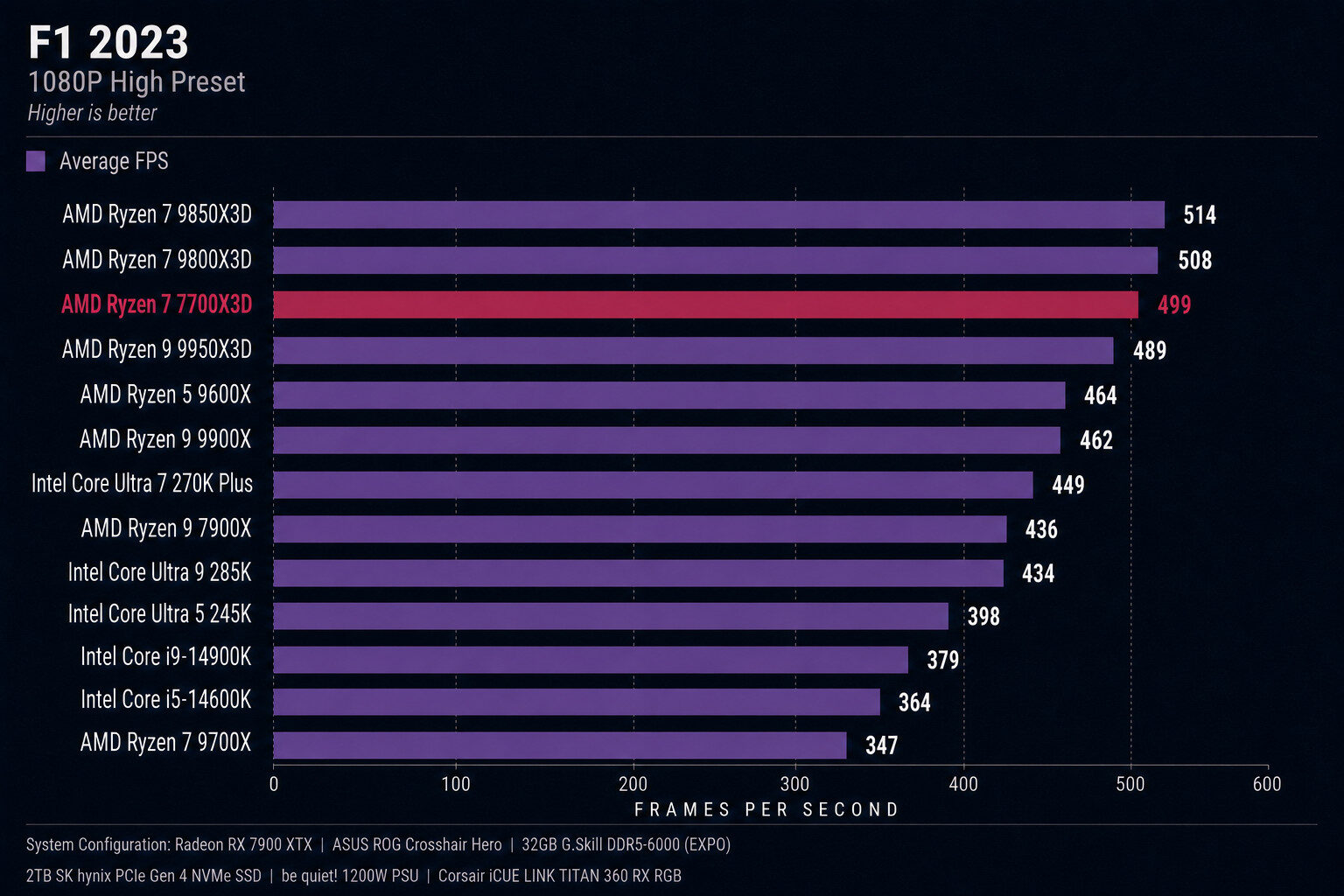
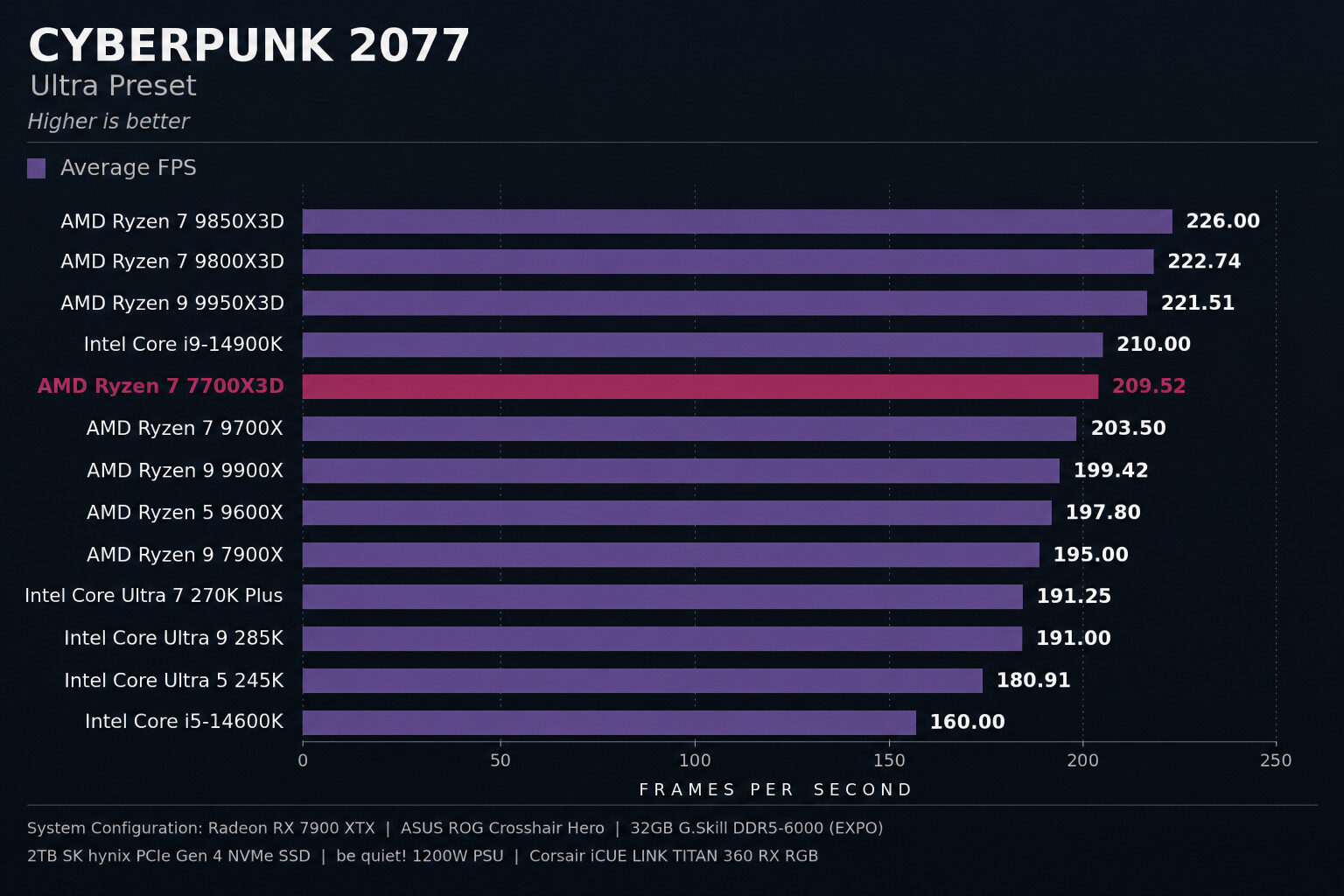
In synthetic tests, the 7700X3D looks modest: a CPU‑Z multi-core score of 6,867.7 and single-core 627.3 places it below the Ryzen 7 9700X and above the Ryzen 5 9600X. Cinebench R23 is even harsher, where it lands last among the tested CPUs with 16,595 multi-core and 1,639 single-core scores. But games tell a different story. In Watch Dogs: Legion at 1080p high settings, the chip reaches 188fps, trailing only the 9950X3D and beating newer CPUs like Intel’s Core Ultra 7 270K and the pricier Ryzen 9 9900X. In F1 2023 at 1080p High, "only the Ryzen 7 7700X3D managed to pull ahead of the 9950X3D and sits in third place out of the CPUs tested." Other reviews confirm that while it is often the slowest chip in pure CPU tests, in‑game benchmarks display a clear competitive edge over some non‑3D rivals, even matching or beating high-end parts at 1440p and 4K in titles like Cyberpunk 2077 and Total War: Three Kingdoms.
Productivity Trade-offs and Comparisons
The downside of the Ryzen 7 7700X3D’s focus on Zen 4 architecture gaming is clear once you step outside games. It "sits far below many other modern CPUs" including the 9950X3D, 9800X3D and most current Intel chips in general compute tests. In Blender it again finishes last among the CPUs tested because rendering platforms fail to use 3D V-Cache, its main advantage. A demanding title like Black Myth: Wukong also exposes limitations: at 1080p, the 7700X3D turns in the worst performance of all chips tested, likely bottlenecked by its weaker raw CPU throughput. Price changes the picture. With a USD 329 (approx. ₱19,000) MSRP, it undercuts the Ryzen 7 9800X3D, which costs nearly USD 479 (approx. ₱27,700), and often sells for less than Intel’s Core Ultra 7 270K Plus around USD 349 (approx. ₱20,200). That gives it a strong value position for gamers compared with newer, faster but more expensive processors.
Buy if / Skip if
- Buy the Ryzen 7 7700X3D if you want a gaming CPU upgrade on AM5 that delivers excellent frame rates at a lower price than newer 3D V-Cache parts.
- Skip the Ryzen 7 7700X3D if your priority is heavy content creation, 3D rendering or other multi-core workloads where it trails every modern competitor tested.
- Buy the Ryzen 7 7700X3D if you already own an AM5 board and want a drop-in Zen 4 architecture gaming boost without rebuilding your system.
- Skip the Ryzen 7 7700X3D if you want the absolute best gaming performance regardless of cost; chips like the 9950X3D and 9800X3D are faster.
- Buy the Ryzen 7 7700X3D if you value strong gaming CPU performance and are comfortable with “serviceable” everyday computing rather than top-tier productivity results.
- Skip the Ryzen 7 7700X3D if you mostly game at low resolutions in CPU-heavy titles where its weaker raw throughput can bottleneck performance, as seen in Black Myth: Wukong at 1080p.