
Third-party camera lenses vs native glass: what are you really choosing?
Third-party camera lenses for fixed-lens and APS-C systems are affordable optics or screw-on converters that expand your focal length options and brightness, but they often sacrifice premium build, flare resistance, and integrated features compared with native manufacturer lenses. In practice, that trade-off determines whether a budget accessory meaningfully extends a camera’s capabilities or becomes a frustrating compromise you stop using. If your priority is maximum image quality, consistent autofocus, and seamless integration, native glass remains safest. If you value price and flexibility more than perfection, third-party options can deliver surprising performance and make systems like compact fixed-lens cameras far more versatile.
For most shooters, the bottom line is simple: if you already own a fixed-lens camera like the X100 series and want wider or longer views without spending as much as a second camera, off-brand conversion lenses such as the Viltrox wide and tele options are the most tempting fixed-lens camera expansion tools. If you want an X100-style experience on an interchangeable body, a third-party pancake like the SG Image 25mm f/1.8 gives you most of the look for far less money. Native lenses still win on polish and consistency, but the right third-party accessory can get you close enough that the savings matter more than the gaps.
Hard numbers: third-party vs native converters and pancakes
Before judging conversion lens quality and usability, it helps to see what you pay for at a glance. Third-party options position themselves as budget camera accessories that undercut native glass by a wide margin while promising similar focal coverage. According to one review, “The WCL-X100VI lists for $159, while the TCL-X100VI is $189, given that the Fujifilm versions are $399 and $399 respectively.” That price gap defines the whole debate: are you comfortable trading some refinement to keep hundreds of dollars in your pocket, or do you want the native ecosystem no matter the premium?
| Spec / Price Point | Third-party option | Native / Premium alternative |
|---|---|---|
| Wide converter for fixed-lens compact | Viltrox WCL-X100VI at USD 159 (approx. ₱9,000) | Fujifilm wide converter at USD 399 (approx. ₱22,400) |
| Tele converter for fixed-lens compact | Viltrox TCL-X100VI at USD 189 (approx. ₱10,600) | Fujifilm tele converter at USD 399 (approx. ₱22,400) |
| Budget pancake prime for APS-C body | SG Image 25mm f/1.8 at about USD 150 (approx. ₱8,400) | Premium fixed-lens compact with built-in 23mm f/2, IBIS, ND filter, OVF |
These numbers show where third-party camera lenses attack: they give you focal length flexibility and fast apertures for around half—or less—of the native asking price. What the table cannot show is integration: native options plug neatly into the camera’s optical corrections, flare control, and handling, while third-party gear has to prove itself in the field.
Viltrox converters on fixed-lens compacts: expansion on a budget
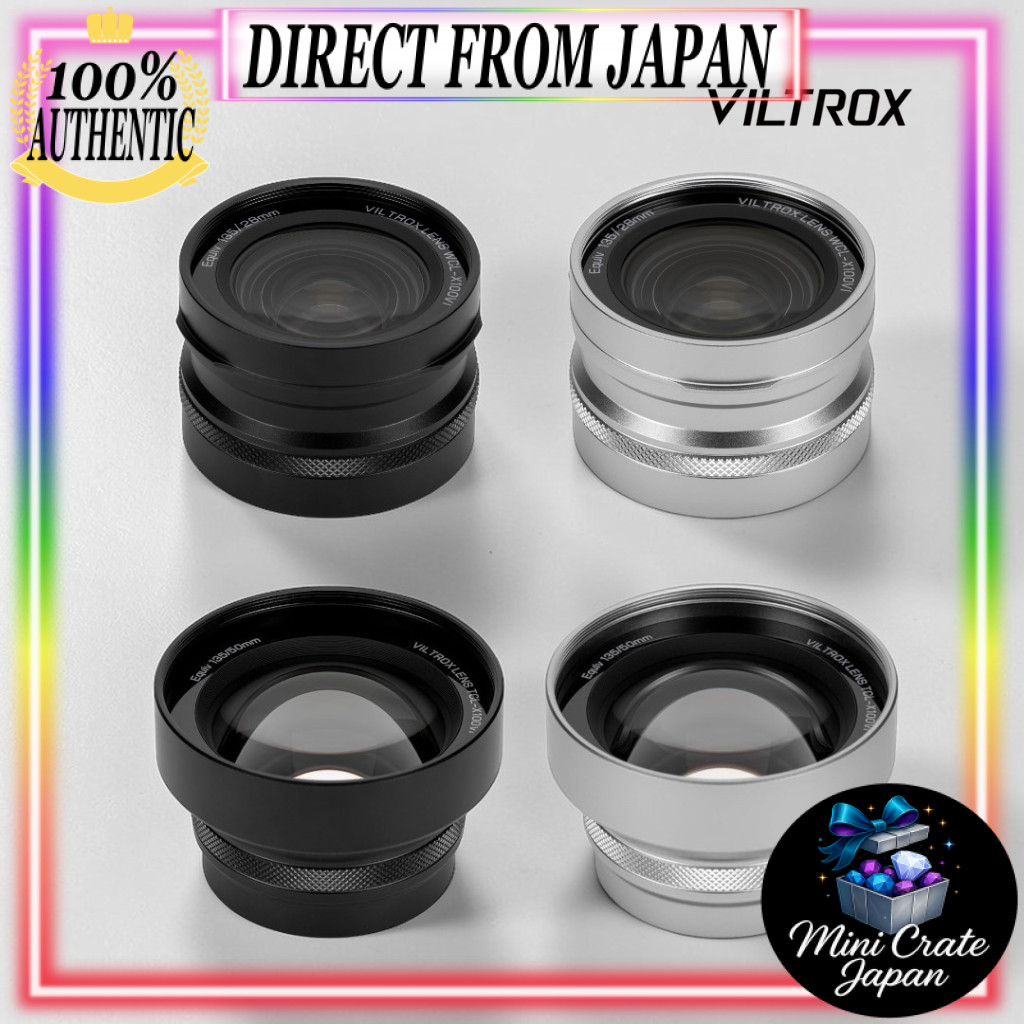
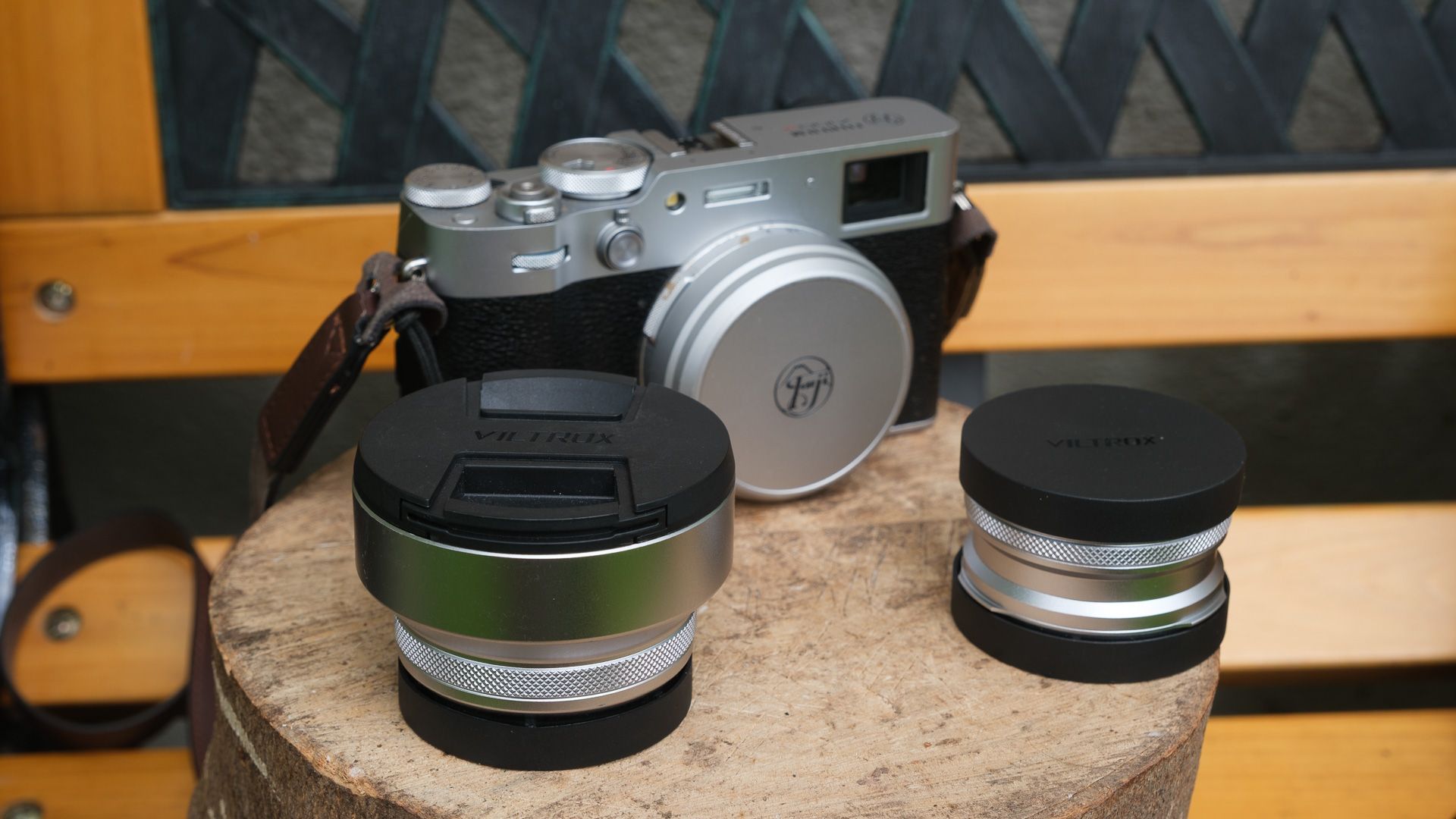
Viltrox’s wide (WCL-X100VI) and tele (TCL-X100VI) screw-on converters target photographers who love fixed-lens compacts but feel limited by the single 23mm equivalent field of view. By turning that into roughly 28mm with the wide unit and 50mm with the tele, you gain a practical three-lens travel kit without changing bodies. At USD 159 (approx. ₱9,000) for the wide and USD 189 (approx. ₱10,600) for the tele, they undercut the native converters, which sit at USD 399 (approx. ₱22,400) each. That is a huge saving if you want both focal lengths.
In terms of conversion lens quality, these adapters are better than their price suggests. They use 5 elements in 4 groups and include nano coating to keep sharpness and aberrations in check, and comparative testing found they can “easily compete with Fujifilm’s versions of these converters.” Integration is also strong: a magnetic mount and chip let the camera detect which converter is attached, tag the right metadata, and apply corrections automatically. The trade-off appears when you shoot into strong light. Reviewers report “dramatic flare with the sun in the centre of the frame,” which matches the broader pattern that off-brand glass can be more vulnerable to veiling and ghosting.
Third-party pancakes vs premium compacts: how much experience do you lose?
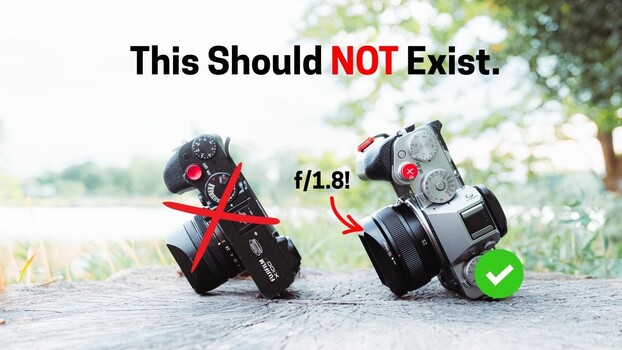
The SG Image 25mm f/1.8 pancake is one of the clearest examples of a budget lens closing in on premium territory. Mounted on an APS-C body, it aims to mimic the small-body, fast-lens appeal of an X100-style compact for around USD 150 (approx. ₱8,400). It even offers a faster maximum aperture than many native pancakes, which often stop at f/2.8. Center sharpness is strong wide open, mid-frame softens, and corners need stopping down to around f/8, but for portraits and subject-isolation shots that is a workable trade.
Where this lens—and similar third-party camera lenses—fall behind is system-level integration. A premium fixed-lens compact combines an optical viewfinder, IBIS, a built-in ND filter, and a fast fixed lens in one body. The SG Image pancake cannot add those: you still depend on the host camera for stabilisation, you lose the convenience of a built-in ND for bright conditions, and there is no dedicated aperture ring, which many users miss. Flare is a shared weakness: like the Viltrox converters, this lens struggles with strong backlight and specular highlights, with flare patterns that can even confuse autofocus. For careful shooters who avoid shooting directly into the sun, that may be acceptable; if you love dramatic backlit scenes, it is a clear reason to favour native or higher-end glass.
Who should go third-party—and who should stay native?
Look across these options and a pattern emerges: off-brand accessories are an effective form of fixed-lens camera expansion when your main constraint is budget, not perfection. Viltrox converters give you travel-ready 28mm and 50mm equivalents at less than half the price of native converters, while still delivering competitive sharpness and solid integration with autofocus and metadata. The SG Image 25mm f/1.8 delivers a bright, sharp center at a fraction of a premium compact’s cost, at the expense of flare resistance and high-end features like built-in ND and IBIS. Shared weaknesses—particularly flare from strong central light sources—are the main penalty for going off-brand. If you understand these limits and shoot around them, third-party gear can be a smart upgrade path; if you want dependable performance in any light, native glass earns its premium.
- Buy the Viltrox converters if you own a fixed-lens compact and want 28mm and 50mm fields of view without paying native converter prices.
- Skip the Viltrox converters if you often shoot straight into the sun or care more about flawless flare control than saving money.
- Buy the SG Image 25mm f/1.8 if you want an X100-style field of view and bright aperture on an interchangeable APS-C body at a low price.
- Skip the SG Image 25mm f/1.8 if you rely on smooth bokeh, strong corner sharpness at wide apertures, or often shoot into backlit scenes.
- Buy the native converters or a premium fixed-lens compact if you prioritise integrated features like ND filters, IBIS, and the best possible optical polish over up-front savings.
- Skip the native accessories if budget camera accessories already give you the focal lengths you need and you are comfortable working around occasional flare and edge softness.