
Airflow Becomes the New Baseline for High-End PC Chassis
Next-generation PC chassis airflow design refers to enclosures engineered around direct, low-resistance air paths and generous radiator support, rather than decorative panels, so that modern flagship GPUs, high-wattage CPUs, and liquid cooling hardware can sustain high performance without thermal throttling in real-world workloads.
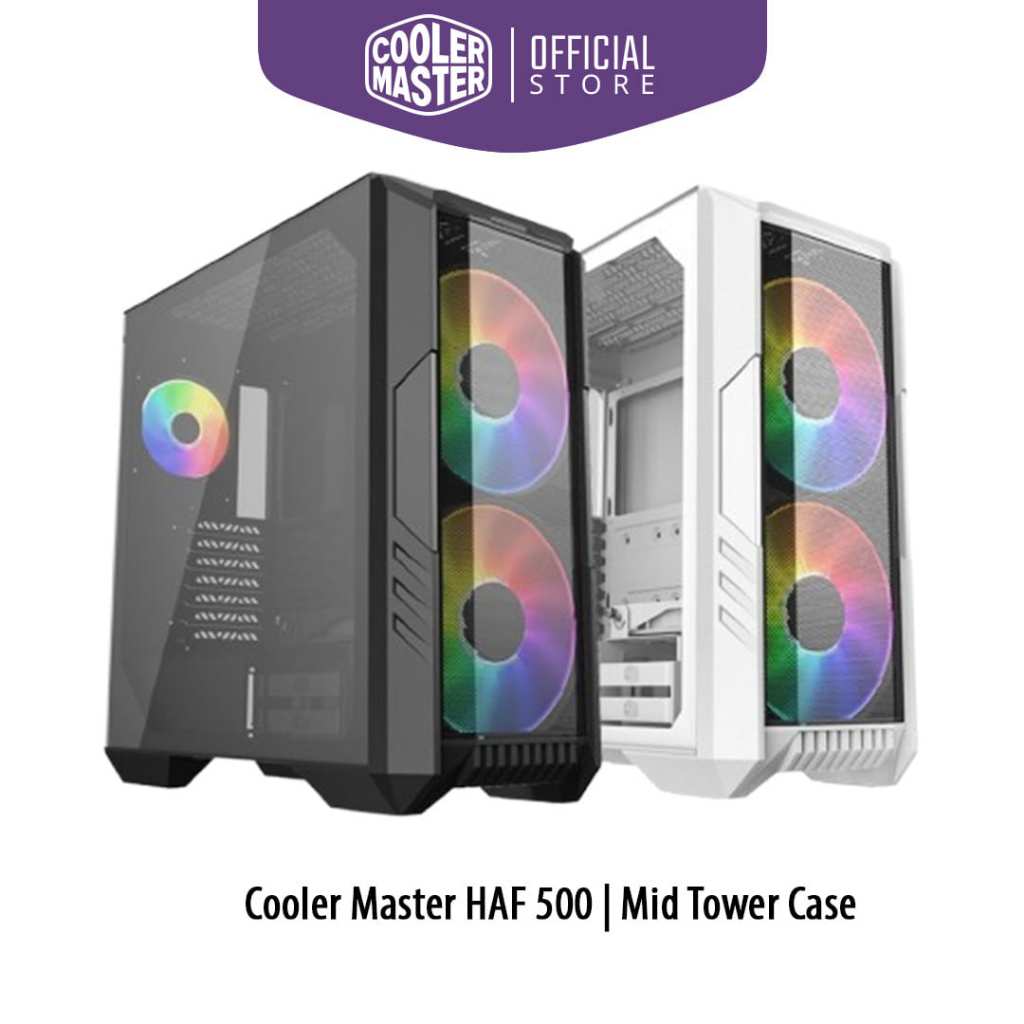
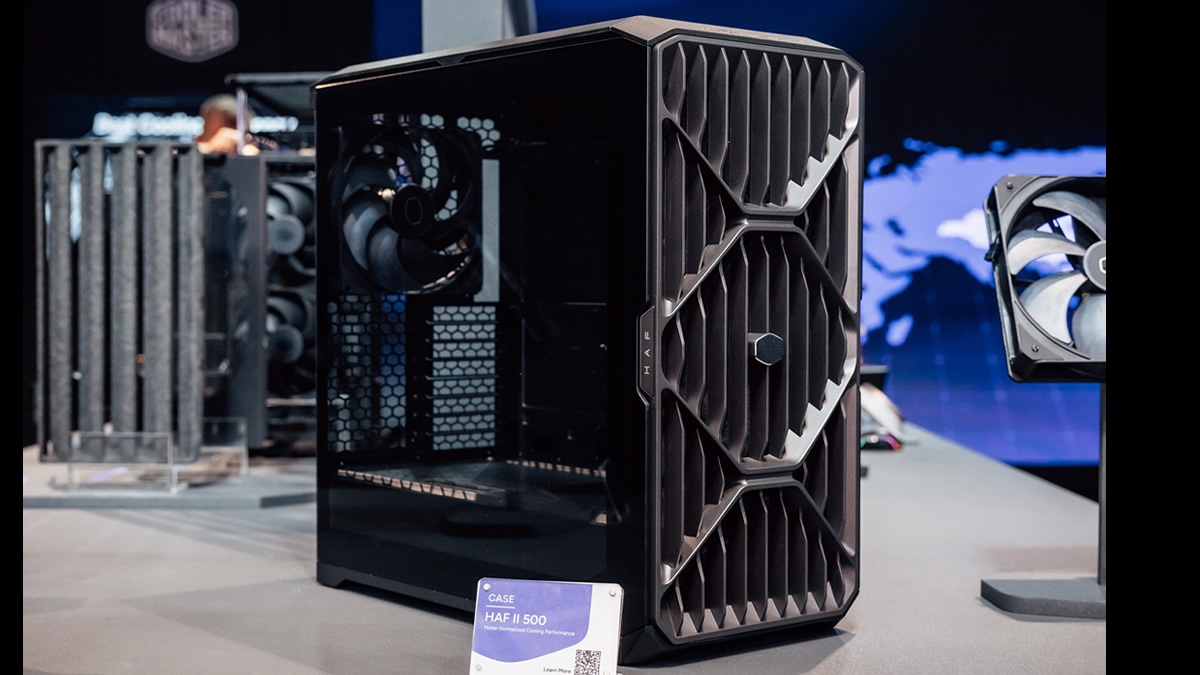
The most important shift in high-performance cooling cases is simple: airflow is no longer optional bling, it is the product. Cooler Master’s new HAF II 500 is marketed on “unmatched airflow and cooling performance” thanks to three oversized Mighty40 fans and a high-airflow chassis that maximises intake and exhaust. Thermaltake’s CAPO X, a dual-system full tower, is built so two complete Micro-ATX rigs can run hard in one shell without cooking each other. Cougar’s CFV220 RGB, even while leaning into panoramic tempered glass, deliberately routes air through a central intake toward GPU and CPU hotspots. Taken together, these thermal management enclosures show that if a case cannot cool, it does not belong in the high-end segment.
Cooler Master HAF II 500: Giant Fans, Minimal Resistance
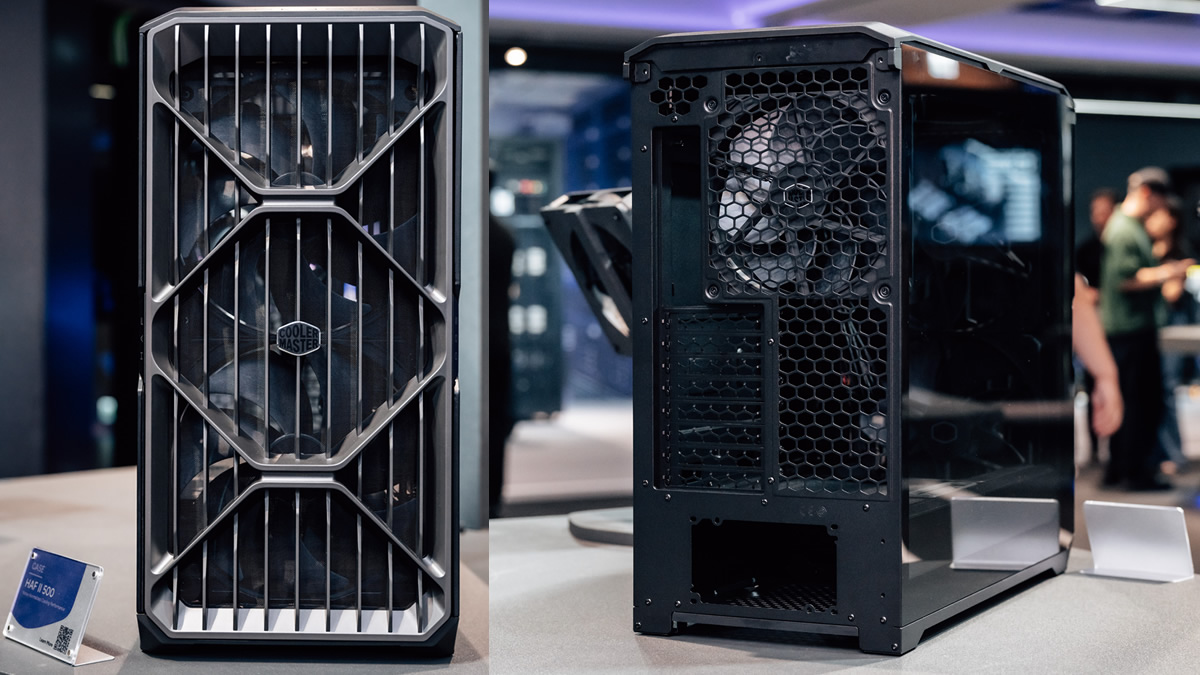
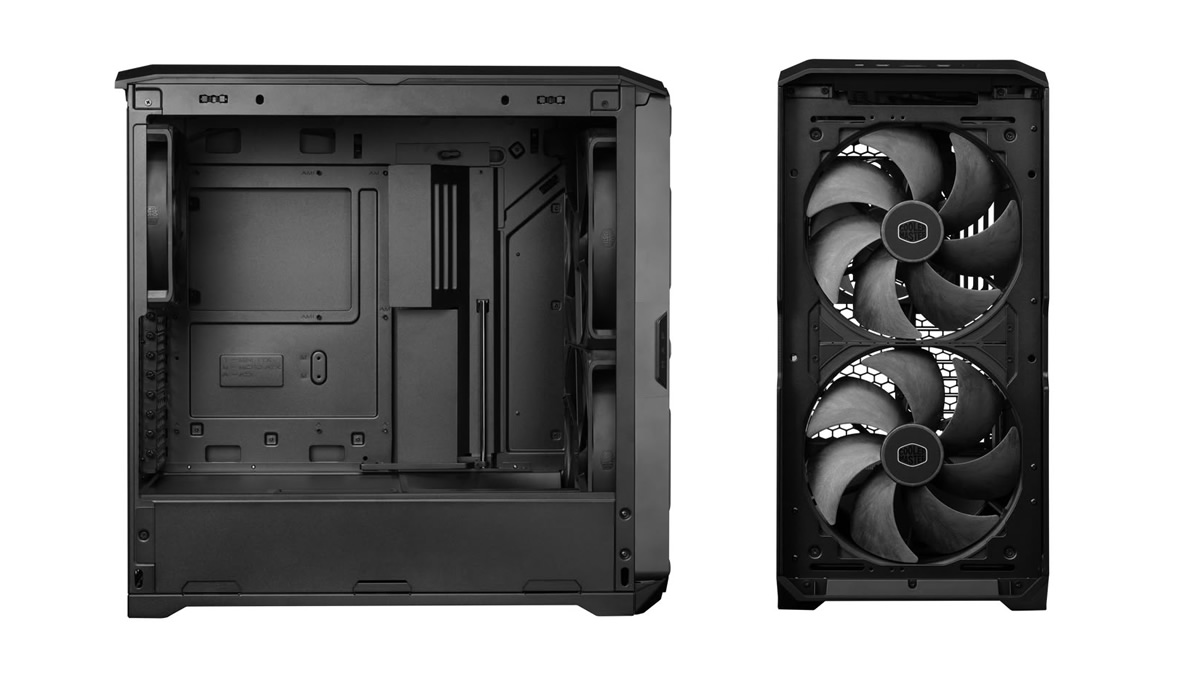
Cooler Master’s HAF II 500 is the clearest sign that airflow has become a selling point on its own. The case ships with two 220 mm Mighty40 fans at the front and one 180 mm Mighty40 at the rear, using 40 mm-thick Liquid Crystal Polymer blades to push serious air with controlled noise. Those fans are not an afterthought; the chassis itself is shaped to minimise airflow resistance and reduce interference from the frame so that as much air as possible can enter and leave the enclosure.
This is what a modern thermal management enclosure should look like: oversized intake, low turbulence paths, and space for serious hardware. The HAF II 500 supports motherboards up to EATX, making it suitable for AI, rendering, simulations, and workstation tasks as well as gaming workloads that keep CPU and GPU power limits pinned. In North America, the case is listed at USD 199.99 (approx. ₱11,200) with European pricing at €184.99, and it is scheduled to arrive through authorised retailers in Europe from September 2026. If you plan to push 400 W GPUs and multi-core CPUs, this kind of airflow-first design is where you should start.
Thermaltake CAPO X: Dual Systems, Dual Cooling In One Shell
Thermaltake’s CAPO X makes an opinionated argument: one chassis can cool two serious machines if you design the airflow and liquid-cooling infrastructure from day one. The full-tower is engineered to house two complete Micro-ATX systems in a single enclosure, split into independent compartments with their own motherboard mounts and front-panel I/O. Typical scenarios include pairing a gaming PC with a dedicated streaming rig, combining an AI inference box with a primary workstation, or condensing virtualization setups that previously demanded multiple cases.
Cooling is where the CAPO X stops being a gimmick and becomes a credible liquid cooling chassis. Both top and bottom sections support 360 mm radiators, enabling separate liquid loops for each system so workloads do not thermally interfere. Hardware support is unapologetically high-end: GPUs up to 420 mm and CPU air coolers up to 180 mm tall can fit comfortably. At 691 × 305 × 448 mm with 1 mm SPCC steel and a single-piece 4 mm curved tempered glass side panel, the enclosure treats airflow and heat isolation as core features, not afterthoughts. For multi-system creators and professionals, this is a strong statement that consolidation no longer has to mean compromised thermals.
Cougar CFV220 RGB: Panoramic Glass Without Suffocating Your GPU
Cougar’s CFV220 RGB proves that airflow-first and aesthetics-first do not need to be enemies, as long as the internal layout is designed around cooling. The ATX mid-tower combines panoramic tempered glass with an airflow-focused internal structure, including three tempered glass panels that give a full view of components and a large ventilated lower compartment acting as the primary intake. From there, the case channels fresh air through the centre toward the GPU and CPU, creating a direct airflow path aimed at better cooling efficiency.
Out of the box, the CFV220 RGB includes three 120 mm ARGB PWM fans, with two on the central intake and one rear exhaust. Users can expand with more fans or a 360 mm radiator at the top for liquid cooling configurations, making this a capable liquid cooling chassis rather than a glass box with token airflow. Despite its visual focus, the case supports standard ATX boards (including reverse-connector layouts), GPUs up to 420 mm, CPU coolers up to 170 mm, and ATX PSUs up to 160 mm. Cougar has not yet announced pricing or regional availability, but the intent is obvious: give builders a panoramic showpiece that can still handle modern flagship heat output.
What This Airflow Shift Means for Builders and Power Users
The through-line across the HAF II 500, CAPO X, and CFV220 RGB is a shared rejection of form-over-function case design. Each is built as a thermal management enclosure first: oversized intakes and exhausts in Cooler Master’s offering, compartmentalised dual-system liquid cooling support in Thermaltake’s, and a central airflow corridor inside Cougar’s panoramic glass shell. These are not small tweaks; they are structural decisions that acknowledge how hot modern systems run under gaming, AI, or rendering loads.
For ordinary users, the practical impact is clear. Streamers can run a gaming system plus a capture/encoding box in one case without roasting either machine. Creators and engineers get high-performance cooling cases that are “just as well suited to AI, rendering, simulations, and workstation use as [they are] to gaming”. And style-conscious gamers can pick a three-sided glass mid-tower that still routes air directly over their GPU and CPU. The message from case makers is blunt: if a chassis does not start with airflow and cooling, it does not deserve your high-end hardware.