
GPU Refreshes Are Now the Real Story in Gaming Laptops
A gaming laptop GPU upgrade is the decisive factor that now separates an average portable PC from a high-end gaming notebook, because modern games, 4K displays, and AI tools demand far more graphics power and video memory than the last generation of mobile hardware could comfortably deliver, turning the GPU into the main bottleneck and the key spec that defines how long a system will remain capable.
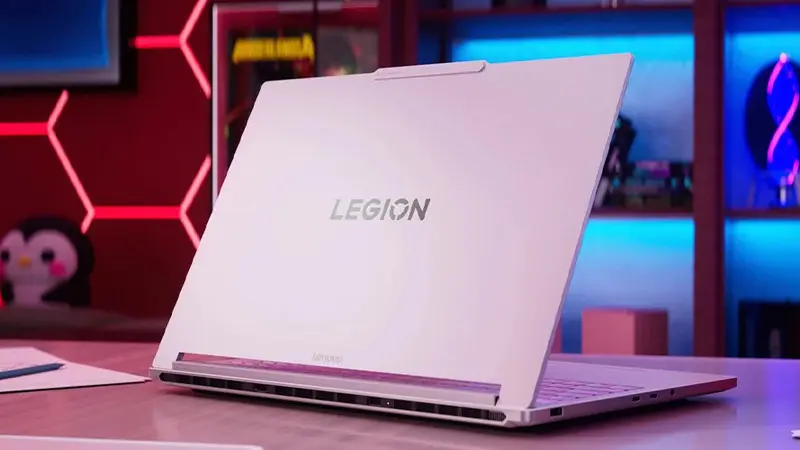
The latest refreshes from Lenovo and MSI underline that the GPU, not the CPU, is driving meaningful progress in mobile performance. Lenovo’s Legion 7a has been quietly updated to support NVIDIA’s GeForce RTX 5070 with 12GB of VRAM, a mid-generation change that directly targets gaming performance and AI workloads rather than a cosmetic spec bump. MSI, meanwhile, has unveiled the Cyborg 15 Black Edition, keeping its existing Core i7 and RTX 4050 combination but wrapping it in a more understated chassis aimed at both gaming and everyday use. These moves show manufacturers treating the graphics subsystem as the lever for tangible upgrades, and they are right to do so.
Lenovo Legion 7a: RTX 5070 12GB Turns a Good Rig Into a Long-Term Bet
Lenovo’s decision to rework the Legion 7a around the RTX 5070 12GB is more than a spec sheet tweak; it fixes a clear performance gap. The laptop originally topped out at RTX 5060, which left it trailing its predecessor in some gaming workloads and made the launch configuration feel oddly conservative. With NVIDIA revising its laptop RTX 5070 lineup into 8GB and 12GB variants, Lenovo seized the chance to offer the higher-memory option that performance-focused buyers were waiting for.
The new RTX 5070 can run at up to 115W TGP with Dynamic Boost, a healthy step above NVIDIA’s baseline target. Paired with 12GB of GDDR7, it is designed to deliver noticeably better RTX 5070 gaming performance in modern titles, particularly at higher settings where VRAM use spikes. AI applications and ray tracing also benefit from the extra memory headroom, which matters for creators pushing neural filters, denoising, and real‑time rendering workloads. The catch is that this GPU option is locked to the Ryzen AI 9 HX 470 configuration, while buyers choosing Ryzen AI 7 450 remain limited to RTX 5060. Even so, positioning the Legion 7a as a premium machine with this GPU gives it a more convincing claim to long-term relevance in the high-end gaming notebook market.
MSI Cyborg 15 Black Edition: Mainstream Power in a More Serious Shell
Where Lenovo pushes into higher tiers of mobile graphics, MSI’s Cyborg 15 Black Edition makes a different point: a balanced CPU–GPU pair can still define the sweet spot for mainstream players. MSI keeps the core hardware familiar, pairing Intel’s 13th Gen Core i7‑13620H, a 10‑core, 16‑thread processor, with an NVIDIA GeForce RTX 4050 Laptop GPU. The target is clear: dependable 1080p gaming plus enough horsepower for content creation and productivity workloads, without trying to compete with desktop-class rigs.
The more interesting change is the chassis. MSI swaps the translucent design cues of earlier Cyborg machines for an all‑black exterior meant to fit into office, education, and general‑purpose spaces while still being ready for games after hours. The 15.6‑inch Full HD panel with a 144 Hz refresh rate and anti‑glare finish backs up the intent with practical specs for competitive play and everyday use. With 16GB DDR5 memory, a 512GB NVMe SSD, Wi‑Fi 6E, and Bluetooth 5.3, the Cyborg 15 Black Edition sits firmly in the portable gaming notebook category at around 1.98 kg and 22.9 mm thick. MSI states that its 53.5 Wh battery can deliver up to four hours of video playback and up to six hours idle under JEITA 3.0 testing. In short, it is not a spec monster, but a deliberate balance for users who need a laptop that can game and still look professional.
| Spec | Legion 7a (RTX 5070 12GB) | Cyborg 15 Black Edition |
|---|---|---|
| GPU focus | High-end, 12GB GDDR7 RTX 5070 for demanding games and AI | Mainstream RTX 4050 for 1080p gaming |
| CPU pairing | Ryzen AI 9 HX 470 only for the 5070 option | Intel Core i7-13620H, 10 cores / 16 threads |
| Positioning | Premium high-end gaming notebook with long-term relevance | Portable gaming notebook with office-friendly design |
What These GPU Upgrades Mean for 4K Gaming and AI Workloads
The real question for buyers is whether these GPU changes translate into day‑to‑day gains. On the Legion side, the answer is yes. With the RTX 5070 12GB running up to 115W and using GDDR7 memory, the laptop is better equipped to drive high‑resolution displays and push towards playable 4K in visually heavy titles, especially when DLSS or similar upscaling is in play. More importantly, the 12GB VRAM pool directly addresses the complaint that 8GB has become cramped in recent games with ray tracing enabled. According to Lenovo’s documentation cited in the refresh, "the move to 12GB of VRAM… addresses one of the biggest criticisms surrounding NVIDIA's recent laptop GPUs". That is a rare case of a spec upgrade lining up perfectly with what power users have been requesting.
AI workloads tell a similar story. Neural rendering, video upscaling, and complex image pipelines scale with both compute and VRAM. The additional memory on the RTX 5070 gives creators more room for larger models and higher‑resolution assets without hitting memory limits as quickly. On MSI’s Cyborg 15 Black Edition, the RTX 4050 will not compete with the Legion 7a’s GPU, but it is still far from underpowered: MSI openly positions the combination of Core i7‑13620H and RTX 4050 as enough for content creation and productivity, alongside mainstream 1080p gaming. For users who care more about smooth FHD gameplay and light AI or editing work than maxing out 4K ray‑traced titles, the Cyborg’s level of performance is sensible and avoids the thermal and battery penalties of more aggressive silicon.
Conclusion: Buy for the GPU You Need, Not the Logo You Like
These launches underline a simple reality: in modern gaming laptops, the graphics card is the part that determines whether your machine feels fast for years or starts to struggle after a couple of big game releases. Lenovo’s Legion 7a, refreshed with RTX 5070 12GB, now looks like a proper high‑end gaming notebook rather than a premium shell with a slightly hesitant GPU choice. Those willing to pay for the Ryzen AI 9 HX 470 configuration are effectively buying more time before they have to dial down settings in new titles.
MSI’s Cyborg 15 Black Edition proves the opposite can also be smart: lock in a balanced Core i7 and RTX 4050 platform, accept that you are aiming at 1080p instead of flagship 4K, and make the laptop more suitable for office and class instead of loud RGB‑heavy gaming rigs. In both cases, the headline change is about GPUs, not CPUs, screens, or gimmicks. If you are shopping in this generation, treat the gaming laptop GPU upgrade as your starting point. Decide whether you need the extra VRAM and higher TGP of something like the RTX 5070 gaming performance, or whether a mainstream chip like the RTX 4050 fits your use, and let that choice guide everything else.