
Meet the Unexpected Budget Champion: RTX 3060 Infinity 2 OC
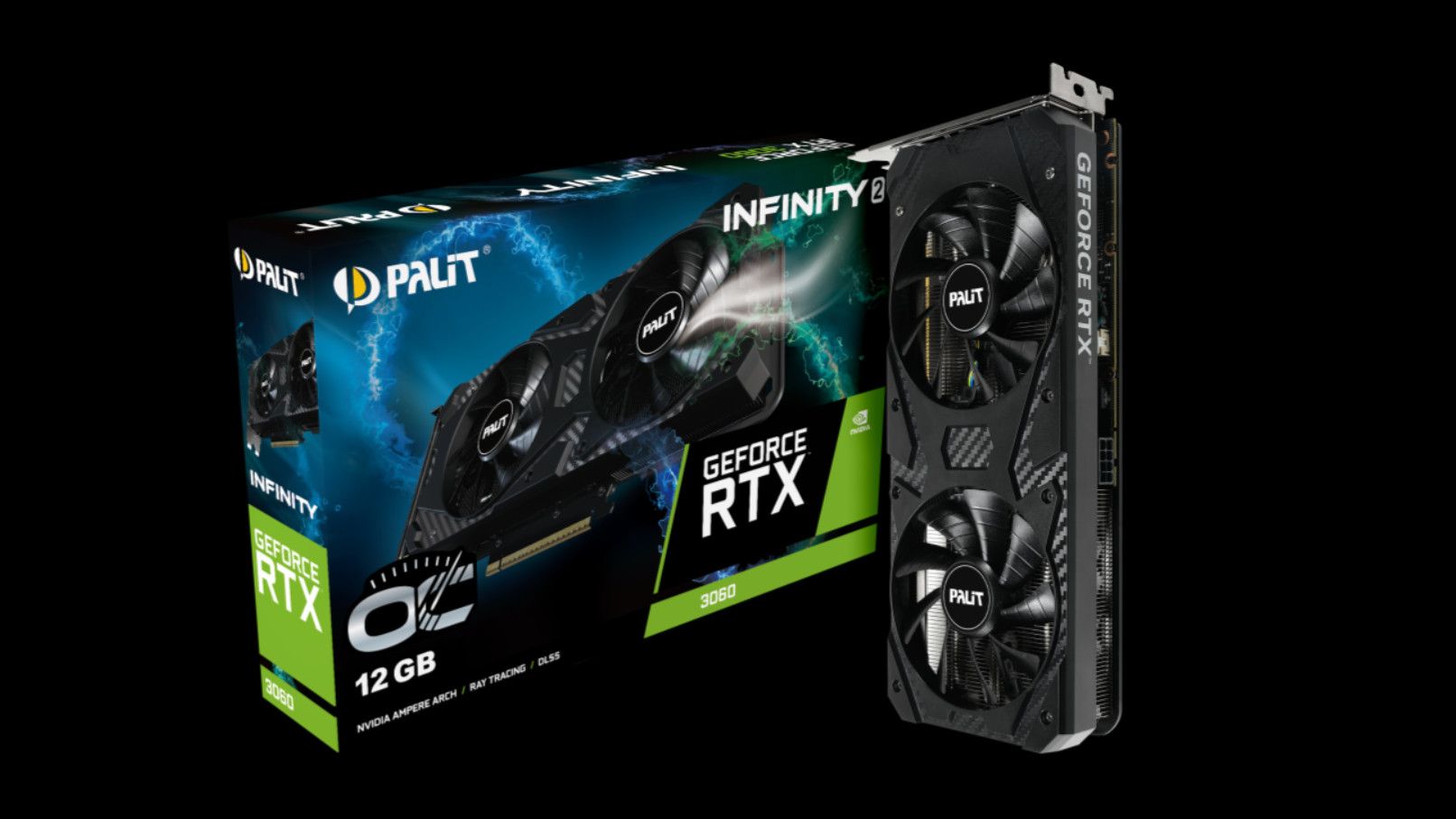
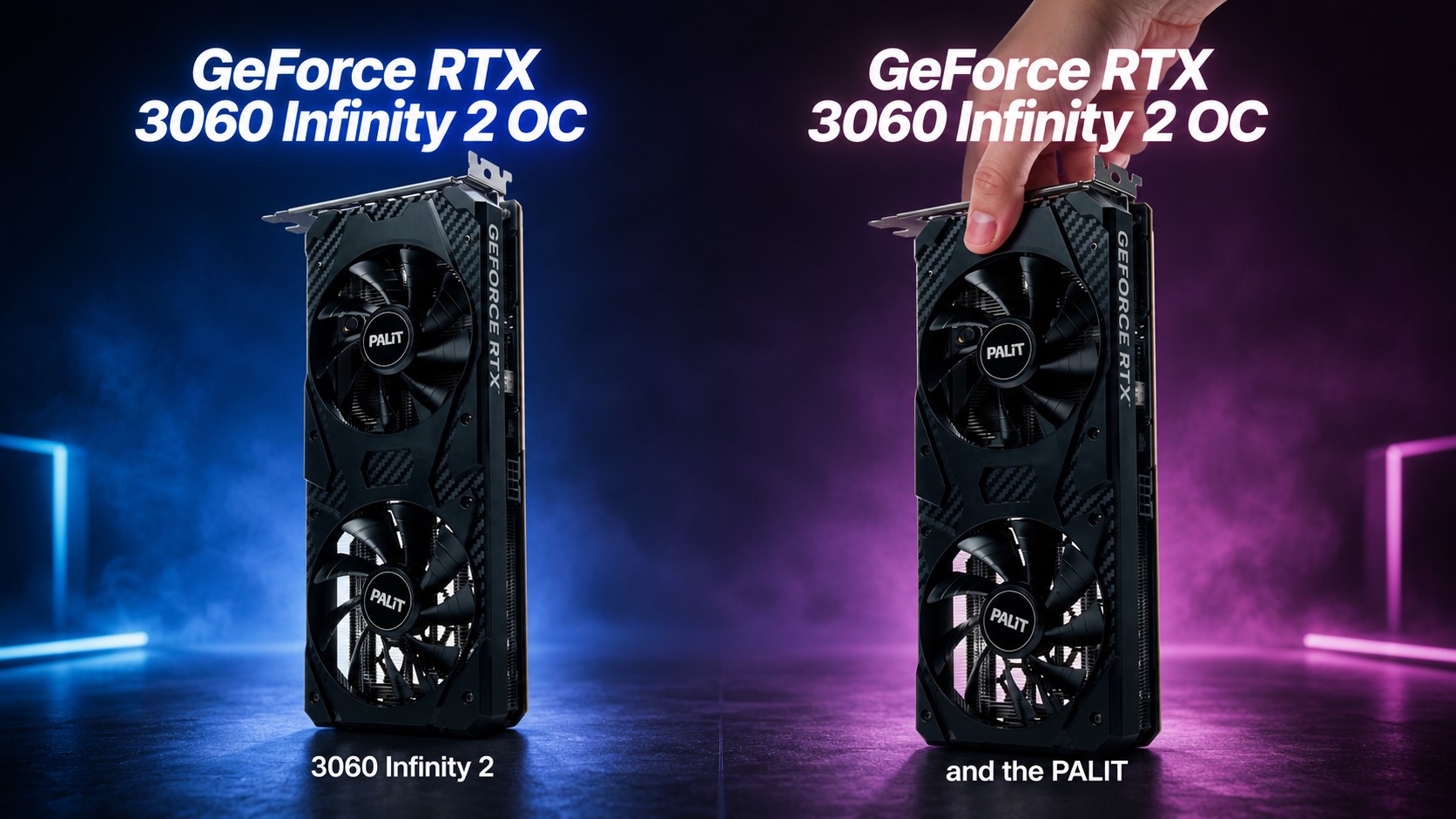
The RTX 3060 Infinity 2 OC is a refreshed graphics card based on Nvidia’s Ampere architecture, pairing 12GB of GDDR6 VRAM with modern cooling to deliver dependable 1080p gaming performance and useful AI acceleration at a time when newer budget GPUs are constrained by memory shortages. That mix of mature silicon, generous VRAM, and sensible pricing makes it a standout choice for buyers who want a budget GPU that will last. Palit markets this card as the return of a ‘reigning champion’, and for most people shopping in the budget GPU segment, that description fits. It is the top pick here because its 12GB VRAM buffer and proven popularity give it an edge over newer cards with smaller memory pools, especially if you care about both gaming and AI workloads in a GPU memory shortage climate.
Why a Five-Year-Old Ampere GPU Beats New Budget Cards Today
On paper, newer cards such as the RTX 5060 deliver 40–60% more raw performance than the RTX 3060 in many games. However, they ship with only 8GB of VRAM, which has become a real limitation as modern game engines push texture quality, ray tracing data, and frame generation overhead into larger memory footprints even at 1080p. The RTX 3060 Infinity 2 OC sidesteps this by keeping the full 12GB GDDR6 configuration, making it far less likely to hit the ‘8GB wall’ that causes stutters, asset pop-in, or the need to dial down settings. The card has reappeared around its original MSRP of USD 329 (approx. ₱18,400) at some retailers, and is still considered a viable buy when you can find it under USD 300 (approx. ₱16,800). In practice, the extra memory turns this older Ampere chip into a smarter long-term 1080p gaming GPU than leaner, faster but more constrained newcomers.
VRAM, AI GPU Value, and 1080p Gaming Performance
If you care about AI GPU value alongside gaming, the RTX 3060 Infinity 2 OC’s 12GB VRAM buffer is its biggest selling point. The VRAM capacity is what turns the RTX 3060 into ‘a budget AI card’, letting it run mid-sized local models that force 8GB GPUs to spill into slower system memory and crawl. Its performance in local AI inference with smaller models made the RTX 3060 a quiet favorite in the local AI community even before its revival. On the gaming side, Palit explicitly promises smooth, ultra-stable frame rates at 1080p, and the card is capable of running modern titles at that resolution without hassle, which is reflected in its position as one of the most popular GPUs among Steam users. In a world where 1080p gaming GPU options are constrained by memory, this combination of 12GB VRAM, stable 1080p performance, and entry-level AI acceleration is tough to beat.
| Spec | RTX 3060 Infinity 2 OC | Typical New Budget GPU (e.g., RTX 5060) |
|---|---|---|
| Architecture | Ampere | Newer generation with Blackwell features |
| VRAM | 12GB GDDR6 | 8GB GDDR7 or GDDR6 |
| 1080p focus | Smooth, ultra-stable 1080p gaming | Higher raw FPS but more VRAM constraints at high settings |
| AI workloads | Budget AI card for mid-sized local models | Falls back to system RAM on similar models |

The GPU Memory Shortage and What Palit’s Refresh Signals
The RTX 3060 Infinity 2 OC exists because the budget GPU 2025–2026 landscape is warped by a GPU memory shortage. Current high-end boards lean on GDDR7, while the revived RTX 3060 taps the separate GDDR6 supply, stepping around the RAM crisis to deliver 12GB VRAM at the cheaper end of the market. As one source notes, ‘It’s sad that the RAM crisis has forced us to this point, but that’s the reality of the GPU world at the moment’. With supply chain pressure from AI data center demand, GPU makers are forced to resurrect legacy hardware when they cannot launch enough new budget silicon. The RTX 3060 remains one of the most popular desktop GPUs on Steam, so reissuing it with Palit’s Infinity 2 cooling design is a sensible way to stabilize the entry-level market. For buyers, the signal is clear: in the current GPU memory shortage, proven Ampere-based cards may deliver better value than unbalanced new releases.
Buy if / Skip if
- Buy the RTX 3060 Infinity 2 OC if you want a budget GPU that can deliver smooth, ultra-stable 1080p gaming for several years without running into the 8GB VRAM wall in modern titles.
- Buy the RTX 3060 Infinity 2 OC if you care about AI GPU value and plan to run local, mid-sized AI models that benefit from a 12GB VRAM buffer instead of spilling into slow system memory.
- Buy the RTX 3060 Infinity 2 OC if you need a dependable 1080p gaming GPU during a GPU memory shortage, and prefer mature Ampere hardware with GDDR6 that is less affected by GDDR7 supply issues.
- Skip the RTX 3060 Infinity 2 OC if your priority is maximum frames per second and access to the newest Blackwell-era features and encoders, and you are willing to accept an 8GB VRAM limit for that performance.
- Skip the RTX 3060 Infinity 2 OC if you mostly play lighter esports titles where VRAM use is modest and a newer, faster 1080p gaming GPU with 8GB VRAM will meet your needs at similar or slightly higher RTX 3060 price levels.
- Skip the RTX 3060 Infinity 2 OC if you already own a capable midrange card and are planning a bigger upgrade later, rather than buying into resurrected legacy hardware during a RAM-constrained cycle.