
What 480Hz, 1,000-Nit OLED Monitors Actually Change
High-refresh OLED gaming monitors are premium PC peripherals that combine extremely fast refresh rates with per-pixel lighting, offering higher motion clarity, deeper contrast, and thinner panels than traditional LCD-based gaming displays while now reaching brightness levels previously out of reach for OLED technology.
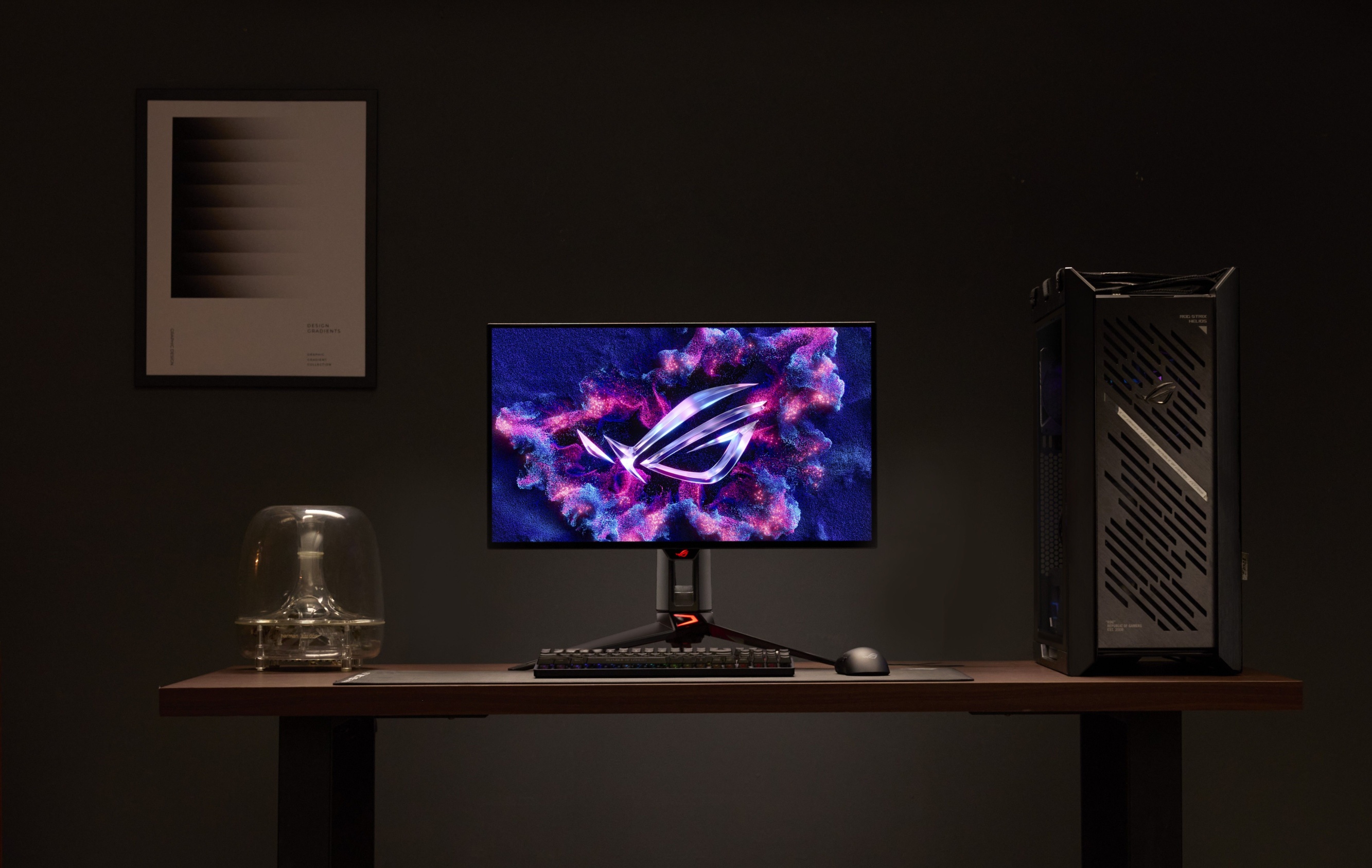
ASUS Republic of Gamers has started selling its two flagship True Tandem RGB OLED gaming monitors, the 26.5-inch ROG Swift OLED PG27UCWM and 31.5-inch PG32UCWM, marking the first time this panel generation ships in gaming-focused monitors. Both displays hit 1,000 nits of peak HDR brightness and can switch via a hardware hotkey between 4K at 240Hz and full-HD at 480Hz. Both monitors are available as of July 15, 2026, though ASUS has not yet published official pricing. That combination of brightness, refresh, and resolution flexibility is the key story here: it signals that OLED is no longer capped at “cinematic” panels but is now aimed directly at competitive FPS players and mixed-use creators.
The timing also matters. While GPUs, RAM, and CPUs feel stuck in a cycle of higher prices and smaller gains, monitors “keep getting cheaper and better at the same time, a bit like computer chips used to.” In other words, your next big upgrade might not be a new graphics card; it might be a display that finally matches your frame-rate ambitions.
Specs That Target Both Esports and HDR Creators
On paper, these ASUS ROG Tandem RGB OLED monitors read like a wish list for both competitive players and content creators. In 4K mode, they run at 3840×2160 with a 240Hz ceiling, using the full bandwidth of DisplayPort 2.1a UHBR20. Hit the Dual Mode hotkey and they switch to 1920×1080 at 480Hz, giving you one of the fastest high-refresh OLED displays available at this size.
Brightness and color specs are clearly aimed at professional workloads too. Peak brightness reaches 1,000 nits, paired with a 1,500,000:1 contrast ratio, 99% DCI-P3 coverage, factory-calibrated Delta E under 2, true 10-bit color, and Dolby Vision support. That combination moves OLED into “serious reference” territory for HDR grading and color-sensitive work, not just eye candy for games. One quotable summary from the launch materials is: “Peak brightness arrives at 1,000 nits — enough for genuine HDR tone-mapping headroom.”
Crucially, these are pure RGB stripe OLEDs, with no white subpixel. Removing the white subpixel improves text rendering by eliminating the color fringing that triangular subpixel layouts can cause, and increases color volume at peak brightness by up to 27% compared to previous WOLED designs. That makes these panels far more comfortable for long desktop sessions than earlier OLED gaming monitors, which sometimes traded text clarity for wow-factor HDR.
Efficiency, Heat, and the GaN Power Advantage
Running a 4-stack Tandem OLED at 4K 240Hz or 480Hz full-HD is no small electrical feat, and ASUS leans on a gallium nitride (GaN) power supply to keep things in check. According to ASUS’s own measurements, the GaN PSU reduces waste heat by roughly 35% compared to the silicon-based designs used in earlier monitors. That same testing points to around a 10% lower vent temperature and an estimated 25% improvement in panel lifespan.
This matters more than it might sound at first. OLED longevity depends heavily on heat, and traditional high-brightness LCD gaming monitors already dump a lot of warmth into cramped setups. A 35% cut in wasted heat is not just about efficiency; it directly benefits comfort, fan noise, and how hard your PC has to work to keep the whole system cool. For players running long competitive sessions or creators rendering HDR timelines for hours, lower heat load is a tangible quality-of-life upgrade.
It also nudges OLED closer to being a practical default, not an exotic luxury. High-refresh OLED displays used to come with the unspoken assumption that you were trading lifespan for speed and contrast. The combination of Tandem stacks and a cooler-running GaN power train challenges that assumption. It does not eliminate burn-in risk or the need for care, but it transforms these ROG monitors from “toy for enthusiasts” into credible daily drivers.
The Dark-Scene Problem: Why 480Hz Isn’t Free
There is, however, a catch, and it hits right where OLED is supposed to shine: dark scenes. The LG Display 4-stack Tandem WOLED architecture inside these panels carries a known limitation at very low luminance levels. The digital-to-analog converter can introduce micro-current variation that shows up as visible banding in near-black content — exactly the sort of material you see in dark game scenes and desktop dark modes.
Independent testing on earlier monitors using the same panel generation found this behavior, and both LG Display and ASUS have acknowledged the issue. Practical guidance from those tests notes that the banding is most visible in controlled patterns under 1 nit, a condition more likely in dark UIs and moody games than in bright, colorful content. The problem is more pronounced on Tandem WOLED than on earlier WOLED or QD-OLED panels and worsens with higher refresh rates, because shorter per-frame charging windows make near-black current control harder. In other words, the very FHD@480Hz mode that esports players crave is also the configuration most likely to reveal gray-banding.
Both manufacturers involved report that manufacturing quality control improvements are underway, and one has confirmed that vertical banding is “significantly improved” in newer production runs. But ASUS has stated that a firmware-only fix is “extremely” unlikely, because this is a physical characteristic of the panel’s analog circuitry. If you are sensitive to uniformity issues in near-black scenes, you should see this as a real tradeoff, not a minor quirk that future driver updates will magically erase.
Falling Prices and Where These ROG OLEDs Fit
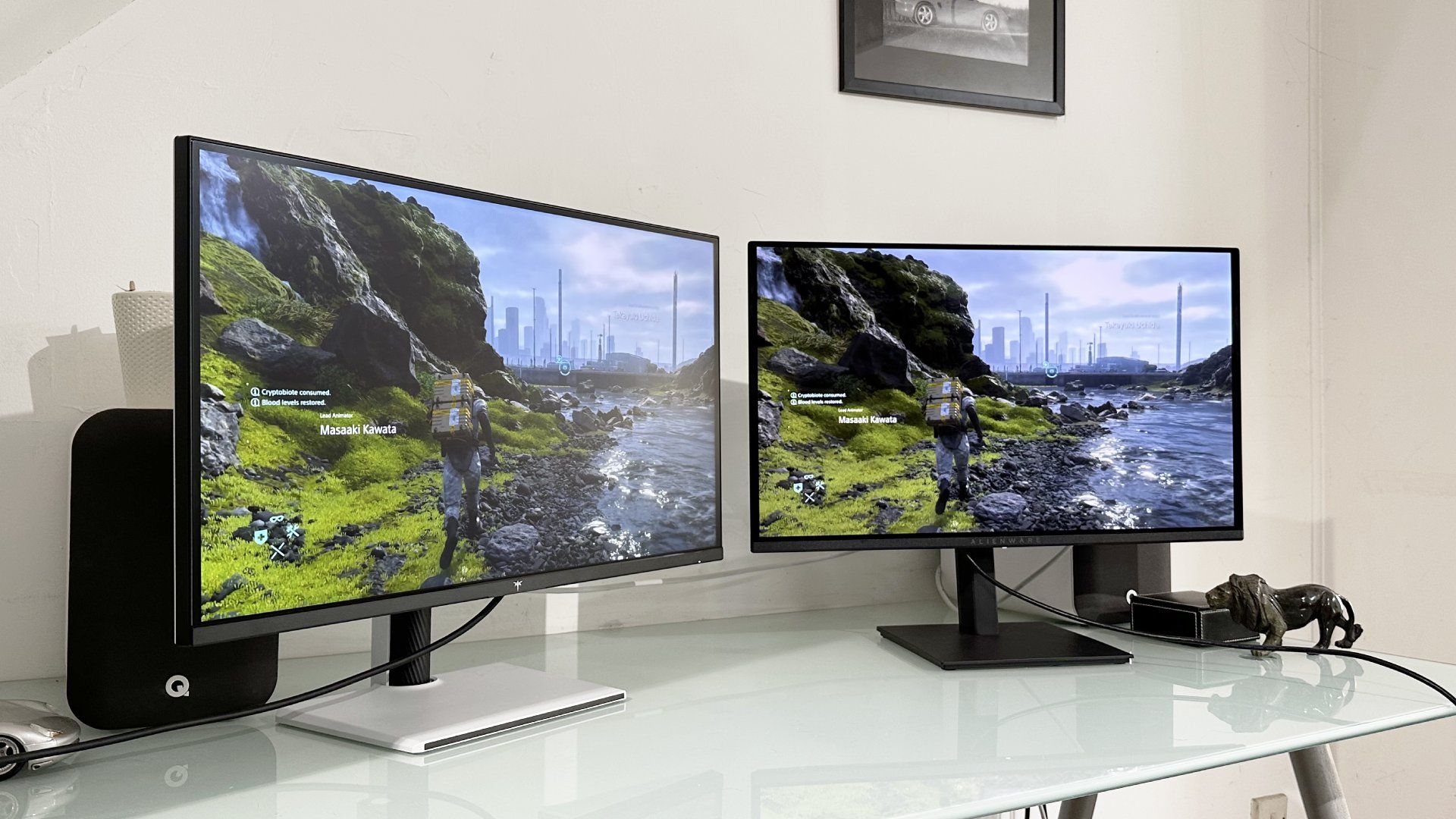
While ASUS has not yet shared official prices for the PG27UCWM or PG32UCWM, the broader context is that OLED and mini-LED gaming monitors are rapidly dropping into mainstream budgets. Recent tests have covered 27-inch 1440p mini-LED and OLED gaming monitors that both come in under USD 350 (approx. ₱19,600). One mini-LED model lands around USD 290 (approx. ₱16,200) and a competing OLED sits near USD 350 (approx. ₱19,600), putting both categories within reach of many PC enthusiasts.
Those cheaper panels already show how OLED and mini-LED trade blows. In darker scenes, an OLED gaming monitor “absolutely hammers” a mini-LED rival thanks to per-pixel lighting and near-infinite contrast. In bright scenes, mini-LED can look punchier because of its higher full-screen brightness and well-controlled local dimming. For daily computing, both types are fast enough; the main differences sit in static image quality, HDR behavior, and uniformity. This is where gaming monitor comparison becomes less about brand loyalty and more about use case.
The new ASUS ROG Tandem RGB OLEDs, with 4K 240Hz or FHD 480Hz, 1,000 nits, pure RGB subpixels, and a GaN power supply, push OLED into a position where it is a serious alternative to high-end LCD for both competitive gaming and content-creation workstations. For players who live in bright shooters and value motion clarity over pixel count, 480Hz OLED finally aligns display tech with high-FPS PCs. For creators who care about HDR accuracy, color volume, and deep blacks, these specs make a compelling case — as long as they go in with eyes open about the dark-scene banding tradeoff and understand that some panel quirks are baked into the hardware.