
A five‑year‑old GPU becomes an AI stopgap
The RTX 3060 relaunch is the reintroduction of Nvidia’s five‑year‑old GeForce RTX 3060, now sold again by partners like Palit with 12GB of GDDR6 memory as a temporary answer to an AI‑driven graphics card memory crisis and soaring demand for affordable GPUs capable of handling modern workloads. This move says more about the state of the GPU market than about the card itself. Faced with an AI GPU shortage, manufacturers are dusting off a 2021 design instead of cutting prices on current‑generation boards or expanding their low‑end offerings. That’s a telling choice: AI isn’t only starving data centers; it is constraining what everyday builders can buy, especially those trying to assemble budget AI workstations without paying high‑end prices.
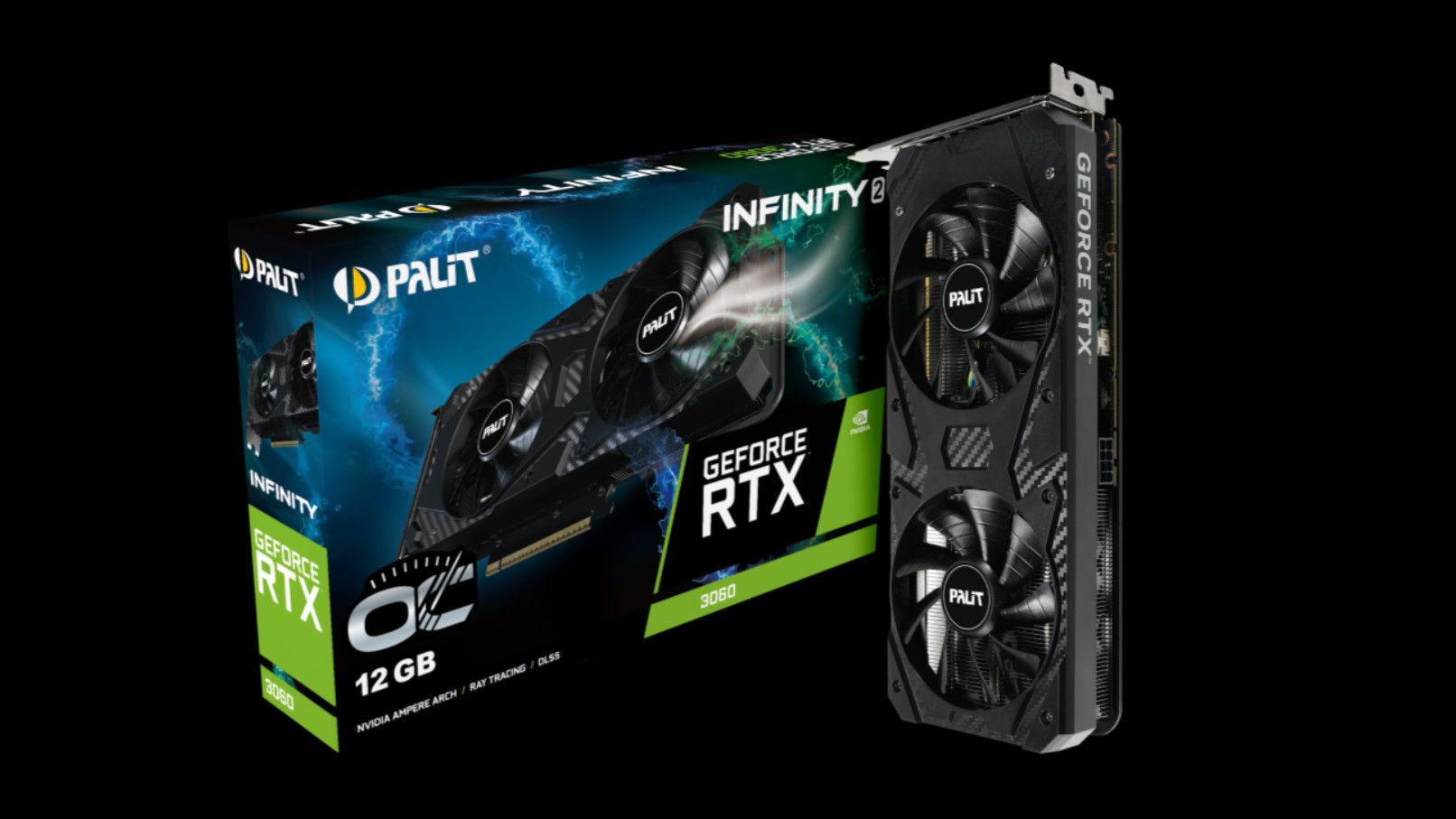
Palit’s new GeForce RTX 3060 Infinity 2 OC is effectively the original card in fresh packaging: 3,584 CUDA cores, 12GB of GDDR6 VRAM on a 192‑bit bus, and a slight factory overclock to a 1,792 MHz boost clock, which is less than 1% above Nvidia’s mandated 1,777 MHz. The design is straightforward and no‑frills, but that isn’t the point; the relaunch exists because memory‑heavy AI workloads are colliding with a supply chain that cannot cheaply deliver enough VRAM on newer architectures. In a RAM‑starved climate where prices on many current‑gen boards are being pushed up, this is a compromise solution, not a triumph of engineering.
The graphics card memory crisis is steering GPU strategy
The RTX 3060 relaunch only makes sense when you look at the graphics card memory crisis. Late last year, the PC hardware industry entered one of its most turbulent periods, as the AI boom created production shortfalls across commodity silicon. Artificial intelligence demands large amounts of memory and storage, driving up costs and diverting manufacturing capacity to higher‑margin parts like HBM for data‑center chips. Consumer GPUs, which initially dodged the worst of this, are now fully caught in the same storm, with prices rising across the stack in a RAM‑starved climate.
Nvidia’s latest Blackwell‑based cards use cutting‑edge GDDR7 memory, which is more expensive and harder to deploy at scale for low‑end products. According to one report, “Where this is side‑stepping the RAM crisis (to some extent) is that these past‑gen Nvidia cards use GDDR6 VRAM, a different memory supply to tap than the GDDR7 used in RTX 5000 graphics cards.” In other words, reviving the RTX 3060 lets partners exploit older, cheaper GDDR6 supply lines while high‑end GDDR7 and HBM stay focused on premium chips. From the manufacturer’s point of view, rebooting Ampere also benefits from better yields on Samsung’s older 8nm process compared with more costly nodes used by Ada and Blackwell. The strategy is financially logical, but it exposes how unbalanced the market has become.
Why a 12GB RTX 3060 still matters to ordinary builders
For ordinary users, the RTX 3060 Infinity 2 OC is appealing for one reason: memory. When you are buying a GPU like this, looks are secondary; the main selling point is that 12GB VRAM pool. Even as architectures move on, many AI tools and modern games respond more to available VRAM than to incremental core or clock bumps at the lower end. In a world where entry‑level current‑gen cards often ship with 8GB, a resurrected board offering 12GB at a “budget” tier is, on paper, tailored for cost‑conscious AI and content workloads.
The problem is that the RTX 3060 relaunch isn’t an outright win for buyers. While it may rank highly in real‑world usage statistics, its performance is outclassed by newer GPUs that cost only a bit more and offer features such as DLSS 4 or later. In practice, this means some budget builders are being nudged into choosing between more VRAM on older silicon and faster, more efficient GPUs with tighter memory limits. That’s a false choice created by supply pressures, not consumer needs. A healthier market would deliver both adequate VRAM and modern features at entry‑level prices, instead of forcing users to trade one for the other.
Pricing and the uneasy economics of the RTX 3060 relaunch
The most controversial part of the RTX 3060 relaunch is pricing. Palit has not yet provided an official price for the Infinity 2 OC, but similar renewed variants have appeared at around USD 329 (approx. ₱19,000). That pits a five‑year‑old card directly against newer RTX 50‑series models, undermining the idea that this is an affordable lifeline for budget AI workstations. One analysis notes that the RTX 3060 12GB is not meaningfully cheaper than an 8GB RTX 5060, despite the latter being a much faster GPU with access to DLSS 4. If the old card’s VRAM advantage is offset by a minimal price gap and significantly weaker performance, its value proposition collapses.
From a consumer perspective, advice around the relaunch is blunt: buyers should stick with RTX 50‑series options or look for used RTX 40‑series GPUs instead. That says everything about where the economics land. Manufacturers, squeezed by memory costs and node pricing, are using the RTX 3060 as a stopgap to fill shelves during an AI GPU shortage. But for budget‑conscious builders, it looks less like a bargain and more like an attempt to sell yesterday’s hardware at today’s prices. Unless the Infinity 2 OC and its siblings significantly undercut current‑gen alternatives, they will serve industry accounting more than end‑user needs.
What the RTX 3060 comeback reveals about the GPU market
Zooming out, the RTX 3060 relaunch is a symptom of a deeper imbalance between cutting‑edge GPU demand and supply chain realities. AI has turned memory into the new bottleneck, driving commodity silicon prices up with no sign of relief. Vendors are chasing higher‑margin data‑center chips with HBM, pushing consumer cards into a squeezed middle where low‑end products cannot afford enough next‑gen VRAM, and high‑end boards remain scarce and expensive. Reviving a 2021 GPU with 12GB of GDDR6 is a clever engineering workaround, but it is also an admission that the industry cannot yet deliver truly affordable, modern AI‑ready cards at scale.
In the short term, the RTX 3060 Infinity 2 OC will help fill the gap for some buyers who care more about VRAM than bleeding‑edge performance. Over the longer term, though, the continued dependence on “classic” GPUs risks normalizing a market where aging hardware props up pricing instead of driving it down. The conclusion for builders is harsh but clear: treat these resurrected cards as temporary tools, not long‑term investments. Until memory supply catches up with AI demand and current‑gen GPUs can offer both speed and capacity at budget prices, the smartest move is to stay skeptical of nostalgic relaunches that serve the supply chain first and the user second.