
A 12–20mm f/2.8 That Aims Straight at the Flagships
The Tamron 12-20mm f/2.8 is a fast-aperture ultra-wide zoom lens for Sony E and Nikon Z full-frame cameras, offering a constant f/2.8 aperture, a 12–20mm field of view, VXD autofocus, and extensive physical controls in a compact, weather-sealed body designed to challenge premium ultra-wide options for landscape and astrophotography workflows.
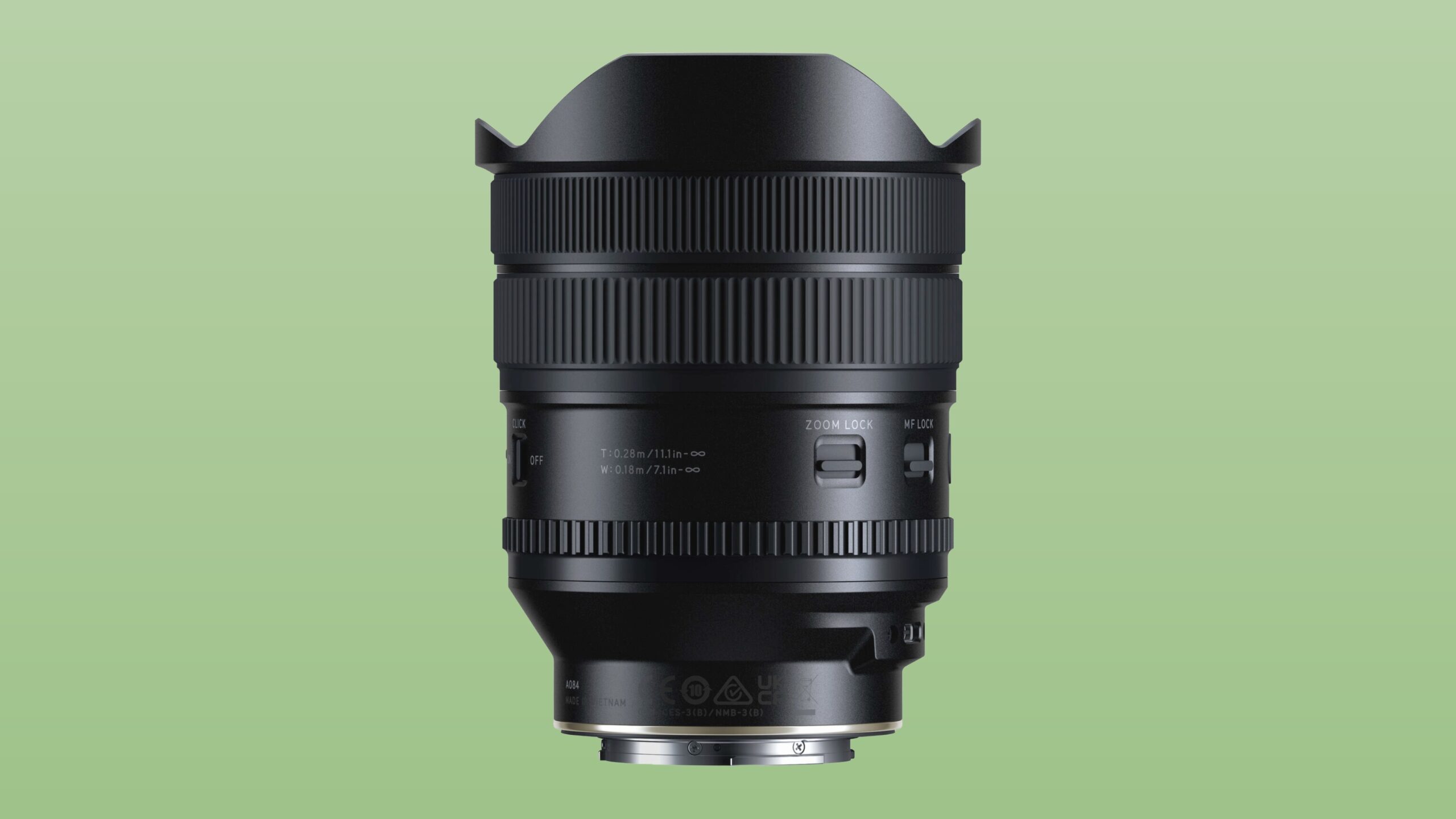
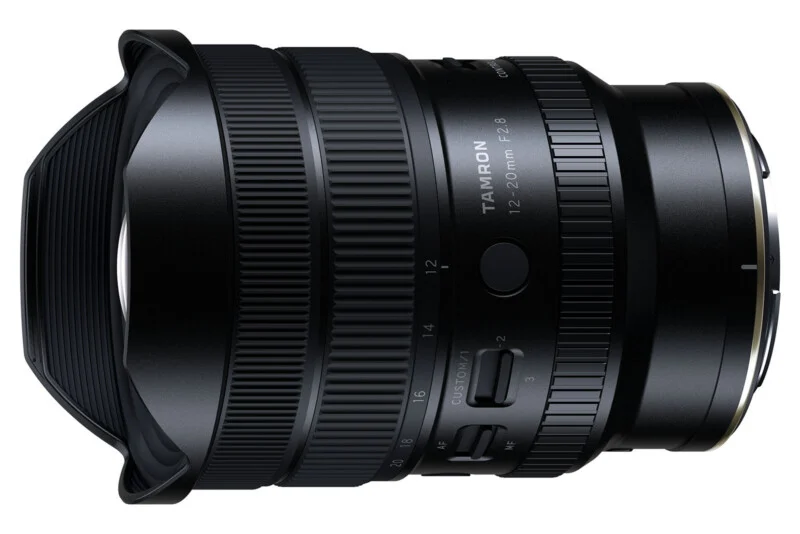
Tamron has announced the 12-20mm f/2.8 (Model A084), a new fast-aperture ultra-wide zoom lens for Nikon Z and Sony E-mount full-frame cameras, and it is the widest full-frame lens the company has ever made. This is not a minor refresh; it is a new optical formula and the first to debut Tamron’s new Toned Profile Next design language, which includes a darker matte finish and revised ergonomics. Tamron has also simplified its naming, dropping older tags like “Di III VXD” in favor of the straightforward Tamron 12-20mm f/2.8, a signal that it wants this lens to stand toe-to-toe with first-party glass rather than sit in a budget corner.
The headline is clear: this ultra-wide zoom lens exists to give working photographers G Master-level performance expectations without G Master baggage in size or branding. From launch, the 12-20mm f/2.8 is set to be available for Sony E and Nikon Z mounts starting July 30 for USD 1,699 (approx. ₱95,000), with the Nikon Z version following on August 27 for USD 1,799 (approx. ₱100,000).
Why 12mm at Constant f/2.8 Matters for Landscapes and Skies
On paper, 12–20mm with a constant f/2.8 aperture sounds like a niche fast aperture zoom, but in practice it hits a sweet spot for modern landscape photography gear and astrophotography equipment. Going down to 12mm delivers a diagonal angle of view of 121°58′, significantly wider than classic 14mm or 16mm zooms and opening up exaggerated perspectives for interiors, real estate, architecture, and tight establishing shots that 16mm simply cannot match.
The optical design—17 elements in 12 groups with XGM, GM, XLD and LD glass—has been tuned to suppress peripheral blurring, color fringing, and especially sagittal coma flare. That last point is where this lens starts encroaching on territory once reserved for high-end primes. By actively correcting sagittal coma, Tamron is promising cleaner star points toward the edges of the frame, rather than the smeared, winged shapes that plague many ultra-wides when shot at f/2.8.
The company is explicit about its intent: it says the lens is poised to become the “new protagonist” for astrophotography and interior shooting, and that users should expect G Master-level quality. Combine that with moisture-resistant construction and a fluorine-coated front element, and you are looking at a wide specialist that wants to live on a tripod in bad weather and under cold night skies, not stay in a padded case.

Compact, Control-Rich Design That Targets Working Pros
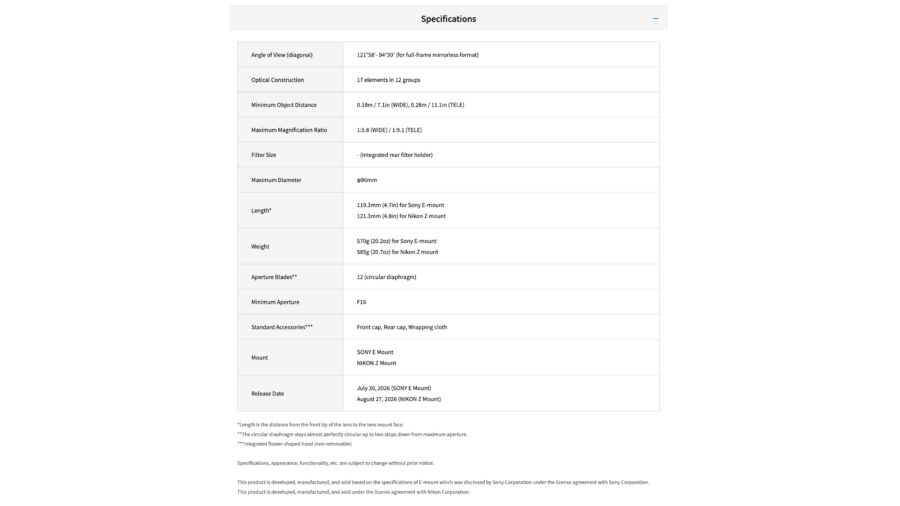
Ultra-wide f/2.8 zooms have a reputation for bulk, but Tamron has made a point of keeping this one compact. The Sony E version measures 119.3mm (4.7 in) and weighs 570g (20.2 oz), while the Nikon Z version comes in at 121.3mm (4.8 in) and 585g (20.7 oz), making it among the smallest in its class. This size and weight matter when you are hiking to a viewpoint or balancing a rig on a gimbal or slider; the lens will not dominate your bag or your rig balance the way many first-party 2.8 ultra-wides do.
Where Tamron refuses to compromise is on physical control. The barrel carries a manual focus ring, zoom ring, customizable control ring on Nikon Z, an aperture de-click switch, manual focus selector, customizable buttons linked to a three-way selector, a zoom lock, and a manual focus lock. There is also a custom switch, focus set button, and a USB-C port for configuring behavior through Tamron’s Lens Utility software, including focus presets and A-B focus transitions for video workflows.
This level of hardware and software control effectively turns the lens into a programmable interface for your camera. For working shooters who want to map specific video or focus behaviors to the lens itself, the 12-20mm f/2.8 behaves far more like a premium cinema-leaning tool than a generic third-party zoom.
VXD Autofocus and Close Focus: Not Just for Static Nightscapes
It is tempting to think of this lens as a static tripod tool—Milky Way arches and blue hour cityscapes—but that sells its autofocus and close-focusing abilities short. Tamron’s VXD (Voice-coil eXtreme-torque Drive) linear motor is tasked with autofocus duties, technology the company has already used in telephoto and macro lenses to deliver fast, quiet, and precise focusing for both stills and video.
Minimum object distance is 0.18m (7.1 in) at 12mm and 0.28m (11.1 in) at 20mm, giving maximum magnification ratios of 1:5.8 and 1:9.1 respectively. At its closest, the front element can be about 50mm from your subject, which, combined with a 12mm field of view, enables dramatic foreground exaggeration with sweeping backgrounds—perfect for environmental details, product work on location, and dynamic documentary shots.
In practical terms, this means the 12-20mm f/2.8 is not only astrophotography equipment but also a strong option for run-and-gun shooters who need to move between handheld video, gimbal work, and stills without swapping lenses. The 12-blade diaphragm, which stays nearly circular up to two stops down, should also help with smoother, less geometric bokeh in those close-up wide-angle shots at f/2.8–f/4.
Where It Fits in Real Kits—and Where It Doesn’t
Tamron has spent the last year filling out a mirrorless range from the 16-30mm f/2.8 G2 to a 25-200mm ultra-zoom; the 12-20mm f/2.8 is the logical next move that pushes into ultra-wide territory the brand has never covered on full frame, going a full 4mm wider than the 16-30mm while maintaining that constant f/2.8. In doing so, it reshapes the conversation about what a workhorse wide-angle zoom can be for Sony E and Nikon Z shooters.
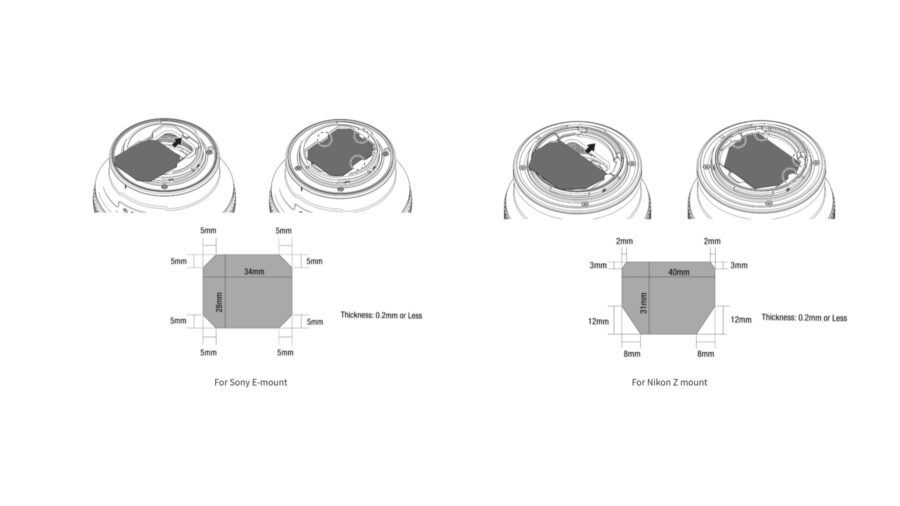
There are trade-offs. The zoom ratio is only 1.7x, so this is not an everyday wide-to-standard lens; it is a specialist tool for those who live at the extreme wide end. The permanently affixed petal hood also means no traditional screw-on front filters; you instead rely on a rear gel filter holder, which will disappoint some landscape photographers who depend on 100mm square ND or polarizer systems.
But for photographers whose work is defined by sweeping vistas, tight interiors, star fields, and dynamic foregrounds, the equation is compelling. A compact, moisture-resistant, G Master-ambitious ultra-wide zoom that starts at 12mm, keeps f/2.8 throughout, corrects coma, and layers on professional control and VXD autofocus is not a side-grade—it is a statement that third-party glass can lead, not follow.