

Verdict: A Smarter Ultrawide for Working Shooters
The Tamron 12-20mm f/2.8 is a full-frame, ultrawide zoom lens for Sony E and Nikon Z cameras that pairs a constant f/2.8 aperture with a compact, lightweight design and extensive controls to give photographers and videographers wide-angle coverage without the usual bulk and cost of premium-brand alternatives. In short, it is a very good lens for professionals and enthusiasts who value portability and price over absolute edge sharpness. At around half the cost of Sony’s 12-24mm f/2.8 GM and several hundred dollars less than Sony’s 12-24mm f/4 G and Nikon’s 14-24mm f/2.8 S in the US, its pricing in the USD 1,699–1,799 (approx. ₱95,000–₱101,000) range makes sense if you work wide often but cannot justify flagship glass. The trade-offs are clear: you give up a bit of reach, some edge performance, and bokeh quality, but gain a lighter bag and more flexible control layout.
Design, Handling, and Controls: Pro Features in a Compact Shell
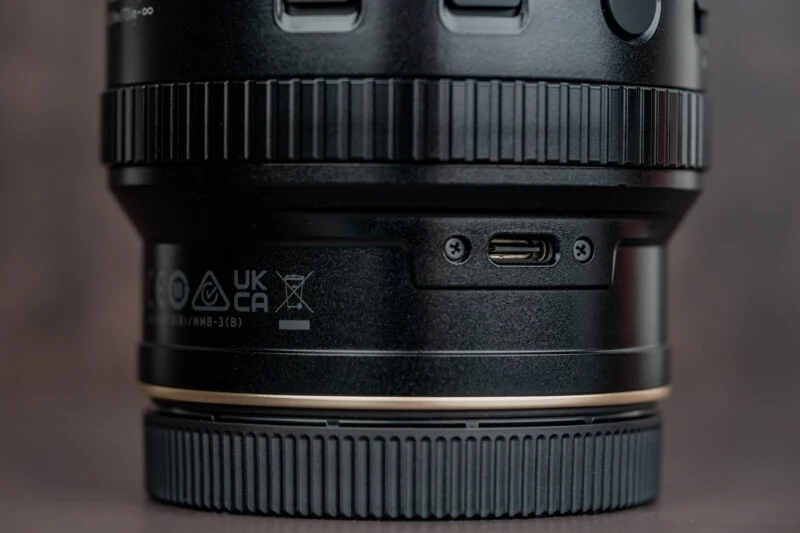
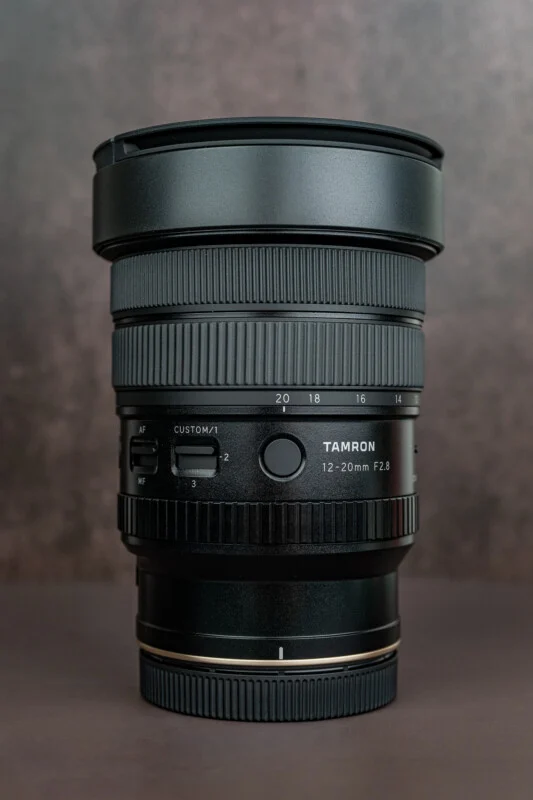
This lens is Tamron’s first in a new visual direction, swapping its old naming and styling for clean lines and a shiny black finish that looks more metallic than the plastic build really is. It stays compact at roughly 4.7–4.8 inches long, with a fixed hood and internal zoom that keeps the dimensions constant as you change focal length. Weight comes in at 20.2oz / 570g for Sony E and 20.7oz / 585g for Nikon Z, making it closer to Sony’s smaller 12-24mm f/4 G than the far heavier 12-24mm f/2.8 GM, and slightly lighter than Nikon’s 14-24mm f/2.8 S. The barrel is densely packed: manual focus and zoom rings, a customizable control ring, AF/MF switch, manual focus lock, zoom lock, user-assignable buttons, and a three-way custom switch all give working shooters direct access to exposure, focus, and custom functions. Weather sealing runs through the rings, controls, and mount, with fluorine coating on the front element and a USB-C port sealed to a similar standard as a phone charge port for firmware updates and Tamron’s utility system.
| Spec | Tamron 12-20mm f/2.8 | Notes |
|---|---|---|
| Mounts | Sony E, Nikon Z | Full-frame mirrorless only |
| Focal length range | 12–20mm | Ultrawide coverage for landscapes, interiors, astro |
| Maximum aperture | Constant f/2.8 | Fast for night and low light work |
| Optical design | 17 elements in 12 groups | Complex ultrawide formula |
| Angle of view (diag.) | 121°58′–94°30′ | On full-frame mirrorless bodies |
| Min focus distance | 0.18m (wide), 0.28m (tele) | Close-ups with strong perspective |
| Max magnification | 1:5.8 (wide), 1:9.1 (tele) | Useful for detail and product work |
| Filter options | Rear filter holder | Gel filters; no front threads |
| Aperture blades | 12, min aperture f/16 | Smooth diaphragm, but bokeh has quirks |
| Dimensions | Ø90mm, 119.3–121.3mm length | Short, chunky barrel |
| Weight | 570–585g | Lightweight zoom lens for this class |
| Accessories | Front cap, rear cap, wrapping cloth | Standard kit in the box |
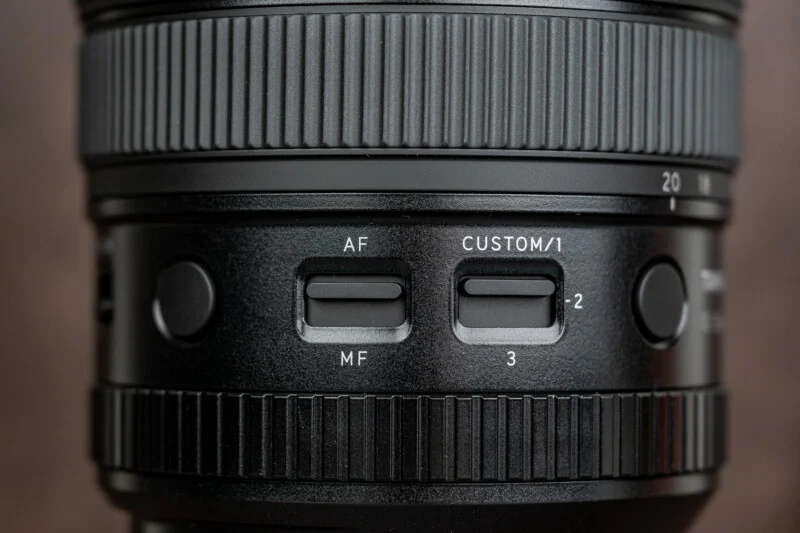
Optical Performance: Strong Center, Quirky Edges
From a user’s point of view, this ultrawide zoom lens is about solid real-world performance with a few predictable wide-angle compromises. Center sharpness is good at f/2.8, with subjects looking crisp but not clinical, and contrast improves noticeably as you stop down. According to one test, “the corners remain slightly blurry towards the extremes of the frame, even at tighter apertures,” which matches field impressions of softer edges and slightly smudged stars at the frame margins in astrophotography. Heavy field curvature at 20mm means that flat subjects shot wide open near the tele end can show focus falloff across the frame, so careful focusing or stopping down is wise. Vignetting is visible at f/2.8 at all focal lengths and needs correction in post, especially for architecture and interiors. Bokeh is another weak point: despite the 12-blade diaphragm, out-of-focus areas can look harsh and distracting, particularly with busy backgrounds, so this is not the lens to pick for dreamy portraits.
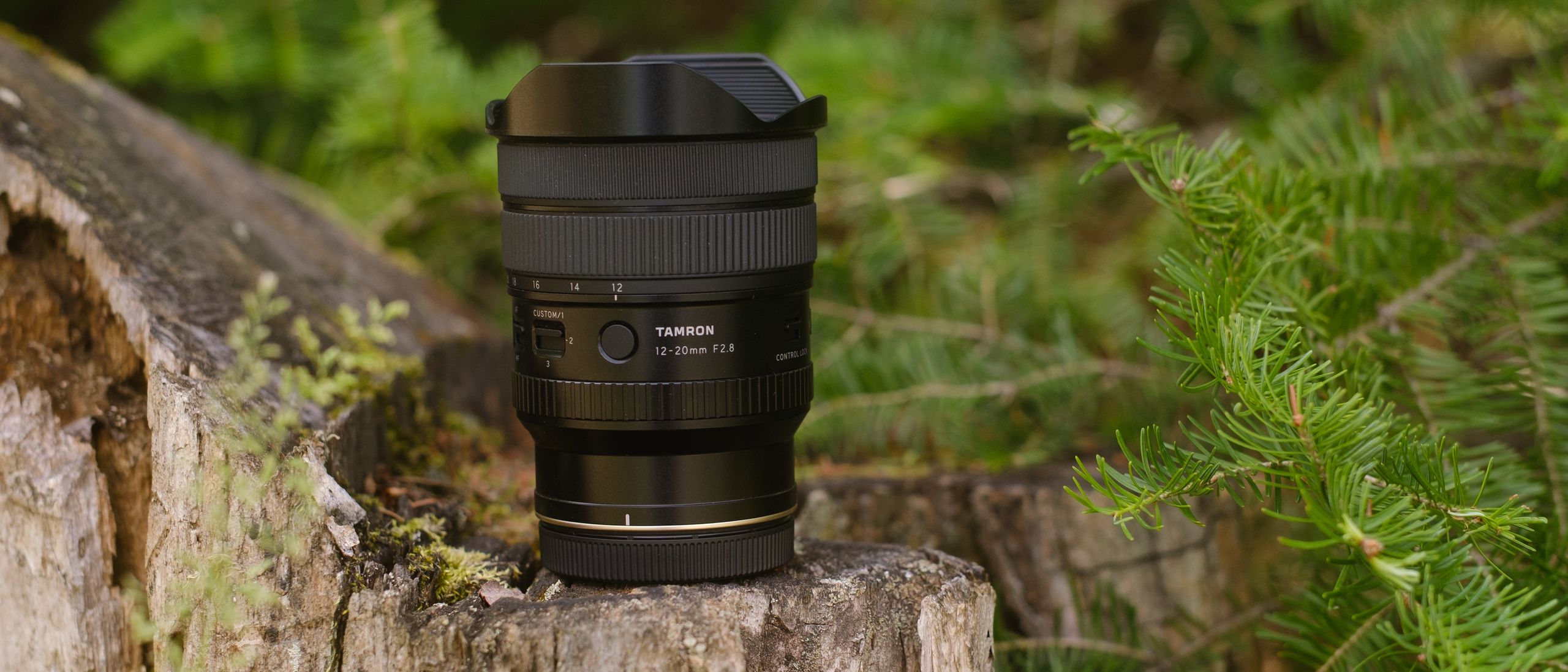
Real-World Use: Landscapes, Astro, and Video
In the field, the Tamron 12-20mm f/2.8 shows why a lightweight zoom lens can be more useful than a technically perfect but oversized alternative. The combination of 12mm coverage, f/2.8 brightness, and short minimum focus distance delivers striking landscapes, close foregrounds, and night scenes while keeping the kit light on a long shoot. It is described as suitable for landscape, astrophotography, and architecture, and its performance backs that up, especially in night photography where the fast aperture and weather sealing earn their keep. The internal zoom, extensive controls, de-clicked aperture option, and customizable buttons make it excellent for video, reducing focus breathing and giving smooth exposure changes on both Sony and Nikon bodies. The rear filter holder allows gel filters for creative work or ND use in bright conditions without relying on large front filter systems. While it does not reach as far as brand-name 12-24mm or 14-24mm designs, the lighter design and more affordable price are widely considered a fair trade for most working shooters.
Pros
- Compact and lightweight for an f/2.8 ultrawide zoom, easing long shooting days and travel.
- Full set of controls, customizable buttons, and USB-C for updates and lens app integration.
- Fast f/2.8 aperture with strong night and video performance, plus weather sealing and fluorine coating.
- Significantly lower price than comparable Sony and Nikon ultrawide zooms, improving overall value.
Cons
- Corner sharpness and edge stars lag behind center performance even when stopped down.
- Heavy field curvature at 20mm makes flat subjects tricky at wider apertures.
- Noticeable vignetting wide open needs correction for critical work.
- Harsh, distracting bokeh limits use for shallow-depth-of-field portraits.
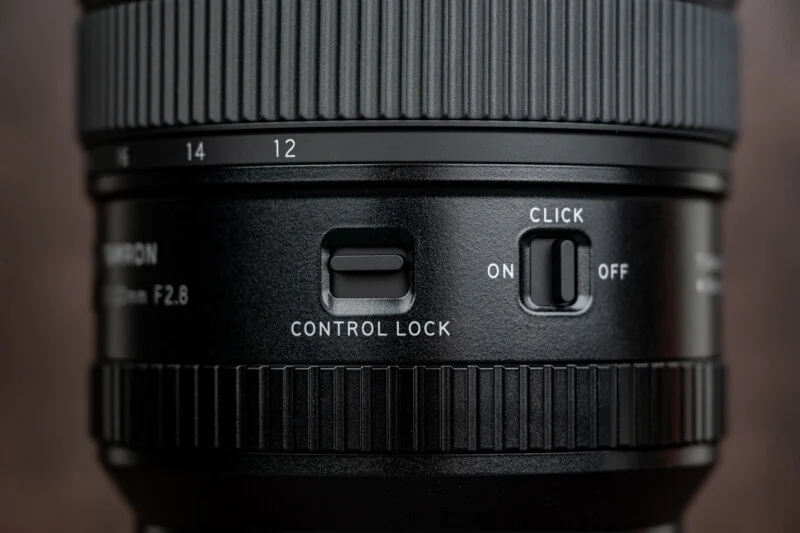
Buy if / Skip if
- Buy the Tamron 12-20mm f/2.8 if you want a fast ultrawide zoom lens that is lighter and cheaper than Sony and Nikon alternatives while still offering professional controls and weather sealing.
- Skip the Tamron 12-20mm f/2.8 if you prioritize flawless corner sharpness and minimal field curvature for architecture or flat artwork over portability and cost savings.
- Buy the Tamron 12-20mm f/2.8 if you shoot a lot of landscapes, interiors, or astrophotography and need a compact, reliable tool with strong center performance and good night capabilities.
- Skip the Tamron 12-20mm f/2.8 if your main use is portrait work or creamy bokeh at wide apertures, where its harsh blur rendering will be a liability.
- Buy the Tamron 12-20mm f/2.8 if you are a hybrid photo-video shooter who wants de-clickable aperture, customizable buttons, and internal zoom for smooth, quiet operation.
- Skip the Tamron 12-20mm f/2.8 if you rarely shoot wider than 24mm and would be better served by a standard zoom or a prime with cleaner optical performance.