
The real upgrade: fixing the Android smartwatch’s two worst flaws
The Galaxy Watch Ultra 2 is Samsung’s upcoming flagship smartwatch that combines an 800mAh battery, a new Snapdragon Wear 8 chip and AI-driven health tools to deliver longer battery life, faster performance and more intelligent health tracking than previous Samsung wearables.
Leaked specs ahead of the July 22 Galaxy Unpacked event show Samsung is finally going after the two weaknesses that have kept Android watches behind: short smartwatch battery life and sluggish performance. The Galaxy Watch Ultra 2 is tipped to jump from a 590mAh to an 800mAh battery, a 35% increase that should translate into dramatically longer time away from the charger. At the same time, both the Galaxy Watch Ultra 2 and Watch 9 move to Qualcomm’s Snapdragon Wear 8 platform, promising big CPU and GPU gains. This looks less like a routine refresh and more like Samsung admitting that battery anxiety and lag have to go if its premium watch is going to compete with the best.
800mAh battery: the breakthrough Android users have been waiting for
The jump to an 800mAh cell in the Galaxy Watch Ultra 2 is the headline change for a reason. In practical terms, this is Samsung conceding that “charge it every night” is no longer acceptable on a top-tier smartwatch. The previous Ultra used a 590mAh battery; the new model’s 35% increase should mean far more hours of GPS tracking, LTE use and sleep logging before you even think about a charger. While the 40mm Galaxy Watch 9 keeps its 325mAh battery and the 44mm version moves modestly to 445mAh, the Ultra 2 is built for people who treat their watch like an outdoor tool, not a fashion accessory. For them, this upgrade matters more than any new color or strap option.
Of course, raw capacity is only part of the story. Samsung is promising better efficiency and longer battery life as part of its pitch that these watches are AI-powered health companions. When you pair a much larger battery with a more efficient processor and smarter software, multi-day endurance stops being marketing fluff and starts looking believable. If real-world tests get anywhere close to what this capacity suggests, the Ultra 2 will have solved one of Android’s longest-running smartwatch problems.
Snapdragon Wear 8: the silicon that finally lets the software breathe
The other half of the fix is silicon. Samsung is shifting its new watches to Qualcomm’s Snapdragon Wear 8 chip, and that is a bigger deal than any cosmetic tweak. According to the leaked specs, this processor delivers a 56% improvement in CPU efficiency and a 47% increase in GPU capabilities, which should mean faster app launches, smoother animations and less stutter when you swipe around the interface. That is the kind of jump you feel every time you flick your wrist.
Both the Galaxy Watch Ultra 2 and Watch 9 line are expected to pair the new chip with 2GB of RAM and either 32GB or 64GB of storage, with the Ultra 2 getting 64GB and the Watch 9 capped at 32GB. For a device that is meant to store apps, music and health data, doubling the Ultra’s capacity over its predecessor is long overdue. The Snapdragon Wear 8’s efficiency also matters for battery life; more work per watt is the only way to make that 800mAh cell feel like overkill instead of a bandage.
| Samsung smartwatch specs (leaked) | Galaxy Watch Ultra 2 | Galaxy Watch 9 (44mm) |
|---|---|---|
| Battery | 800mAh | 445mAh |
| Chipset | Snapdragon Wear 8 | Snapdragon Wear 8 |
| RAM | 2GB (expected) | 2GB (expected) |
| Storage | 64GB | 32GB |
| Connectivity | Bluetooth 6.0, NFC, dual-band Wi‑Fi, LTE on select models | Bluetooth 6.0, NFC, dual-band Wi‑Fi, LTE on select models |
Design, AI health and price: familiar on the outside, smarter on the inside
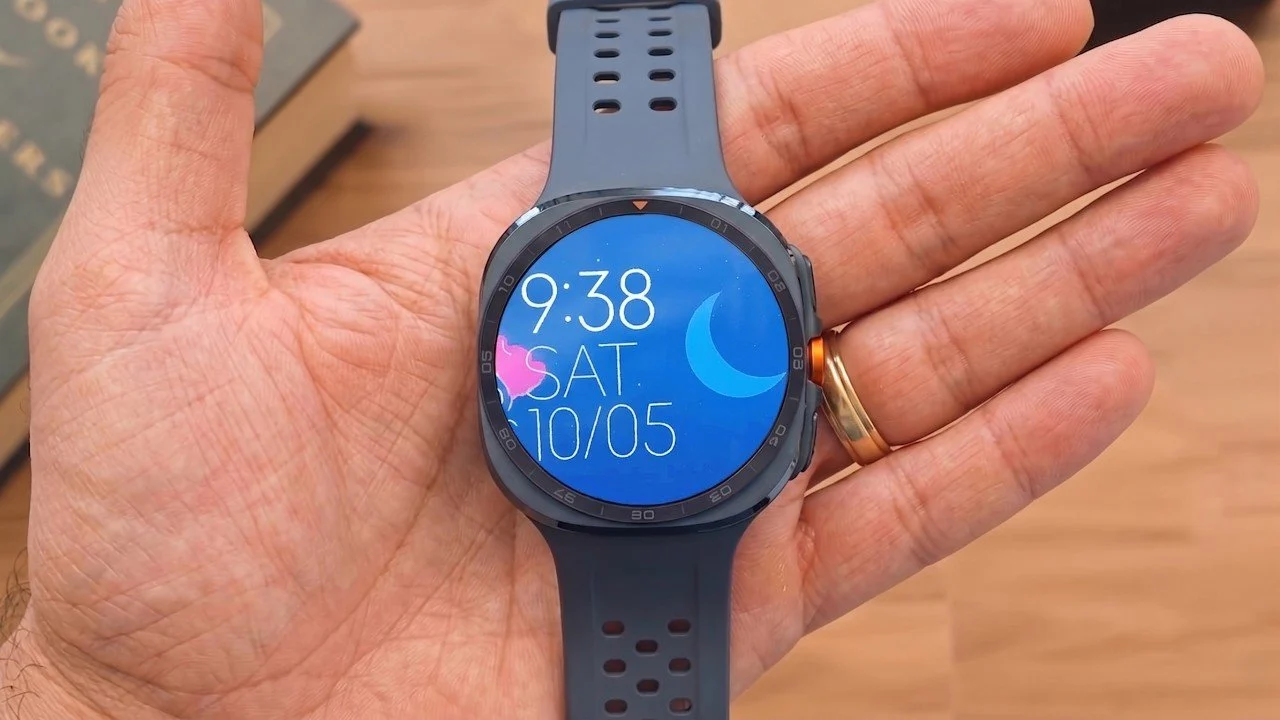
Visually, Samsung is playing it safe, and that is mostly the right call. The Galaxy Watch Ultra 2 keeps its titanium body and 100‑metre water resistance, but tightens things up with a slimmer bezel, engraved numbers and refined side buttons for a more polished, premium look. The Watch 9 sticks with a lightweight aluminium case, 5 ATM water resistance and new color options. On the surface, it feels like an iterative design year, but that restraint highlights how much of the change is hidden inside: more storage on the Ultra, a new chip in both, and upgraded batteries where they matter most.
The smarter story is health. Samsung is positioning these wearables as AI-powered health companions, with more precise tracking of heart rate, sleep and stress, plus AI-powered health insights that deliver personalized recommendations. Features like raise‑to‑talk nudge the watches toward being true assistants. All of this comes at a higher cost: leaks suggest the Galaxy Watch 9 may start at 409 euros for the base model and 439 euros for the larger variant, while the Galaxy Watch Ultra 2 could land at 749 euros. Another report pegs the Watch Ultra 2 at around USD 700 (approx. ₱40,600) and the Watch 9 at about USD 380 (approx. ₱22,000), reflecting a modest increase over previous models.
What these leaks really signal ahead of July 22
Taken together, the leaks paint a clear picture: Samsung is done chasing novelty and is finally fixing what made its earlier watches hard to recommend to power users. A massive 800mAh battery, the Snapdragon Wear 8 chip and AI health features are not flashy gimmicks; they are direct answers to complaints about endurance, lag and shallow health insights.
With the official unveiling set for the July 22 Galaxy Unpacked event, alongside new foldables and the company’s Flex Titanium display technology for its phones, Samsung’s wearables strategy looks more focused than it has in years. If the Galaxy Watch Ultra 2 delivers in real-world testing what these specifications promise on paper, it will not only be a strong Samsung smartwatch; it will be the first Android watch in a long time that stops apologizing for battery life and performance and starts competing on its own terms.