
Intel’s Arc Cards Redefine What “Budget GPU Market” Should Mean
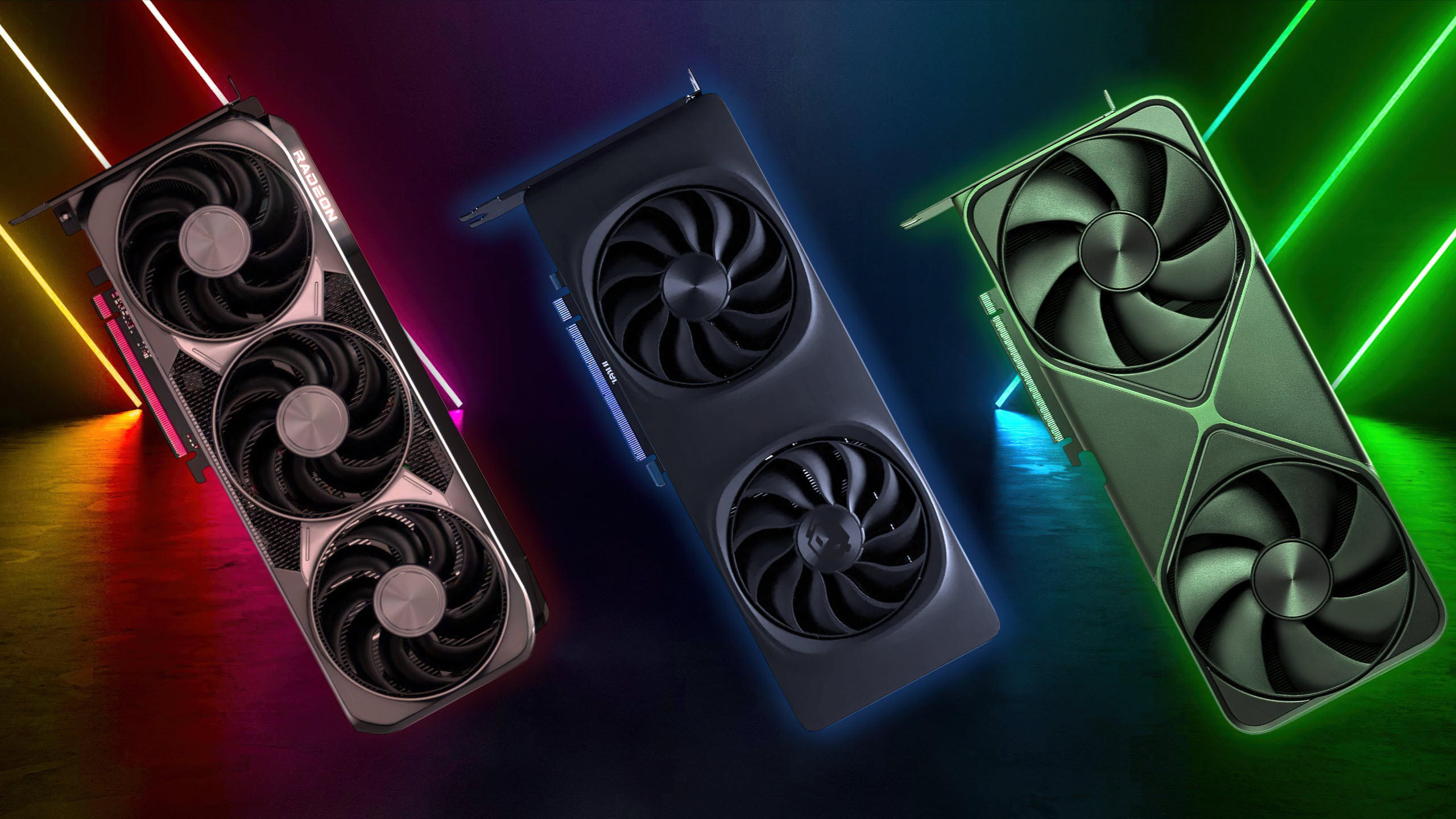
The budget GPU market refers to entry-level graphics cards aimed at mainstream gamers who want reliable 1080p performance without paying premium prices, and Intel’s new Arc models have transformed this tier by delivering more video memory and closer-to-MSRP pricing while Nvidia and AMD raise costs and trim specifications at the low end. Intel’s Arc B580 and B570 sit in a price sweet spot that the incumbent giants have abandoned, with the B580 listed from USD 309 (approx. ₱18,000) and the B570 from USD 249 (approx. ₱14,500). This is not just another product launch; it is a direct challenge to a market that “has stopped making sense” as entry-level cards creep toward midrange pricing without matching performance. Intel’s aggressive GPU pricing forces a simple question that Nvidia and AMD have avoided for years: why are budget buyers paying more and getting less?
How AI Demand and Market Consolidation Broke Entry-Level GPUs
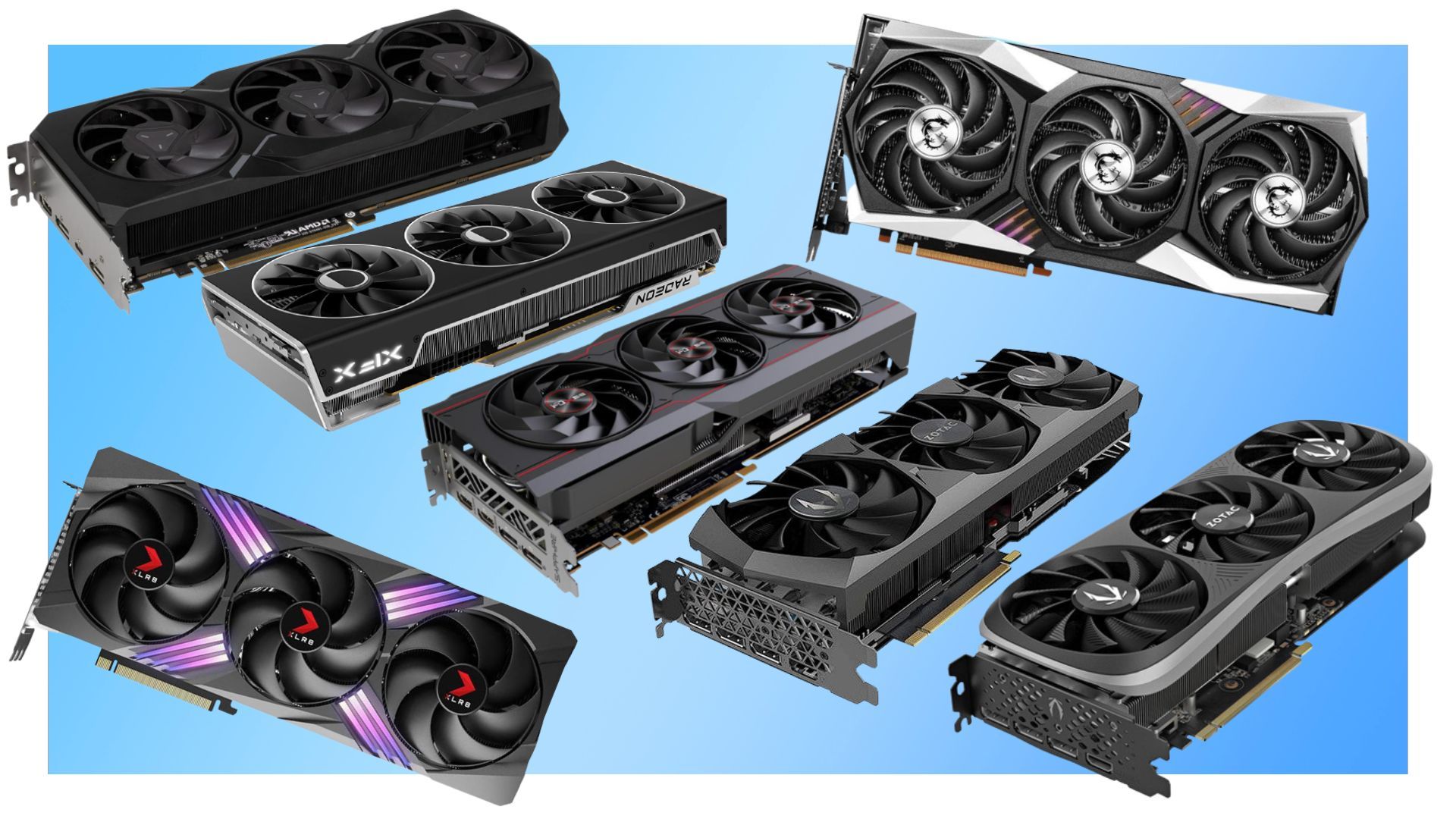
Intel’s move matters because it lands in a market warped by AI and consolidation. Huge memory orders for AI data centers and AI GPUs have driven up DRAM costs, and gaming cards have followed. One price tracker bluntly describes a “pricing crisis” and now monitors the lowest-priced recent GPUs across Nvidia, AMD, and Intel in an effort to help buyers cope. Nvidia is even said to allocate memory based on how much profit it can earn per gigabyte of VRAM, a strategy that leaves some consumer models starved of capacity. In this climate, budget cards like the GeForce RTX 5060, with an MSRP of USD 299 (approx. ₱17,400), sell USD 30–70 higher (approx. ₱1,700–₱4,000), and AMD’s RX 9060 XT has drifted far beyond its original USD 299 (approx. ₱17,400) tag. When one player controls “well over 90% of the consumer market,” neglecting the entry-level segment stops being an accident and starts looking like strategy.
Intel Arc B580: Value That Exposes the Gap
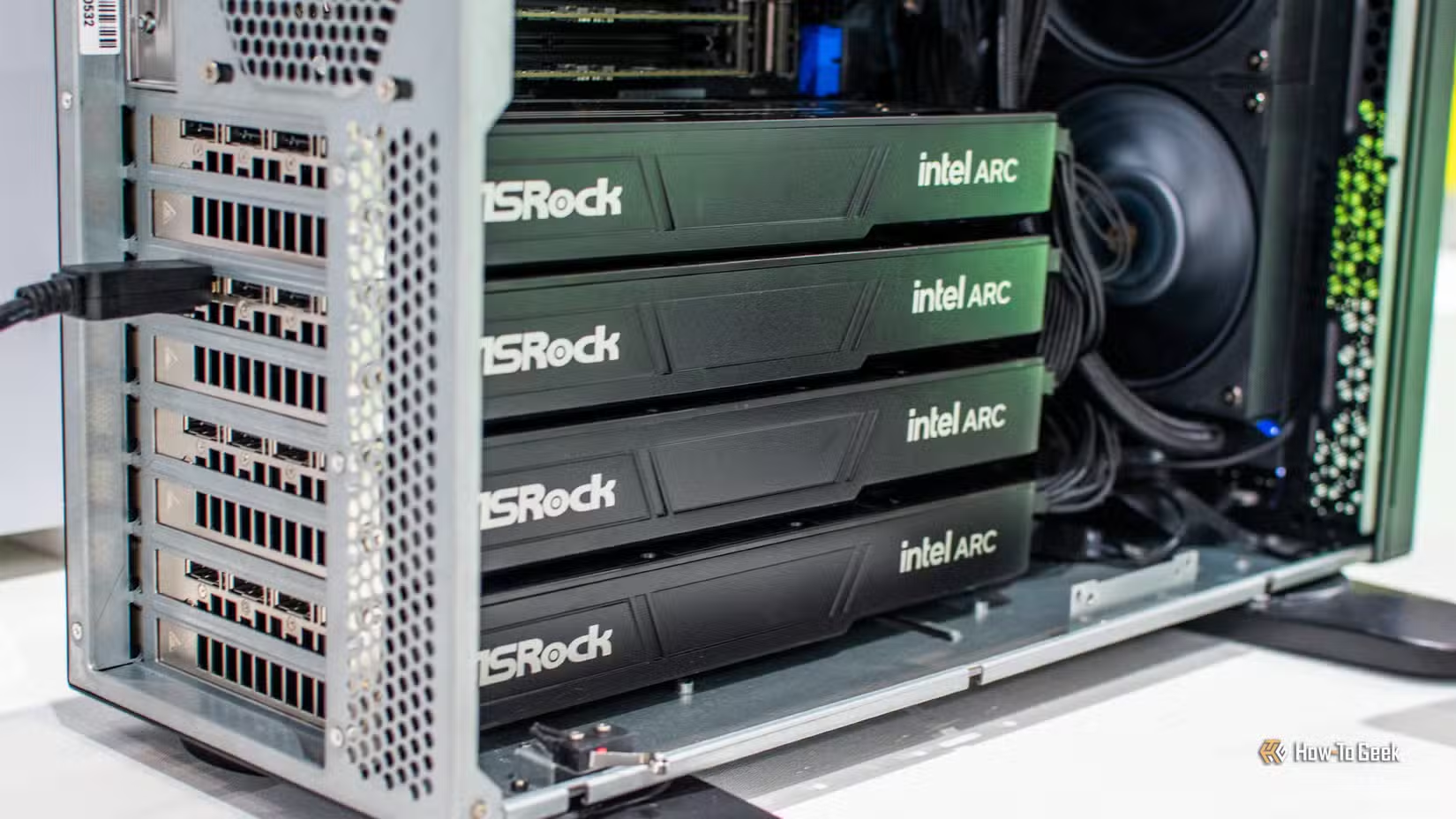
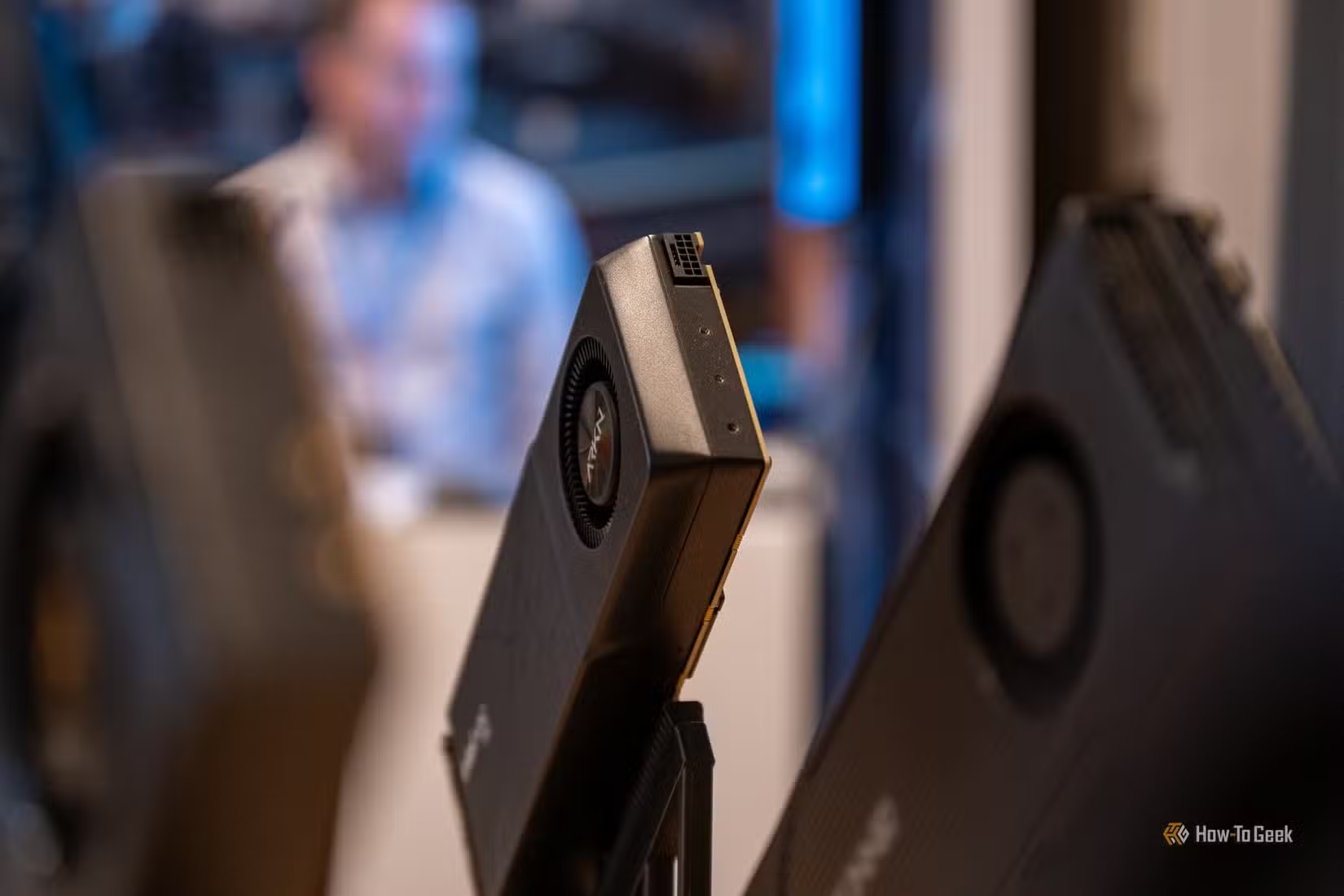
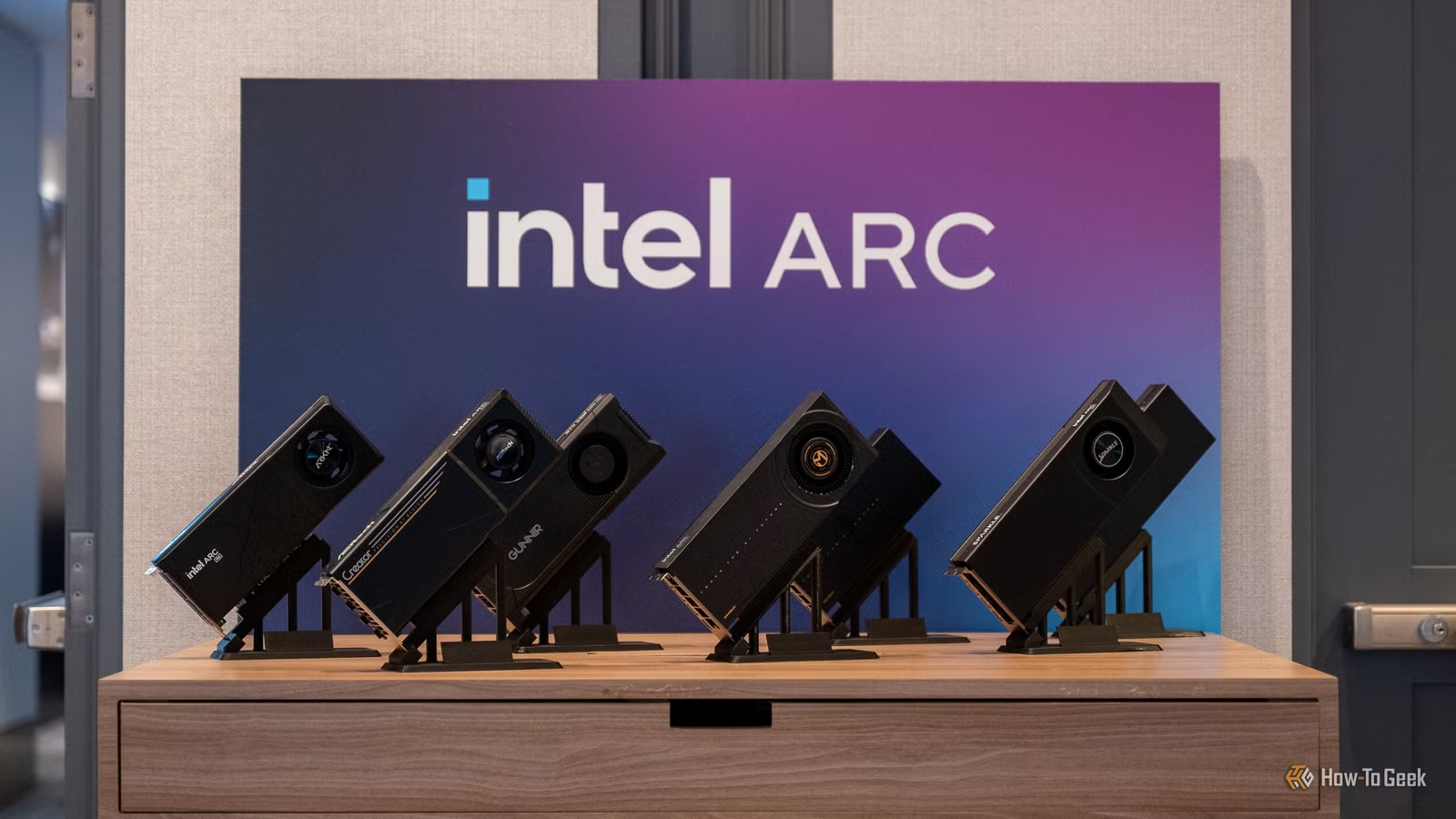
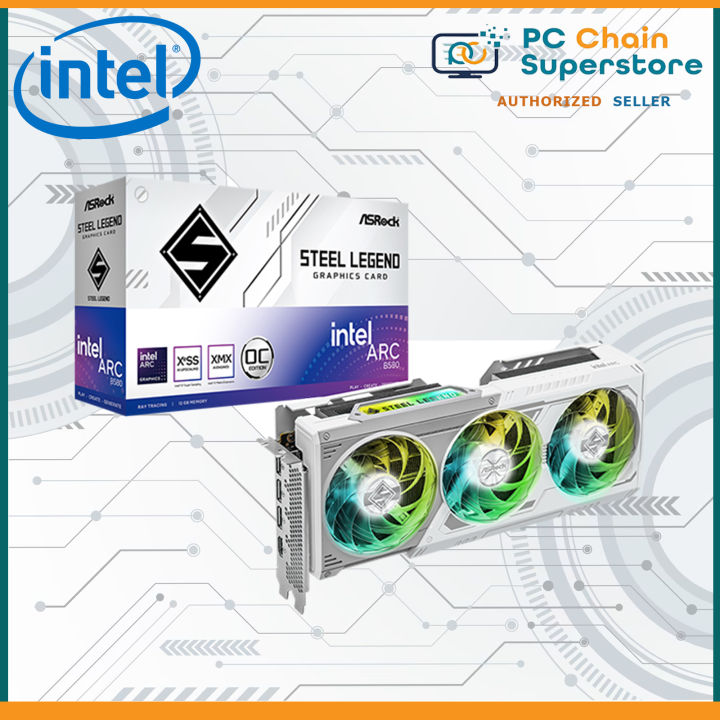
Intel’s Arc B580 is the clearest expression of this GPU market disruption. While Nvidia pushes GDDR7 and charges a premium, the B580 quietly offers 12GB of GDDR6 across a 192‑bit bus, aimed squarely at 1080p gamers who care more about longevity than synthetic benchmarks. Meanwhile, cards such as the RTX 5050 and RX 9060 XT ship with 8GB on a narrower 128‑bit interface, yet sell above their intended budget positioning. Current price tracking data shows the Arc B580 at a best listed price of USD 309 (approx. ₱18,000) and a lowest‑ever price of USD 229 (approx. ₱13,300), against an MSRP of USD 250 (approx. ₱14,600). The cheaper Arc B570 lands at USD 249 (approx. ₱14,500) with a historical floor of USD 199 (approx. ₱11,600). The same index notes that these Intel GPUs “have hit a price sweet spot that has been abandoned by Nvidia and AMD, especially for 1080p gaming,” and warns buyers not to discount Arc when building budget gaming systems.
What This Means for Ordinary Gamers
For everyday players, the impact is immediate and practical: there are finally viable alternatives below the premium tiers. Where recent years forced budget shoppers to stretch into midrange cards or accept aging hardware, Intel’s Arc B580 now offers “copious amounts of VRAM for the price” and is “more than good enough for most 1080p gamers,” with extra memory extending its life in AAA titles. A value‑focused review even concludes that “the Arc B580 remains hard to beat for gamers who don’t expect miracles.” Alongside this, ongoing GPU price indexes list the lowest available prices across recent generations so buyers can check whether a discounted last‑gen card is truly worth it or if they are better off paying a little more for a newer, better‑specced option. This transparency, combined with Intel’s undercutting, increases graphics card competition in a segment that had turned into a monopoly by default.
A Disrupted Market That Nvidia and AMD Can No Longer Ignore
The uncomfortable truth for Nvidia and AMD is that Intel’s budget GPUs are doing the job their own entry-level products should have done years ago. Arc’s current pricing has “avoided the worst of the price increases” and is “the only one of the three that’s decent value” in the mainstream bracket. That alone forces a rethink: either the incumbents accept the loss of price‑sensitive gamers, or they restore sane VRAM allocations and pricing at the low end. Ongoing price trackers that highlight every SKU’s MSRP, best price, and lowest‑ever price ensure that any correction—or failure to correct—will be obvious. Buyers have been advised to compare older‑generation cards against the newest ones to see whether they are getting a good deal or should pay a little extra for a current GPU, and that advice will only get louder as Intel’s offerings gain trust. Maybe in the next generation, “be it in 2027 or 2028,” prices will improve, but Intel has already shown that improvement is possible right now.
![Pro-grade Intel Arc B570 Equipped Graphic Card GDDR6 10GB [Authorized Domestic Distributor Product] AR-B570D6-E10GB/DF | Shopee Philippines](https://img.milik.ai/product/2026/07/20/8b47d814-ae1a-4413-900d-52988b8f1b35.jpg)