
All-day mobility: why battery and weight now matter more than raw power
A lightweight OLED laptop with all-day battery life is a portable ultrabook that combines a thin-and-light chassis, power-efficient hardware, and a high-contrast OLED screen to deliver full workday runtime without frequent charging, making it ideal for remote and traveling professionals who value both display quality and mobility.
For people who work from airports, cafés, and hotel desks, the right laptop is less about headline performance and more about how invisible it feels in a backpack and how long it lasts away from the wall. The Acer Swift Edge AI 14 is the purest expression of that idea, pairing a featherlight 14in body with a 2.8K OLED touchscreen and a battery that can run for more than twenty hours on test. The Honor MagicBook 16 takes a different path: it offers a larger display, stout all-metal construction, and long battery life as its “ticket in” to your consideration list. Both aim to be an all-day battery laptop for professionals, but they serve different instincts: extreme portability versus roomy comfort.
Design and portability: the Acer is ultra-light, the Honor is workhorse-solid
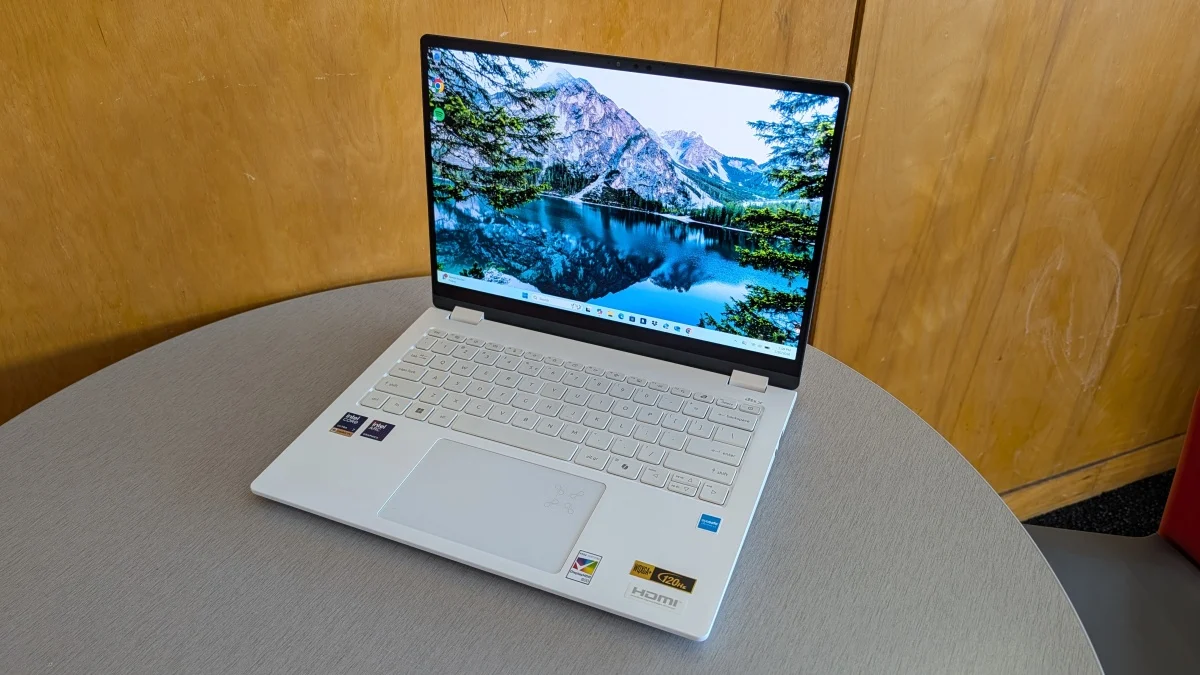
On pure portability, the Acer Swift Edge AI 14 wins by a wide margin. It weighs only 2.18 pounds and measures 12.35 x 9.03 x 0.65 inches, combining a 14in frame with a thin magnesium–aluminium alloy shell that is described as sleek, sturdy, and super portable. This is the archetype of a portable ultrabook: the kind of machine that feels almost like a display dummy when you pick it up, yet has firm hinges and a rigid keyboard deck.
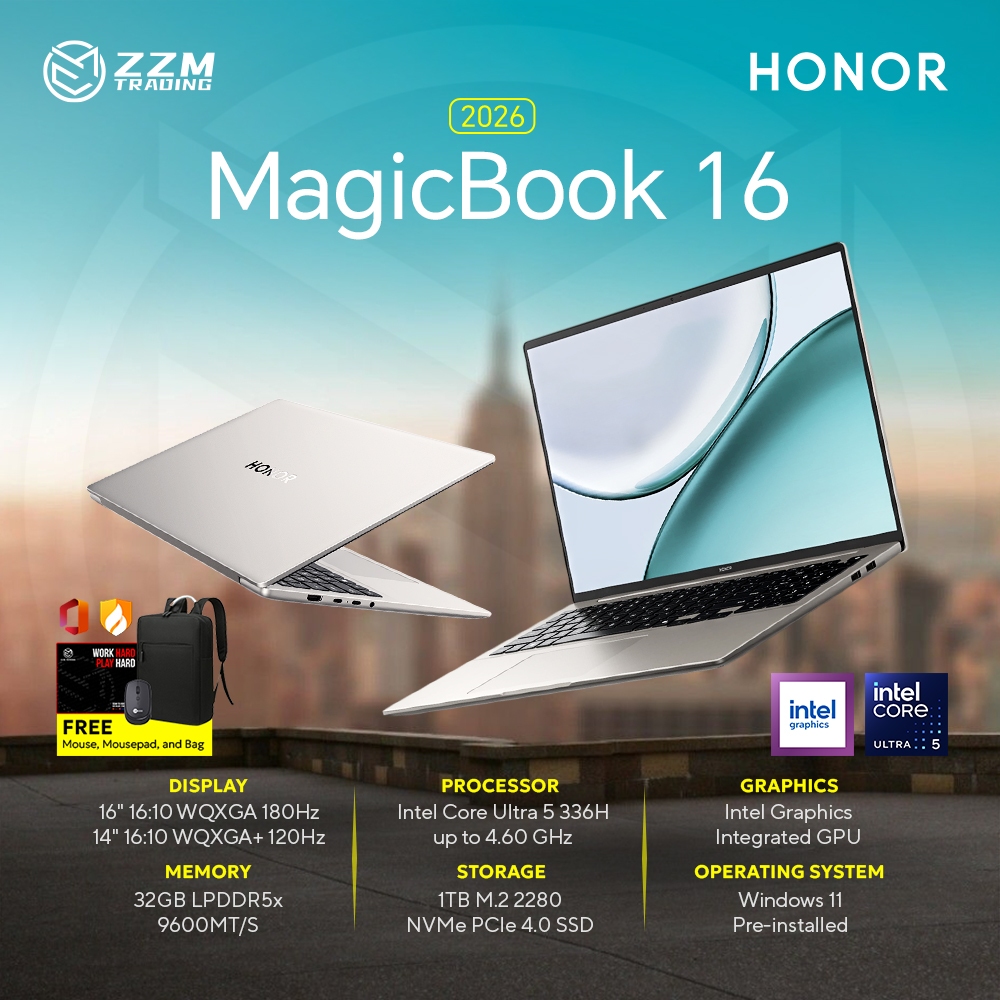
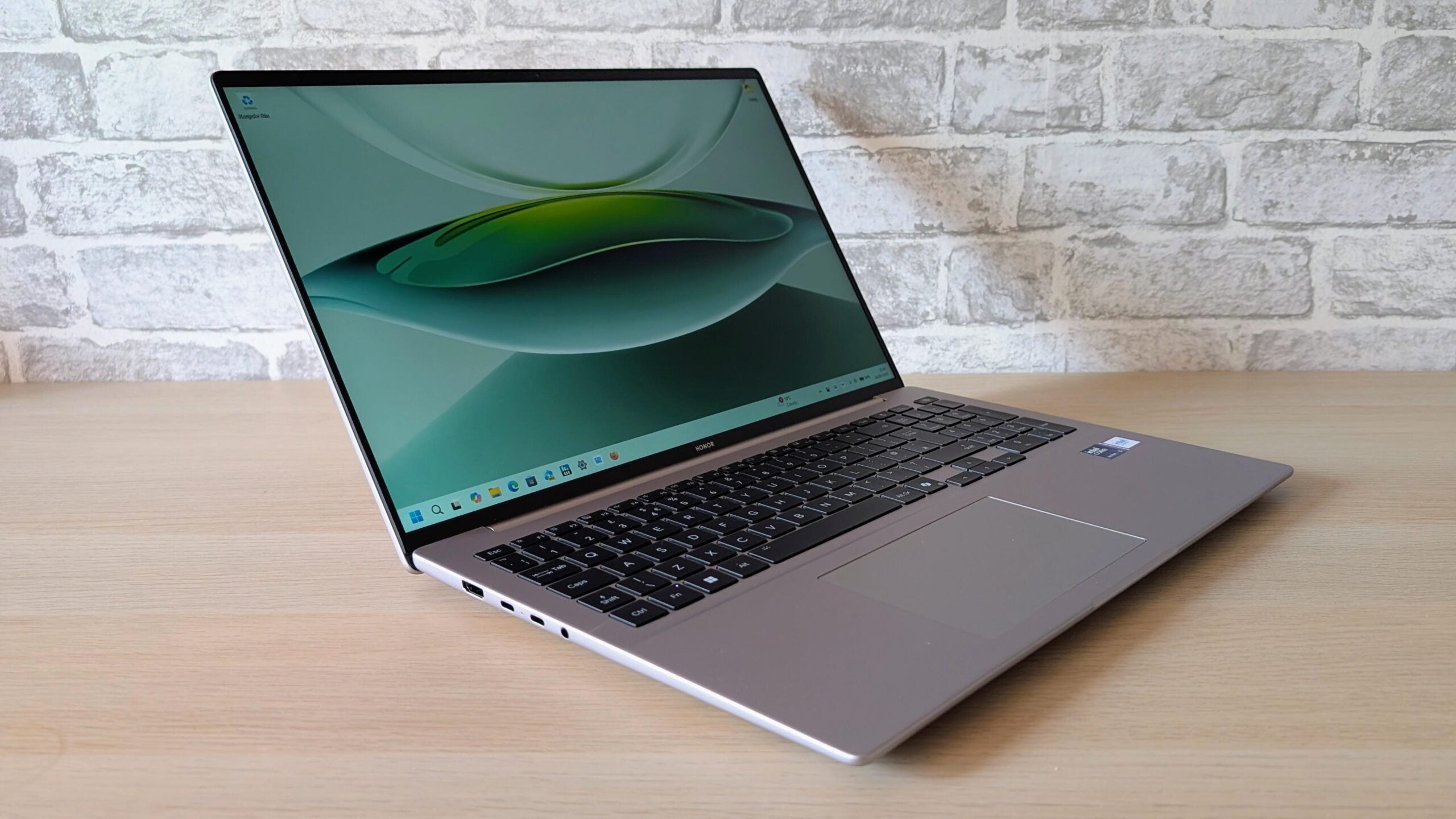
The Honor MagicBook 16 plays a different card. It uses an all-metal shell and is praised for build quality that feels like it should cost more than it does. At 1.53kg and around 20mm thick, it is heavier and chunkier than the Acer but still reasonable for a 16in laptop. The trade-off is clear: the Acer disappears in your bag, while the Honor feels more like a classic workhorse that can soak up daily abuse and still look professional.
| Spec | Acer Swift Edge AI 14 | Honor MagicBook 16 |
|---|---|---|
| Weight | 2.18lb (approx. 0.99kg) | 1.53kg |
| Thickness | 0.65in | 20mm |
| Chassis | Magnesium–aluminium alloy, pearl white | Aluminium alloy, anodised silver |
Displays and daily experience: OLED beauty versus bigger, flatter visuals
If you care about screen quality as much as weight, the Acer Swift Edge AI 14 is difficult to ignore. It delivers a 14in 2.8K (2880 x 1800) OLED touch display with a 120Hz refresh rate that is described as stunning and able to put other mid-range laptops to shame. In other words, it is the canonical lightweight OLED laptop: deep blacks, vivid colours, high resolution, and silky scrolling, all in a compact lid.
Honor takes the opposite approach: more screen, less visual punch. The MagicBook 16 uses a 1,920 x 1,200 60Hz IPS panel, and while it benefits from the larger 16in canvas, the display is criticised as colourless. You trade the inky contrast and saturation of OLED for extra space to juggle spreadsheets and timelines. That may be worth it if you value real estate over richness, but there is no question which panel is more premium.
| Spec | Acer Swift Edge AI 14 | Honor MagicBook 16 |
|---|---|---|
| Panel type | OLED touch | IPS |
| Resolution | 2880 x 1800 (2.8K) | 1920 x 1200 |
| Refresh rate | 120Hz | 60Hz |
| Screen size | 14in | 16in |
Performance, specs, and battery: both aim for all-day, but Acer goes further
Both machines are built around Intel’s modern Core Ultra chips with on-board AI capabilities, but they are clearly pitched at different performance tiers. The Swift Edge AI 14 configuration tested uses an Intel Core Ultra 7 258V processor, integrated Intel Arc 140V graphics, 32GB RAM, a 1TB SSD, and that 14in 2.8K OLED touch display for USD 1,499.99 (approx. ₱84,000). Honor’s MagicBook 16 review unit runs an 8‑core Intel Core Ultra 5 Processor 325 with 16GB RAM, a 512GB SSD, and a 1,920 x 1,200 IPS display at a price of £849.
On endurance, both position themselves as a long battery life laptop for professionals. The Acer Swift Edge AI 14 notched an impressive 20 hours and 44 minutes during a standard video rundown test, which qualifies as beyond all-day by any fair measure. The MagicBook 16’s battery life is described as its primary claim to a spot on buyers’ lists. Put bluntly: Acer wins on both raw specifications and tested runtime, while Honor counters with a more affordable entry point and still-strong endurance.
| Spec | Acer Swift Edge AI 14 | Honor MagicBook 16 |
|---|---|---|
| CPU | Intel Core Ultra 7 258V | Intel Core Ultra 5 325 |
| GPU | Intel Arc 140V integrated | Integrated graphics (Core Ultra 5) |
| RAM | 32GB | 16GB |
| Storage | 1TB SSD | 512GB SSD (two partitions) |
| Battery claim | 20h44min video test | Battery life is the primary selling point |
| Price when reviewed | USD 1,499.99 (approx. ₱84,000) | £849 |
Weak spots and verdict: which all-day ultrabook deserves your bag space?
Neither machine is flawless, and their weaknesses say a lot about priorities. On the Acer Swift Edge AI 14, the largest complaints are disappointing audio from its two down-firing speakers and a built-in webcam that “left a lot to be desired”. USB-C ports clustered on one side also make charging less flexible. The MagicBook 16 shares the camera issue; its 720p webcam is described as low-rent, and its display is criticised as colourless, while the SSD arrives split into two partitions, which feels unnecessarily fussy.
For remote and travelling professionals, both still hit the core promise: a long battery life laptop that can handle all-day work sessions without constant recharging. The Acer Swift Edge AI 14 is the clear choice if you care most about extreme portability and a premium OLED experience; it is the archetypal all-day battery laptop that looks and feels high-end. The Honor MagicBook 16 instead suits those who value a larger workspace and sturdy construction at a lower price, even if that means living with a flatter, less vivid screen and more weight.