
What Ryzen 7700X3D Overclocking Really Means
Ryzen 7700X3D overclocking is less about chasing higher boost clocks and more about fine‑tuning CPU temperature management and efficiency within the strict thermal and frequency limits imposed by its 3D V‑Cache design, using tools like Precision Boost Overdrive and Curve Optimizer to hold stock frequencies at lower voltages, reduce power draw, and keep the processor comfortably below its thermal target under realistic rendering and gaming workloads.
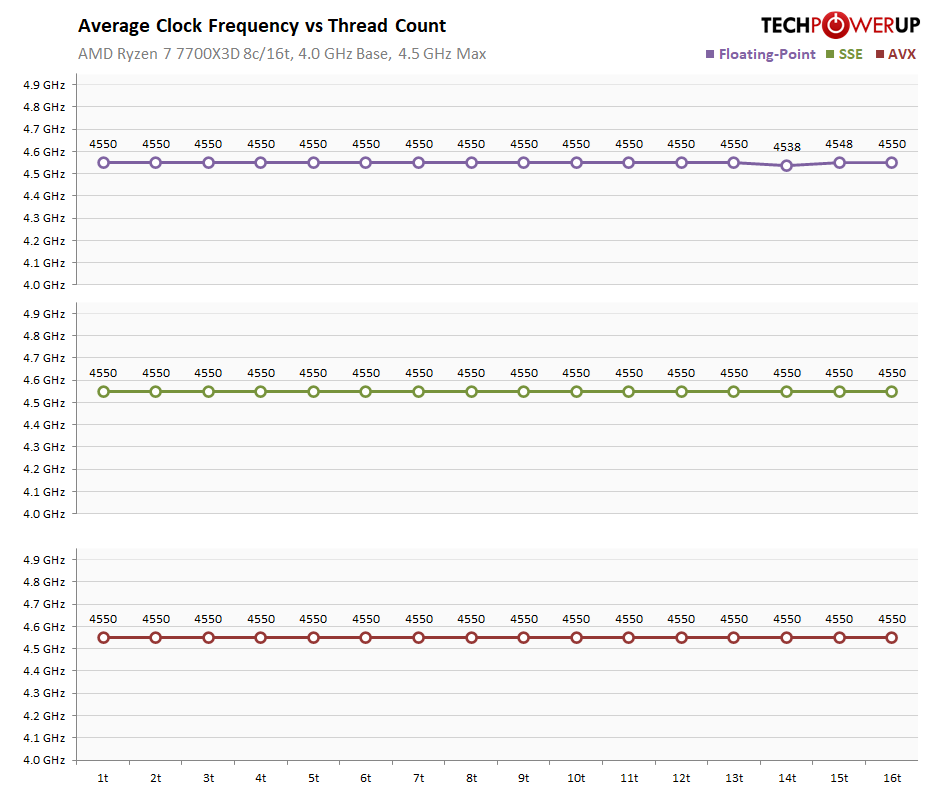
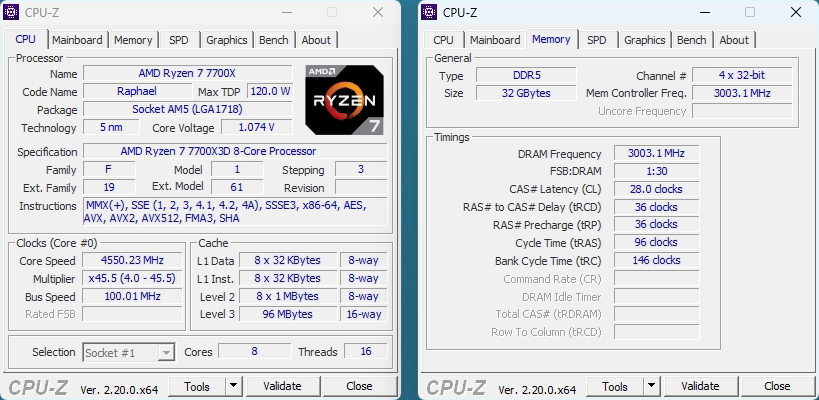
If you go into Ryzen 7700X3D overclocking expecting dramatic frame rate gains, you will be disappointed, and that is not a bug in your BIOS but a direct result of how this chip is built. AMD locks its maximum boost to 4550 MHz, and the CPU hits that ceiling almost immediately and holds it flat even under light multithreaded load. Because the processor already runs at its cap, the sensible goal for DIY builders is to make that stock behavior cooler, quieter, and more efficient, rather than to force more frequency out of silicon that is deliberately fenced in.
3D V-Cache Cooling Limits and Thermal Headroom
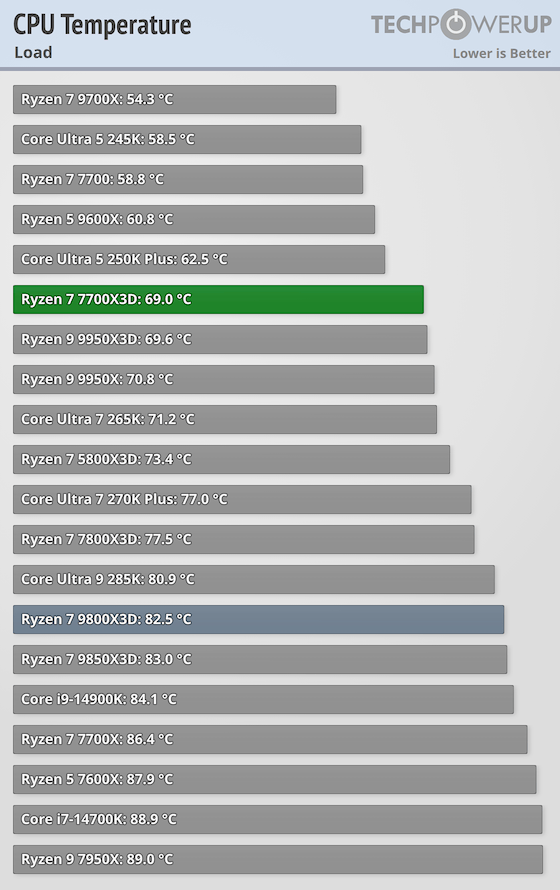
The 7700X3D sits in a uniquely constrained cooling envelope: its 3D V‑Cache is stacked on top of the cores and cannot handle as much heat as standard Zen 4 dies, so AMD enforces a lower 89°C thermal target instead of the 95°C used on non‑X3D chips, and this limit cannot be raised. That sounds harsh, but in practice the processor rarely gets close to that wall. Under a demanding Blender workload that fully loads all cores, it levels off at about 69°C, while gaming temperatures hover near 55°C, both measured as steady‑state values after extended runs.
This behavior means you are working with genuine thermal headroom, even though the absolute cap is lower than on previous non‑X3D Zen 4 CPUs. In other words, the 3D V‑Cache cooling constraint is real, yet the stock 7700X3D spends its life well below the danger zone because its modest power draw and locked 4550 MHz clock keep heat under control. That combination is why tweaking this chip is more about exploiting its generous efficiency margin than about brute‑force heat soaking.
Boost Clock Tuning: Why MHz Gains Are Off the Table
Boost clock tuning on the Ryzen 7700X3D is defined by a hard reality: AMD’s platform caps the maximum boost frequency at 4550 MHz, and this ceiling applies across the board—single‑core, all‑core, overclocked, or not. The CPU reaches that 4550 MHz limit almost instantly even under light multithreaded load and then holds it as a flat line, regardless of instruction mix. That is the architecture doing exactly what it was designed to do for 3D V‑Cache cooling, not something you can override.
Because of this fixed ceiling, traditional boost clock tuning knobs lose their bite. Removing power and current limits or enabling aggressive Precision Boost Overdrive "PBO Max" fails to move performance beyond stock; measured runs land within normal run‑to‑run variation. Likewise, pushing a positive frequency offset does nothing, since the chip already sits at its cap. The only honest conclusion is that on this CPU, MHz is a closed door. Any practical tuning strategy must accept that fact and focus on voltage, power, and memory, not on chasing an unreachable higher boost.
Curve Optimizer, Undervolting, and Temperature Management
The most powerful tool for Ryzen 7700X3D overclocking is not a frequency slider but Curve Optimizer, used as an undervolt rather than a speed tweak. Curve Optimizer lets the CPU maintain its 4550 MHz limit while drawing less voltage, which in turn reduces power and heat. One tested sample remained fully stable at a -30 all‑core setting, while -35 was slightly unstable; that -30 curve dropped load temperatures by about 10°C and cut per‑test power use by roughly 15%, with performance staying flat compared to stock.
This kind of tuning flips the usual overclocking mindset on its head. You are not chasing more frames from the core frequency; instead, you are carving away wasted power so the chip can sit at its designed boost in a cooler, quieter state. Application‑level temperature measurements taken under a realistic Blender load and modern, multi‑thread‑aware gaming show how meaningful that is once you normalize for ambient conditions and allow the CPU to reach thermal steady state. If your goal is a stable, silent build, undervolting is where the 7700X3D truly rewards careful tweaking.
Where Real-World Gains Come From (And Where They Don’t)
The blunt truth is that you should not expect real‑world performance gains from core clock frequency tuning on the Ryzen 7700X3D, because every practical path—lifting power limits, enabling PBO, or adding a positive offset—has been tested and shows no measurable performance increase over stock. The chip already runs at its 4550 MHz ceiling under typical loads, so there is nothing for overclocking logic to add. According to one detailed review, "Neither moved performance over stock," even in a full "PBO Max" configuration.
Where you do gain is in efficiency and system behavior. A well‑tuned undervolt can hold the same performance level while dropping temperatures and power, which in turn gives your cooling system more headroom and lowers noise. That matters more than another 50 MHz that you cannot access. Memory tuning can move the needle a bit, but it will not transform the chip. The rational takeaway for DIY builders is clear: treat the 7700X3D’s frequency as fixed, use CPU temperature management and Curve Optimizer to sharpen efficiency, and enjoy a stable gaming and rendering experience that respects the limits of its 3D V‑Cache cooling design.