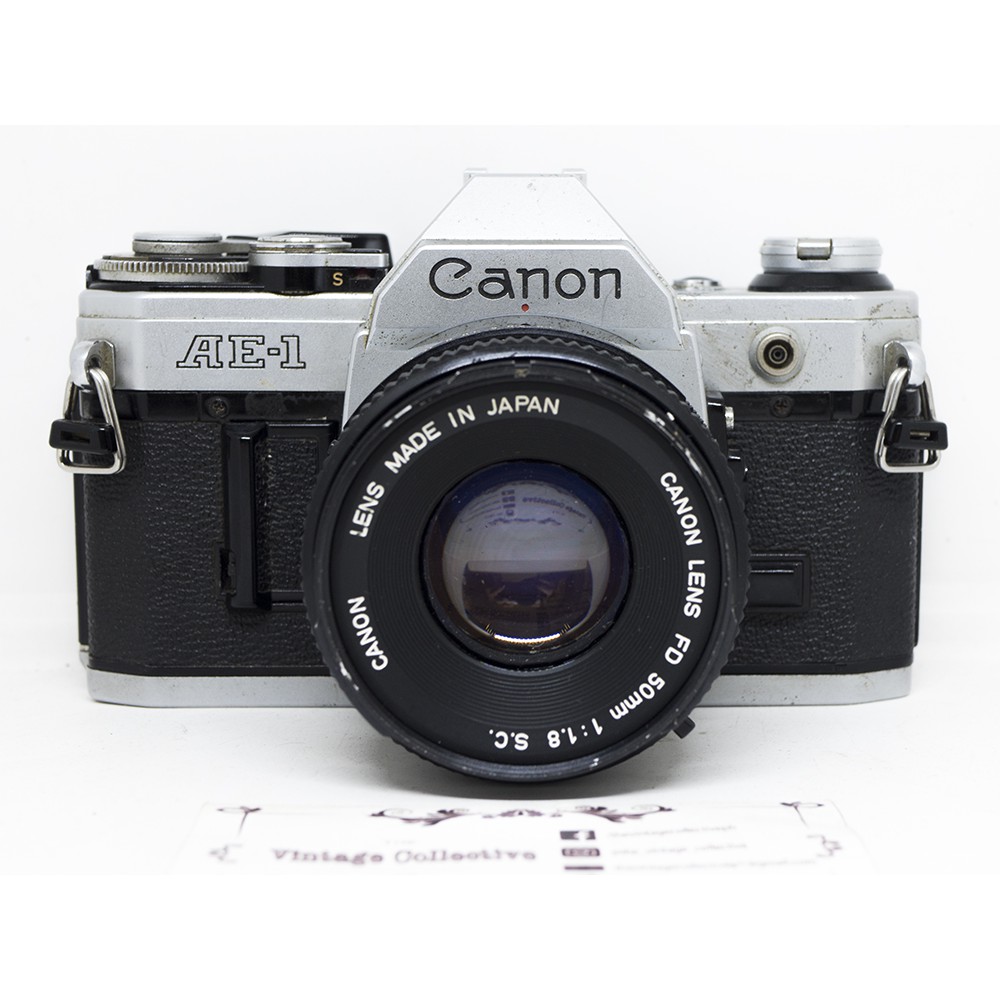


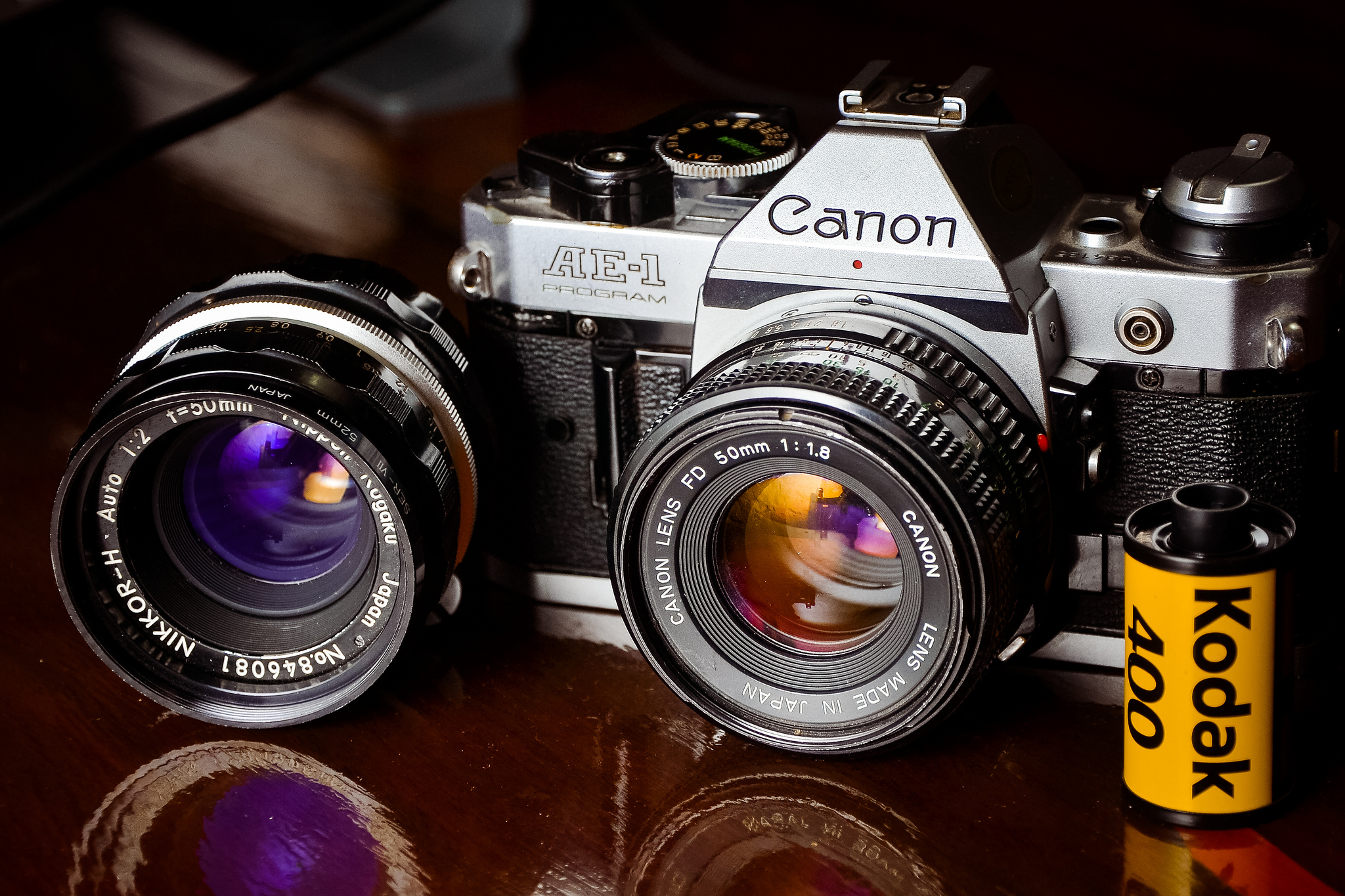
Our Top Pick: Canon AE-1 – The Best Budget Camera for Most People
A vintage camera buying guide explains why older film cameras offer better long-term value, durability, and learning potential than many modern budget digital models, helping photographers choose affordable film cameras that build real skills instead of chasing short-lived features. For most people wanting serious budget photography gear that will last, the Canon AE-1 is the clear first choice. It was launched at USD 250 (approx. ₱14,000), which was 40% more affordable than rival cameras of its time. That aggressive pricing, combined with automatic program exposure and a wide range of lenses, made it one of the most accessible affordable film cameras ever made. Decades later, those same strengths still matter: it is simple to use, quick to learn, and built to keep working when many cheap digital bodies are in landfill.
The AE-1’s focal plane shutter, 35mm film format, and ISO range from 25 to 3200 cover everything from bright daylight to low light. Its electronics were designed around a dedicated CPU that controls metering, timing, and automation, reducing the number of parts and increasing reliability. Despite relying on metallic-feeling plastic, it remains solid in the hand and was produced in huge numbers, which makes it easy to find on today’s used market and keeps prices reasonable. According to Canon’s own historical notes, it helped create a generation of “pro‑am” photographers, and many AE-1 bodies still function very well 40–50 years later. If you want one camera that will teach you photography and stay alive for decades, start here.
| Spec / Trait | Canon AE-1 (vintage film) | Modern budget digital toy (example) |
|---|---|---|
| Primary medium | 35mm film with interchangeable lenses | Tiny built-in sensor with fixed lens |
| Age vs usability | Around 50 years old and still fully usable for everyday shooting | New, but designed as a fun gadget rather than a long-term tool |
| Learning value | Teaches exposure, focus, and composition through manual controls and limited automation | Encourages casual snapshots, less emphasis on fundamentals |
| Power / storage | One 6V battery rated for about a year of use | Rechargeable battery and internal storage / card for low-res digital files |
| Intended role | Serious yet accessible camera for beginners and enthusiasts | Screen-free fun camera bought for about USD 45 (approx. ₱2,500) |
Why Vintage Cameras Offer Better Long-Term Value Than Cheap Digital
The strongest reason to choose a classic like the AE-1 over a modern bargain-bin digital is longevity. The AE-1 bodies nearing 40 and now 50 years of age still work and function very well. In contrast, even committed photographers struggle to name a digital SLR that survives more than a decade of regular use. That is not nostalgia; it is a track record. When you buy used camera recommendations from the 1970s and 1980s, you are buying gear that has already proved it can shrug off decades of real-world handling.
Build and design choices explain this staying power. The AE-1 used plastic molded to look like metal, which made the camera lighter and less prone to cracking compared to stiff metal shells while keeping a dense, solid feel. This pushed manufacturing costs down and output up, getting cameras into more hands without sacrificing reliability. Affordable film cameras from this era were built as primary tools, not disposable toys. By comparison, modern ultra-cheap digital cameras often prioritize one standout gimmick or feature over durability. A fun USD 45 (approx. ₱2,500) gadget camera may be great for a season, but its construction rarely matches a vintage body that has already survived half a century.
Vintage Cameras Teach Real Photography Skills
If you want to improve as a photographer, a vintage film body is a better teacher than a feature-heavy budget digital. Cameras like the AE-1 were designed to make photography simple without doing everything for you. Its CPU automates exposure and flash when you need speed, but you still think about shutter, aperture, and focus while you shoot. That balance forces you to understand light and timing, not menu systems. You frame through an optical viewfinder, choose your film, and commit to each frame—an ideal classroom for learning composition and exposure discipline.
According to camera historians, the AE-1 helped create a wave of enthusiasts who grew beyond casual snapshots into serious “pro‑am” work thanks to its mix of automation and control. That is the kind of growth modern budget digital cameras often hold back. Many cheap digital models add shooting modes, creative filters, and screens that encourage chimping instead of planning. By stripping away those distractions, vintage cameras turn every click into feedback you feel: did you meter correctly, did you choose the right shutter speed, did you time the moment? For anyone building long-term skills, that feedback loop is worth more than any toy feature.
How to Choose a Vintage Camera and When a Budget Digital Still Makes Sense
For a first film body, the Canon AE-1 is the best all‑round recommendation for most people: it is cheap, easily accessible, and a fantastic way to get into shooting with film. The widespread Canon FD lens mount means you can find lenses in many focal lengths, from simple 50mm primes to wider options, often at lower prices than modern autofocus glass. When comparing affordable film cameras, focus less on cosmetic marks and more on whether the shutter fires at all speeds, the meter responds, and the film advance feels smooth. These mechanical checks matter more to long-term reliability than a perfect finish.
That said, there are niche cases where a budget digital toy camera makes sense. The transparent-viewfinder G100, bought for about USD 45 (approx. ₱2,500), is described as “the most fun $45 I’ve ever spent on camera stuff” and offers surprisingly good 2MP image quality given its tiny sensor. It is ideal for casual play, social events, and screen-free snapshots—one of the most entertaining pieces of budget photography gear you can buy. However, it is not built as a long-term system: you cannot change lenses, sensor size is limited, and its role is more novelty than lifelong tool. If you care about learning, durability, and a camera that can grow with you, the AE-1 and similar vintage bodies are still the smarter investment.
- Buy the Canon AE-1 if you want an affordable film camera with a proven 40–50 year track record of reliable operation and image quality.
- Skip the Canon AE-1 if you refuse to shoot film and only want instant digital results and on-camera review for every frame.
- Buy the Canon AE-1 if you care more about learning exposure, focus, and composition than collecting modern automation features you may not use.
- Skip the Canon AE-1 if you never plan to handle film, wait for processing, or think about each shot before pressing the shutter.
- Buy the Godox transparent-viewfinder camera if you want a playful, screen-free digital toy that delivers more fun than its low price suggests.
- Skip the Godox transparent-viewfinder camera if you are looking for a long-term, system-based camera with lens options and decades of durability.