
Verdict: A Smart Budget X3D Pick, With Caveats
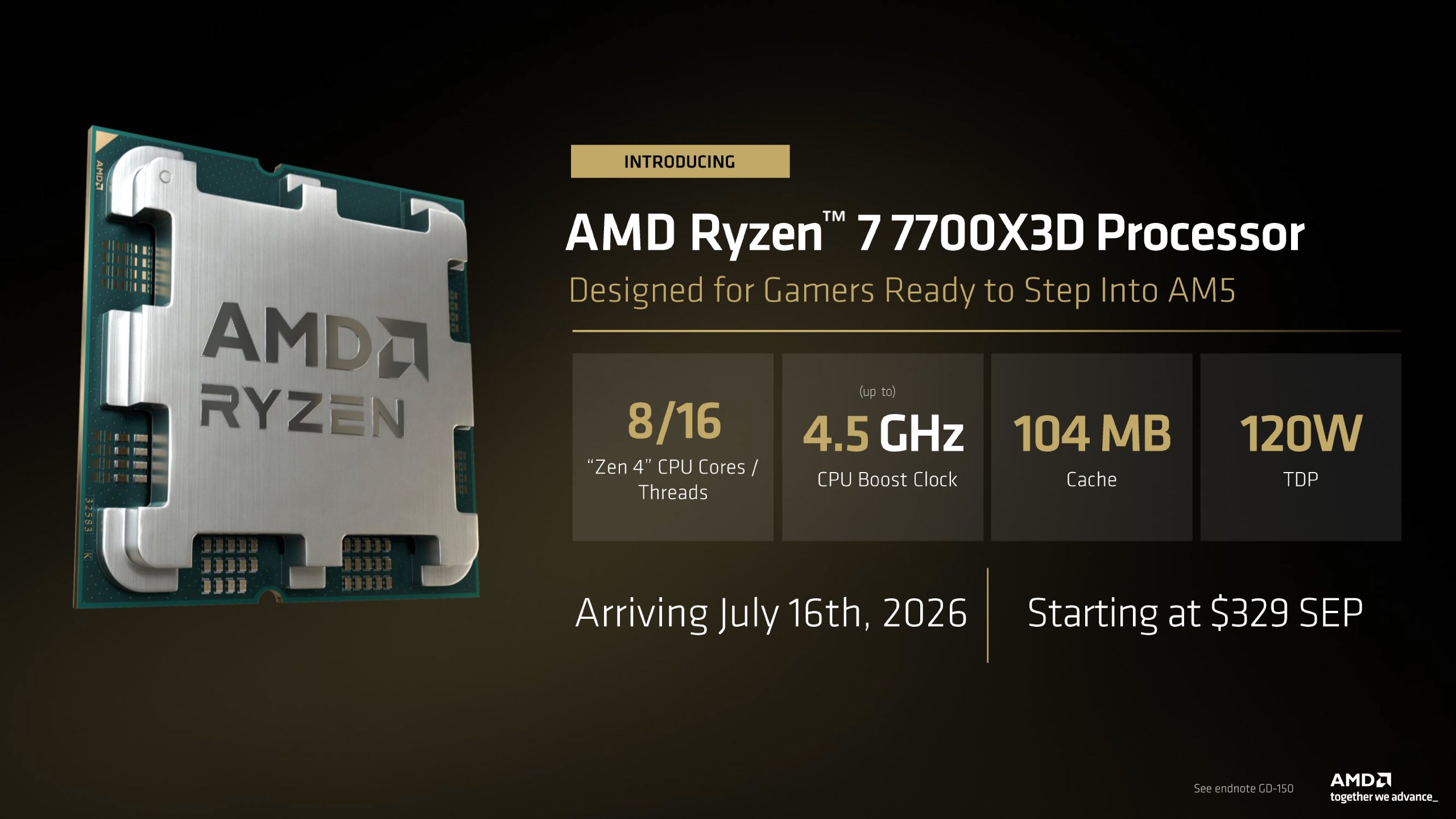
The Ryzen 7 7700X3D is an 8-core, 16-thread Zen 4 3D V-Cache processor for the AM5 platform that targets gamers and power-conscious builders who want near-flagship frame rates and strong efficiency at a mid-range price point. At USD 329.99 (approx. ₱19,000), it undercuts higher-end X3D models while delivering roughly 98% of a Ryzen 7 7800X3D’s overall performance in Linux testing. From a user’s point of view, this is the X3D chip for people who care more about electricity costs, cooler noise, and total build budget than about chasing every last frame. It is not the fastest, not the newest, and at launch, not necessarily the best value compared with Zen 5 alternatives, but if you are building a sub-USD 350 (approx. ₱20,000) gaming CPU setup on AM5, the 7700X3D is a compelling contender.
| Spec | Ryzen 7 7700X3D | Notes |
|---|---|---|
| Architecture | Zen 4 | Last-generation, still very capable |
| Cores / Threads | 8 / 16 | Standard mid-high desktop configuration |
| Base / Boost Clock | 4.0 / 4.5 GHz | Lower clocks than 7800X3D for efficiency |
| Total Cache | 96 MB L3 + 8 MB L2 (104 MB total) | 3D V-Cache for gaming |
| Socket | AM5 | Wide motherboard and cooler support |
| TDP | 120 W (tested peak ~90 W) | Runs cooler than spec suggests |
| Price | USD 329.99 (approx. ₱19,000) | Cheapest 8-core X3D on AM5 |
Gaming Performance: 3D V-Cache on a Budget
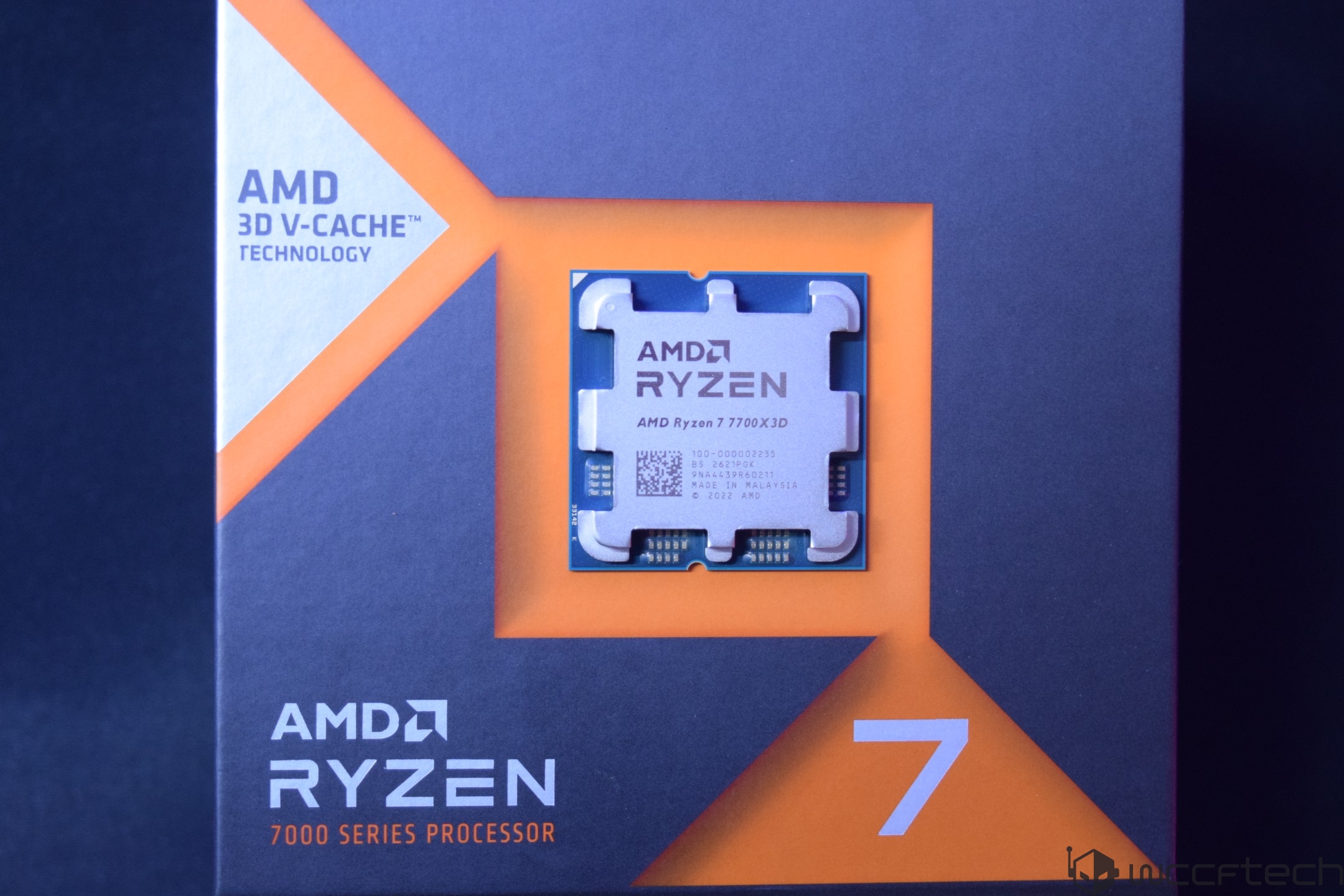
As a budget gaming CPU, the Ryzen 7 7700X3D is designed around 3D V-Cache and a single CCD to keep latency low in games that rely heavily on cache. It mirrors the core and cache configuration of the 7800X3D, with 8 cores, 16 threads, and 96 MB of L3 cache, but trims clocks to 4.0 GHz base and 4.5 GHz boost for better efficiency. In Linux benchmarks, it delivers 97.8% of the 7800X3D’s performance on a geometric mean basis, which tells you that in most titles and everyday workloads, the gap will be small. The single-CCD design avoids cross-CCD scheduling quirks and is ideal for gaming workloads where consistent frame pacing matters. While some game-specific data was limited by GPU driver issues, the established track record of 3D V-Cache in cache-sensitive titles suggests this chip will behave like a slightly slower, cooler 7800X3D at a much lower asking price.
Pros
- Near-7800X3D gaming performance despite lower clocks (97.8% on geometric mean).
- Single-CCD 3D V-Cache design well suited to gaming workloads.
- Cheapest 8-core 3D V-Cache CPU on AM5 at USD 329.99 (approx. ₱19,000).
Cons
- Not the newest architecture and trails Zen 5 X3D chips in absolute performance.
- Awkward launch pricing relative to discounted 7800X3D and 9800X3D alternatives.
Efficiency and Productivity: Where the 7700X3D Stands Out
The most impressive part of this Ryzen 7 7700X3D review is its power behavior. In a broad Ubuntu 26.04 benchmark run with a Linux 7.0 kernel, the chip never exceeded 90 W despite a 120 W TDP, averaging only 61 W across tests. By comparison, the 7800X3D averaged 68 W and peaked at 95 W, and a competing Intel Core Ultra 5 part averaged 85 W with spikes up to 159 W. That means lower PSU requirements, easier cooling, and quieter systems, which matter in compact cases and budget builds. In code compilation and video encoding, it trails the 7800X3D by a small margin but keeps drawing less power—for example, a default Linux kernel build took 96 seconds, with 68 W average vs. 75 W on the 7800X3D. HPC and AI workloads such as OpenFOAM, CloverLeaf, and CPU-based OpenVINO inference also benefit from the large cache and AVX-512 support, giving students and hobbyists real throughput without a high energy bill.

Platform Value and Pricing Trade-offs on AM5
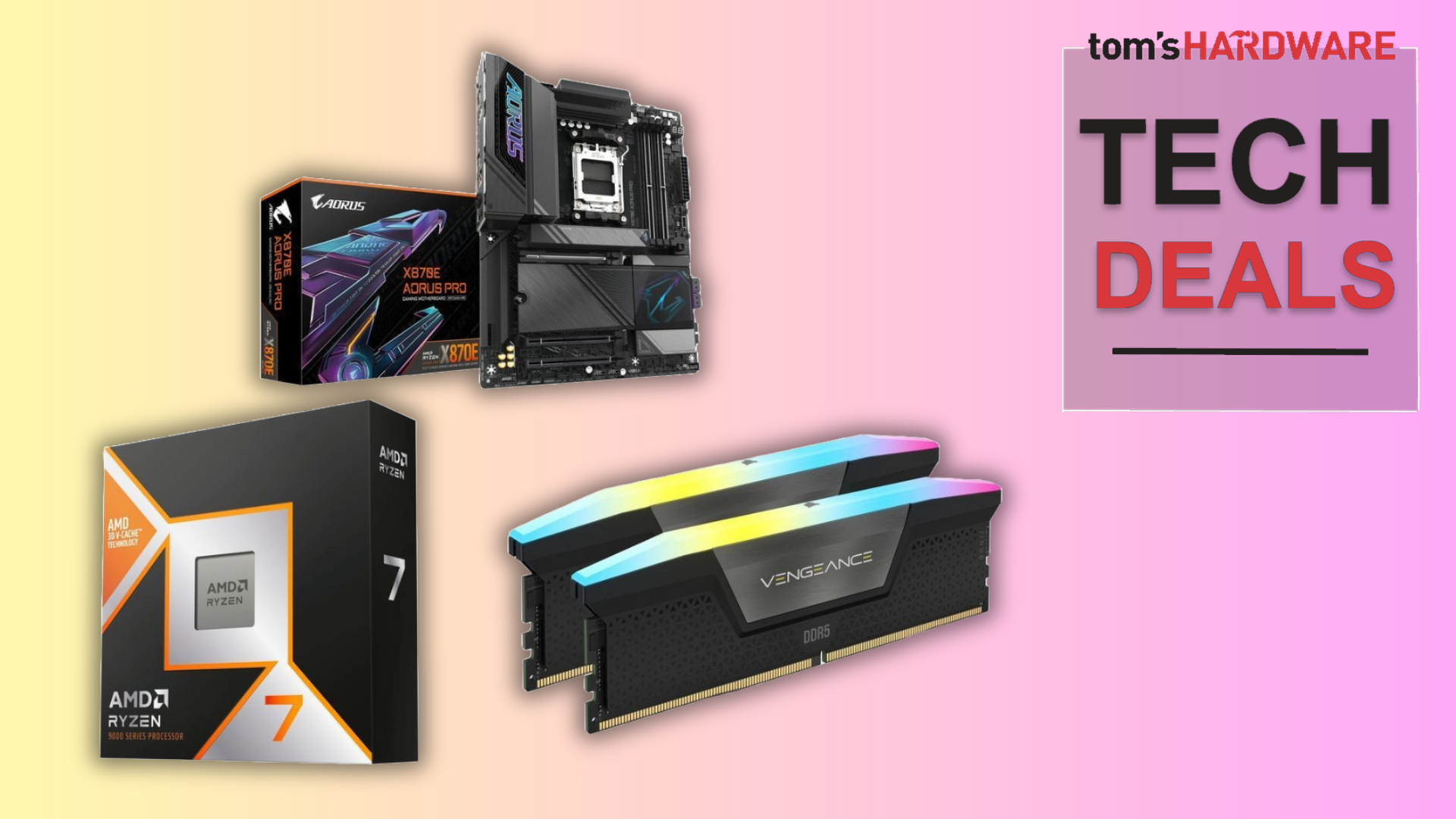
On the AM5 platform, the 7700X3D aims to be the affordable X3D CPU that convinces existing AM4 users to jump to DDR5 and newer boards. AM5 already offers a wide range of motherboards and keeps cooler mounting compatible, so builders can reuse many components when upgrading. At USD 329–329.99 (approx. ₱19,000), it sits below the Ryzen 7 9700X and well under Zen 5 X3D pricing like the USD 444 (approx. ₱25,500) 9800X3D, while still offering 3D V-Cache gaming benefits. However, launch pricing is awkward: in some markets, the 7800X3D and even 9800X3D have dipped close to or below local 7700X3D prices, undermining its value pitch. One review noted, “Unless you absolutely must have this chip, you should choose the Zen 5-based Ryzen 7 9800X3D, which is available at a similar price.” As discounts arrive and the 7700X3D settles below newer X3D parts, its mix of efficiency and price will make far more sense for budget-focused builders.
Buy if / Skip if
- Buy the Ryzen 7 7700X3D if you want near-flagship 3D V-Cache gaming performance while keeping your CPU budget under USD 350 (approx. ₱20,000).
- Skip the Ryzen 7 7700X3D if Zen 5 X3D chips like the 9800X3D are available to you at a similar or lower price.
- Buy the Ryzen 7 7700X3D if you are building a compact or quiet PC where sub-90 W real-world power draw matters more than maximum frame rates.
- Skip the Ryzen 7 7700X3D if you need the absolute highest single-thread speed or productivity performance and do not care about power efficiency.
- Buy the Ryzen 7 7700X3D if you are a student, hobbyist developer, or CI/CD user who values solid HPC and AI inference performance per watt over raw throughput.
- Skip the Ryzen 7 7700X3D if you already own a strong AM4 3D V-Cache CPU and the total platform upgrade cost to AM5 outweighs the modest performance uplift.