
Older CPU, New Momentum: What the 5800X3D Surge Really Means
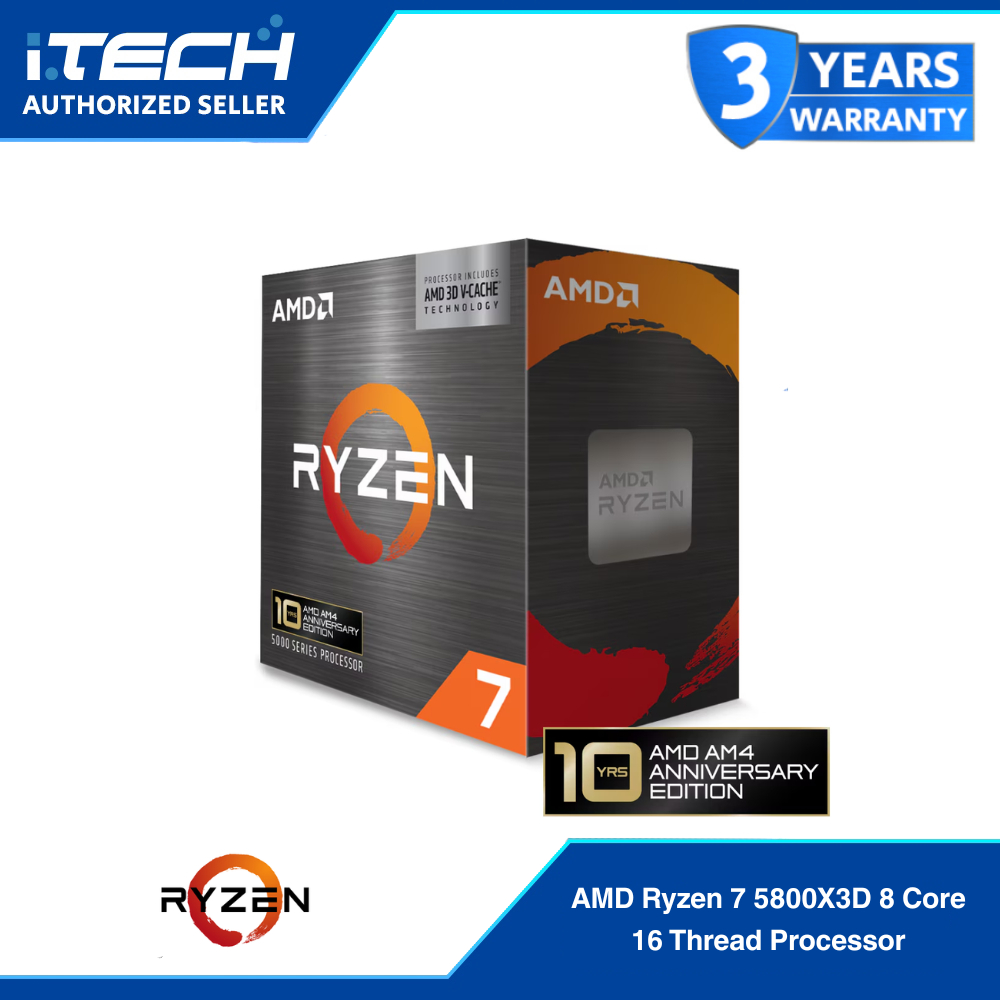
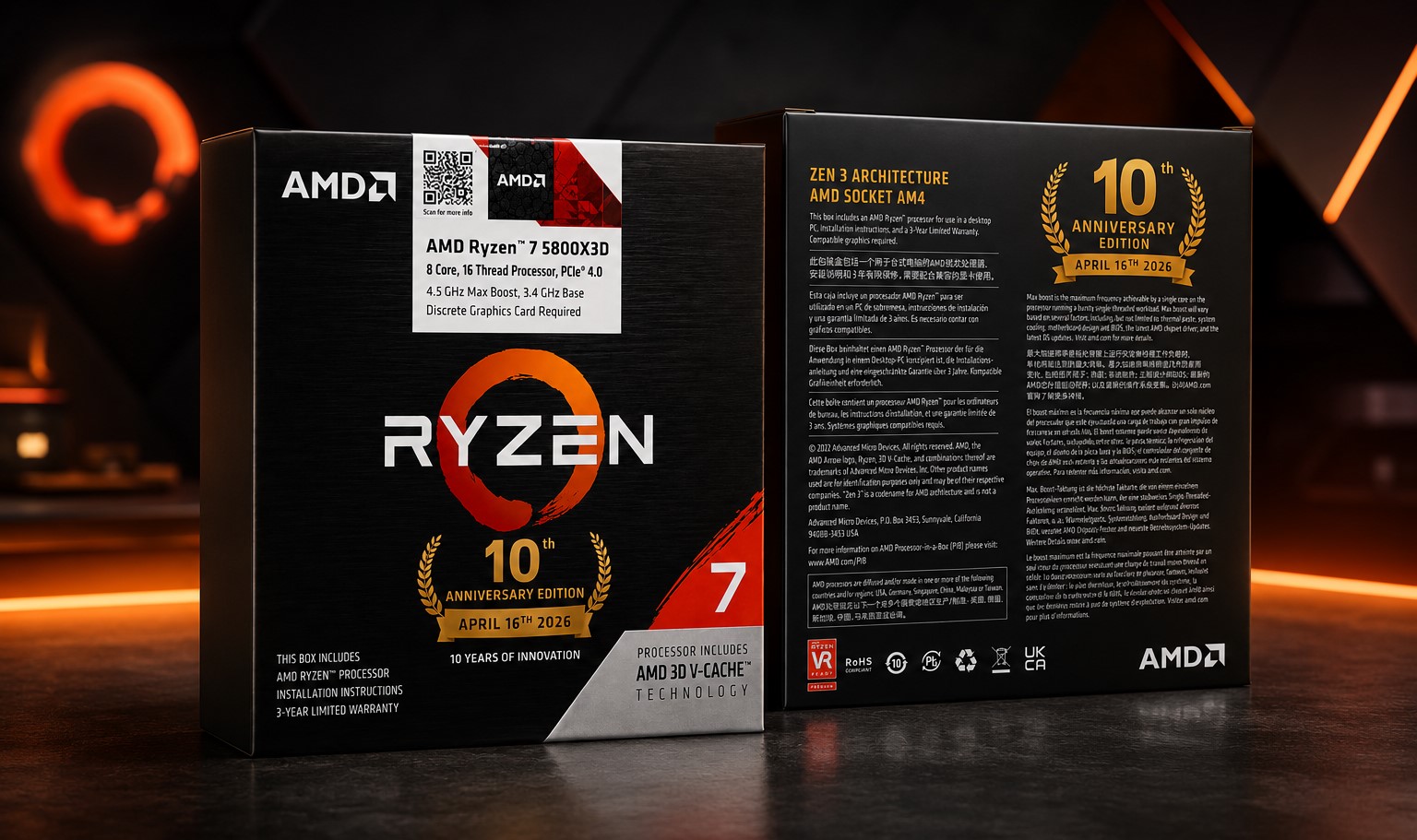
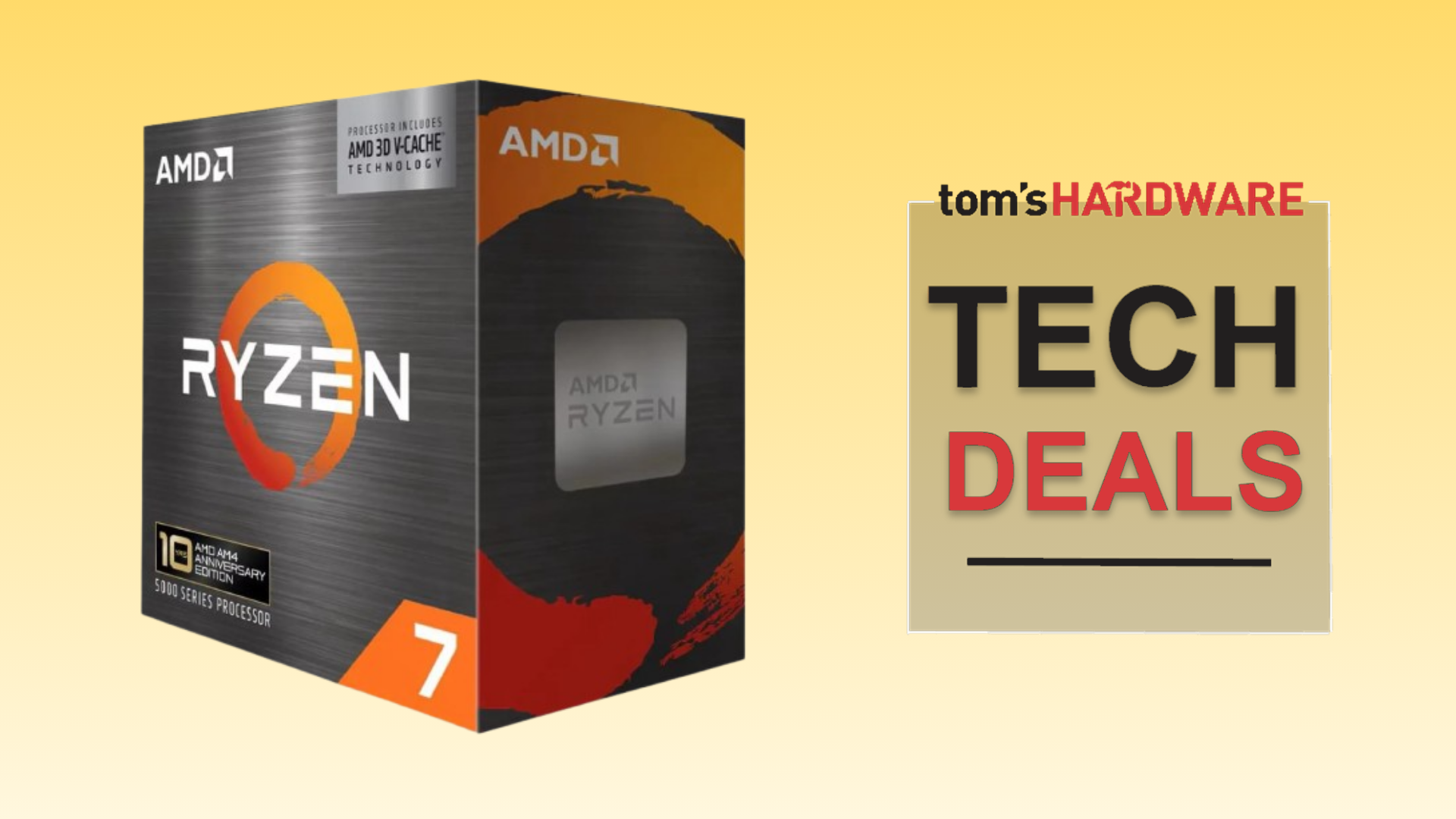
The current surge in AMD Ryzen 7 5800X3D deals is a clear example of budget builders choosing mature platforms, bundled coolers, and cheaper DDR4 memory over newer but costlier AM5-based options, highlighting that PC build value now matters more than chasing the last few frames per second in benchmarks. With AMD’s 10th Anniversary Ryzen 7 5800X3D re-release, a six-year-old platform is suddenly one of the most attractive gaming CPU discounts for value-focused gamers.
Here’s the headline that should worry newer-chip marketing departments: the Ryzen 7 5800X3D has sold around 3,000 units at about USD 349 (approx. ₱20,000) in a month, while the newer Ryzen 7 7800X3D trails at roughly 2,000 units at nearly the same price. On the best-selling CPU lists, the 5800X3D sits ahead of its technically stronger sibling, even though the 7800X3D offers better raw performance for similar money. That isn’t a fluke; it is a signal. Gamers are voting with their wallets for total build cost and convenience, not spec sheets. And the AM4 ecosystem, powered by aggressive budget CPU bundles, is giving them exactly that.
The Bundle Math: Why Free Coolers and RAM Discounts Trump Specs
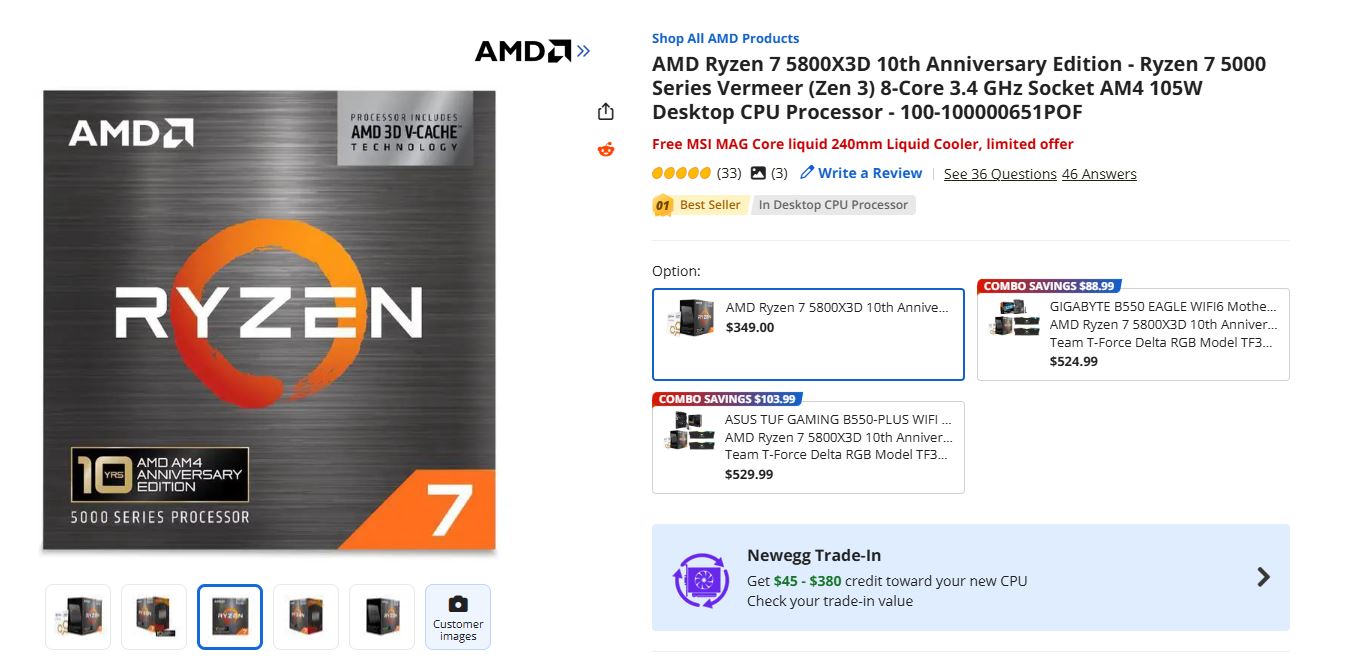
If you look at the Ryzen 5800X3D deals as whole-system value instead of isolated CPU pricing, the sales story stops being surprising and starts being inevitable. On Newegg, the 5800X3D anniversary edition sells for USD 349.99 (approx. ₱20,200) and comes with a free MSI MAG Coreliquid 240mm AIO cooler worth about USD 70 (approx. ₱4,000). That free cooler effectively drags the CPU’s cost under USD 280 (approx. ₱16,200) once you factor in what you no longer need to buy separately. Add in combo offers that include an Asus TUF Gaming B550-Plus motherboard plus 16GB of DDR4 RAM for USD 529.99 (approx. ₱30,600), and you’re staring at textbook budget CPU bundles built to maximize PC build value.
The psychology is simple: a free 240mm AIO cooler erases a whole budget line item and removes planning friction. For cost-conscious builders, not having to shop for a separate cooler is almost as important as saving the money itself. According to one review, “the free AIO cooler brings the effective cost of the 5800X3D to just USD 270 (approx. ₱15,600).” That kind of clear, quantifiable value is exactly what budget builders latch onto. They don’t see an old CPU; they see a ready-to-drop-in gaming package that makes their spreadsheet look better than any bare AM5 chip can right now.
| Build Element | 5800X3D AM4 Bundle | Typical 7800X3D AM5 Setup |
|---|---|---|
| CPU price bracket | ≈ USD 349.99 (approx. ₱20,200) with cooler | ≈ USD 350 (approx. ₱20,200) without major bundle perks |
| Cooler requirement | Included 240mm AIO, no extra cooler cost | Usually bought separately at extra cost |
| RAM type | DDR4 (cheaper, widely available) | DDR5 (more expensive in current market) |
| Bundle options | CPU + motherboard + 16GB RAM at USD 529.99 (approx. ₱30,600) | Less aggressive bundle presence |
AM4’s Maturity: The Hidden Edge in AMD Processor Sales
Raw performance may favor the 7800X3D, but platform maturity strongly favors the 5800X3D. AM4 has been around for years, and that matters in a way spec sheets do not. Millions of gamers already own AM4 systems, which makes the 5800X3D a straight drop-in upgrade path. They can keep their DDR4 RAM, reuse their cases and power supplies, and often avoid replacing motherboards entirely. When they do opt for a new board, the bundles provide reliable B550 options with modern features like Wi-Fi 6, 2.5Gb Ethernet, dual M.2 slots, and plenty of USB. By contrast, moving to AM5 often means new RAM, new motherboard, and the pain of higher DDR5 prices.
The current “RAMpocalypse” of rising DDR5 costs is the real villain here. Reviews note that simply moving to DDR5 can be a noticeable performance boost, but those same reviews concede DDR5 is “massively more expensive than it used to be.” AMD’s decision to re-release the 5800X3D is targeted: it gives owners of older AM4 builds, and new budget-focused builders, an alternative route that avoids the DDR5 tax while still delivering top-tier gaming performance on the AM4 platform. In other words, AM4’s popularity and maturity are not nostalgia; they are a rational response to rising platform costs, and they are directly shaping AMD processor sales charts.
Price-to-Performance Sweet Spot: How Gamers Value Real-World Gains
The 5800X3D is not the fastest gaming CPU AMD sells, but within AM4 it is the performance ceiling, and that context is crucial. Reviews confirm it remains “the fastest option for AMD AM4 builds with DDR4 RAM,” thanks to eight cores, sixteen threads, boosts up to 4.5 GHz, and a massive 96MB of L3 cache. Pair that with sub-USD 280 (approx. ₱16,200) effective CPU pricing when the bundled AIO cooler is counted, and you hit the price-to-performance sweet spot that value-driven gamers look for. They care less about beating the 7800X3D in synthetic charts and more about hitting high FPS without blowing their full-system budget.
This is what makes these gaming CPU discounts so impactful: for a limited window, builders can get near-flagship gaming performance on a mature, cheaper platform, without paying for the rest of the AM5 ecosystem. For a budget-friendly build, the 5800X3D kits “make sense,” not because they are glamorous, but because they line up with how gamers actually make decisions: total cost of ownership, reuse of existing parts, and meaningful in-game performance per dollar. When performance differences move from “game-changing” to “nice-to-have,” the bundle that looks better in a spreadsheet tends to win. Right now, that bundle is the 5800X3D on AM4.
Conclusion: Budget Builders Are Sending a Message to CPU Makers
Taken together, the data paints a clear picture: when AMD offers smart Ryzen 5800X3D deals with free coolers and RAM-inclusive budget CPU bundles on the AM4 platform, gamers respond by buying older chips over newer ones. The 5800X3D outselling the 7800X3D at similar prices is not irrational fan behavior; it is a rational reaction to high DDR5 costs, platform churn, and the desire to squeeze maximum PC build value out of every dollar.
The message to CPU makers is blunt: specs alone no longer win the midrange. Builders want whole-platform value, future-proof enough performance, and tangible discounts like bundled 240mm AIO coolers, not marketing slogans. If AMD and its competitors want their latest architectures to dominate sales, they will have to stop assuming buyers will swallow expensive platform shifts without meaningful package deals. Until then, older tech with smarter pricing will keep punching above its weight—and the Ryzen 7 5800X3D will remain the poster child for that shift.