
Glass, Airflow, and the New Mid-Tower Mindset
Modern mid-tower PC case design is the effort to balance panoramic tempered glass aesthetics with engineered airflow paths that keep high-performance components cool in compact, desk-friendly dimensions, allowing DIY builders to display their hardware without surrendering thermal efficiency or upgrade flexibility. That tension—glass airflow design versus high-performance cooling—is exactly where the latest cases are most interesting. Instead of treating glass as a necessary evil that traps heat, designers now treat it as a constraint that forces smarter intake and exhaust placement. In other words, cooling innovation is no longer about punching more mesh into a box; it’s about making airflow work in visually driven layouts. That shift explains why the current generation of mid-tower PC case options feels less like a compromise and more like a deliberate intersection of style and performance for everyday builders.
Cougar CFV220 RGB: Panoramic Glass Without Thermal Guilt
The Cougar CFV220 RGB is a clear answer to builders who want a panoramic, three-sided tempered glass chassis but refuse to cook their GPUs for the sake of aesthetics. This ATX mid-tower PC case combines that glass-heavy look with an airflow-focused internal layout, using a large ventilated lower compartment as its primary intake area to drive fresh air straight toward the CPU and GPU. Cougar’s central intake chamber, lit by integrated ARGB, is more than a light show: the design channels air through the middle of the case in a direct path that aims to improve cooling efficiency even in a compact footprint. Out of the box, you get three 120 mm ARGB PWM fans—two feeding that intake tunnel, one handling rear exhaust—plus room for more roof fans and a 360 mm radiator up top for liquid builds. This isn’t glass pretending to be performance; it’s glass forced to coexist with real airflow math.
Cooler Master HAF II 500: Brute-Force Air for Big Hardware
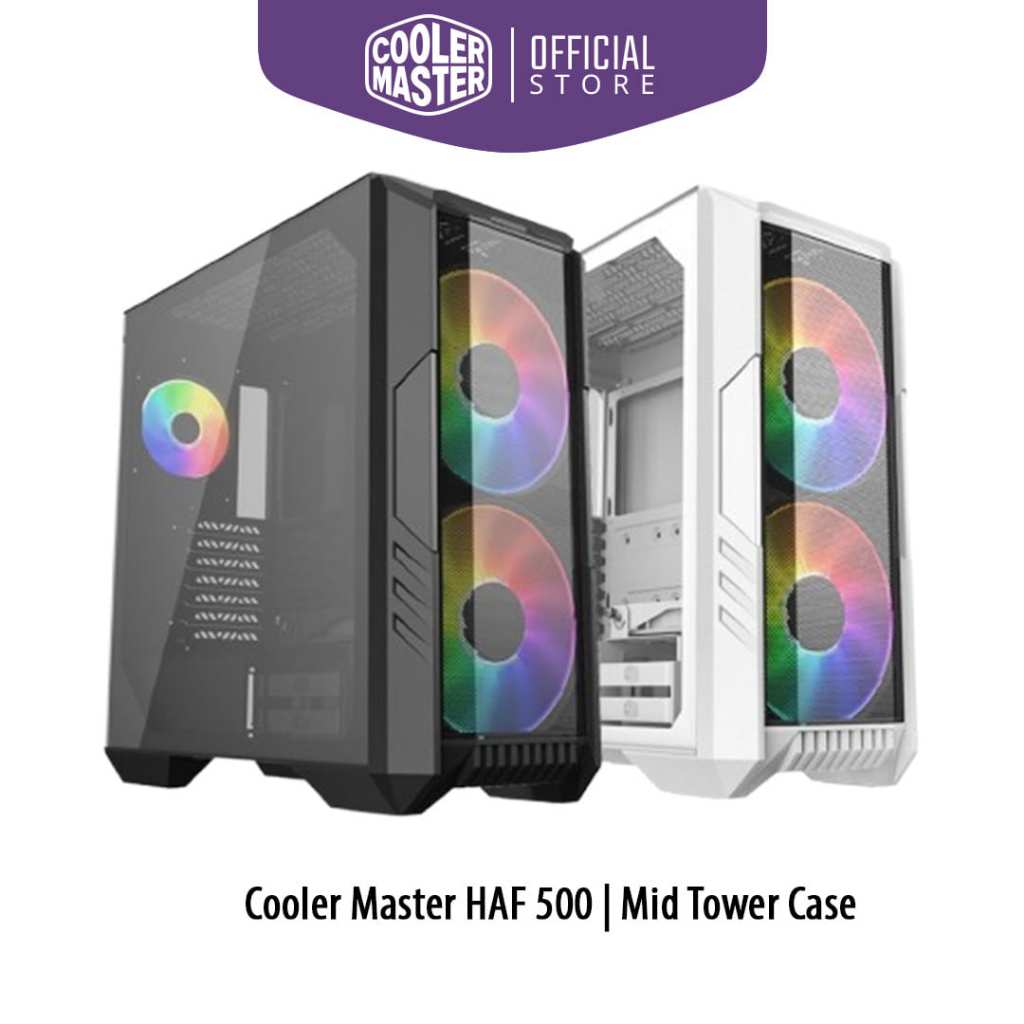
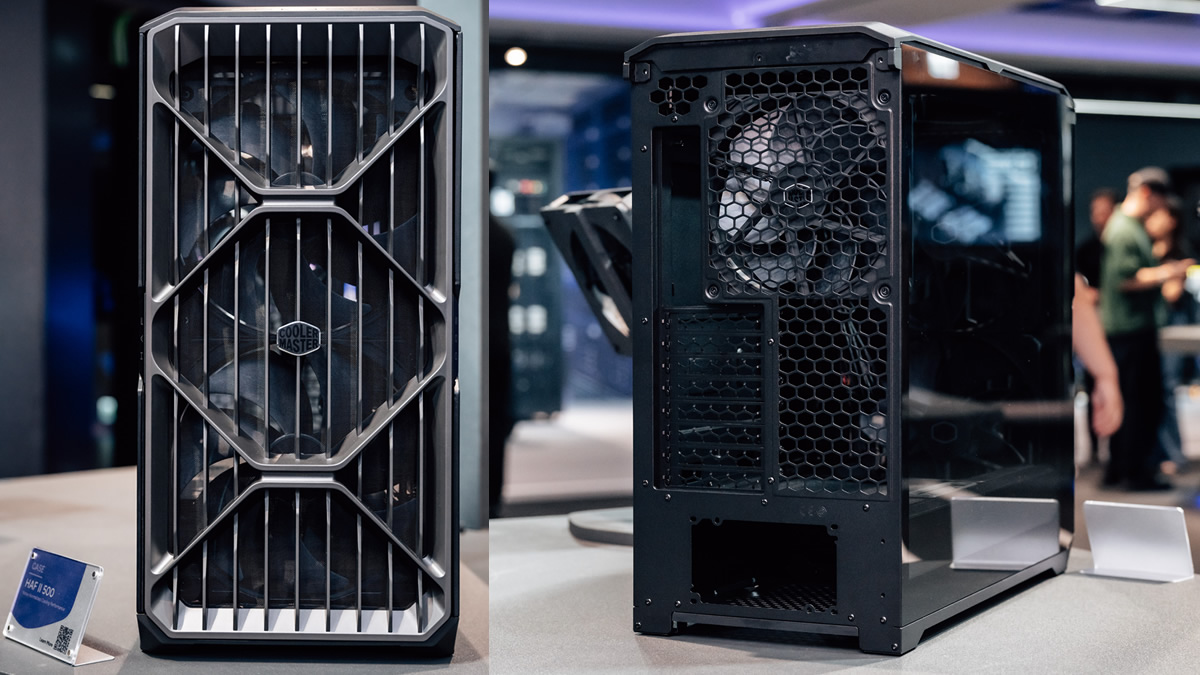
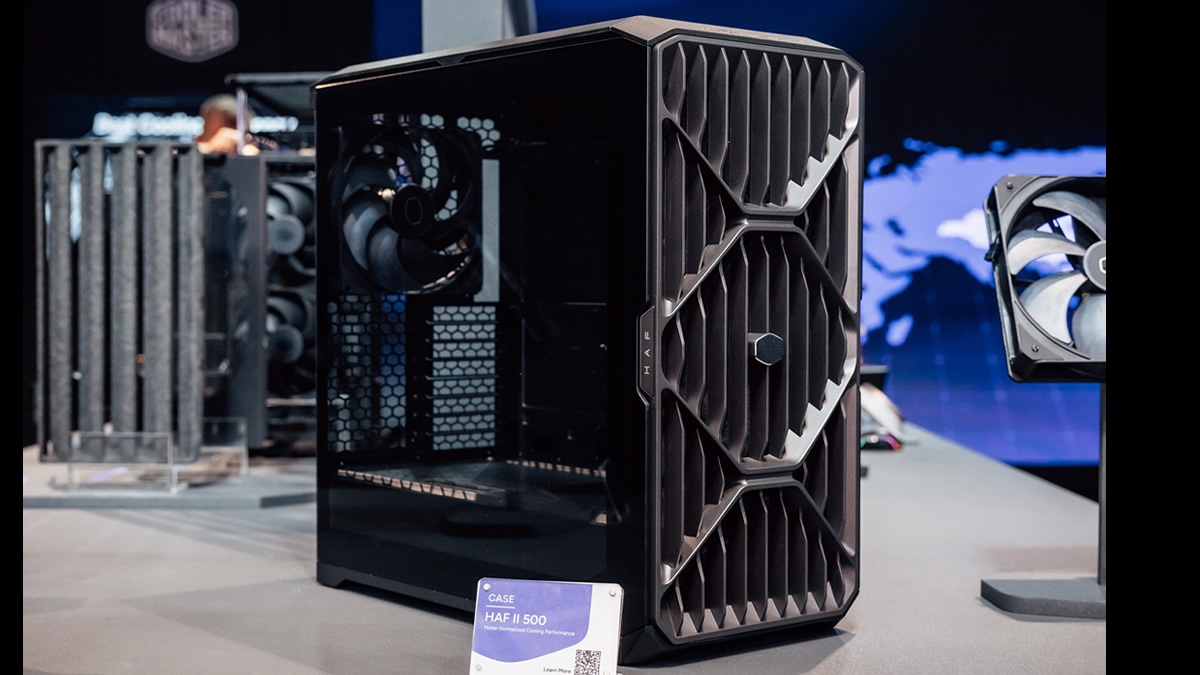
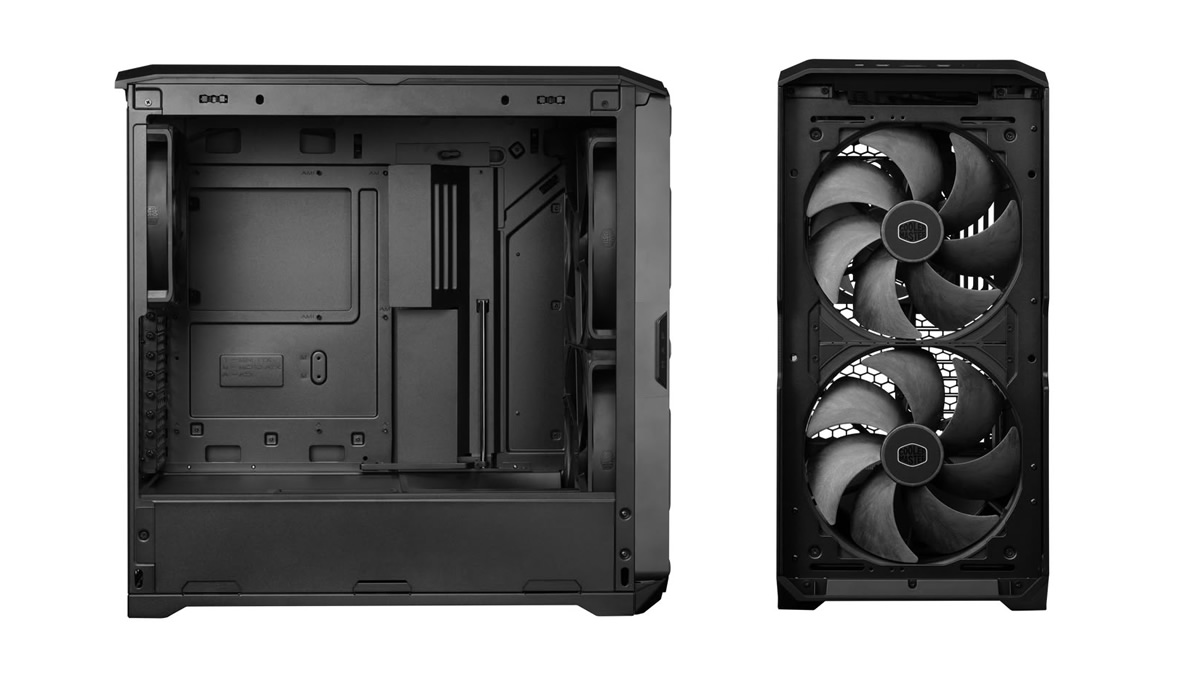
On the other side of the spectrum sits Cooler Master’s HAF II 500, a case that treats airflow not as a constraint but as a weapon. It arrives with two 220 mm "Mighty40" fans at the front and a 180 mm "Mighty40" at the rear, and the company promises "unmatched airflow and cooling performance" from this trio. These oversized, 40 mm-thick LCP-bladed fans are backed by a high-airflow chassis that reduces intake resistance and cuts down on internal interference, so more air moves in and out with less drama. This tower is large enough to hold boards up to 310 mm wide (EATX), making it well suited to AI work, rendering, and heavy workstation loads alongside high-end gaming hardware. You pay for that brute-force philosophy: the case is listed at USD 199.99 (approx. ₱11,200) in North America and €184.99 in Europe. In short, the HAF II 500 makes the case that raw airflow can still dominate, especially for oversized GPUs and complex builds.
Why Mid-Towers Are the Real Sweet Spot for DIY Builders
The CFV220 RGB highlights why mid-tower cases remain the sweet spot for most DIY builders: you get broad hardware compatibility without owning half the room. Measuring 235 x 504 x 446 mm, it fits standard ATX boards (including reverse-connector designs), GPUs up to 420 mm long, air coolers up to 170 mm tall, and ATX PSUs up to 160 mm. That combination of GPU and CPU clearance with modest external dimensions is exactly what home setups need. You can go aggressive on cooling—adding roof fans or a 360 mm radiator—without upgrading your desk or cutting cable holes in a wall. Meanwhile, the HAF II 500 leans into larger hardware and bigger airflow machinery, appealing to builders who prioritize thermal headroom and expansion. Together, these designs prove that mid-tower doesn’t mean mid-performance; it means choosing the right balance between footprint, cooling capacity, and visual ambition.
The Future of Cooling Innovation in Glass-Heavy Mid-Towers
The interesting story here isn’t which case wins a spec sheet fight, but what their philosophies reveal about cooling innovation. Cougar’s CFV220 RGB shows that panoramic glass can coexist with purposeful airflow when intake and exhaust are treated as core layout features rather than afterthoughts. Its central intake chamber and directed airflow path are a blueprint for future glass airflow design in compact towers. Cooler Master’s HAF II 500, by contrast, argues that high-performance cooling can still be pushed forward through sheer airflow volume and carefully tuned fan engineering. Pricing reflects those different bets: the HAF II 500 is already pegged at USD 199.99 (approx. ₱11,200) and €184.99, while Cougar has yet to announce what the CFV220 RGB will cost or where it will ship. The takeaway for builders is simple: stop thinking of glass and cooling as opposites. The best mid-tower PC case today is the one that treats airflow as a first-class design language, whether that means panoramic panels or gigantic fans.