
The Hidden Curriculum in Your Rejected Photography Frames
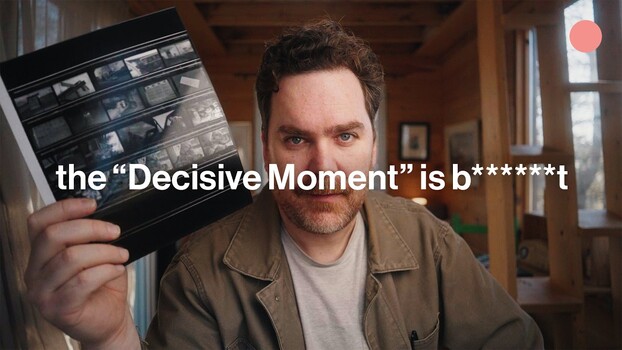
Rejected photography frames are the overlooked images from a shoot that never become final prints or posts, yet together they form a revealing record of a photographer’s decisions, missteps, experiments, and evolving vision across a sequence of moments. Treating these discards as study material, not embarrassment, turns every failed exposure and near‑miss composition into direct feedback about how you see and react with a camera in your hands. In other words, your rejects silently teach you the craft you think your polished portfolio already shows. The key takeaway is blunt: if you want to improve, stop obsessing over your best shot and start interrogating the roll that produced it. Contact sheet analysis was born for this purpose. After a shoot, film photographers would lay negatives on light‑sensitive paper, expose it, and get a readable print of every frame in one go, a quick way to assess results before committing to full prints. That overview, not the single masterpiece, is where process becomes visible.
What Masters’ Contact Sheets Expose About Real Mastery
The myth is that great photographers operate like snipers: one clean shot, pure instinct, no waste. Contact sheets from masters tear that myth apart. In a book on Eve Arnold, the pioneering photographer known for her portrait of Marilyn Monroe, a contact sheet from that session shows her working and searching, circling some frames and crossing out others as she moves through the shoot. The image we remember is not a lightning bolt of genius; it is the end point of trial and error. The same is true for Dorothea Lange’s “Migrant Mother” and Elliott Erwitt’s famous Chihuahua image, where the sheet even reveals heavy cropping that transforms the final frame. One quotable reality emerges from these artifacts: “Instagram shows you the one frame out of a thousand. The contact sheet shows you the other 999”. Mastery, in other words, is built on missed shots, not immunity to them.
Decisive Moment Photography Without the Myth of Perfection
The cult of technical perfection insists that missing a frame is unforgivable, that autofocus charts and corner sharpness matter more than meaning. Yet the history of photography openly disagrees. Work by Helen Levitt, Henri Cartier‑Bresson, Robert Frank, Garry Winogrand, Nan Goldin, Luigi Ghirri, Guido Guidi, and William Eggleston was made with imperfect tools and even more imperfect frames, often embracing blur, grain, and unresolved composition as part of their language. Decisive moment photography has been flattened into a fantasy of surgical precision, as if Cartier‑Bresson’s title described an infallible trigger finger instead of a long process of shooting and editing. In reality, the decisive moment is identified in the photography editing process, not only at the shutter press. According to one analysis, the contact sheet survives as the artifact that shows the working session behind every supposedly effortless hit. Precision should serve vision, not become a substitute for it.
Why Editing Your Own Sequences Matters More Than Gear Talk
There is a growing mountain of technically immaculate images that feel spiritually empty: camera tests masquerading as art, sharp enough to cut glass yet saying almost nothing. One reason is that many photographers spend more time refreshing firmware notes than examining their own rejected photography frames. The contact sheet mindset reverses that. When you see a full sequence, you witness hesitation, repeated attempts at timing, shifts in angle, and the photographer’s changing relationship to the subject. This is where the photography editing process becomes a training ground. You learn which frames you circle, which you cross out, and why. Over time, the act of choosing teaches you what a real decisive moment looks like in your own work, instead of some abstract ideal. Even experienced portrait photographers work through a session until they can say “we got it,” projecting confidence while still wrestling with doubt about the frame they’ll keep. That tension is not failure; it is craft.
Let Your Misses Shape Your Vision
If you treat every missed focus and awkward composition as proof you’re a fraud, you’ve misunderstood how photography grows. The masters’ contact sheets prove that most of their frames are rejects, and only a handful survive into cultural memory. History keeps Levitt, Goldin, Ghirri, Guidi, and Eggleston not because they worshipped technical certainty, but because their images stayed alive despite, and often through, their imperfections. Your task is not to eliminate failure; it is to harvest it. Build your own contact sheets, digital or physical, and study the whole sequence. Ask what you were trying to say, where the attempt faltered, and where it flickered into something real. Then let those patterns inform the next shoot. Great photography is not the absence of rejected frames. It is the courage to learn from them, again and again, until your vision outgrows your fear.