
Why Claude Code Is a Non‑Coder’s Secret Productivity Tool
Using AI code tools like Claude Code for organization means talking to an AI assistant in plain English so it can read your folders, notes, and documents, then summarize, group, and explain them without requiring you to write or understand any code at all. Claude Code productivity shines when you treat it less like a programmer and more like a librarian for everything you have scattered across drives and cloud folders. Instead of opening fifteen files and trying to remember what you saw in the first three, you get a map of the mess before you start moving anything. It can make sense of neglected folders by inspecting file names, contents, timestamps, and structure, then giving you a readable overview that feels like a guided tour of your own work. This angle turns Claude Code into one of the most practical non‑coding AI tools for day‑to‑day organization.
Set Up a Safe, "Pencil and Paper" Workflow
Before you let any AI touch your files, you want a planning‑first routine. Claude Code is excellent for programming, but it has many other useful capabilities, and the trick is keeping it in thinking mode, not coding mode. A simple way to do that is to prepend a phrase like “Stay in pencil and paper mode” to your prompts so it will hold off and discuss your plans before diving into the actual work. That phrase gives you time for review and prevents the tool from charging ahead while you are still deciding what you want. The most common mistakes here are forgetting to invoke planning features or giving broad permission to reorganize an entire directory in one shot, which can lead to large batches of files being moved or renamed based on assumptions. Treat this as a conversation about AI file organization, not a blind command.
Step‑by‑Step: Use Claude Code to Organize Files and Notes
Here is a practical, friend‑to‑friend workflow you can reuse whenever a project folder turns into a junk drawer. The goal is Claude Code productivity without surprises: separate analysis from action and stay in control of what changes.
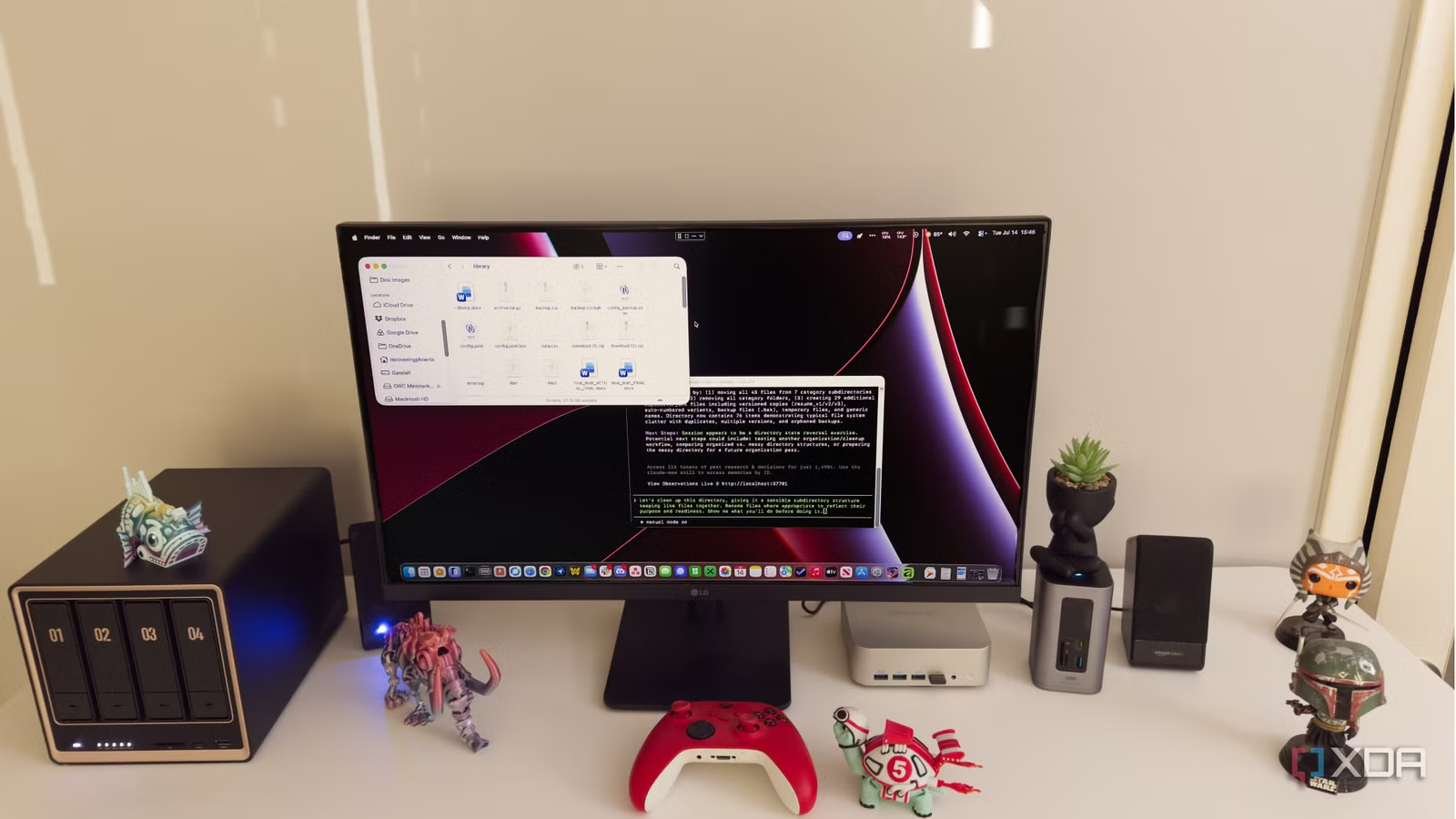
- Open Claude Code with your messy project folder attached, and start with “Stay in pencil and paper mode. Inspect this folder and tell me what you see, but don’t change anything.”
- Ask for an overview: which files appear related, where the obvious duplication or confusion lives, and which groups of notes look like they belong to the same project.
- Request summaries of scattered notes so you can see repeated ideas, drafts versus references, and which files still have a clear purpose.
- Have Claude propose a cleanup plan: a clearer folder hierarchy, more descriptive names, and candidates for an archive, but again without executing changes yet.
- Review the plan, correct misunderstandings, and only then approve specific moves or renames, keeping sensitive or ambiguous files out of scope.
This ordered flow keeps AI file organization from turning into a one‑click purge. The expected result is that your abandoned projects become reopenable, your scattered notes turn into usable working context, and you can quickly tell which files have been taking up attention without offering much in return. It has been most valuable when it helps deal with work you have already created rather than generating more of it.
Avoid the Gotchas: Context, Permissions, and Privacy
Claude Code can read your files, but it cannot automatically know why you kept each one. That is the heart of the real gotcha: if you ask for a cleanup with too little context, it has to fill the gaps with assumptions. A cleanup can appear perfectly organized and still leave you with no idea where the version you needed went. That is why you should not give broad permission to rename, move, overwrite, or delete large batches of files based on a single request. Instead, ask for inventories before allowing any actual changes, and be explicit about which directories are fair game. Privacy matters here too; some folders contain material you would not paste into a casual chat, and what you are comfortable letting Claude inspect depends on contents and how much access the task requires. Staying in “pencil and paper mode” plus “ask me questions first” makes those boundaries clearer from the start.
Is Using Claude Code This Way Worth It?
If you are buried in drafts, exports, and half‑finished notes, using Claude Code as an organizational assistant is worth trying. Using Claude Code as a librarian has made it feel less like a specialist tool and more like something that belongs in a regular workflow, helping reopen abandoned projects and understand folders that no longer match the neat system they started with. The payoff is a map of your work and compact summaries that let you decide what to keep or archive with far less manual effort. The main things to watch for are over‑broad commands, missing context, and forgetting to stay in planning mode, all of which can lead to changes you did not intend. Treat Claude Code as an advisor for AI file organization, not an unsupervised cleaner, and you get the best of non‑coding AI tools without losing control of your projects.