
Top Pick: SG Image 25mm f/1.8 – 90% of an X100 Experience for a Fraction of the Cost
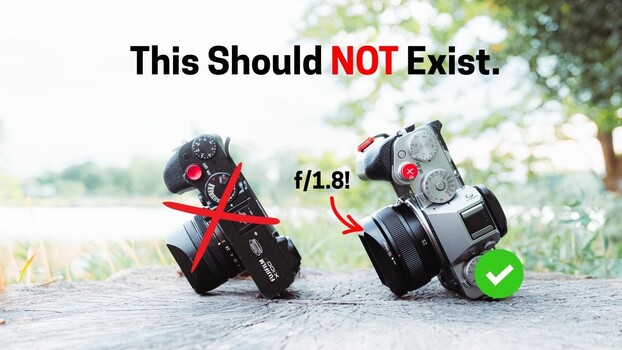
Budget prime lenses are fixed-focal-length optics that trade some features and corner performance for sharp centers, bright apertures, and much lower prices than premium glass, making them smart choices when matched to specific shooting needs and camera systems. For most people, the SG Image 25mm f/1.8 pancake for Fuji X is the budget prime to buy. Mounted on a body like the X-T5, it is used as a compact, everyday wide-normal lens that aims to give about “90% of the Fujifilm X100VI experience” in a cheaper interchangeable-lens setup. Center sharpness is strong at f/1.8, which matters for portraits and subject-isolating street shots, while stopping down to around f/5.6–f/8 cleans up the frame for landscapes and general walk‑around work. Autofocus is accurate even if not the fastest motor, so you get more keepers in real use rather than headline‑grabbing speed tests.
Build quality feels solid, with a metal mount and metal focus ring backed by dense plastic elsewhere. It stays slim on the camera, perfect if you want a near‑pocketable setup. There is a thin rubber gasket around the rear for basic sealing, though its real protection is uncertain. You do lose some premium niceties: there is no aperture ring, which many Fuji shooters expect, and flare can be a problem. Wide open in backlit scenes or around bright streetlights, the lens can throw distracting patterns that may even trip up autofocus; stopping to f/2.8 makes flare much more manageable. If you can work around flare and accept softer corners until you stop down, this lens gives you sharp budget optics with a bright aperture and accurate AF at a much lower cost than fixed‑lens premium compacts.
Runner-Up: Meike 24mm f/1.4 – Full-Frame Wide with Serious Sharpness
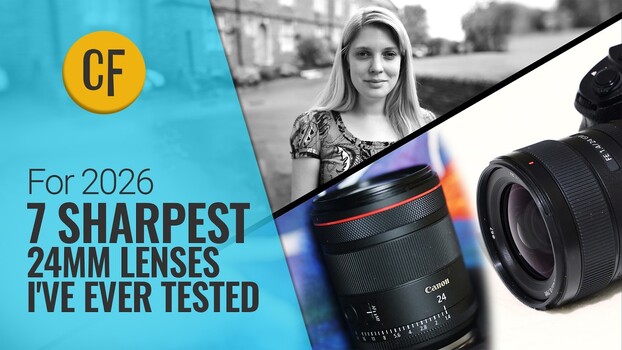
If you shoot full frame and want a wide budget prime, make the Meike 24mm f/1.4 your first pick. In an independent test of seven autofocus lenses around 24mm, including one 25mm entry, this third-party prime was described as “a genuine surprise at its price,” holding reasonable sharpness from center to corner even on a high‑resolution body. Wide open you get a bright f/1.4 aperture for low light and shallow depth of field; stop down to f/2 and the whole frame sharpens up significantly. That makes it a strong option for environmental portraits, events, and street work where your subject lives near the center and you value brightness over perfect corners.
The trade‑offs are classic budget‑prime compromises. Color fringing is visible, so you may need to correct chromatic aberration in post, especially around high‑contrast edges. While corner sharpness is decent for the price, it will not match high‑end 24mm glass designed for landscapes and architecture, especially once in‑camera distortion correction stretches the outer frame. That said, all seven lenses in the comparison were described as options “no one would be embarrassed to own,” and the Meike earns its place by delivering sharp budget optics with a fast aperture at a fraction of the cost of premium 24mm lenses. If you mostly shoot people, street scenes, or documentary work, it offers more than enough resolving power in real‑world use.
How These Budget Primes Compare to Premium 24mm Glass
Comparing affordable primes to premium optics is not about finding a flawless clone; it is about understanding which corners are cut and whether they matter to you. In the 24mm test, lenses like the Nikon Z 24mm f/1.8 S and Sigma 24mm f/2 DG DN tied at the top, with the Sigma edging the Nikon in corner sharpness while the Nikon’s brighter aperture made it harder to design. On the budget side, the Meike 24mm f/1.4 trails those flagships but still keeps center and corner sharpness respectable once stopped down, despite more color fringing.
On APS‑C, the SG Image 25mm f/1.8 aims to mimic the feel of a fixed‑lens premium compact by pairing a slim body with a bright f/1.8 maximum aperture. Its center sharpness at f/1.8 is comparable to what many shooters expect from more expensive fixed‑lens cameras, while corners only become acceptable around f/8. Flare resistance and the lack of an aperture ring remind you this is a budget design. According to Christopher Frost, reading lens rankings well means “matching the winner to what you actually photograph rather than the raw score,” since wide‑angle designs often favor center detail while corners reveal how hard the design is working. In that context, these third‑party prime lenses make sense: they target sharpness and brightness where everyday photographers notice it most, and leave premium edge‑to‑edge perfection to higher‑priced glass.
| Spec / Trait | SG Image 25mm f/1.8 (APS‑C) | Meike 24mm f/1.4 (Full Frame) |
|---|---|---|
| Focal length class | Wide‑normal (about 35mm equivalent feel on APS‑C) | Wide‑angle 24mm on full frame |
| Max aperture | f/1.8 pancake design | f/1.4 bright prime |
| Autofocus behavior | Accurate but not the fastest motor | Autofocus tested among seven full‑frame AF lenses |
| Center sharpness wide open | Genuinely sharp center at f/1.8 | Reasonable center sharpness even at f/1.4 |
| Corners stopped down | Clean up by about f/8 | Sharpen up clearly by f/2 |
| Main optical weakness | Strong flare wide open; softer corners until stopped down | Visible color fringing; less refined corners vs premium 24mm options |
| Controls / build | Metal mount and focus ring, dense plastic body, no aperture ring, thin gasket | Budget build; designed as a low‑cost AF 24mm |
Buying Checklist: When Budget Primes Beat Premium Glass
Before you default to expensive branded lenses, check whether a sharp budget optic can do the job. For wide primes, the most important choice is between center and corner performance. Wide‑angle designs almost always resolve their sharpest detail in the middle, and corners reveal the limits of the design. If you shoot landscapes, architecture, or astro, corner sharpness and distortion correction matter more than a stop of extra light. If you shoot environmental portraits or street scenes where your subject sits near the center, a brighter aperture and strong center sharpness at f/1.4–f/1.8 can serve you better even if corners stay soft.
Next, weigh autofocus behavior and flare control. For many users, autofocus accuracy matters more than headline speed, and the SG Image lens proves that on Fuji bodies by delivering reliable focus even with a slower motor. On the other hand, it struggles with flare wide open, which can hurt backlit or night work. Finally, match the lens to your camera’s strengths and your shooting conditions. Rankings and lab scores are useful, but as Frost notes, you should align any lens choice with what you actually photograph rather than the chart position. In practice, both the Meike 24mm and SG Image 25mm reward shooters who use them within their strengths: center‑weighted compositions, moderate stopping down for detail, and realistic expectations about corners and flare.
- Buy the SG Image 25mm f/1.8 if you want a compact, wide‑normal walk‑around lens on Fuji X that feels close to an X100‑style setup at a far lower cost.
- Skip the SG Image 25mm f/1.8 if you rely on an aperture ring for exposure control or often shoot into strong light sources where flare will spoil images.
- Buy the Meike 24mm f/1.4 if you shoot full‑frame environmental portraits, events, or street scenes and care most about bright apertures with solid center sharpness at low cost.
- Skip the Meike 24mm f/1.4 if your priority is ultra‑clean corners for landscapes, architecture, or astro work where premium 24mm lenses still hold an edge.
- Buy the SG Image 25mm f/1.8 if you value accurate autofocus and are happy to stop down for landscapes or more even frame sharpness.
- Skip the Meike 24mm f/1.4 if you dislike correcting color fringing in post or need the feature set and refinements of higher‑end 24mm primes.