
Flash Sync in Plain Language: What You Are Really Controlling
Flash sync shutter speed is the fastest shutter setting at which your camera’s entire sensor is uncovered at once, allowing a single flash burst to evenly expose the whole frame while you balance ambient light, depth of field, and flash exposure control in bright or low-light conditions. When you press the shutter, the front curtain opens to start the exposure and the rear curtain closes to end it; the time between them is your shutter speed, and the flash can only fire when the sensor is completely unobscured. Most cameras top out around 1/200 s as their standard sync speed. Above that, the curtains form a moving slit, and a single flash pop gives you the infamous black band across the frame. Mastering flash sync is less about memorizing numbers and more about deciding whether you want speed, power, or motion in your frame.

HSS High Speed Sync: Freedom with a Hidden Price Tag
HSS high speed sync is the seductive option: flip it on and you can push shutter speeds far beyond your native sync limit, even up to 1/8000 s, while firing flash. In practice, that means you can shoot wide open at f/1.4 or f/2.8 in harsh daylight without needing an ND filter, using flash as daylight fill and keeping backgrounds pleasantly blurred. The camera and flash coordinate a series of rapid pulses instead of one big pop, so the slit moving across your sensor always sees light. The catch is serious: as the flash pulses 5, 10, or 20 times in a fraction of a second, effective power drops drastically because it cannot recycle at full output that fast. At the fastest shutter speeds you can lose around 4–5 stops of usable flash power, and even modest speeds like 1/250–1/400 s cost you 1–2 stops. You trade reach and punch for convenience.
ND Filter Flash Photography: Keeping Your Power and Paying in Stops
Neutral density in flash photography is the grown‑up option when you care more about flash power than convenience. Instead of forcing the shutter faster, an ND filter cuts ambient light before it even hits the sensor, so you can stay at or below your sync speed while still opening the aperture for shallow depth of field. A 5‑stop ND, for example, can move a midday exposure from ~1/3000 s to 1/100 s at f/1.2, turning an unmanageable scene into a sync‑friendly one. The key advantage is simple: with an ND filter, full power is full power and you regain 3–5 stops of effective light compared to HSS. You keep optimal recycle times, can maintain low ISO, and your flash exposure control remains predictable. The downside is you now have to compensate for the filter’s density in all your exposure decisions, and you add one more piece of glass to manage on the front of your lens.

The Overlooked Sweet Spot: Slow Shutter, Sharp Subjects, and Motion Blur
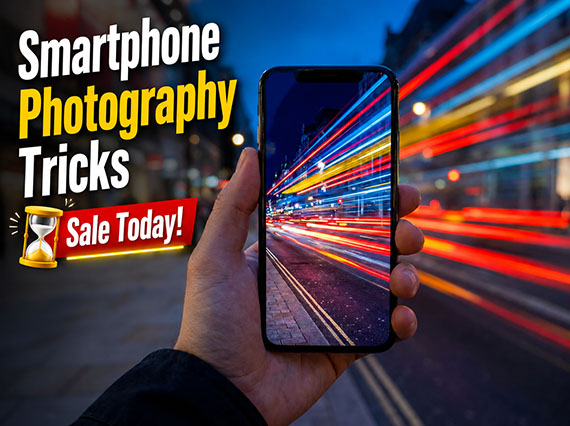
Most photographers either freeze everything or blur everything; the magic lives between about 1/10 s and 1/125 s, where part of the frame stays sharp while motion streaks gracefully through it. In this range you can handhold, add flash, and let motion paint around your subject instead of obliterating the scene. The amount of blur you see depends on three variables: focal length, subject speed, and shutter time. Longer lenses compress the frame so a walking person crosses it quickly, while a wide lens makes the same movement look slower. That means a car at a distance might need 1/30 s, but a nearby cyclist calls for 1/60 s to keep some form. In daylight, an ND filter becomes your best friend again; without it, bright conditions block you from dragging the shutter to 1/10–1/30 s where the creative effects live. The smart workflow is to pick the subject’s speed first, then match a shutter that leaves recognizable form behind.

Choosing HSS or ND: Match the Tool to Your Style, Not the Hype
The HSS vs ND filters debate only matters if you start with what you want the picture to feel like. If you are an on‑the‑go shooter who adds a little fill, works fast, and cares more about agility than raw power, HSS is a practical default. You gain freedom over flash sync shutter speed and keep the setup clean: no extra glass, no fiddling. If you chase dramatic, high‑contrast portraits, overpower midday sun, or push your flash near its limits, ND filters are the smarter backbone. You keep every bit of output and recycle speed your flash can offer while shaping ambient with aperture and shutter. Depth of field is the second deciding factor: both tools let you shoot wide open, but HSS costs you distance; ND costs you stops and setup time. Creative intent is the final tie‑breaker: HSS shines when you want crisp frames and speed flexibility, while ND filters excel for controlled, repeatable flash exposure control and for slow‑shutter motion experiments between 1/10 s and 1/125 s.