
Search Stops at Answers, AI Mode Pushes Through to Action
Google’s AI Mode in Search is a conversational AI search assistant that now connects directly to third-party apps so users can plan, shop, design, and manage music from one interface using natural language commands, turning passive search results into automated actions across services like Instacart, Canva, and YouTube Music. Google is no longer content to show blue links; it wants Search to be where tasks begin and end. With the new Connected Apps feature in AI Mode, users can link Instacart, Canva, and YouTube Music and execute tasks without leaving the results page. This is a clear power move: Google is trying to own not only the discovery step of the web but also the execution step. In practical terms, AI Mode is evolving from a smarter search box into the command center for your daily digital chores.
From BBQ Planning to Brand Launches: Cross-App Workflows in One Box
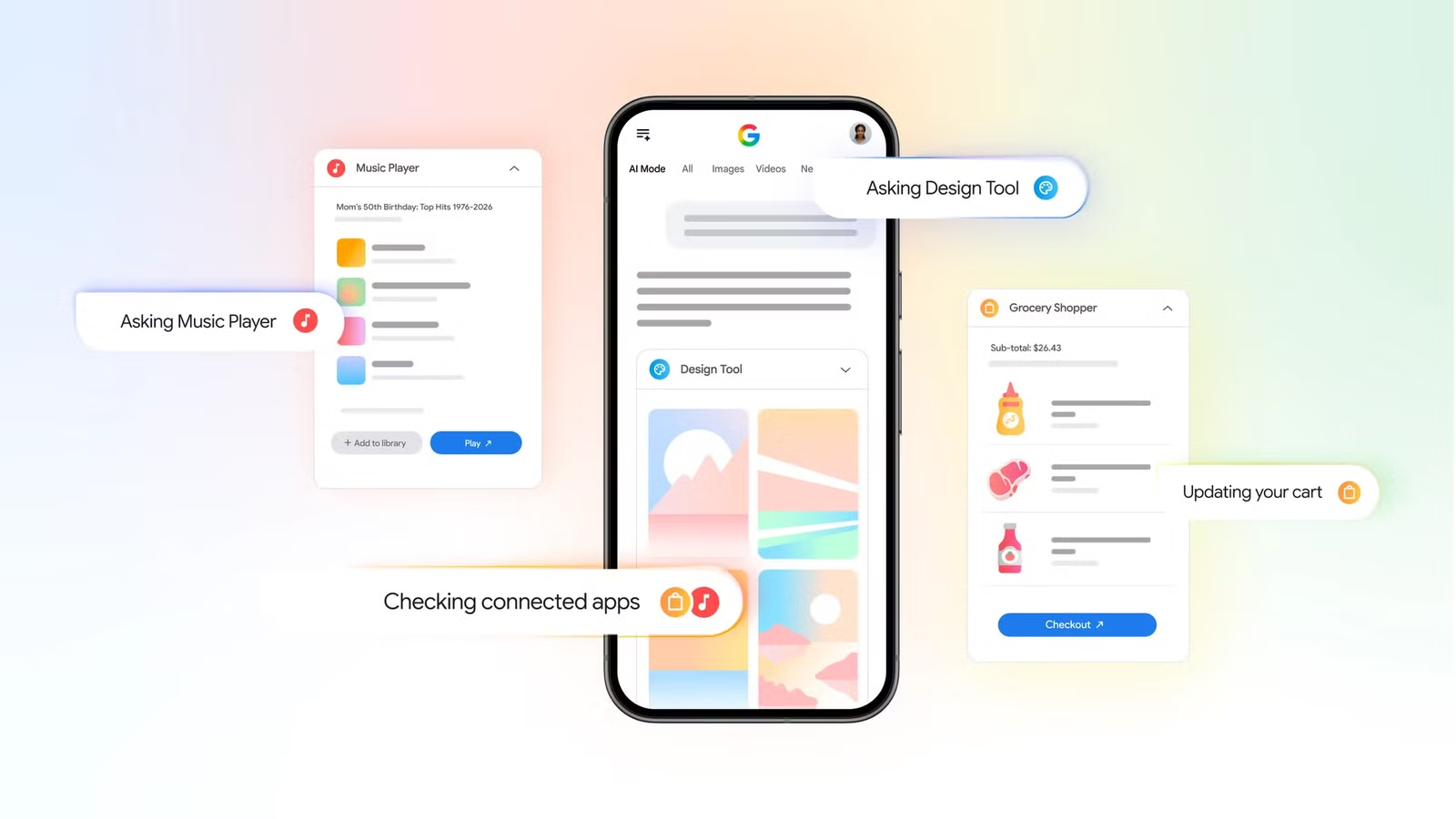
The most important change is not technical; it is behavioral. When AI Mode fills your Instacart cart for a barbecue based on a single prompt, the workflow moves from "search then do" to "say it and it’s done." Users can ask for a grocery cart of healthy snacks and drinks for eight adults and send those items straight into Instacart for checkout with a few taps. The same kind of third-party app automation now applies to creativity and entertainment. Ask AI Mode for a retro, grainy flyer in neutral earth tones and it surfaces Canva templates ready for editing. Ask for a playlist of top trending Bollywood songs from the past decade or songs from every year of someone’s life, and YouTube Music builds it right inside the chat, complete with title, track count, and duration, ready to play or save. The trio already covers shopping, design, and music management—three everyday workflows that usually require juggling between apps.
Why Google Is Turning AI Mode Into an All-Purpose Assistant
This expansion is not a random experiment; it is the next phase of a long game. Earlier this year, Google rolled out Personal Intelligence, which let people plug Gmail, Photos, and Drive into the Gemini assistant. Now that same philosophy—your information plus AI plus actions—is being pulled into mainstream Search and extended to non-Google partners. “Google is taking a significant step toward turning its search engine into an all-purpose digital assistant.” That line captures the strategy: keep users in the Google environment while doing the kinds of tasks usually handled by dedicated AI companions, shopping apps, and productivity platforms. If Search becomes where you draft marketing flyers, stock up on groceries, and assemble playlists, the risk is clear for others: fewer app opens, fewer websites visited, more value trapped in Google’s closed loop.
Productivity Hub or Walled Garden? The Trade-Offs Ahead
For users, the upside is obvious. AI Mode’s productivity workflow integration reduces friction between planning and execution so you can complete cross-app workflows without bouncing across tabs or devices. Planning a party becomes one conversation: brainstorm the menu, auto-fill an Instacart cart, generate a Canva flyer, and spin up a YouTube Music playlist. But convenience comes with trade-offs. As more tasks are completed within Search, less traffic flows outward, which reshapes how brands and retailers reach people. The integrations also rely on connected data: AI Mode can scan your Google Account and Gmail for context before composing a shopping list, which raises fresh questions about how much we want our inbox powering our purchases. If Google keeps adding partners—as it says it plans to do in the coming months—Search will feel more like an operating system than a website, and that shift deserves close scrutiny.
Where AI Mode Goes Next—and What Users Should Watch
Connected Apps in AI Mode is rolling out now in English to signed-in users, with Instacart, Canva, and YouTube Music as the initial launch partners. To turn it on, you head to google.com/ai, type a request into the Ask Anything bar, and link each third-party account through the surfaced “Link” button. Google says it is working with other developers and plans to add more app integrations, though it has not disclosed names or timelines. The direction is clear: more domains of life will be routinized through natural language, and more of that routing will be controlled inside Search. Users should welcome the time savings but stay alert to two things: how much personal data they connect and how much of their digital life becomes dependent on one AI layer. The line between helpful productivity hub and over-powerful gatekeeper will be drawn by how this integration evolves.