
The best first film camera: any working cheap compact under $20
Cheap compact film cameras are small, fixed-lens cameras that take 35mm film, automate most settings, and cost as little as a few dollars while still delivering sharp, usable photos and a simple shooting experience for beginners.
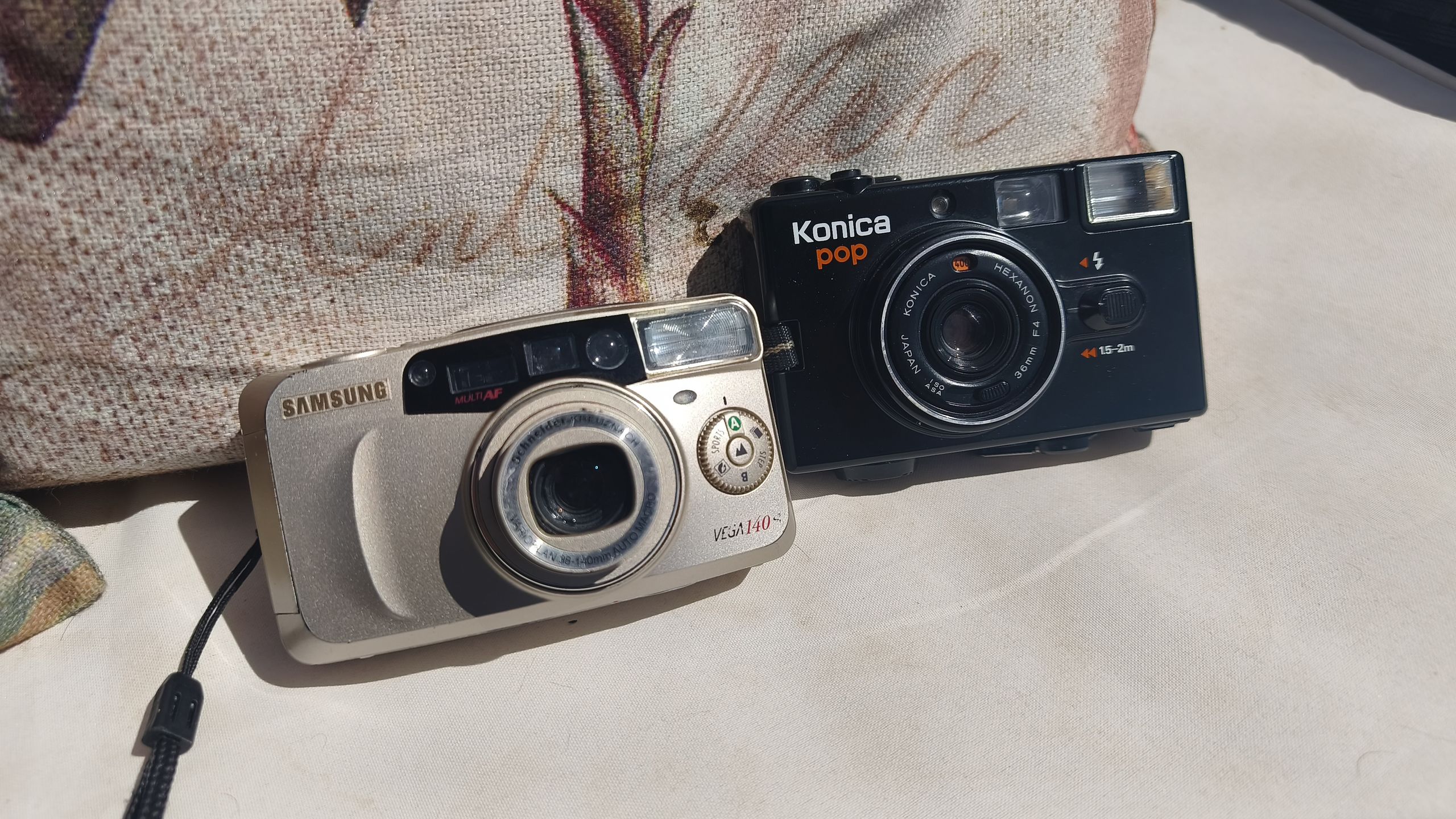
Your best first film camera is not a luxury rangefinder; it is the cheapest working compact you can find. Cheap compact film cameras are fantastic: they fit in a coat pocket, weigh little, and are ready to shoot the moment something interesting appears. That means you will actually carry them and use them, which matters more than any fancy spec sheet. For many people, the ideal entry point is a thrift-store or swap-meet compact that costs under USD 10 (approx. ₱560) for the body. One writer found a Konica Minolta Pop for USD 4 (approx. ₱224) and a Samsung Vega 140S for USD 6 (approx. ₱336), walking away with two cameras for USD 10 (approx. ₱560) that they “can use and enjoy.” That is the level of investment most beginners should start with.
These budget compact cameras offer autofocus, automatic exposure, built-in flash and even zoom lenses in some models, all tuned to prioritize taking photographs over fiddling with settings. A $4 compact can teach you composition, timing and light awareness every bit as effectively as gear that costs hundreds or thousands.
Why cheap compacts beat budget digital cameras for beginners
Film photography already slows you down because every frame costs money, so the camera should not add more friction. Cheap compacts shine here: their automation keeps you focused on the scene, not the menu. With automatic exposure and focus doing the work, you can concentrate on where to stand, when to press the shutter and what to include or exclude from the frame. That is exactly what a film camera beginner needs.
Modern low-end digital cameras often drown newcomers in modes, icons and settings that distract from learning core skills. By contrast, a compact that you pull from your pocket, point at something interesting and fire in one motion forces intentional decisions about each shot without overwhelming you. You have a limited number of frames on a roll, so you learn to think before shooting and to live with the consequences after. There may be imperfections, missed focus and the occasional strange exposure, but those are all part of the charm and part of the education.
Affordable film photography is still very possible: film costs exist, but even those can be lowered if you later learn home development. For now, the point is that your camera itself does not need to be expensive to give you real creative control and satisfaction.
Step up choice: Canon AE-1 as a long-term investment
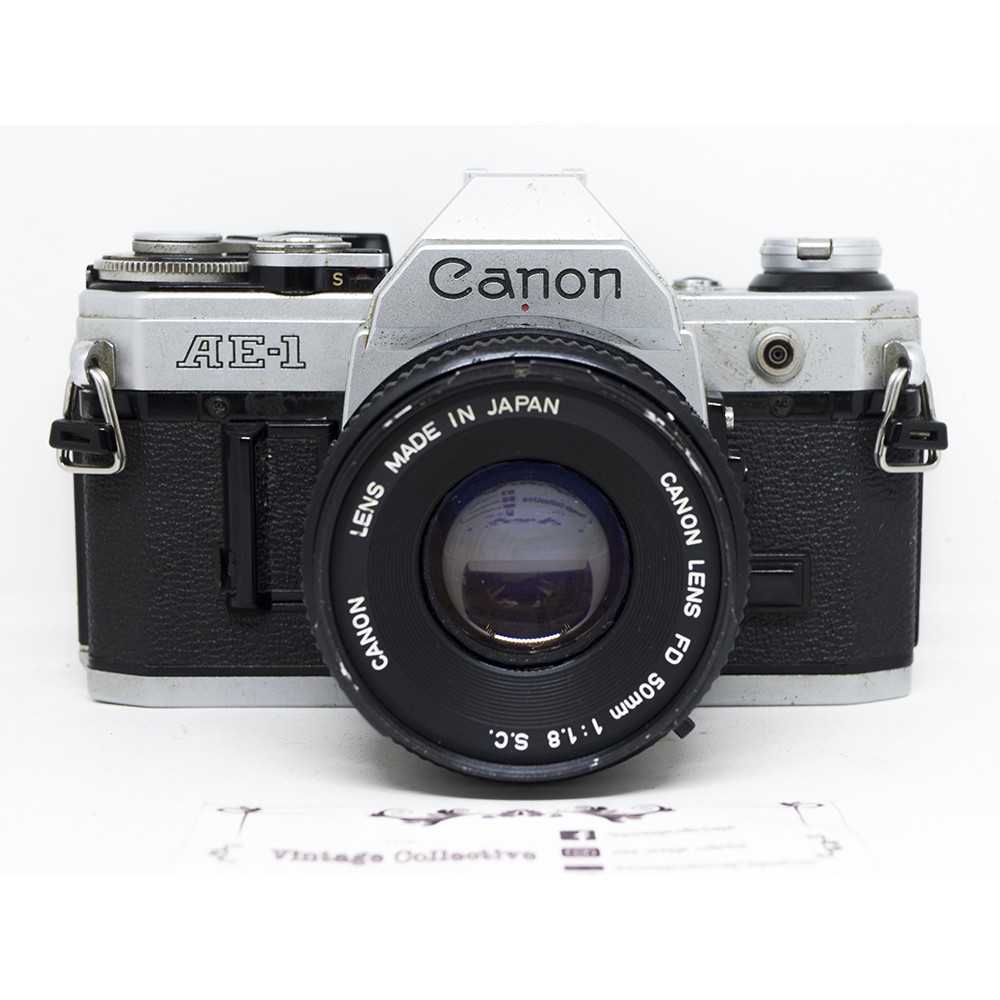
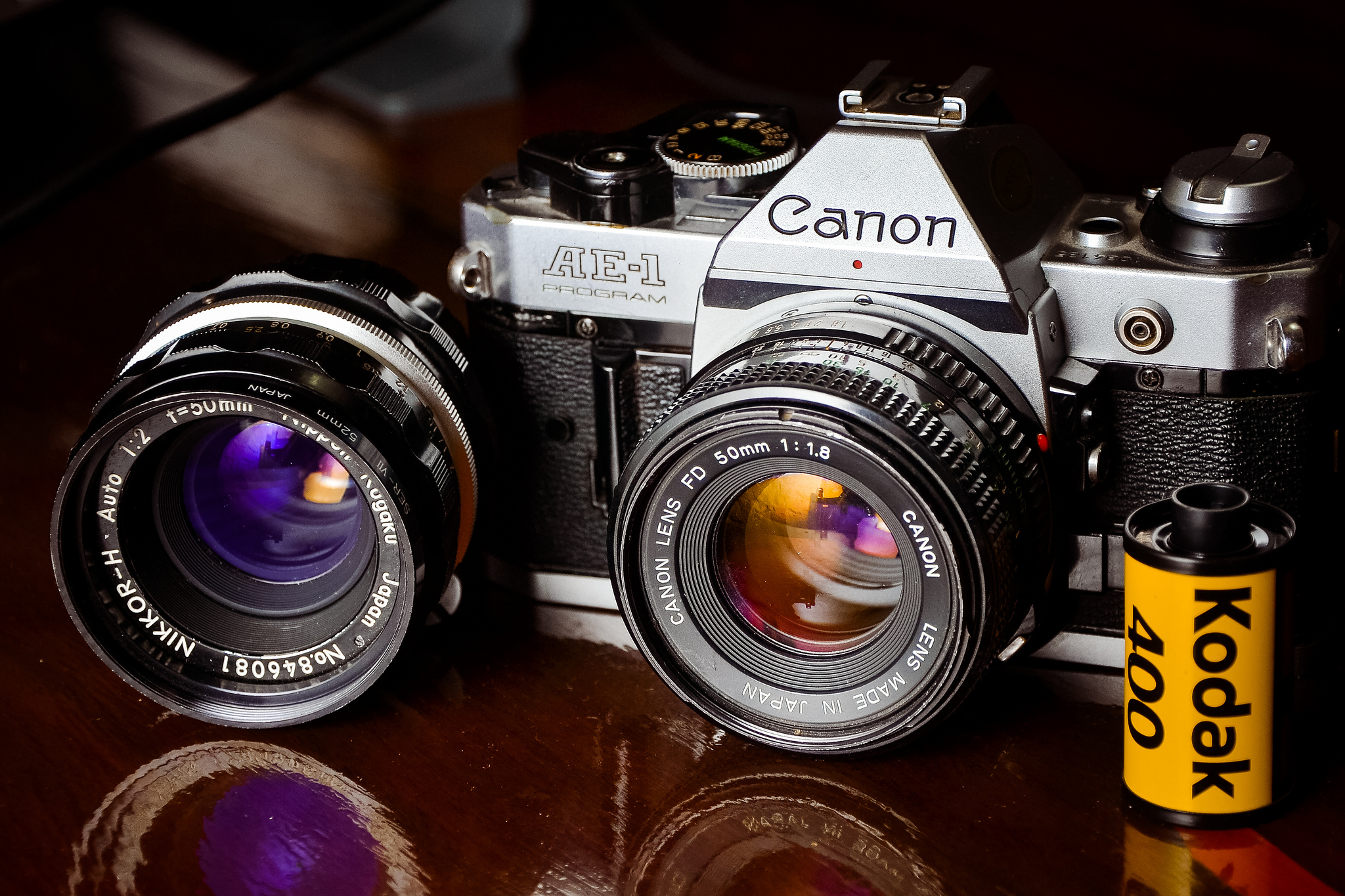
Once you have shot a few rolls on a compact and want more control, the Canon AE-1 is the clear step-up recommendation. It is a 35mm SLR that uses a focal plane shutter, takes 35mm film, accepts Canon FD lenses, covers ISO 25 to 3200, and offers shutter speeds up to 1/1000s plus bulb. It also syncs flash at 1/60s and works with dedicated flashes that can set aperture and shutter automatically.
This camera has something modern disposable digital gear cannot match: proven longevity. The Canon AE-1 is now 50 years old, and many copies still work and function very well. It was built using plastic molded to look and feel metallic, which helped reduce weight to 590g without a lens and made manufacturing simpler while keeping the camera solid in use. A notable camera hunter notes that the AE-1 “was groundbreaking and ushered in a new generation of ‘pro-am’ photographers” and that it remains “one of the go-to cameras for people starting their film journey… a fantastic way to get into shooting with film.”
The Canon AE-1’s main downside is that it is larger and heavier than a pocket compact, and it relies on a 6V battery for its electronically controlled shutter and metering. That means more to carry and slightly more setup. But in exchange, you gain interchangeable lenses, bright viewfinder focusing and a camera that has proved it can outlast trends and still be relevant decades later.
Real examples: Konica Minolta Pop and Samsung Vega 140S
To see how much value lives in the used film market, consider two specific budget compact cameras. At a car boot sale and swap meet, a photographer found a black Konica Minolta Pop in excellent condition for USD 4 (approx. ₱224). On the same stall they picked up a Samsung Vega 140S for USD 6 (approx. ₱336). For USD 10 (approx. ₱560) total, they left with two fully working cameras that they could use and enjoy.
The Konica Minolta Pop is a classic simple compact with a fixed lens, pocketable size and automatic exposure, while the Samsung Vega 140S adds autofocus and a 38–140mm zoom lens made by Schneider-Kreuznach, plus a cropped panoramic mode that gives images a cinematic shape. These are not fragile toys; they are practical tools that slip into a coat pocket, weigh almost nothing and are ready the moment you see a photograph.
| Spec | Konica Minolta Pop | Samsung Vega 140S |
|---|---|---|
| Approx. purchase price | USD 4 (approx. ₱224) | USD 6 (approx. ₱336) |
| Lens type | Fixed compact lens (auto-exposure) | 38–140mm zoom by Schneider-Kreuznach with autofocus |
| Special features | Pocketable, ready-to-shoot compact | Panoramic cropped mode, cinematic frame shape |
| Who it suits | Film camera beginner who wants a fun, simple pocket camera | Beginner wanting more versatility without extra complexity |
The used film market: low risk, high creative reward
The used film market is the secret that makes affordable film photography possible. You can find compact film cameras in car boot sales, charity shops, swap meets and forgotten family drawers. Many of these cameras look unassuming, but they hide sharp lenses and solid automation that still work fine today. Because the prices are low, you can experiment with different models without financial risk.
Film photography does not have to be an exclusive club for people spending thousands on gear. The best film camera is the one you are happy to carry, not afraid to use and that encourages you to take photographs. High-end models may be beautiful objects, but they are not the entry ticket to “proper” film photography and should not make anyone feel that film is out of reach. Pick up something inexpensive, check that it works, load a roll and put it in your pocket; you might be surprised how much enjoyment USD 10 (approx. ₱560) can buy.
- Buy the cheapest working compact if you want to learn film with minimal cost and maximum simplicity.
- Skip the cheapest working compact if you dislike imperfections, occasional missed focus and quirky exposures.
- Buy the Samsung Vega 140S if you want autofocus, a 38–140mm zoom and a fun panoramic mode in a budget compact.
- Skip the Samsung Vega 140S if you prefer a fully manual experience or do not care about zoom and panoramic features.
- Buy the Canon AE-1 if you are a film camera beginner ready for more control and a 50-year-proven SLR that still works well today.
- Skip the Canon AE-1 if you need a tiny, pocketable camera or dislike depending on a 6V battery for operation.