

ChatGPT Work: From Chatbot to Colleague
ChatGPT Work is OpenAI’s new AI job automation tool that can pull context from your apps and files to create documents, spreadsheets, presentations, and even web apps, then keep working on those tasks for hours by breaking them into smaller steps and completing them independently. This is not another chat interface; it is a full-blown AI agent meant to sit inside your working day. Launched alongside the GPT-5.6 family of models—Sol, Terra, and Luna—ChatGPT Work is OpenAI’s clearest attempt to move from “assistant that answers questions” to “agent that executes work.” The message is blunt: your repetitive office tasks are now fair game for automation, and OpenAI wants to be the platform that does it.
GPT-5.6: The Engine Behind the Agent
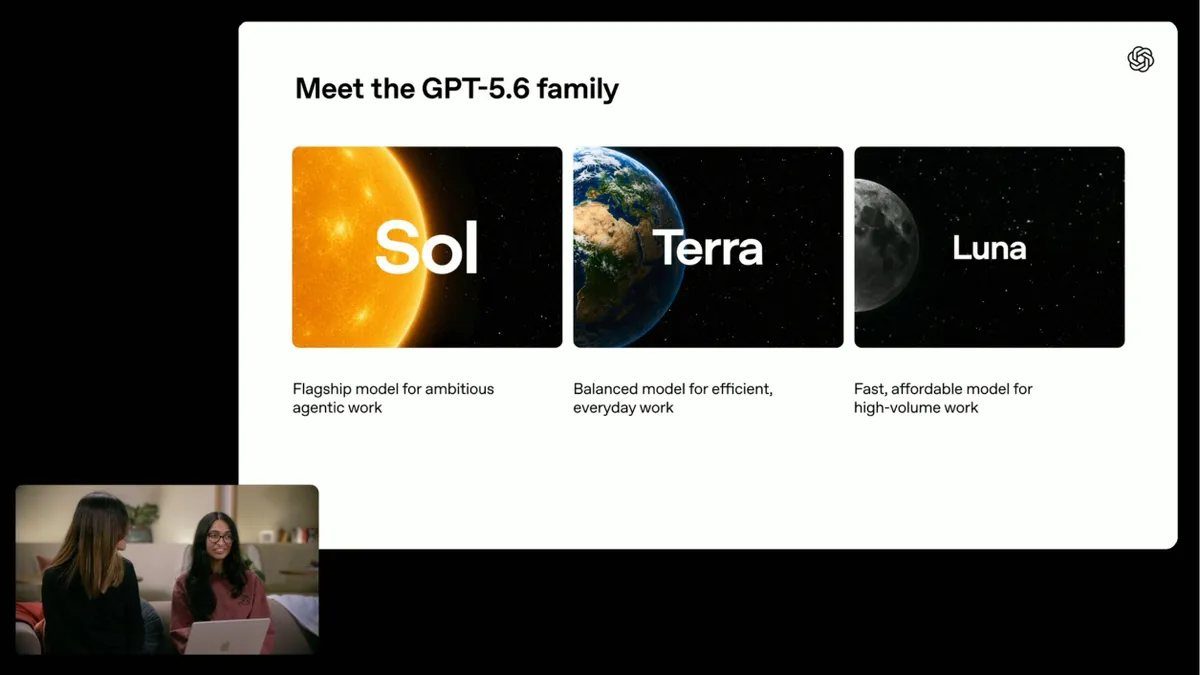
If ChatGPT Work is the colleague, GPT-5.6 is the brain that makes it credible. After a preview delay to allow government review of security concerns, OpenAI has officially debuted GPT‑5.6 with three tiers—Sol, Terra, and Luna—designed to replace the GPT‑5.5 lineup. The flagship Sol model is tuned for long, multi-step workflows, and the benchmarks are clearly aimed at one target: Anthropic. On the Agents’ Last Exam, a test of long-running professional workflows across 55 fields, Sol scored 53.6, beating Claude Fable 5 by 13.1 points. OpenAI also says Sol matched Fable on a broad intelligence index while finishing tasks in 61% less time and scored 80 on a coding agent index, 2.8 points higher. The quote that matters: “GPT‑5.6 Sol scored 53.6 on Agents’ Last Exam, beating Claude Fable 5 by 13.1 points.”
What ChatGPT Work Automation Looks Like in a Real Office
The pitch for ChatGPT Work automation is simple: hand it the grunt work you already understand and let it run. OpenAI says the best way to start is by giving it tasks such as analyzing a month‑end budget variance, turning disparate source materials into a marketing campaign brief, or preparing for a sales meeting—with you supervising as it goes. Under the hood, the AI agent spreadsheet and document skills are more than templates: the tool can scan your apps and workflows to generate documents, spreadsheets, presentations, and web apps from live business context. One early case from an enterprise marketing team shows how far this can go: “We used ChatGPT Work to build a repeatable system for reviewing thousands of leads each month…it generated a weekly executive dashboard that highlighted missed pipeline and revealed seven figures in potential sales.” If that is not job automation, what is?
The New Battlefront: Desktop Control and Deep Integrations
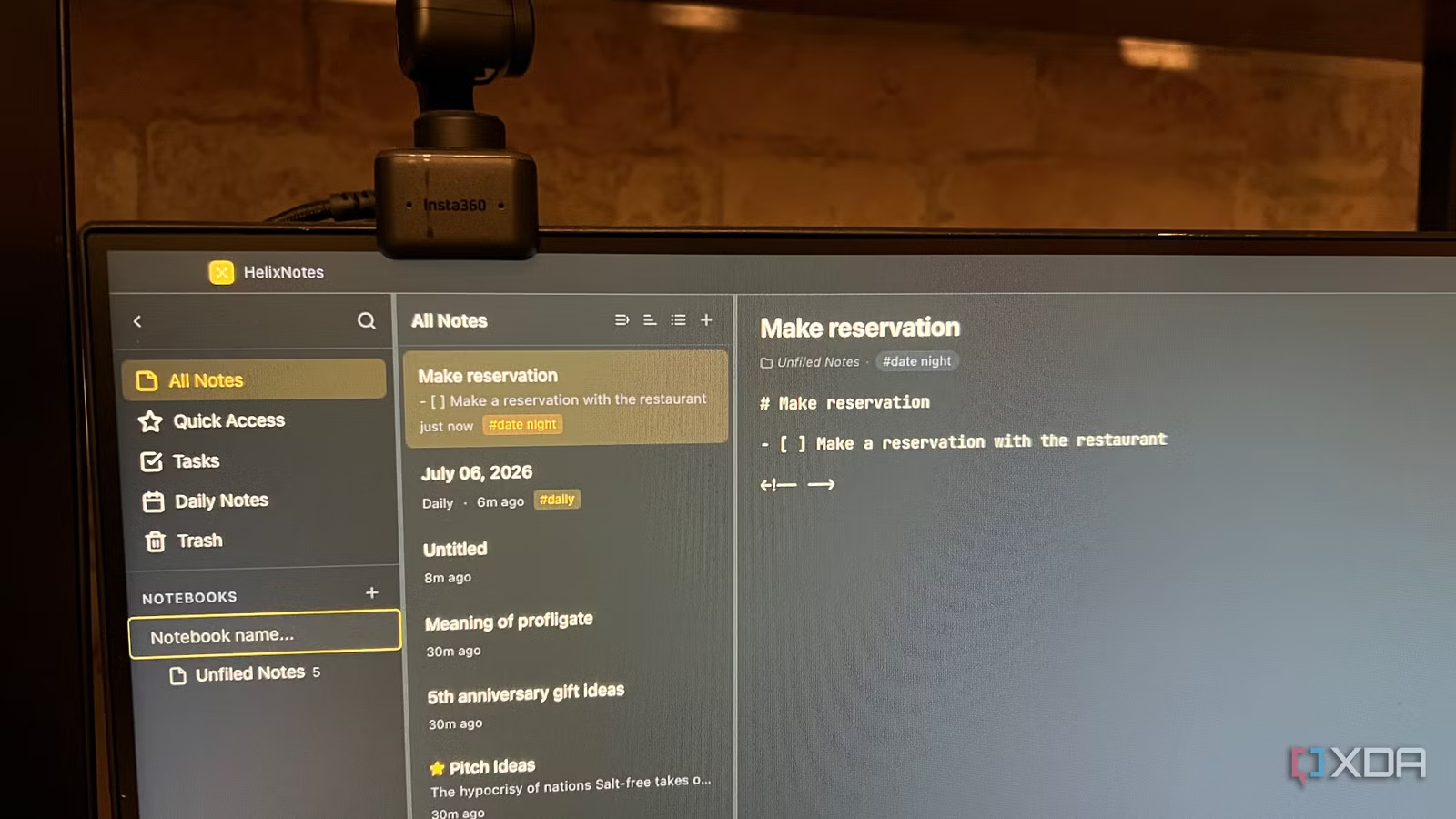
The real shift is that OpenAI no longer wants you to copy-paste into a chat box; it wants your desktop. ChatGPT Work can access your desktop and browser to perform tasks directly, from creating spreadsheets and slide decks to building full websites and reorganizing your notes. That level of control is both powerful and unsettling—as one demo of the AI freely restructuring a notes app showed. This is where ChatGPT Work as an AI job automation tool collides head-on with rivals. It has plugins and connectors for Slack, Microsoft Teams, Google Drive, SharePoint, email, calendars, CRMs, and project trackers, pulling context across apps to automate documentation and data entry. In effect, OpenAI workplace productivity is no longer about smart replies; it is about wiring an agent into the same systems your team already lives in.
OpenAI’s Competitive Gamble—and What Happens Next
These launches are less a quiet upgrade and more a public counterpunch. Commentators have noted that GPT‑5.6 and ChatGPT Work look like OpenAI “playing catch-up with all the buzz” around Anthropic’s latest models and agent tools. The company is leaning on benchmarks that frame Sol as faster and more efficient than Claude Fable 5, while also describing it as less costly at comparable reasoning levels. Strategically, splitting the general-purpose ChatGPT Work agent from the coding-focused Codex is a smart branding move that signals a broader audience beyond developers. Availability is rolling out now: mobile and web for Pro, Enterprise, and Edu users, expanding to Plus and Business in the coming days, with desktop agents on Windows and Mac for all plans. The conclusion is hard to avoid: the next phase of AI competition will be decided less by raw model IQ and more by who automates the most of your daily work without breaking your trust.