

What “no signal” travel connectivity looks like today
Emergency communication travel tools now include satellite messaging on phones and built-in flight tracking on iPhones, helping travelers stay connected, informed, and safer when regular mobile signal or third-party apps are unavailable in remote areas or during disruptions.
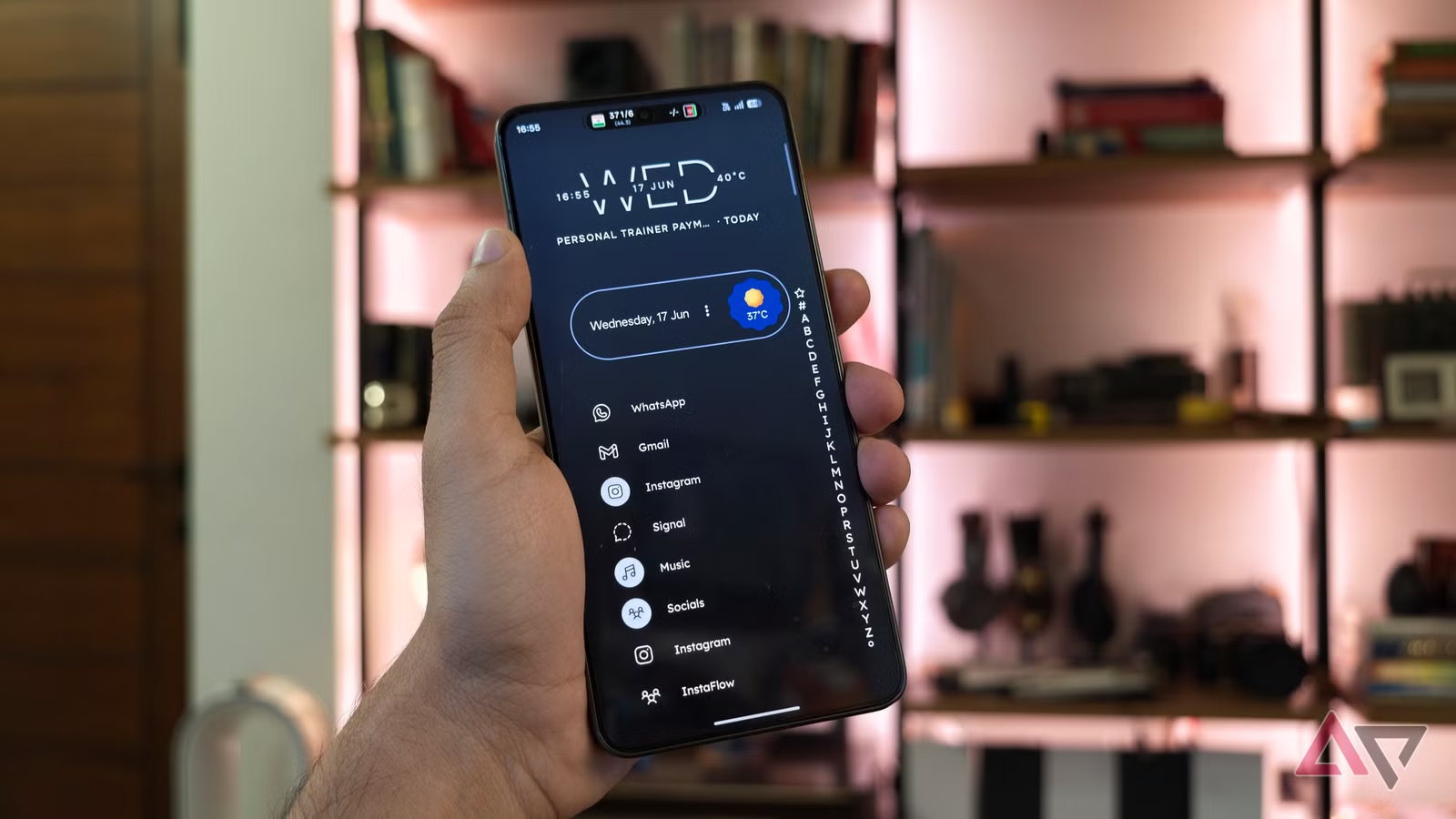
If you spend time on mountain trails, long road trips, or tight airport connections, your phone already has more travel connectivity features than you might think. Modern networks can link your satellite messaging phone to StarLink satellites so it can switch between ground networks and satellites on the fly, keeping you online almost everywhere you can see open sky. At the same time, your iPhone can track flights in real time without installing anything extra, giving you an instant read on delays and cancellations. The only real prerequisite is to set these up before your trip, so you are not learning menus while you are cold, stressed, or boarding.
Setting up T-Satellite for emergency communication travel
Think of T-Satellite as a safety net when your usual bars disappear. It uses StarLink satellites equipped with special cell radios that talk over T‑Mobile’s LTE Band 25 spectrum, so compatible phones can automatically switch between terrestrial and satellite networks to keep you connected about 99% of the time. When it works, you can use selected apps like WhatsApp for voice calls, send MMS photos, pull maps, and even text 911 from areas where no normal mobile service exists.
The main caveat: not every recent phone is supported. T‑Mobile notes that most phones sold in the last four years are compatible, but many devices outside its own sales channels still do not work with T‑Satellite. If your phone is not supported, you will not see any satellite connectivity option in its settings menu. So you want to confirm compatibility long before you are halfway up a trail or driving across empty desert.
- On your phone, open Settings and scroll to “About Phone” in the system section to find your IMEI and EID numbers.
- Go to T‑Mobile’s official T‑Satellite compatibility tool in a browser and enter those IMEI and EID numbers to check support.
- If your phone is compatible, enable the T‑Satellite option in your connectivity or SIM settings (it appears only on supported models).
- In areas with weak or no normal coverage, watch your status bar: it will change to show “T‑Mobile SpaceX” or “T‑Sat+Starlink” when the satellite link is active.
- Use supported apps like WhatsApp for voice calls, and send text messages (including texts to 911) while connected via satellite.
When everything is set up, your phone can connect to T‑Satellite virtually anywhere you have a clear view of the sky, including more than 500,000 miles of previously uncovered territory. T‑Satellite also works in some international locations such as Canada, New Zealand, and Japan. The only real gotcha is speed: the link is slower than standard 5G, so treat it as a lifeline for messaging, navigation checks, and emergency calls rather than streaming.
Using your iPhone’s hidden flight tracker instead of extra apps
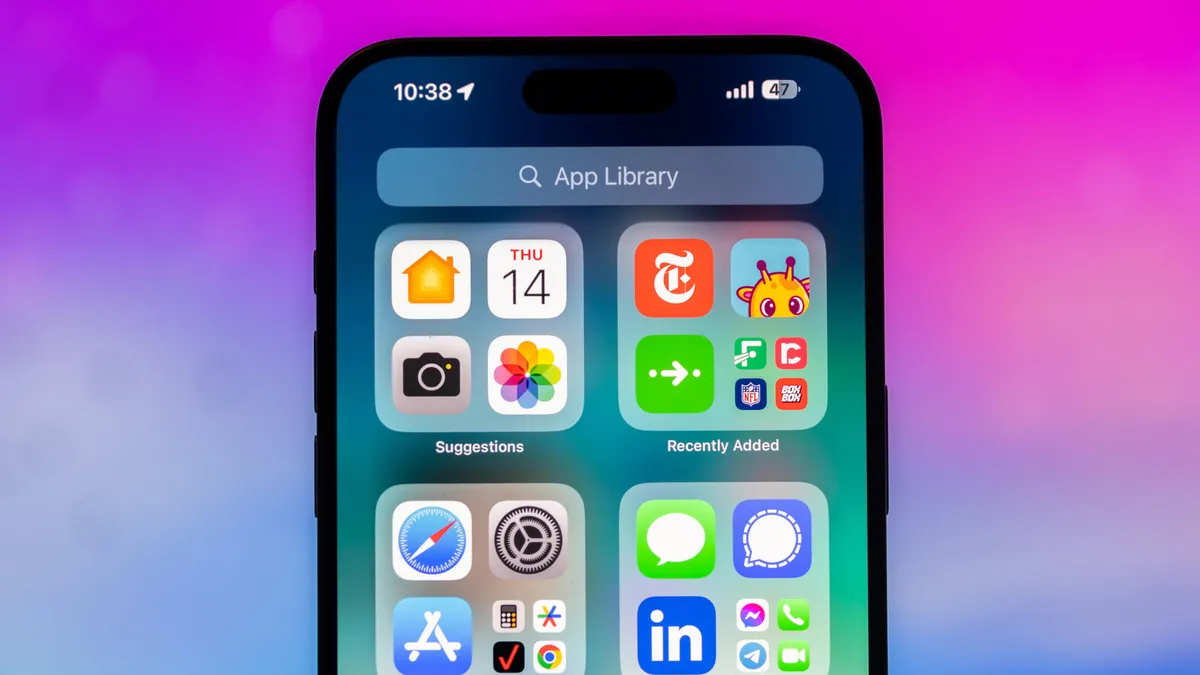
While satellites keep you in touch off-grid, your iPhone can keep you sane in airports. There is a built-in flight tracking iPhone feature inside Messages and Spotlight that shows real-time maps, gate changes, delays, and cancellations without any third-party downloads. As one guide notes, this hidden tracker “completely bypasses the need for third-party downloads or constant Google refreshes.” The only prerequisites are that iMessage is turned on, and your flight number appears in a message in the format Airline FlightNumber, for example, American Airlines 9707.
The most common mistake is format and timing. If iMessage is off, or the flight number is buried in extra words, your phone will not recognize it. And if your flight is months away or already in the past, you may see “Flight information unavailable,” or even details for a different route, because airlines recycle flight numbers. So always double-check that the number and date match your actual trip.
- On your iPhone, confirm iMessage is enabled in Settings; the tracker does not work over plain SMS/MMS.
- Send yourself or someone else a message that contains the flight in this format: Airline FlightNumber (for example, American Airlines 9707).
- Open the Messages app, tap the conversation with that text, and look for the flight number to appear underlined; this means it is actionable.
- Tap the underlined flight number, then choose “Preview Flight” from the quick-action menu to open the tracker window.
- Check the live map and details: you will see a moving plane icon between cities plus status, departure and arrival times, terminals, gates, duration, and baggage claim info.
If you prefer, you can swipe down on your home screen to open Spotlight and type the flight number there instead; Spotlight will display the same status and details. When you tap Preview Flight, you get a real-time map and a clear list showing airline, flight status (on time, delayed, canceled), terminals, gates, times, duration, and baggage carousel. The main thing to watch for is reusing old texts: if the date has changed but the flight number has not, delete and resend the correct details so your phone pulls the right flight.
Is setting all this up worth it?
If you travel through remote areas, hike, camp, or drive long distances, pairing T‑Satellite with your normal plan turns your phone into a far more reliable lifeline. Your satellite messaging phone can stay online in places where ordinary towers do not reach, as long as it can see the sky, and it can handle essential apps plus emergency texts to 911. For airport days, the native flight tracker keeps all your flight information one tap away, so you can respond to delays and gate changes faster without juggling extra apps or websites.
There are a few gotchas: not every recent phone works with T‑Satellite, satellite data is slower than 5G, and the iPhone tracker is picky about flight format and timing. But if you handle those details before you leave home—checking compatibility, turning on iMessage, and saving your flight numbers correctly—you gain a calm kind of backup: you stay reachable, informed, and better prepared when plans or weather fall apart.