
Why Samsung Gesture Optimization Matters More Than You Think
Samsung gesture optimization is the process of replacing the default navigation and edge gestures in One UI with customized, thumb-friendly actions while disabling slow or unnecessary background features so your Android phone feels faster, launches apps quicker, and uses less battery over a full day of normal use.
If your Galaxy feels powerful on paper but sluggish in day‑to‑day use, this guide is for you. Modern Samsung phones ship with big screens, lots of hidden gestures, and a pile of One UI extras that quietly consume memory and storage. You don’t need to root your phone or install sketchy third‑party apps; you’ll use Samsung’s own tools to reshape how the phone responds to your thumb and to turn off features that slow things down. The main caveat: some of this works only on devices running the full version of One UI, not One UI Core, so some budget models are excluded. Still, if you have a recent Galaxy with a large display, these tweaks can make it feel like a different device.
Set Up Edge Gestures as Your Personal Control Center
Samsung quietly offers a powerful gesture system inside its customization suite: a module that lets you place invisible gesture handles along both sides of the screen and map each one to specific actions. Instead of stretching for the top of a 6.9‑inch display every time you want notifications or quick settings, you can make those appear with a short or long swipe right where your thumb rests. This is the core of turning your display edges into a personal control center that reacts instantly.
- Open the Galaxy Store, search for Samsung’s customization suite, and install it.
- Launch the suite and install the module named One Hand Operation+ from inside it.
- Enable One Hand Operation+ and turn on the left and right gesture handles on the edges of the screen.
- For each handle, assign actions to straight, diagonal up, and diagonal down swipes, both short and long, giving you up to twelve gesture slots.
- Map everyday actions to those gestures: for example, a short diagonal swipe on one side for screenshots, a long diagonal on the other to open the notification panel, and a straight long swipe for the flashlight.
Each handle supports three swipe directions, and each direction has short and long variants, so you get twelve gesture slots with no extra buttons cluttering your screen. When you assign tasks like split‑screen, screenshots, or quick tools to these swipes, multi‑step actions collapse into a single thumb motion: one user reduced a split‑screen flow from four taps to one diagonal swipe. The main gotcha here is support: this customization suite only runs on devices with the full version of One UI, while many A and M series phones ship with One UI Core and don’t support it. If your phone qualifies, though, this is where most of your speed gains from gestures will come from.
Build Faster App Switching and On‑Screen Tools
Once the edge handles are active, the real performance win comes from assigning them to smarter app switching and quick tools. Instead of relying on the standard navigation bar or fixed home gestures, you can pull up recent apps, pinned favorites, and floating controls directly from the side of the screen for faster app switching on Android. This cuts down on thumb travel and eliminates the delay of opening full‑screen menus when you only need a simple action.
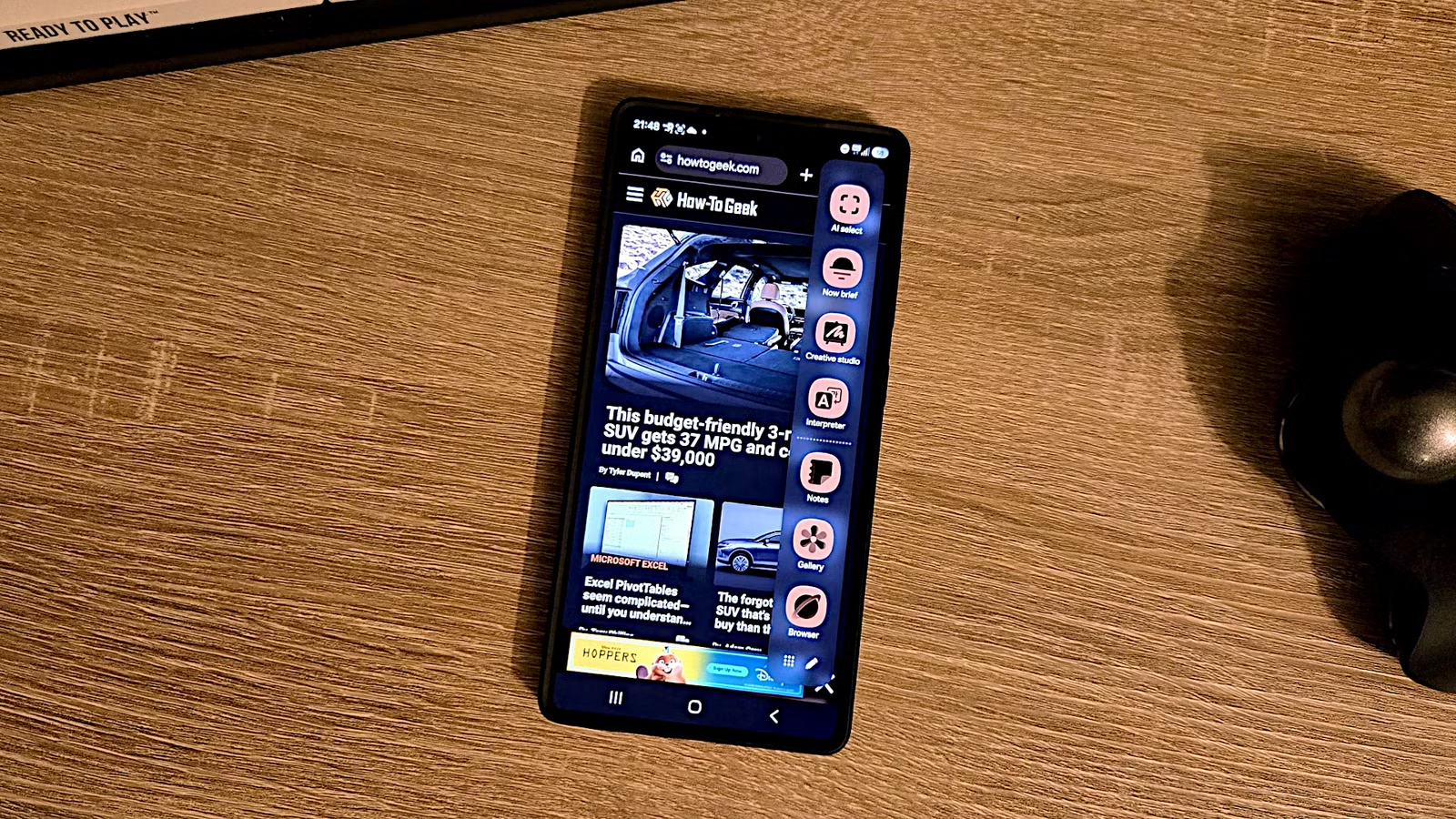
Inside the gesture module, you’ll find options like Task Switcher and Quick Launcher. Task Switcher opens a floating list of recent apps with a search bar, so you can jump straight to what you want without returning to the home screen. Quick Launcher gives you a pinned grid of apps you can call up with a swipe from the edge instead of tapping through icons. You can also attach Quick Tools, which opens a compact panel with brightness and volume sliders, media controls, and toggles for Wi‑Fi, Bluetooth, flashlight, and screen recording—effectively a mini control center that appears from the side instead of the top. The gotcha is muscle memory: expect a day or two of adjusting before this feels natural, but once it does, your thumb stops taking the long way around the interface.
Tweak Android Performance Settings That Quietly Slow You Down
Samsung includes performance features that sound helpful but can slow the phone when you already have enough RAM. One of the biggest culprits is RAM Plus, a setting that reserves part of your phone’s storage as virtual memory. According to reporting cited in the source material, RAM Plus can make your phone feel slower instead of faster when you have more than 8GB of physical RAM. That extra virtual memory adds overhead without giving you a real benefit in day‑to‑day use.
To switch RAM Plus off, go to Settings > Device Care > Memory > RAM Plus and either reduce the amount or disable it entirely. When you turn it off, many users notice that the phone feels snappier, app launch times improve, and they don’t see low‑memory warnings or crashes—which means they didn’t need the feature at all. Systematically disabling extras like this reduces background work, which can help both responsiveness and battery life over time. Be cautious with anything marketed as automatic optimization: if your phone already has plenty of memory, fake “boosters” that live in the background are often more harm than help.
What You Can Expect After These Changes
When you combine custom edge gestures with trimmed‑down background features, the difference is noticeable in everyday use. Actions that used to take multiple taps become one short swipe where your thumb naturally rests—for example, turning a four‑step split‑screen sequence into a single diagonal gesture. The phone spends less time juggling virtual memory and redundant services, which translates to a snappier feel when switching apps and a smoother lock‑screen‑to‑home flow.
Users who disable features like RAM Plus often report that their phones feel faster, with fewer stutters and better battery endurance, while still running all their usual apps without memory errors or crashes. Edge gestures that call up quick tools or app switchers from the side of the screen reduce how often you stretch for the top edge, which matters a lot on large models where one‑handed use can be tiring. Overall, these tweaks are worth the setup time if you’re willing to retrain your muscle memory and experiment with gesture layouts. The key is to change only a few things at once, live with them for a couple of days, and keep an eye on how much smoother your daily routine feels.