
Agile manufacturing becomes a strategic weapon in drone development
Protolabs’ expansion of Multi Jet Fusion (MJF) 3D printing services and quick-turn CNC machining for drone manufacturing is a deliberate move to give commercial and defense drone developers on-demand manufacturing capacity that supports rapid drone prototyping, frequent design changes, and low-volume production of flight-ready components at high aerospace quality standards. This is not a minor capacity bump; it is a bet that the winners in the drone race will be the teams that can iterate hardware as fast as they iterate software. Instead of locking capital into dedicated production lines too early, programs can now treat manufacturing as a flexible, digital service that scales in step with demand. That shift has real strategic implications: it turns factory capacity from a bottleneck into a variable resource, and it moves the advantage toward teams that design, test, and deploy faster than their rivals.
From 90% revenue growth to a new default for 3D printing drone manufacturing
The hard numbers show why Protolabs is pushing so aggressively into drone work. Revenue from drone customers has climbed more than 90% since 2023, a compound annual growth rate near 40%. That is not incremental; it signals a structural shift in how drones are designed and built. As defense spending rises and commercial use spreads across sectors, programs are gravitating toward 3D printing drone manufacturing and digital machining that can handle high-mix, low-volume parts without sacrificing aerospace-grade precision. In practice, that means ducts, housings, brackets, and snap-fit enclosures now move from CAD to flight tests in days. Suresh Krishna’s claim that Protolabs can deliver flight-ready parts “in a matter of days instead of weeks” is less marketing than a statement of the new competitive baseline for serious drone developers.
MJF 3D printing services shift from prototyping to production workhorse
The most interesting part of this expansion is how MJF 3D printing services are being tuned for real production, not just pretty prototypes. Through a partnership with HP Additive, Protolabs has increased MJF capacity specifically for thin-walled, lightweight drone components that still need to survive turbulence, heat, and field abuse. Using Nylon PA12, engineers can design near-translucent air ducts, avionics housings, brackets, and snap-fit enclosures that hit strict weight limits while maintaining impact resistance and durability in extreme temperatures, high winds, and rugged terrain. The message is clear: powder bed fusion is becoming the default for low-volume, high-performance drone parts. When developers can print customized payload integrations or cooling solutions on demand, they stop treating hardware as fixed and start treating it as a configurable layer—exactly how they already treat software.
CNC machining plus additive: a pragmatic hybrid workflow for drones
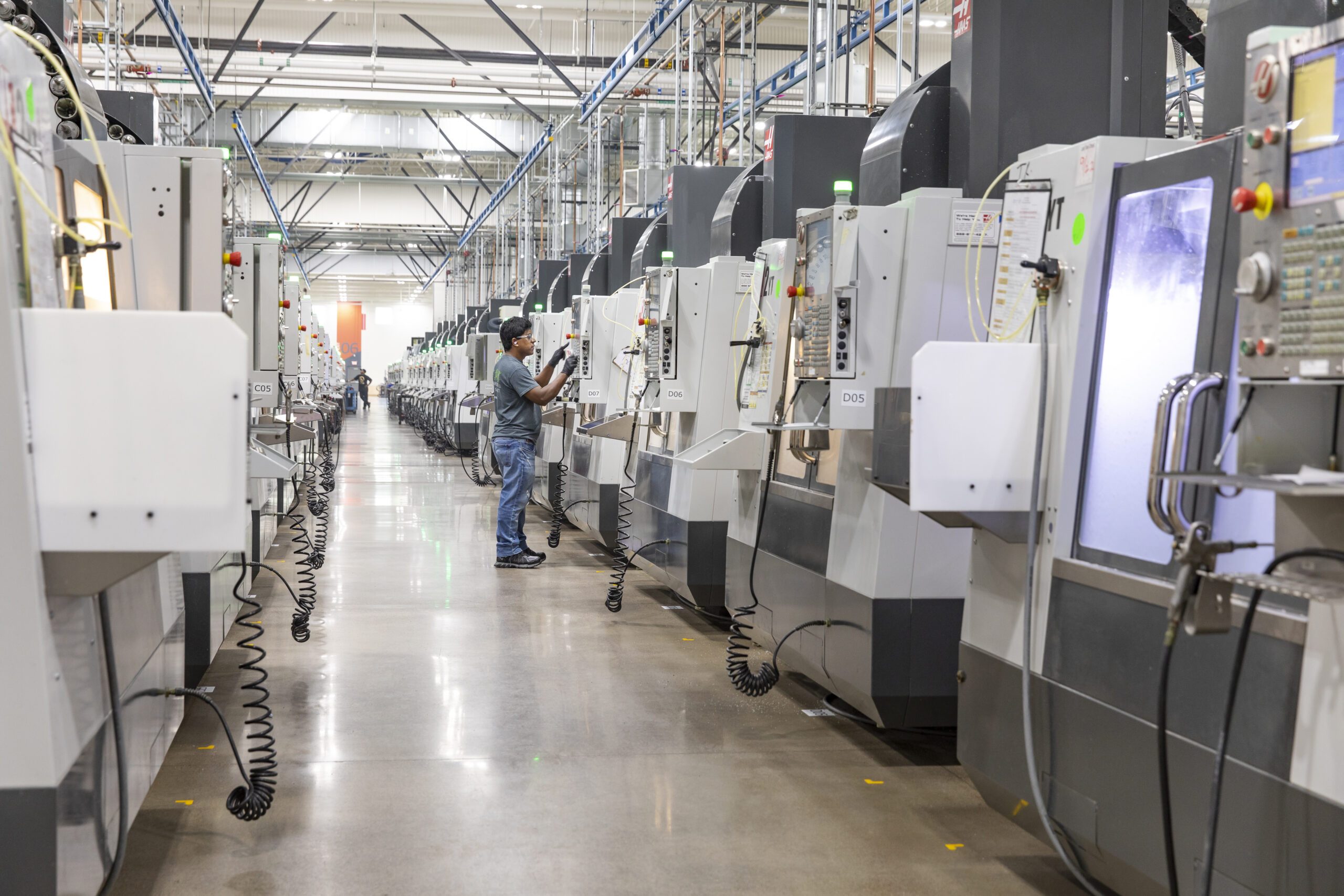
Where this move becomes strategically powerful is in the hybrid workflow. Protolabs has expanded quick-turn CNC machining to deliver metal and plastic components with tighter tolerances, greater precision, and a broader range of functional and cosmetic finishes, often within days. Combined with MJF, developers can now route structural, high-load parts to CNC while pushing complex geometries and lightweighted features to additive manufacturing. That is hybrid manufacturing in practice, not theory. The digital model lets teams use the same on-demand manufacturing capacity from early prototypes through end-use production, so there is no painful handoff between "prototype shop" and "real factory". For high-mix, low-volume drone platforms that change payloads, sensors, and avionics per mission, this is the only sane way to build: lock precision where it matters, keep geometry flexible where it does not.
Aerospace-grade infrastructure aimed squarely at commercial and defense programs
The infrastructure behind this expansion shows Protolabs is not chasing hobbyists; it is aligning with serious commercial and defense aerospace programs. Its manufacturing footprint includes facilities registered under International Traffic in Arms Regulations and machining and 3D printing sites certified to AS9100 and ISO 9001, the standards expected for high-requirement aerospace components. The company will present these drone production capabilities at the Commercial UAV Expo from September 1–3, 2026, where it plans to demonstrate how its digital manufacturing can support rapid prototyping and scaled production for drone applications. In a market where demand can surge overnight, on-demand manufacturing capacity backed by compliant infrastructure is a strategic asset. The implication is straightforward: future drone winners will be those that treat manufacturing as a fast, certified service, not a slow, fixed asset—and Protolabs is positioning itself as the go-to partner for that shift.