
Digital identities turn 3D printed parts into provable assets
Digital identity systems for 3D printed parts are platforms that bind a physical component to a secured digital record describing its origin, materials, production history and conformity, so that any authorised party can verify authenticity and traceability at any point in the part’s lifecycle across complex supply chains.
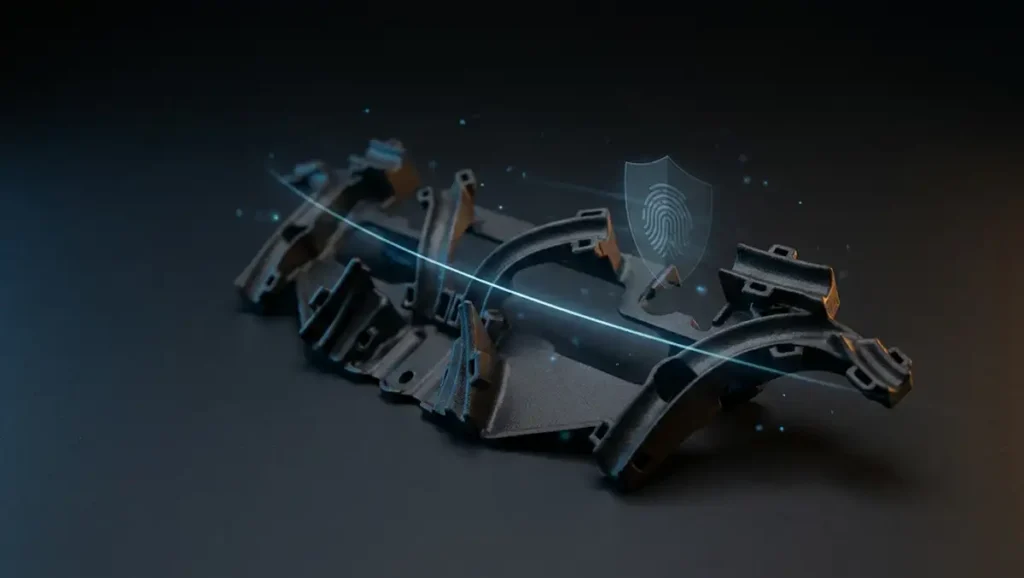
The key shift is simple but transformative: a part is no longer "trusted" because a supplier says so; it is trusted because it can continually prove who it is. CRP Group’s new UniqTrust platform assigns each component made from its Windform additive manufacturing composites a unique digital identity that records where it came from, how it was produced and whether it meets specification. This directly tackles the long‑standing trust gap in additive manufacturing traceability, where paper certificates and siloed databases have been too easy to lose, forge or misinterpret.
In critical sectors like aerospace and defense, that shift is not a luxury; it is the difference between a traceable, certifiable part and an unverified risk hiding in plain sight.
How UniqTrust ties physical parts to secure digital records
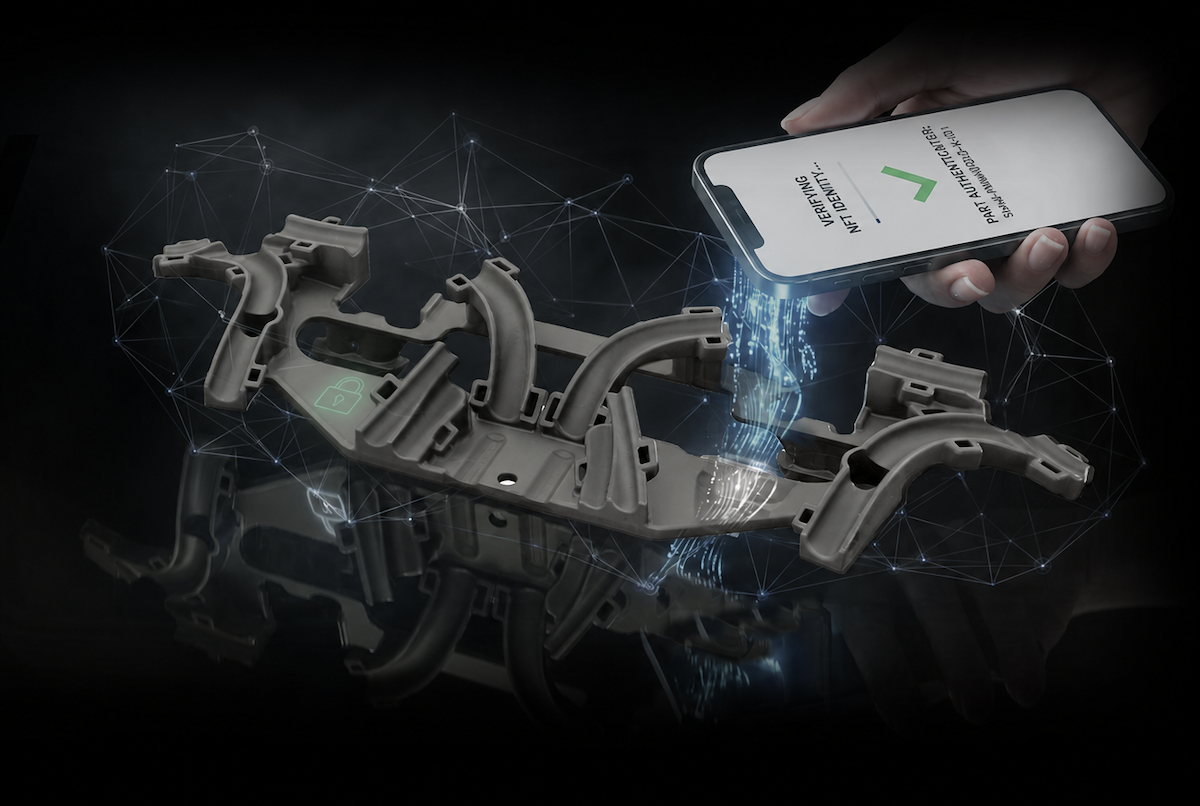
UniqTrust’s most important design choice is that it links every physical part to a single, secured digital record instead of scattering information across labels and PDFs. At production, CRP adds a non‑clonable element to the packaging, associates it with the component, and binds it to a digital file that stores the part’s identity.
This record holds the certificate of authenticity, order references, part code, the Windform material used and any customised technical documentation the customer requires. To verify a 3D printed part’s authentication, an authorised operator brings an enabled device close to the tagged packaging and receives near‑instant confirmation that the part is genuine and conforms to spec. In practice, this replaces a stack of paper with a single point of truth, and it allows the system to flag suspicious read requests from companies other than the intended recipient, strengthening supply chain integrity.
According to CRP’s CEO Franco Cevolini, “it is no longer enough for a part to be expertly made — it must be able to prove its own identity and conformity at any point in its life cycle”.
Counterfeit prevention and lifecycle accountability for high‑stakes sectors
The industry should view UniqTrust less as a convenience tool and more as a line of defence against counterfeiting and weak quality assurance. High‑value components in aerospace and defense already face counterfeit risk, and observers warn this could become a major problem as additive manufacturing scales. A secure way of uniquely identifying each part and its history can materially improve counterfeit prevention in 3D printing by giving buyers a clear yes/no answer on provenance.
CRP explicitly targets aerospace, motorsport and defense buyers, where parts operate in mission‑critical roles and must prove their origin and conformity through long, distributed supply chains. For these sectors, digital identity verification is not just about checking a box; it is about having verifiable component provenance for every maintenance, repair and overhaul decision. When you can see exactly when the part was produced, which Windform composite was used and which order it belongs to, additive manufacturing traceability stops being a spreadsheet exercise and becomes a built‑in property of the part itself.
The message is clear: in high‑stakes manufacturing, an untraceable part should now be treated as an unacceptable part.
Regulation, digital product passports and what comes next
UniqTrust is also a strategic response to regulation. CRP states that its move is designed to align with the emerging Digital Product Passport framework, which requires products sold in the EU to provide information on origin, materials, environmental impact and disposal recommendations. By building digital identities into 3D printed parts now, CRP is pre‑empting stricter expectations around traceability and lifecycle records.
Once these digital passport directives are fully implemented, systems like UniqTrust will stop being differentiators and become table stakes for suppliers of critical components. Buyers will expect every part to carry a scan‑readable record of its journey, from recycled feedstock to finished component, and regulators will have little patience for "unknown" entries in safety‑critical inventories. The ripple effect will extend beyond polymers: similar schemes are already being piloted for metal parts with embedded digital product passports, suggesting a broader shift toward identity‑aware hardware in aerospace, energy and healthcare supply chains.
Industry events are already inviting practitioners to present applications that pair additive manufacturing with digital traceability tools in sectors like energy, healthcare, automotive, aerospace and defense, underscoring that this is becoming a cross‑sector norm rather than a niche experiment.
From parts to platforms: the new trust contract in additive manufacturing
The deeper change here is cultural. With UniqTrust, CRP is saying that quality is no longer just about how a part is made; it is about whether the part can continuously prove what it is. The company couples this with the formal launch of its Design and Engineering Team service, indicating a move from being a parts supplier to being a lifecycle partner that designs for traceability as much as for performance.
For customers, the practical impact is immediate: instead of chasing paper certificates and emailing suppliers for clarification, they scan a tag and see a single, consistent source of truth, including order details, material data and tailored documentation. This reduces administrative friction and makes audits more evidence‑driven. For the wider market, it raises the bar; any additive manufacturing provider that continues to ship critical parts without digital identities is quietly asking its customers to accept blind trust in a world that is running out of patience for it.
The conclusion is blunt but necessary: as additive manufacturing matures, digital identity and traceability will separate serious industrial suppliers from everyone else. Those who invest in 3D printed parts authentication and lifecycle proof now will own the trust layer of tomorrow’s supply chains; those who do not will be left explaining why their parts cannot speak for themselves.