

3D-Printed Detonation Engines Move From Concept to Capital-Backed Reality
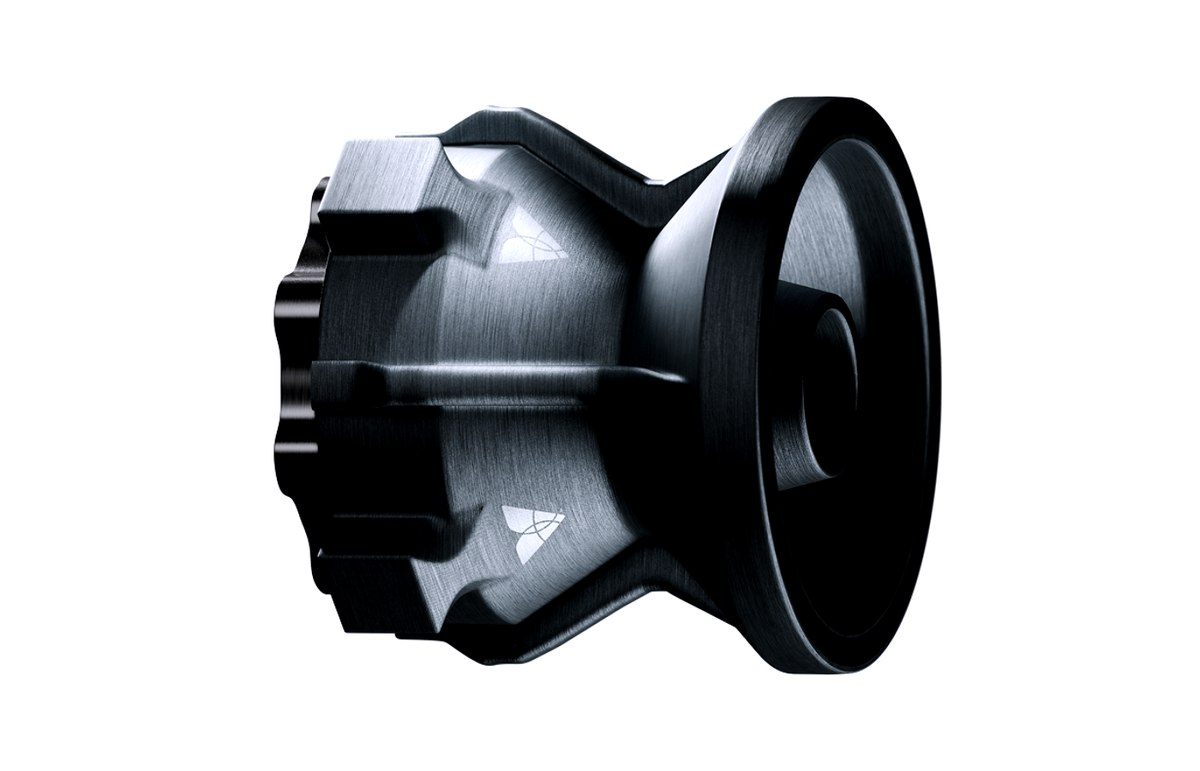
3D printing rocket engines is the use of additive manufacturing to build complex propulsion components layer by layer, allowing engineers to create intricate internal geometries—such as integrated cooling channels and flow paths—that conventional machining cannot produce, enabling faster design iteration, higher performance, and domestic, scalable production for modern aerospace systems. That definition sounds abstract until you look at Venus Aerospace. The company developing a high-thrust rotating detonation rocket engine (RDRE) built with 3D printed components has secured USD 91 million (approx. ₱5,088,000,000) in Series B funding to move from demonstration to production scale. This is not mere validation of one startup; it is a vote that future rocket propulsion technology will be printed, not machined. The funding follows Venus’s milestone of what it believes was the world’s first successful flight test of an RDRE engine, achieved in May 2025 after just over four years and USD 80 million (approx. ₱4,480,000,000) in capital.
Why Additive Manufacturing Is Essential, Not Optional, for RDREs
The key shift in rocket propulsion technology is that rotating detonation rocket engines can’t practically be built without additive manufacturing aerospace methods. Detonation combustion pushes efficiency roughly 15% beyond conventional subsonic engines, but that gain turns the combustion chamber into an extreme thermal and pressure environment that demands sophisticated cooling and fuel management. The geometry these engines require—tight-tolerance injectors, integrated coolant channels, and complex internal flow paths—is too intricate for traditional machining, making 3D printing a prerequisite rather than a nice-to-have. NASA’s Marshall Space Flight Center has reached the same conclusion, relying on laser powder bed fusion and specialized alloys like GRCop-42 and GRX-810 to keep RDRE hardware cool enough to survive. According to NASA’s Marshall Space Flight Center, additive manufacturing is what makes detonation combustion viable, not merely more convenient. Venus’s architecture is therefore emblematic of a larger trend: hardware is being redesigned around what printing can do, instead of reshaping designs to fit old tools.
Faster Iteration, Lower Costs, and Domestic Supply Chains
The most underrated impact of 3D printing rocket engines is economic. Venus reached its first high-thrust RDRE flight test in just over four years, using USD 80 million (approx. ₱4,480,000,000) in capital, a pace the company frames as among the fastest in propulsion development. Additive manufacturing cuts lead times because engineers can print and test multiple design variants without waiting for complex machining or exotic supply chains. It also reduces manufacturing costs for high-thrust engine components by compressing part counts and enabling domestic production with standard materials paired to printed structures. The RDRE is explicitly designed for domestic manufacturing at scale, aiming to eliminate dependence on constrained or foreign-sourced parts. That matters at a moment when defence and space customers prioritize hypersonic and long‑range capability and want propulsion systems that “can be produced reliably and are built on supply chains they can trust,” in CEO Sassie Duggleby’s words. In other words, additive manufacturing is as much a supply-chain strategy as a performance upgrade.
Industry Confidence: From Flight Test to Multi-Mission Platform
Venus’s USD 91 million (approx. ₱5,088,000,000) Series B is notable not just for its size, but for who is writing the checks. The round was led by Mercury Fund, with reinvestment from Lockheed Martin Ventures alongside other backers, a clear signal that established defence players now see 3D-printed detonation engine production as strategically important rather than speculative. Lockheed Martin Ventures explicitly cited Venus’s “speed to manufacture, cost management, and reduction of supply chain constraints” as reasons to deepen its stake. That confidence rests on more than one impressive flight test. Venus is positioning the RDRE as a common propulsion architecture: reusable, throttleable, and suitable for munitions, space launch, orbital transfer, and lander vehicles. The logic is bold: print once, deploy across mission classes. If this platform vision holds, it will pressure other propulsion programs to abandon bespoke, machined engines and embrace additive manufacturing aerospace strategies as the default.
From Prototype to Production: The New Baseline for Rocket Propulsion
The most important takeaway from Venus Aerospace’s trajectory is that 3D printing is no longer a fringe experiment in rocket propulsion technology; it is becoming the baseline. Detonation combustion was historically confined to simulations and short-duration tests because traditional fabrication could not handle the thermal realities. Now, across programs—from Venus to NASA to Astrobotic, which has recorded a 300‑second continuous RDRE burn—additive manufacturing has turned theory into hardware with hundreds of seconds of runtime. Venus’s Series B explicitly pushes its RDRE from breakthrough flight test into scaled capability for near-term defence and space applications. The message to the industry is blunt: if your engine concept requires intricate cooling and flow control, machining will hold you back. The combination of faster iteration, lower cost, and flexible, multi-mission design means printed engines are not just better; they are strategically necessary. The revolution is less about 3D printers themselves and more about accepting that future rocket engines will be designed from day one to be printed.