
A Long-Standing Weak Point in 3D Printing Has Been Fixed
3D printed elastomers are flexible polymer materials produced by additive manufacturing that aim to combine rubber‑like stretchability with the structural integrity, repeatable performance, and geometric precision traditionally associated with rigid 3D printed plastics and metals. For decades, that goal has been undermined by a harsh trade‑off: flexible resin materials could be tough or long‑lasting, but rarely both. You either printed parts that resisted a single violent hit and then degraded, or parts that survived many load cycles but tore when pushed too far. EPFL’s new work finally breaks that compromise, and it changes what engineers should expect from fatigue resistant polymers.
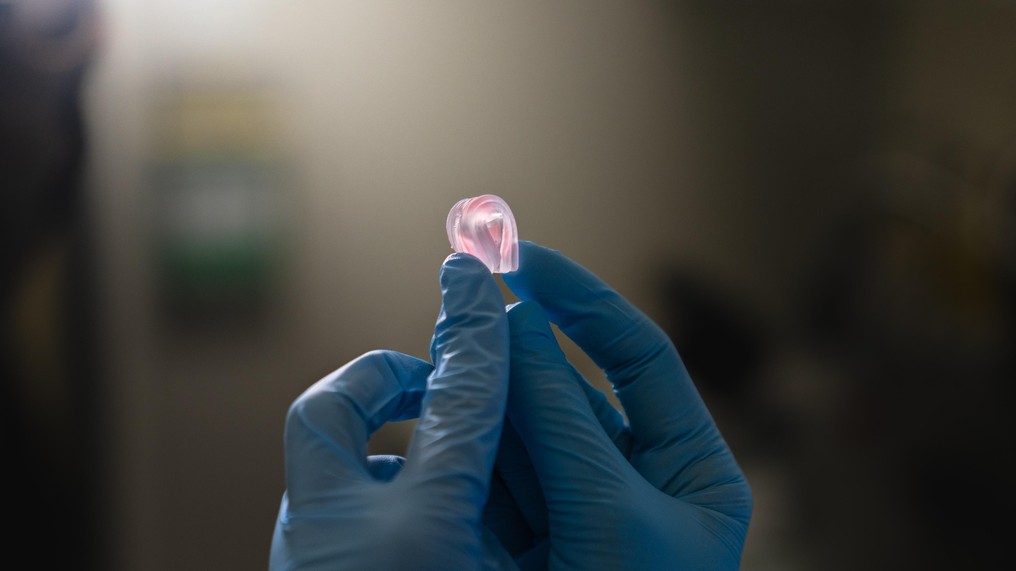
Researchers at EPFL’s Soft Materials Laboratory have reported a 3D printable elastomer that combines high resistance to fracture with high resistance to fatigue, closing a gap that has limited soft materials in robotics, wearable electronics, and biomedical devices. Their double network granular elastomers (DNGEs) reach fracture toughness up to 15 times higher and fatigue resistance up to three times higher than comparable elastomers of the same chemistry. In straightforward terms, they bend far, bend often, and still refuse to break. That is the key takeaway: the structural problem has been solved at the material level, not patched with cautious design rules.
Why EPFL’s Double-Network Architecture Is a Genuine Breakthrough
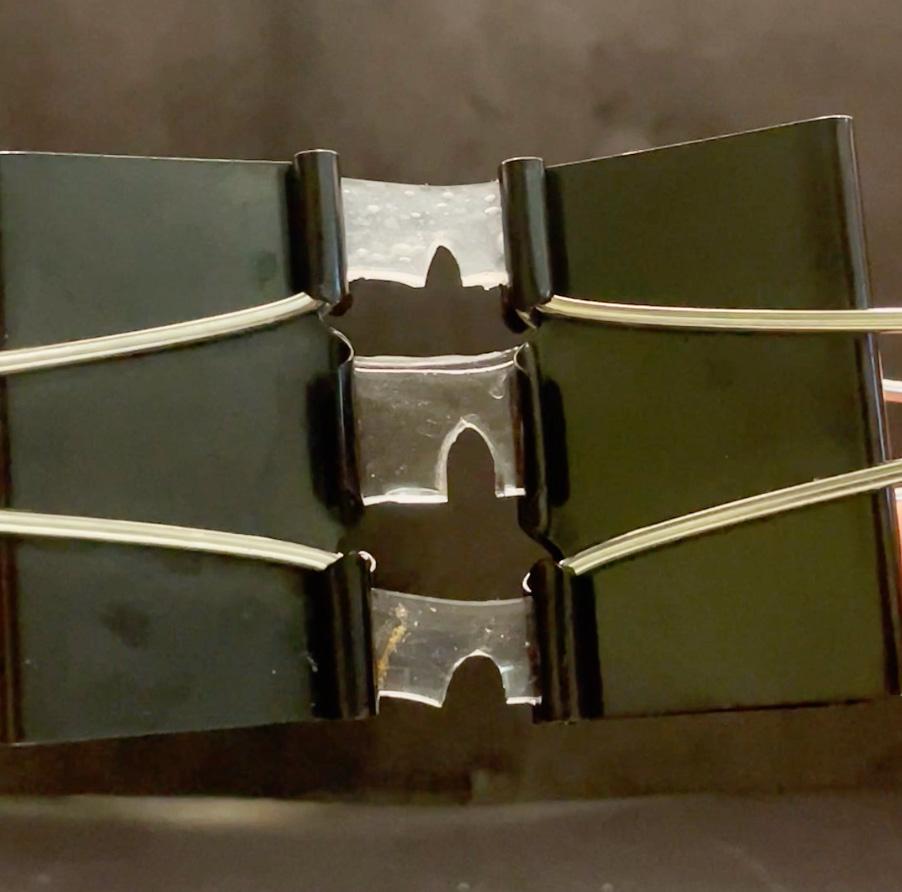
The important insight behind DNGEs is architectural, not chemical. The material is built from stiff elastomer microparticles welded together by a softer second network. When the structure is stretched, mechanical strain is transferred away from the rigid particles into the softer regions between them, where polymer chains can slide and rearrange, dissipating energy instead of snapping. Cracks are forced to wander through this softer matrix rather than cutting straight lines, which slows their advance and delays catastrophic failure. In other words, the material is engineered to let damage meander and relax instead of propagate and destroy.
According to EPFL’s Soft Materials Laboratory, optimized DNGEs show fracture toughness up to 15 times and fatigue resistance up to three times that of single‑network and bulk double‑network elastomers of the same composition. That quote matters because it proves the effect is structural: chemistry stayed constant while performance jumped. The same granular architecture that makes the material extrudable as a 3D printing ink with tightly controlled mechanics also gives it unusual resistance to both fracture and fatigue. Instead of relying on exotic formulations, EPFL has given designers a blueprint for fatigue resistant polymers that can be tuned, printed, and reproduced in ordinary labs.
From Rigid Parts to Flexible, Load-Bearing 3D Printed Systems
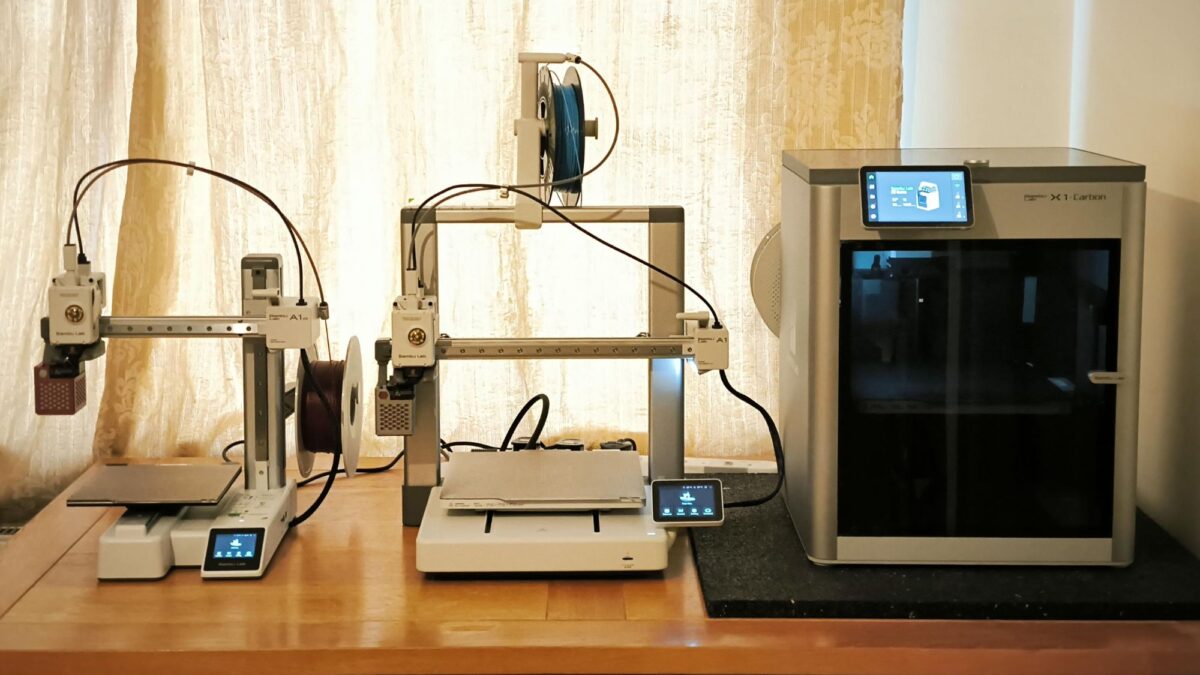
DNGEs matter because they move 3D printing beyond rigid aerospace‑style parts into genuinely flexible, load‑bearing systems. The inks were extruded with a commercial 3D printer, and the team used their printability to make composites with locally varying compositions, including fiber‑reinforced structures and core‑shell designs inspired by mussel byssus fibers. Those examples combine stiffness with the toughness and fatigue resistance usually seen only in softer materials. This is the architecture that soft robots, flexible electronics, and biomedical devices have been waiting for: components that endure repeated stress and large deformations over long lifetimes without fragile interfaces or brittle hinges.
The broader research community has been chasing graded and hybrid structures for years—mixing soft and stiff regions in a single print to create machines that bend where needed yet carry meaningful loads. EPFL’s DNGEs push that agenda further by solving “toughness versus fatigue” at the material scale rather than only at the structural scale. When a single ink can be extruded easily and also handle sustained, repeated flexing, designers gain freedom: fewer overbuilt safety factors, fewer metal inserts, fewer glued joints. The group is now refining the material with sustainability in mind, exploring biodegradable elastomers and recycled feedstock, aiming to expand the accessible material set without sacrificing mechanics.
Bio-Med Flex Proves Biocompatible Flexible Resins Are Ready for Clinics
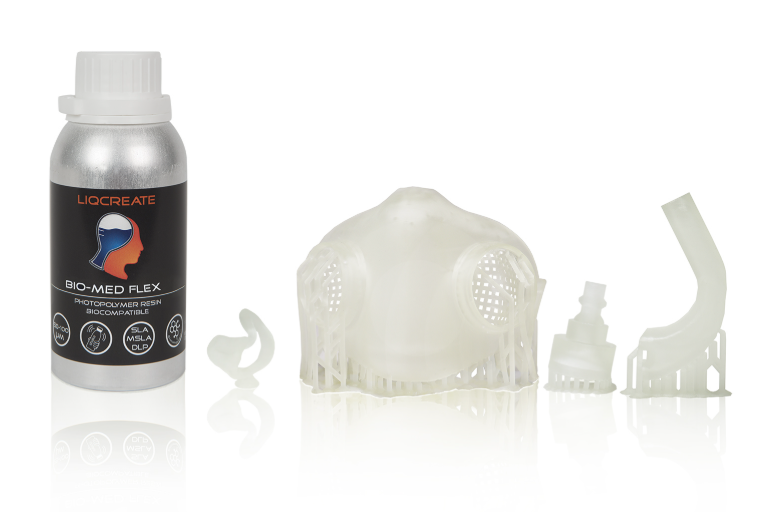
On the commercial side, Liqcreate’s Bio-Med Flex shows that biocompatible flexible resins are not a lab curiosity but a practical toolchain. The company has launched a clear flexible photopolymer designed for sterilizable, biocompatible medical and biomedical applications. Bio-Med Flex targets the exact gap rigid resins leave: flexible anatomical models, wearable sensor housings, and soft fixtures that deform under load without cracking are difficult or expensive to make with current materials, especially in‑house. With a Shore A hardness of 73, tensile strength of 5.0 MPa, elongation at break between 180 and 250%, and tear strength between 20 and 28 kN/m, this resin stretches substantially before failure and resists rips under load.
The more consequential feature is certified biocompatibility. Parts processed through the specified workflow can pass cytotoxicity, sensitization, and irritation testing under multiple ISO 10993 standards. After steam sterilization at 121°C, tensile strength drops from 5.0 to 3.7 MPa, elongation at break from 240% to 183%, while Shore A hardness shifts from 73 to 70; at 134°C, values are 3.6 MPa, 166% elongation, and Shore A 75. That detailed sterilization data signals serious intent: Bio-Med Flex is meant for real devices, not decorative prototypes. Because it runs on common DLP, LCD, and SLA printers in the 385–405 nm range, most open-material desktop systems can print biocompatible flexible parts in‑house.
The Future: Durable Soft Devices Printed Anywhere
Taken together, EPFL’s DNGEs and Bio-Med Flex tell a clear story: 3D printed elastomers have matured from niche novelty to serious engineering option. On one front, EPFL has cracked the structural problem of making printable elastomers that resist both fracture and fatigue simultaneously. On another, Bio-Med Flex proves that biocompatible flexible resins with known mechanical and sterilization behavior can be shipped, printed, and certified in real clinical workflows. Flexible resin materials are no longer the weak link; design culture is. Engineers who still treat soft printed components as disposable “rubber bits” are behind the curve.
The next step is democratization. EPFL’s team aims to implement more sustainable raw materials and make DNGEs accessible to any lab with a commercial 3D printer. Bio-Med Flex, meanwhile, can be re‑branded by OEM partners for different medical uses. The likely outcome is an ecosystem where fatigue resistant polymers and biocompatible flexible resins are as routine as today’s rigid photopolymers. When that happens, the question will no longer be whether flexible 3D printed parts can survive or stay sterile, but why they were ever dismissed as fragile in the first place.