

From Hype to Production: What $4.35B Really Means
The global 3D printing market is the total value of hardware, materials, and services used to build parts layer by layer from digital designs, and its latest growth figures show that additive manufacturing is evolving from experimental technology into a disciplined, production-focused tool used across industrial sectors. Global manufacturing activity pushed the worldwide 3D printing market to $4.35 billion in the first quarter of 2026, with metal, polymer, ceramic printers, materials, and services together rising 13.1 percent year-on-year. That headline number matters less than what is driving it: industrial 3D printing is now being pulled by manufacturing needs rather than pushed by tech buzz. This is not a speculative spike; it is steady growth powered by factory floors rethinking how they handle supply chains, defense demands, and time-critical production problems.
Measured Growth Is a Sign of Manufacturing Maturation
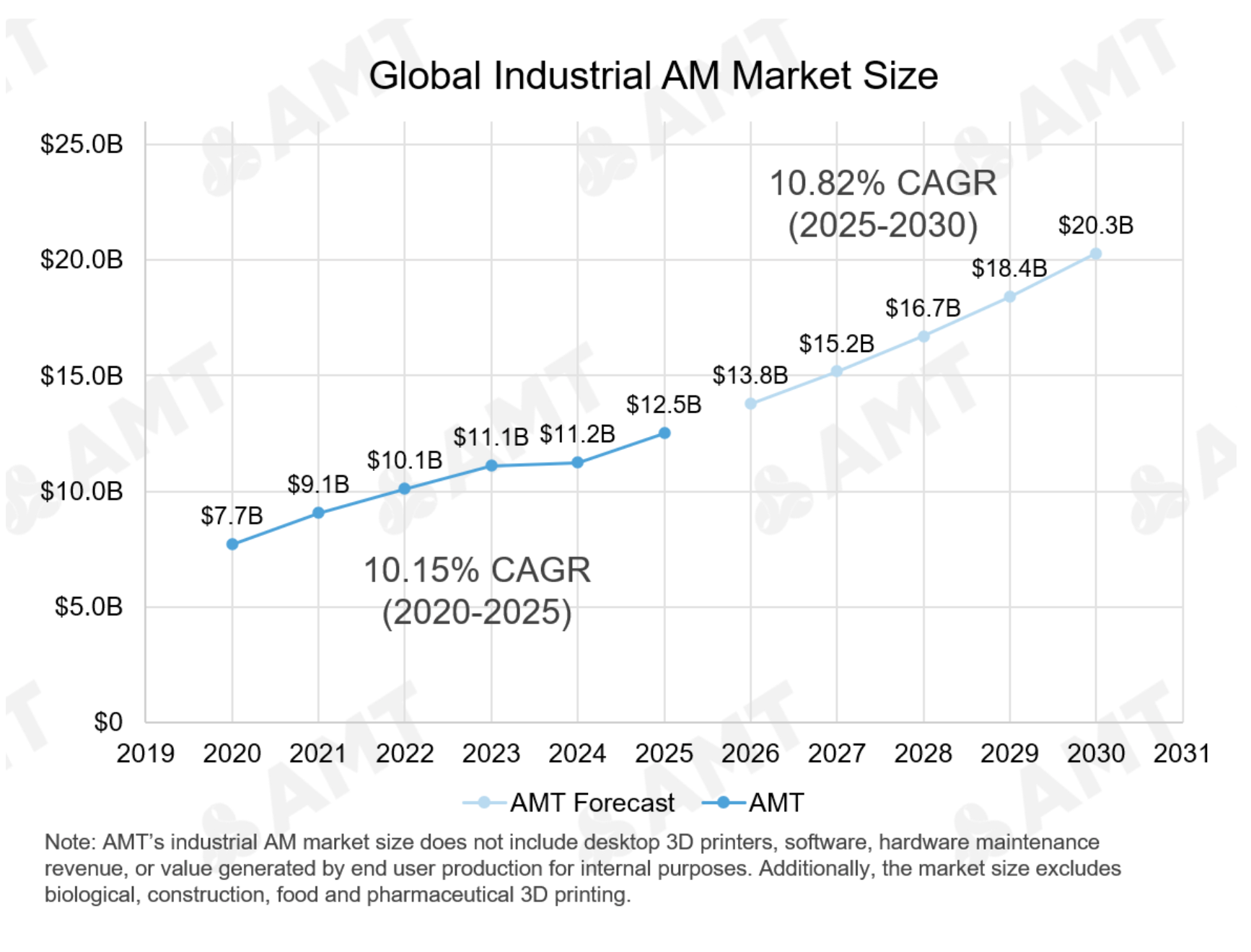
The 3D printing market growth path toward an estimated $20.3 billion by 2030 looks restrained compared with past hype, and that is a healthy sign for manufacturing maturation. According to AMT – The Association for Manufacturing Technology, the global additive manufacturing market was about $12.5 billion in 2025, with projections reaching $20.3 billion by 2030. Investors who wanted explosive curves may call this slower, but factories prefer predictable trajectories shaped by qualification rules, cost-per-part, material performance, machine utilization, and integration with existing workflows. In practice, this means fewer moonshot promises and more attention to whether a printed part can pass audits, meet procurement criteria, and run reliably on installed systems. Growth that follows these constraints shows additive manufacturing 2026 is being treated as real manufacturing infrastructure, not a lab experiment.
Proven Use Cases Are Now the Engine of Industrial 3D Printing
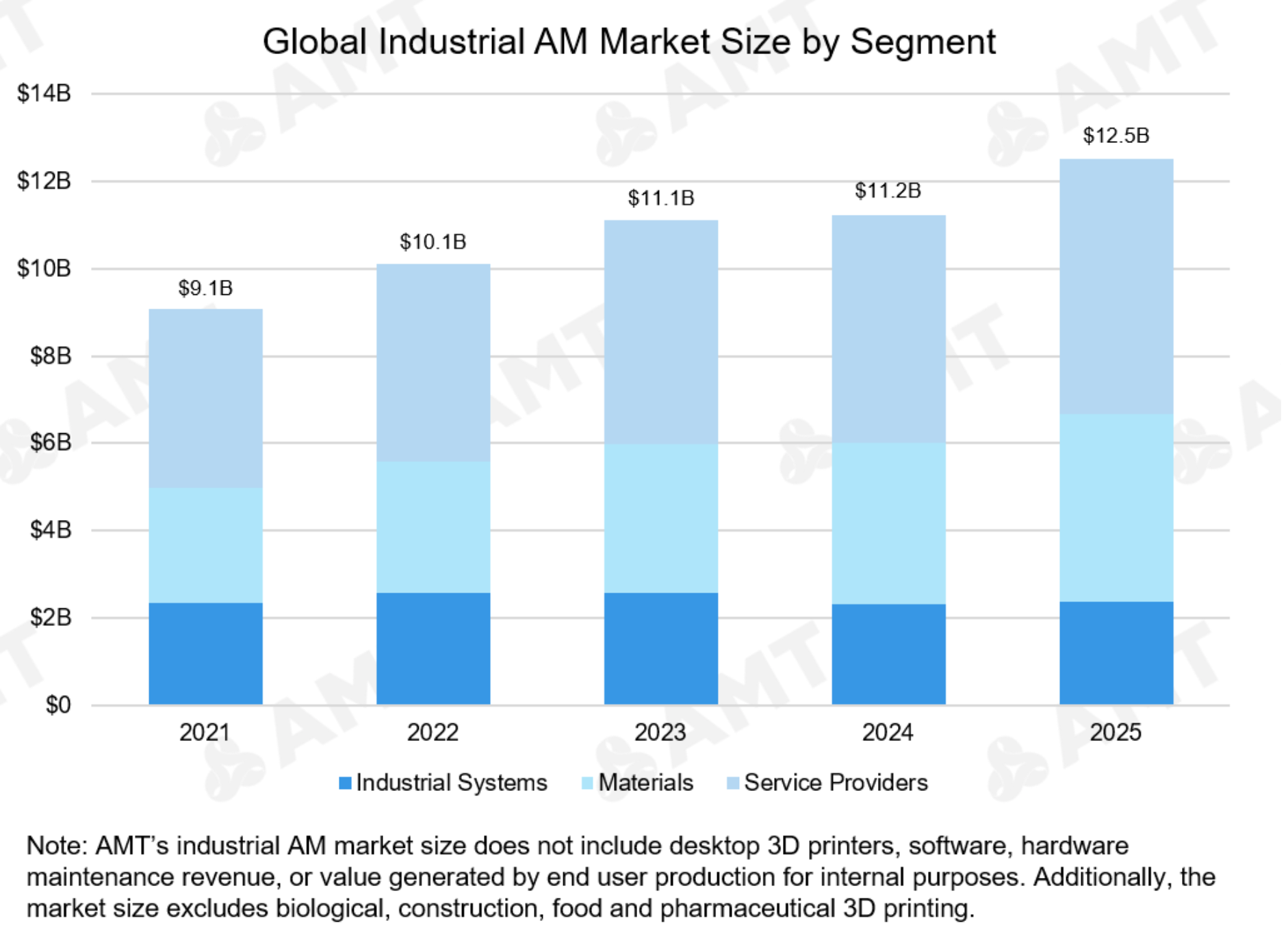
The most telling shift is where demand comes from: aerospace, defense, medical, and industrial applications where 3D printing has clear production value now drive additive manufacturing growth. In 2025, market expansion became increasingly tied to use cases that deliver measurable outcomes, and that pattern is persisting as service revenues and materials sales outpace new system purchases. Service providers remain the largest slice of the market, while materials revenue rose significantly, suggesting manufacturers are using existing industrial 3D printing capacity rather than chasing fresh hardware for its own sake. That utilization-focused behavior marks a turning point. Companies are qualifying parts, scaling material consumption, and embedding additive into workflows instead of treating it as a standalone novelty. In short, the industry has moved from “can we print this?” to “should we print this, and can we prove it pays off?”
Disciplined Investment: Additive Manufacturing Grows Up
Capital now chases proof, not promises. Earlier funding cycles in additive manufacturing prioritized platform development and broad disruption narratives; by 2025, investment activity had shifted toward companies showing clear applications, demonstrated ROI, and production scalability. For investors, this marks a more disciplined phase for AM markets, where consolidation and restructuring aim at stronger business models, more efficient operations, and tighter vertical integration. Hardware revenues holding relatively flat while services and materials climb indicates that the installed base of systems from key vendors is finally being sweated as production equipment, not as showroom technology. This is how mainstream manufacturing tools behave: they attract money when they produce qualified parts at scale, not when they are merely new. 3D printing market growth grounded in such discipline is far more likely to endure than hype-driven surges.
What Comes Next: Utilization, Qualification and Real-World Scale
The next phase of additive manufacturing 2026 and beyond will be decided less by breakthroughs in printer speed and more by how well the technology fits into everyday production. Market trackers are already extending historical data sets and ten-year forecasts, underlining expectations of continued, structured expansion. At the same time, industry events such as IMTS 2026 will put metal and polymer systems, hybrid platforms, and post-processing lines in front of manufacturers who care about shop-floor value, not spectacle. Persistent challenges—qualification timelines, material availability, workforce skills, and post-processing—will define winners and losers. The companies that treat industrial 3D printing as a tool for qualified applications, scalable economics, and seamless workflow integration will capture the bulk of that projected $20.3 billion market. Everyone else will be left with impressive prototypes and disappointing balance sheets.