
Volumetric 3D Printing’s Promise Has Been Held Back by Heat
Volumetric 3D printing is an additive manufacturing approach that cures an entire three‑dimensional object at once inside a resin vat using shaped light, delivering far faster print cycles than conventional layer‑by‑layer methods but historically suffering from overheating, overcuring defects, and limited resin accuracy that distort parts and block industrial scaling.
The core story is simple: speed has not been the real problem for fast 3D printing; control has. Computed axial lithography (CAL), a key volumetric 3D printing technology, can harden a whole object in one go by projecting light patterns into a rotating vat of resin. The catch is that the underlying chemistry runs too hot. Free radical polymerization kicks off an exothermic chain reaction, driving the Trommsdorff gel effect, where warmer zones cure quicker, create more heat, and warp or fuse features that should remain separate. If volumetric 3D printing is going to leave the lab and enter the factory, it must stop fighting its own thermal physics.
Nottingham and Berkeley: Fixing Overcuring at the Molecular Level
Researchers at the University of Nottingham and the University of California, Berkeley took the right approach: fix the resin, not the gimmicks around it. They introduced reversible addition‑fragmentation chain transfer (RAFT) polymerization into standard CAL resins so the reaction’s heat no longer runs away. Instead of dumping more cooling hardware or conservative exposure profiles on the problem, they changed how polymer chains grow. The RAFT agent shuttles radicals between chains, slowing the runaway without slowing the print itself.
The numbers underline how decisive this is. In a common CAL resin, pentaerythritol tetra acrylate, prints without RAFT shot up by 59°C during polymerization. Adding just 0.1% of a dithiobenzoate RAFT agent called CPBD cut that temperature rise to 27°C, and 0.3% loading dropped it to 3.5°C. Thermal and shadowgraph imaging showed that resin without RAFT overcured within minutes, while resin containing 0.2% RAFT showed no overcuring even two minutes after the object had formed. That is not a small tweak; it is a direct strike at the overheating that has crippled resin accuracy in volumetric 3D printing.
From Warped Blobs to Precise, Multi‑Material Parts
Solving overcuring defects is about more than pretty images of clean parts; it is about dimensional precision that manufacturers can trust. In CAL, overheating also drives thermal buoyancy: convection currents shove parts around mid‑print, smearing feature positions and fusing structures that should remain separate. With the RAFT resin, a test object made of three different‑sized spheres that previously fused into a single mass now printed as separate, correctly spaced parts, hitting 150‑micrometer resolution between features. That kind of resin accuracy is the difference between a demonstrator and a production‑grade process.
The RAFT chemistry also keeps reactive end groups alive in the printed polymers, which the authors used to graft extra coatings onto finished parts. In practical terms, that opens the door to multi‑material fabrication: print a volumetric core in one shot, then selectively grow other polymers on top without needing a second tooling chain. Manufacturers who have been told they must trade quality for speed now see a more attractive option: fast 3D printing cycles without accepting warped geometries or fused channels as the cost of doing business.
Utah’s Single‑Exposure Method Shows the Same Layer‑Free Trend
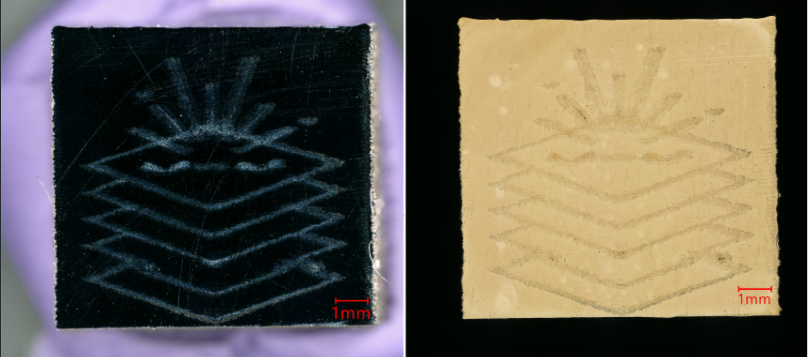
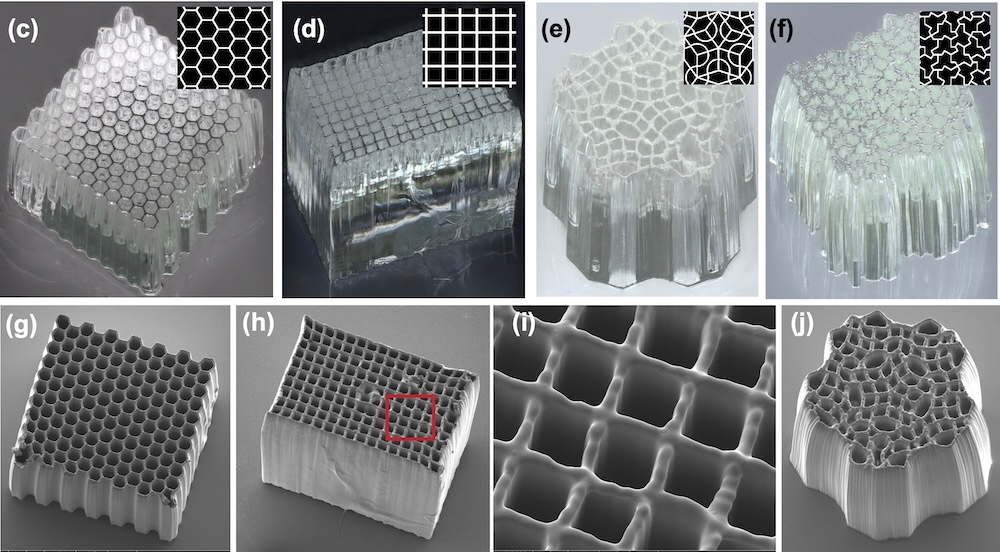
The CAL breakthrough does not stand alone; it sits inside a clear trend toward layer‑free, light‑shaped fabrication. Engineers at the University of Utah have presented a 3D printing approach that uses a nanoscale mask to bend laser light into a holographic version of the target shape, hardening the material into a solid form in a single pass. The operation runs in roughly 20 seconds, compared with the hours typical of competing laser‑driven methods. This method, built on SU‑8 photolithography materials, sidesteps the leaky seams that slice‑by‑slice printing leaves behind, delivering microtubule assemblies with channels as small as 6 micrometers and aspect ratios up to 120:1.
Menon’s team describes the current output as “extended 2D” rather than full 3D, since they can dictate the geometry in two dimensions and stretch it along the third. Across several lattice layouts, their prints endured compression and moved liquid by capillary action, and the group is now working to make the technique capable of true three‑dimensional prints. According to the authors, the broader motivation is blunt: layer‑by‑layer building is slow and leaves weak seams that limit parts needing to hold liquid or bear load. Whether through volumetric 3D printing or single‑exposure holographic lithography, the goal is the same—fast 3D printing without structural compromises.
Why This Matters for Industrial Fast 3D Printing
Overcuring has been the quiet saboteur of volumetric 3D printing: a hidden thermal instability that limits scale and undermines the part quality manufacturers require. Introducing RAFT polymerization into CAL resins sharply reduces the exothermic runaway that has constrained both accuracy and size. In effect, the Nottingham and Berkeley work removes a central technical excuse for keeping volumetric methods on the sidelines of industrial production. The Utah group’s single‑exposure approach points in the same direction—collapse build time from hours to seconds and avoid layer seams altogether.
The next steps are clear. CAL researchers are already using the RAFT agent’s retained reactive end groups to add further polymer coatings after printing, a path toward multi‑material volumetric parts without slowing the process. Utah’s engineers are pushing their holographic lithography toward true 3D control. The industry should stop treating speed and quality as opposites. With controlled resin chemistry and smarter light delivery, volumetric 3D printing can offer fast 3D printing cycles, high resin accuracy, and defect‑free geometries. The companies that embrace these layer‑free approaches early will be the ones writing the rules for what “production‑grade” additive manufacturing means in the next decade.