

Large-Scale 3D Printing Moves From Concept Art to Working Design Tool
Large-scale 3D printing in architecture refers to the use of robotic additive manufacturing systems to produce full-size architectural models and sculptural furniture design pieces directly from digital files, allowing complex geometries, faster prototyping, and reduced material waste compared with traditional handcrafted or subtractive fabrication methods. Instead of treating 3D printers as gimmicky desktop toys, leading studios now treat them as industrial tools. The strongest evidence is coming from architects who put their reputations on the line in public exhibitions. When a six-meter air traffic control tower and a family of structural chairs can be printed, lit, assembled, dismantled, and redeployed, the technology stops being a future promise and becomes part of the everyday design workflow. That shift matters: it changes how architects explore form, how they think about materials, and how they confront sustainability.

A Six-Meter Architectural Model That Proves Throughput Matters More Than Form
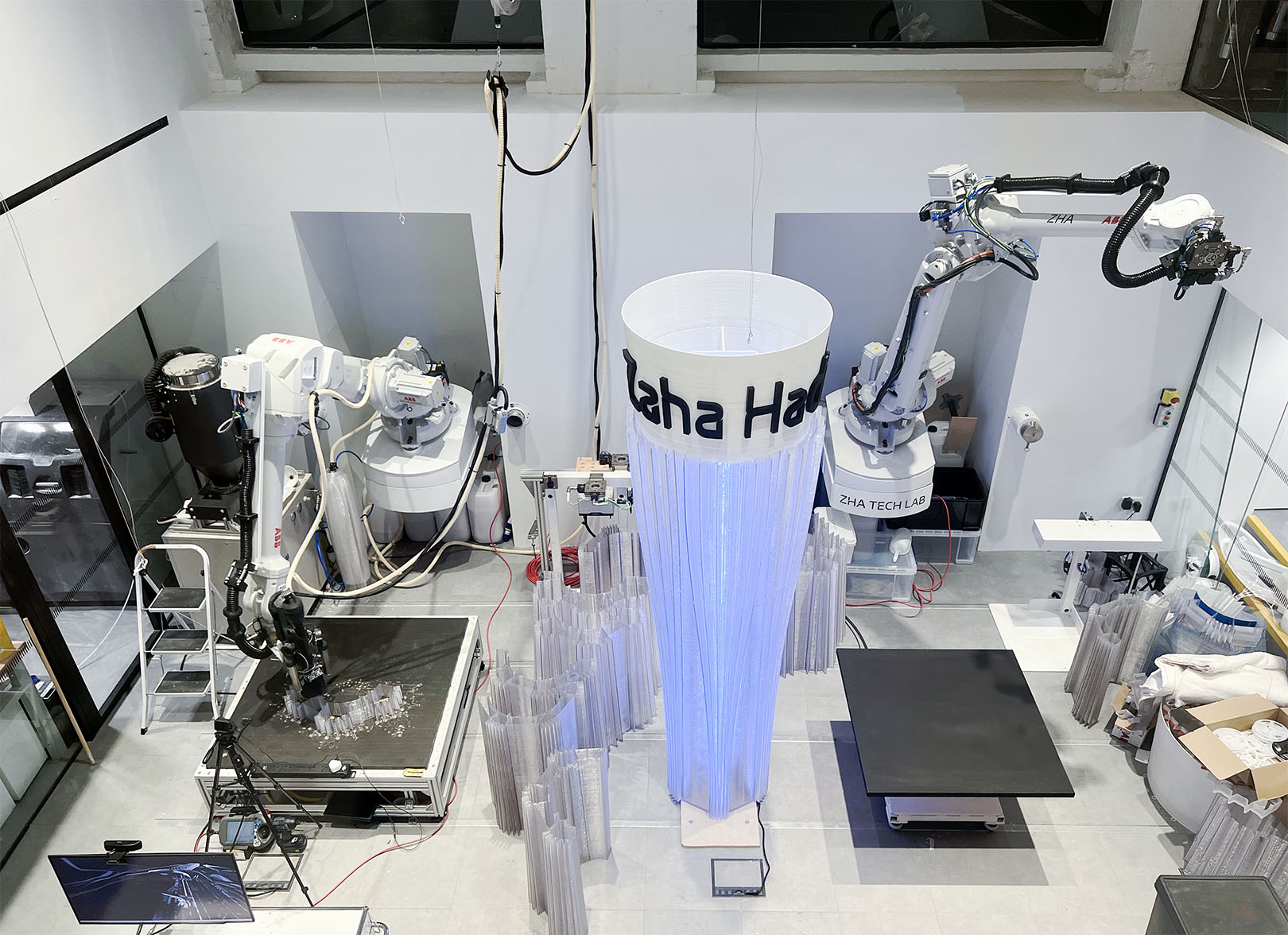
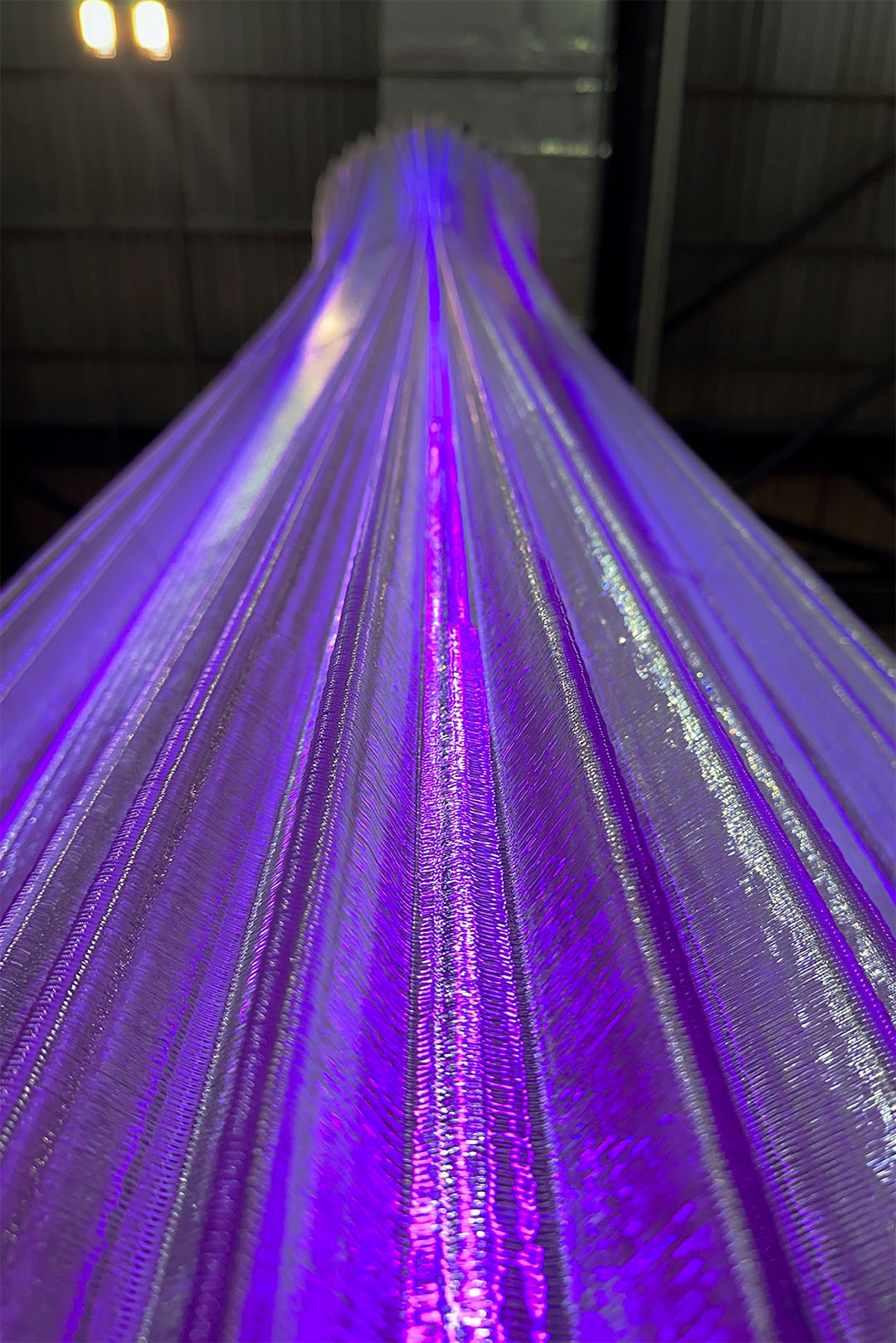
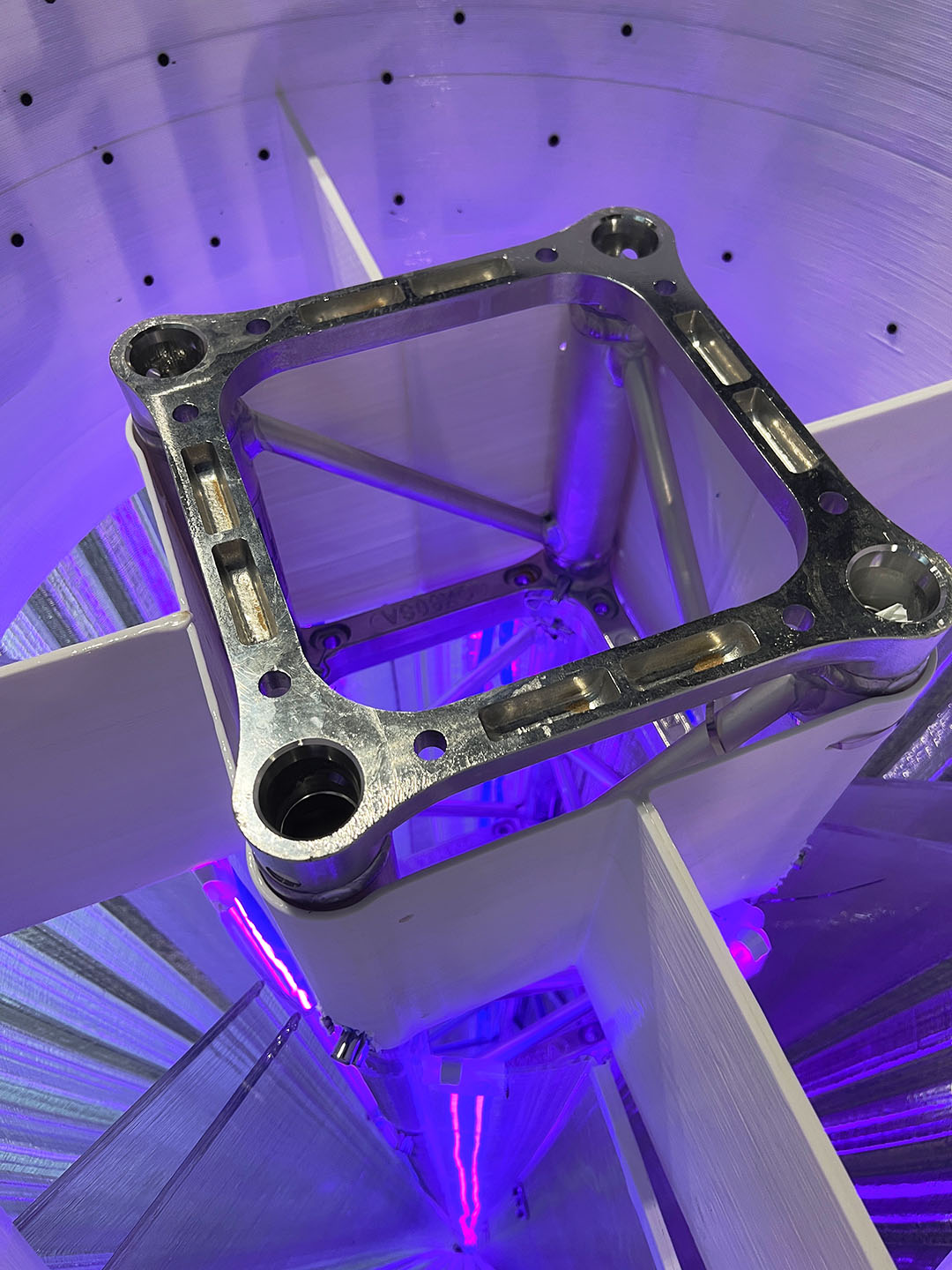
Zaha Hadid Architects’ Tech Lab has completed a six-meter-tall 3D printed model of an air traffic control tower for its ZHAviation stand at Passenger Terminal Expo 2026 in London. The team printed fifteen modular PETG panels, each about one meter by one meter, in a continuous 270‑hour run on a WASP HDP XL pellet extruder mounted to a robotic arm. Fire‑resistant PETG and internal programmable LEDs turn the tower into a safe, glowing sculptural beacon rather than a fragile prop. Crucially, the panels bolt onto a metal frame so the structure can be assembled inside the hall, dismantled afterward, and redeployed at future events. The studio has added a second robot on the CEREBRO control system, enabling coordinated multi‑robot printing so large-format 3D jobs can run in parallel rather than one after another. The real design story here is not the fluid geometry; it is throughput. Machine time is now the bottleneck, and architects are attacking it with more robots instead of more labor.
From Waste Plastics to Sculptural Furniture Design Through Continuous Extrusion
The same studio has partnered with Nagami to develop the Echo Chair, a piece of sculptural furniture produced entirely from recycled industrial plastic waste. Here, large-scale 3D printing is not an experiment stuck in a tech lab; it is the manufacturing method for a commercial chair with demanding structural and ergonomic requirements. Using parametric design, the team shaped an organic backrest that flows into the ground while the sides lift to form a scooped seat. Fabrication relies on a continuous‑extrusion robotic process that builds up layers sequentially, leaving a ribbed surface across the frame and removing any need for assembly or separate joints. Structural support, comfort, and texture exist in one continuous printed system. This is the kind of sculptural furniture design that would be prohibitively complex in traditional carpentry or metalwork. Industrial 3D printing turns it into a repeatable, tunable product rather than a one‑off art piece.
Material Iterations and Circular Design, Not One-Off Prototypes
The Echo Chair project shows why robotic additive manufacturing is so attractive to architects: the same geometry can be explored across multiple material iterations without redesigning tooling. Four distinct versions go on public display, all printed with the same continuous-extrusion structural logic. Two use recycled PETG reinforced with glass fiber in monochrome black and white, delivering high structural stability for daily use. Another replaces the plastic blend with a bio-based cork composite, creating warm caramel surfaces. A fourth plays with translucency in a gradient from solid white to clear. The raw polymers come from discarded single-use medical plastics and other industrial waste streams, turning an overlooked resource into desirable furniture. According to ZHA project design director Sebastian Andia, the textured ribbing is meant to echo the mineral complexity of stone, underscoring how waste-based large-scale additive manufacturing can aspire to the visual richness of natural materials. This is circular design in practice, not theory.
Why Industrial 3D Printing Is Becoming a Serious Architectural Workflow
Architects have long tolerated slow, material-heavy model making. Robotic additive manufacturing exposes how wasteful that habit has been. When a six-meter tower can be printed, wired with LEDs, bolted to a frame, and reused across events, it challenges the logic of bespoke wood and foam models that end up in the dumpster. When sculptural furniture design can be produced from recycled industrial plastic waste in four material variants without cutting a single sheet or milling a single block, subtractive fabrication suddenly looks clumsy. Robotic extrusion also minimizes material waste compared with traditional subtractive manufacturing, turning print time—not offcuts—into the primary cost. At the same time, companies behind systems like WASP’s pellet printers show that large-scale 3D printing can already handle boat interiors, facades, wall tiles, expo structures, and even airport buildings. The direction of travel is obvious: industrial 3D printing is becoming a core architectural workflow for form exploration and sustainable prototyping, not a fringe technology.