
Additive propulsion: from exotic option to industrial default
Additive manufacturing in aerospace propulsion is the use of industrial 3D printing to produce rocket engines, hypersonic thrusters, and satellite RF subsystems with complex, integrated geometries that lower mass, cut lead times, and enable entirely new performance architectures that conventional machining and casting cannot economically achieve at scale across commercial and government space markets.
The most important shift in space hardware today is that 3D printing is no longer supporting cast; it is becoming the production method that ambitious propulsion and satellite companies design around. Venus Aerospace, Ursa Major, and SWISSto12 are not experimenting with 3D printing aerospace propulsion—they are building their business models on it. Their latest funding rounds are not about proving that additive works; they are about racing to scale factories before demand for new engines and multi‑orbit connectivity outstrips supply.
That matters because the bottleneck in space is no longer ideas, it is hardware throughput. Additive manufacturing rocket engines and RF payloads is emerging as the only credible way to unlock the next wave of missions without waiting years for parts.
Venus Aerospace: detonation engines that only exist because of 3D printing
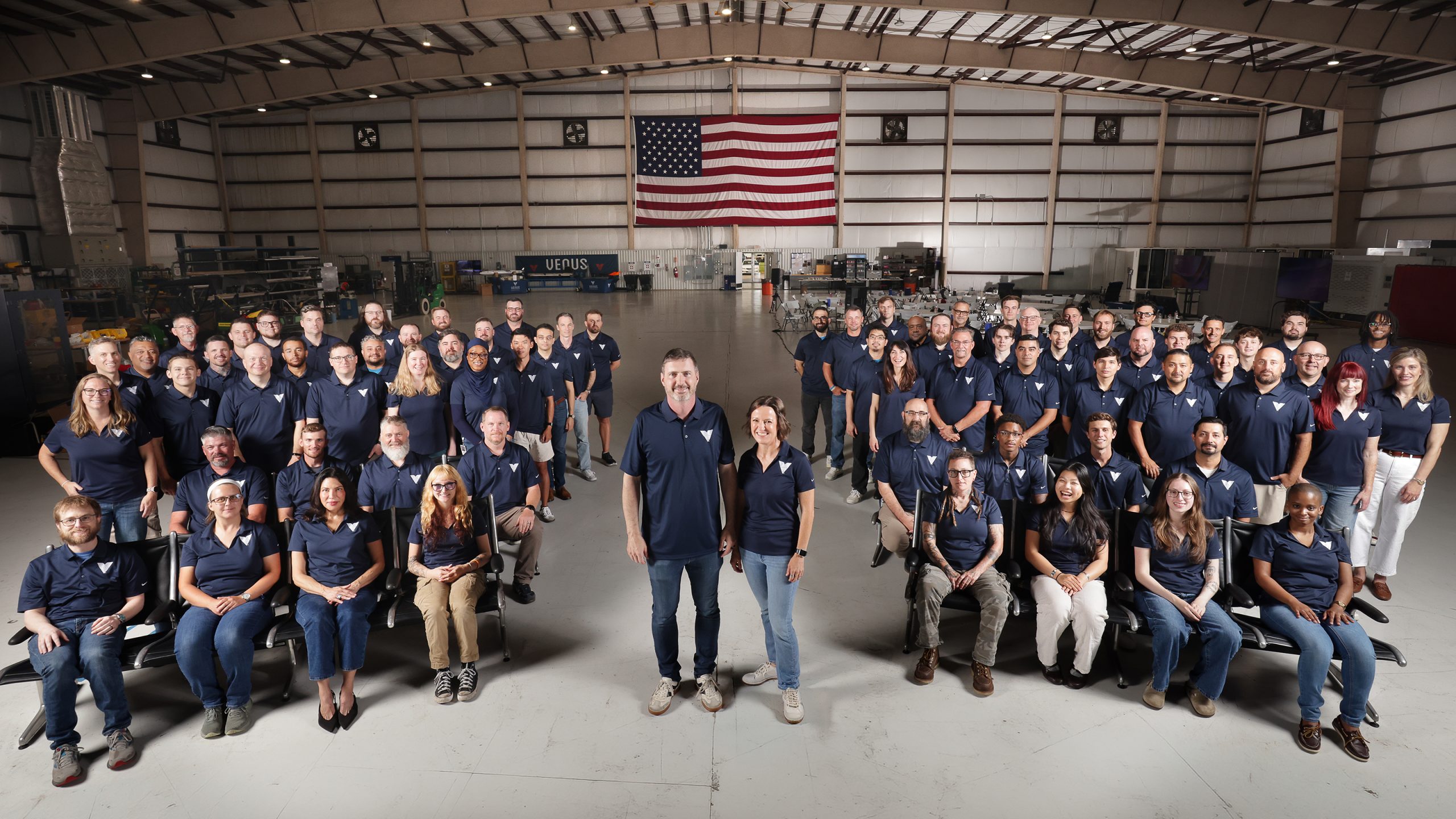
Venus Aerospace has raised USD 91 million (approx. ₱5,096,000,000) in Series B funding to move its rotating detonation rocket engine from flight‑test trophy to production product. This is not incremental; the company is betting that rotating detonation rocket engines will define the next era of high‑thrust propulsion—and that such engines are impossible to build at scale without 3D printing. The RDRE uses a continuous supersonic detonation wave that circles the combustion chamber and delivers about 15% higher efficiency than conventional subsonic designs, opening up longer range and payload flexibility for defense and space missions.
Crucially, Venus is clear that geometry, not marketing, forces their manufacturing choice. The tight‑tolerance injectors, integrated cooling passages, and internal flow paths required for detonation engine production are too intricate for traditional machining, making additive manufacturing a prerequisite. The engine’s 3D printed components are paired with standard materials and designed for domestic manufacturing at scale to avoid constrained or foreign supply chains. In practical terms, that means Venus can offer a reusable, throttleable propulsion platform that can be adapted across munitions, launch, orbital transfer, and landers instead of crafting bespoke hardware for each mission class.
The opinionated takeaway: rotating detonation engines are the clearest proof yet that some future propulsion architectures would not exist in the real world without additive manufacturing rocket engines at their core. As capital pushes Venus from demonstration into scale, legacy engine houses that still treat 3D printing as a niche tool risk being locked out of the most efficient architectures on the table.
Ursa Major: hypersonic propulsion, one printed layer at a time
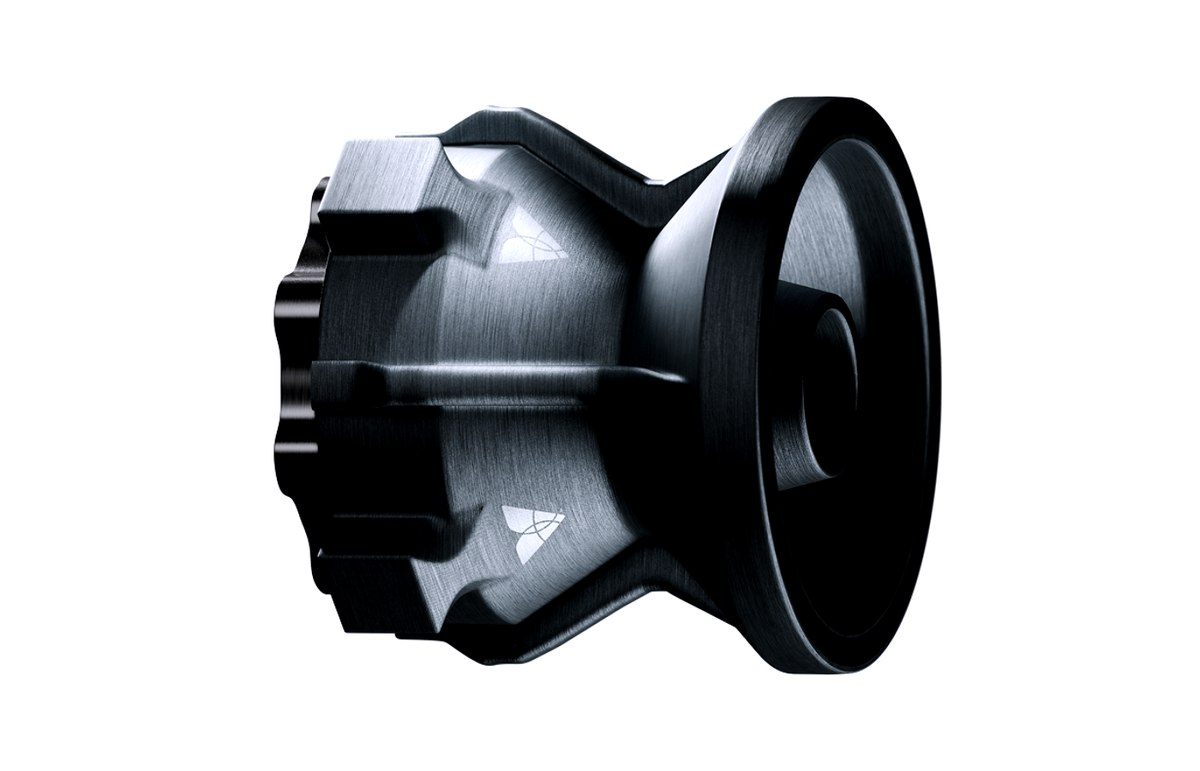
If Venus shows how 3D printing enables new engine physics, Ursa Major shows how it compresses time. The company has built its propulsion portfolio around metal additive from day one, and its Hadley engine—an oxygen‑rich staged‑combustion design—is about 80% 3D printed by mass, with all major rotating machinery and combustion components, including the thrust chamber, produced additively. That level of printing is not aesthetic; it is how Ursa Major hits the aggressive development cycles that modern hypersonic programs demand.
Ursa Major and the Air Force Research Laboratory went from contract to a flight‑ready Draper engine powering the Affordable Rapid Missile Demonstrator in eight months, reaching supersonic speeds in the January 2026 flight. The company then backed that momentum with a USD 100 million (approx. ₱5,600,000,000) Series E equity round plus USD 50 million (approx. ₱2,800,000,000) in debt to scale hypersonic systems, solid rocket motors, and space‑mobility hardware, supported by more than USD 115 million (approx. ₱6,440,000,000) in bookings through the third quarter of 2025. In parallel, it broke ground on a 400‑acre test and qualification site and expanded to six EOS‑based metal 3D printers dedicated to hypersonics and defense production.
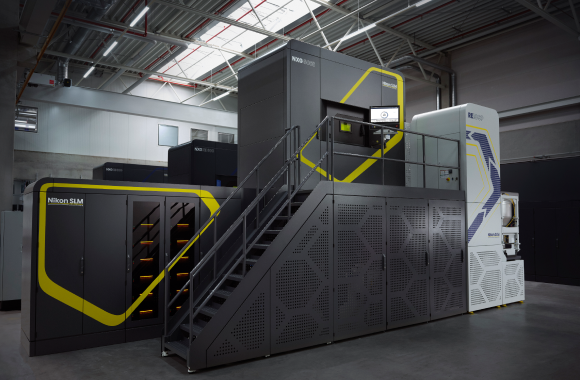
Ursa Major’s additive team has grown from an outsourced experiment to nine metal powder‑bed machines across two facilities, with plans for 15 printers, full post‑processing, and eventually large‑scale production plants in the Youngstown region. That scale is justified by the design‑print‑test loop enabled by metal AM: multiple injector designs can be printed in parallel, hot‑fired within about two weeks, and iterated again, allowing hypersonic propulsion additive programs to evolve at an exponential pace compared with traditional hardware cycles.
The signal is blunt: hypersonic propulsion is becoming an additive‑first domain. Policymakers may talk about strategy, but the real competitive edge is how many high‑energy engines you can design, print, and qualify per year.
SWISSto12: 3D‑printed RF payloads and the multi‑orbit land grab
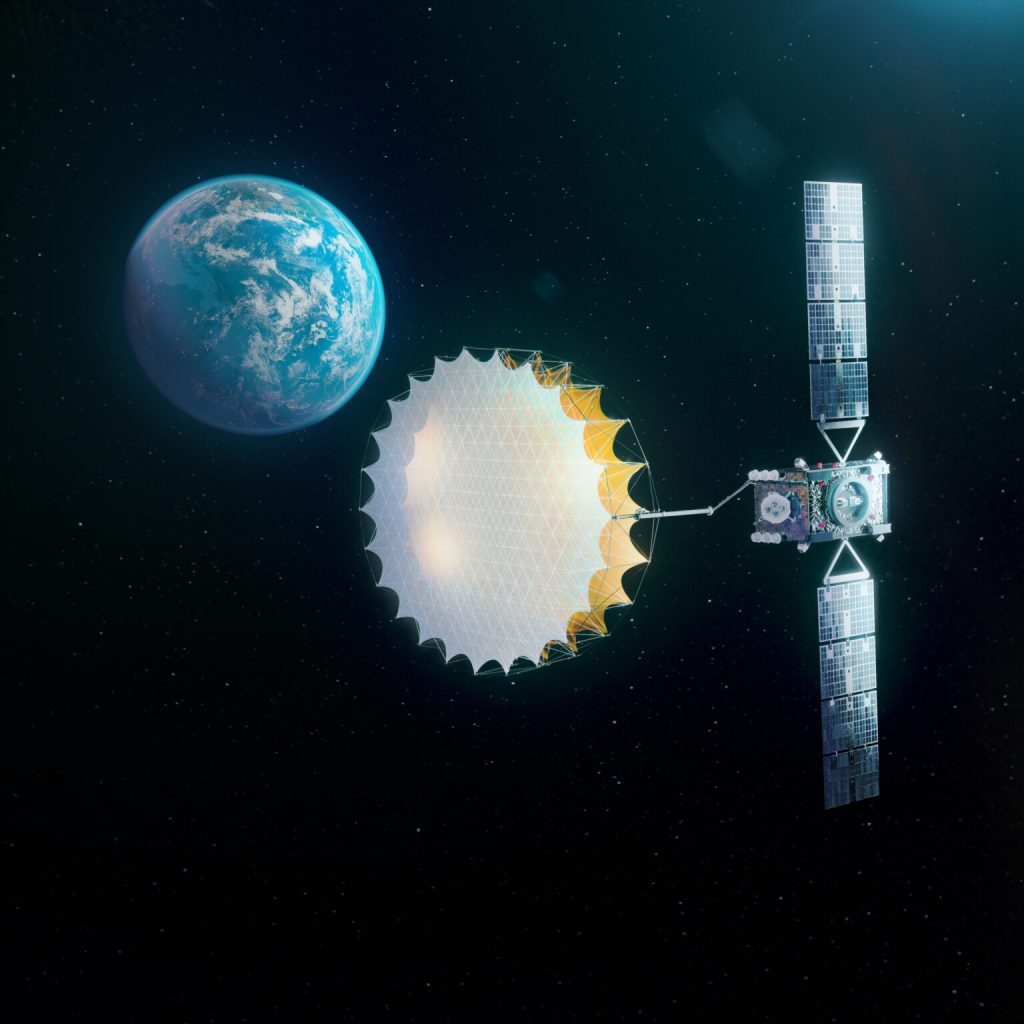
On the satellite side, SWISSto12 shows how 3D printing is re‑shaping the RF hardware stack rather than propulsion tanks. The company closed USD 70 million (approx. ₱3,920,000,000) in Series C funding to expand manufacturing as orders grow across commercial and government customers. That raise follows a steep climb in revenue to USD 140 million (approx. ₱7,840,000,000) in 2025 and more than USD 500 million (approx. ₱28,000,000,000) in cumulative contracts, a trajectory the company says will push it into positive EBITDA in 2026.
SWISSto12 is not raising to validate technology; it is raising to turn an order book into delivered satellites and payloads. The company uses additive manufacturing to gain a cost and speed edge for RF components and satellite subsystems, allowing it to serve growing satellite‑connectivity demand across low, medium, and geostationary orbits at once. According to its chief financial and strategy officer, the Series C is a capacity play aimed at meeting “strong demand from a space, satellite and telecommunications market that’s evolving and growing at pace”. Public backing amplifies this: member states of the European Space Agency have awarded USD 84.8 million (approx. ₱4,748,800,000) to support the HummingSat ARTES partnership, funding development and in‑orbit validation of the HummingSat platform.
The broader satellite manufacturing 3D printing trend is clear. Other ventures are building satellite IoT constellations around metal‑printed patch antennas, while new satcom entrants pair mass‑production economics with 3D printed RF components for small geostationary platforms, a profile that echoes SWISSto12’s own proposition. Investors are following: money is moving toward printed space hardware because it promises lighter parts, faster builds, and lower launch costs.
In other words, satellites are being optimized as printed RF systems first and bus structures second. That inversion only works when additive manufacturing is mature enough for production, not prototypes.

Why additive‑first companies will drive consolidation in space hardware
Step back from the individual deals and a pattern emerges. Venus Aerospace, Ursa Major, and SWISSto12 sit in different corners of the market—detonation engines, hypersonic propulsion, and satellite RF payloads—but they are all scaling around the same thesis: design for additive, own the manufacturing stack, and then raise capital to build factories, not merely demonstrations. Venus is using its USD 91 million (approx. ₱5,096,000,000) to take its RDRE platform from breakthrough to scaled capability across defense and space. Ursa Major’s USD 150 million (approx. ₱8,400,000,000) financing plus more than USD 115 million (approx. ₱6,440,000,000) in bookings backs an ambitious plan for additive‑heavy hypersonic and rocket‑motor production facilities. SWISSto12’s USD 70 million (approx. ₱3,920,000,000) Series C is geared toward turning a USD 500 million (approx. ₱28,000,000,000) contract book into multi‑orbit hardware.
This is not a random funding wave. It lands at a moment when allied governments are prioritizing hypersonic and long‑range capability, demanding systems that outperform legacy platforms in speed and reach, while global satcom operators race to build capacity across LEO, MEO, and GEO simultaneously. In that environment, whoever can collapse design cycles and production lead times will win. Additive manufacturing reduces lead times and allows geometries, such as highly integrated coolant channels and internal RF waveguides, that conventional machining struggles to deliver at all.
The likely outcome over the next decade is industry consolidation around the companies that treat 3D printing as core infrastructure. As AM‑enabled propulsion and payload manufacturing scales to meet commercial and government demand, smaller firms that cannot afford their own additive production lines will either become customers of these new manufacturing giants or acquisition targets. In effect, the factories being built today by Venus, Ursa Major, and SWISSto12 are not only printing engines and antennas; they are printing the future structure of the space industry itself.