
Metal 3D Printing Software Becomes the Production Engine
Metal 3D printing software now refers to a new class of tools that control toolpaths, inspect each powder layer in real time, and simulate post-processing such as depowdering, turning metal additive manufacturing from a risky prototyping method into a data-driven, repeatable production technology for critical industrial parts at scale. This shift matters more than any single new machine: it is software, not hardware, that is starting to decide which providers can run reliable, profitable metal AM lines. The headline story today is clear—advanced software is becoming the real engine of additive manufacturing optimization, cutting trial-and-error from powder bed fusion workflows and exposing the hidden risks that once made metal AM slow, expensive, and hard to qualify. Those who treat software as a core manufacturing asset will own the next phase of industrial AM growth.
PAAM: Making Metal AM Toolpaths Measurable Instead of Mysterious
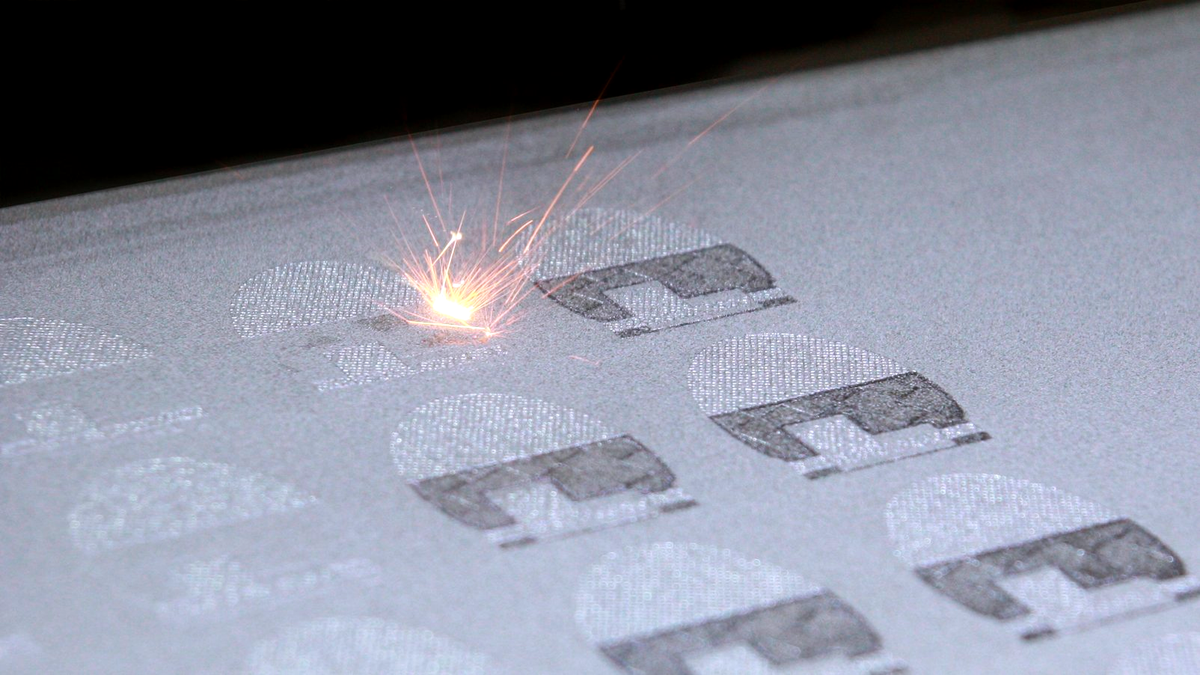
Gravity Pull Systems is rolling out a new generation of its Personal AM Assistant (PAAM), an automated toolpath optimization platform built specifically for metal laser powder bed fusion systems. This matters because scan strategies still hide many production failures in metal AM. Toolpath behaviour can drive local quality and porosity risk, trigger multi-laser interaction problems and gas flow sensitivity, and inflate build time and cost while raising requalification headaches in regulated sectors. PAAM attacks that opacity head-on. It inspects slicer and build files, analyses scan-path behaviour, detects geometry- and process-driven risk mechanisms, then applies controlled toolpath and parameter optimizations before the first build. Instead of relying on bespoke scripts and hero engineers, it embeds process knowledge and algorithmic optimisation without huge datasets, cutting manual setup, expert intervention, engineering loops, and avoidable human error in toolpath decisions.
The opinionated takeaway: PAAM is pushing metal AM toward a world where toolpaths are treated like any other critical process parameter—they must be visible, measurable, and correctable. Huba Horompoly’s comment that “metal AM service providers and regulated manufacturers do not only need better build preparation, they need better build confidence” captures this shift. Gravity Pull Systems is also opening selected PAAM Diagnostic Benchmark projects to metal AM service providers and industrial users, effectively inviting them to quantify how much money and time their current scan strategies waste. That is a provocative move: once you can see your hidden risk in numbers, it becomes a management problem, not a niche engineering concern. In a market chasing manufacturing automation, PAAM shows that optimization must start at the digital toolpath, not at the machine’s front panel.
Phase3D and NASA: Real-Time Monitoring as Quality Insurance
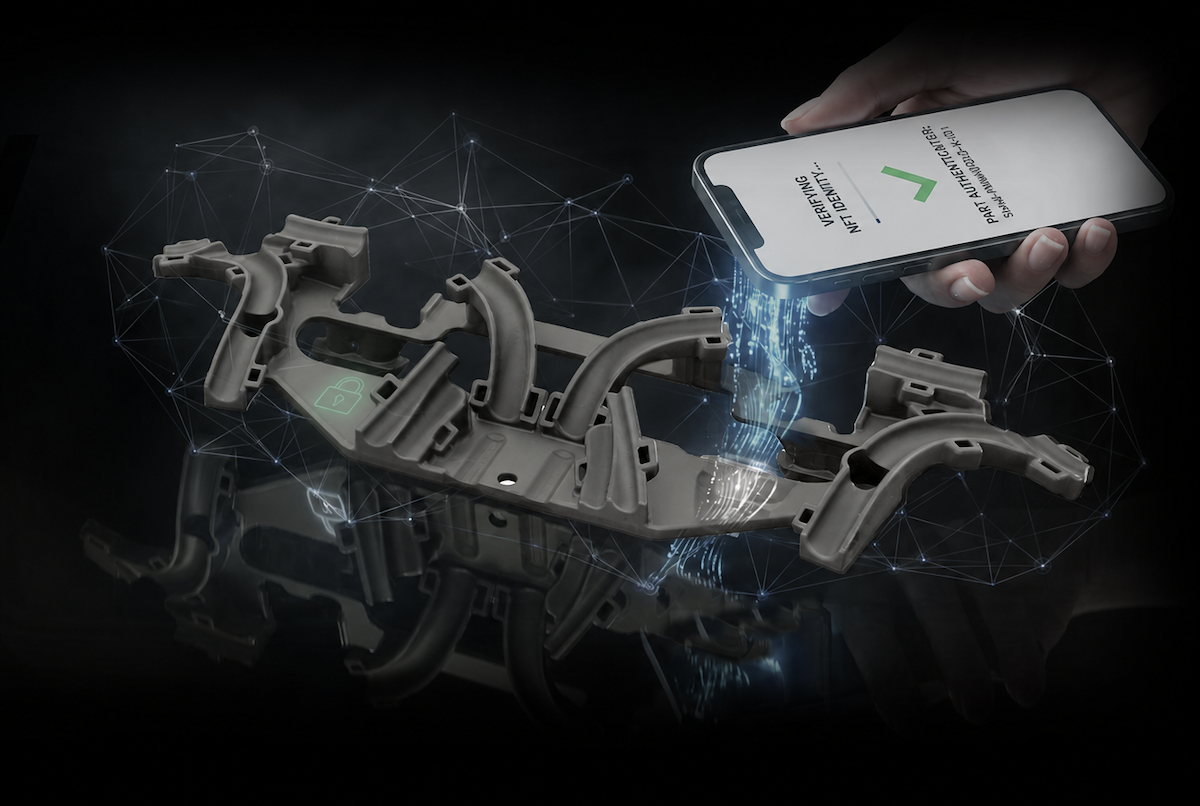
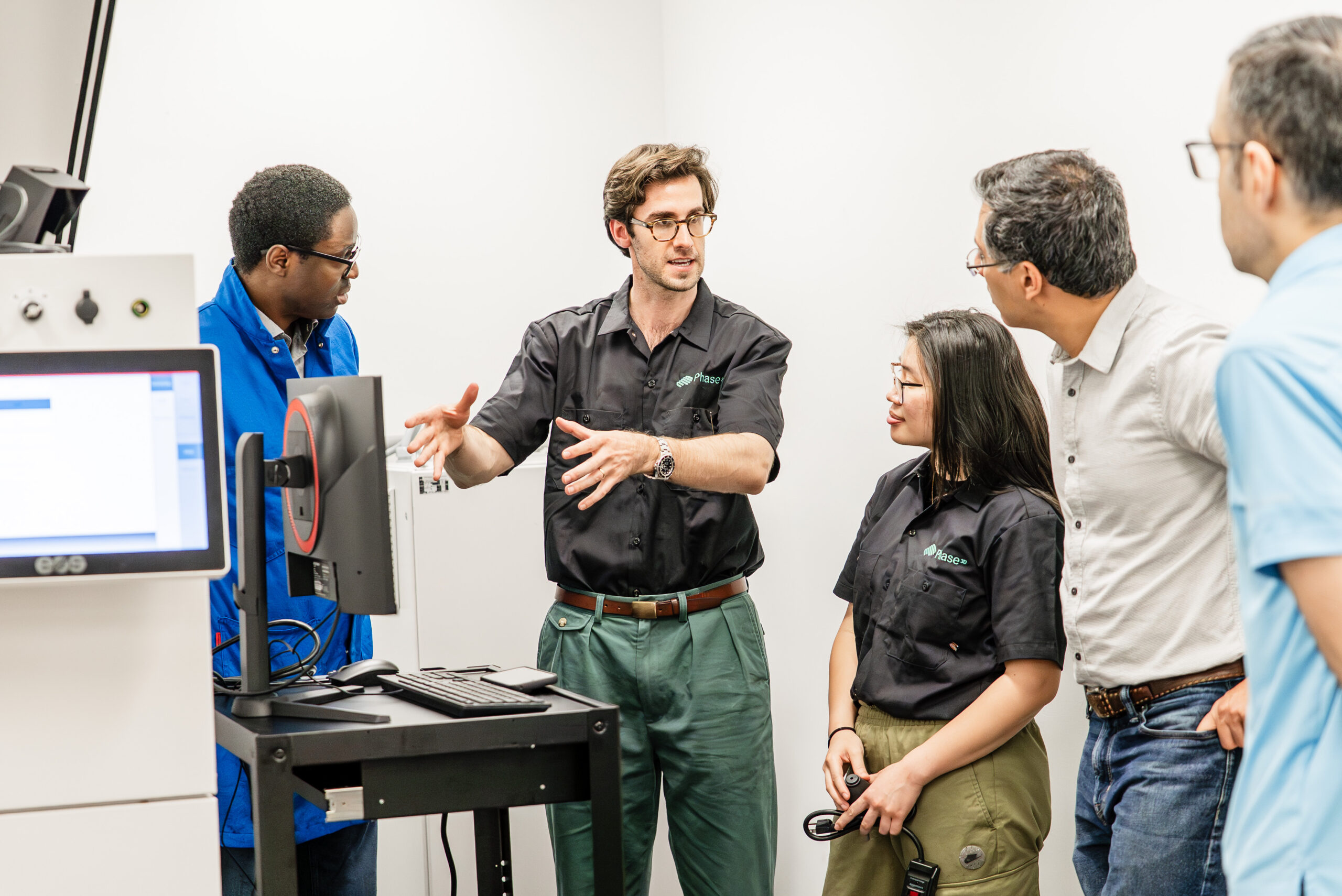
If PAAM cleans up input data, Phase3D’s NASA-funded work tackles the output: in-situ monitoring that qualifies parts layer by layer. The company has secured a contract to deploy its Fringe Inspection hardware and Fringe Qualification software on an EOS M300-4 quad-laser powder bed fusion machine in partnership with an aerospace and propulsion prime. The test case is structural brackets made from Invar 36, with an ambitious aim to cut the qualification timeline two- to three-fold compared to the standard, which can exceed eighteen months for space components produced with metal AM. Today, rejection rates in this segment can be as high as 30 percent, a brutal statistic that makes large-scale adoption financially painful. Phase3D’s thesis is blunt: “with Fringe Inspection, the part is qualified as it is built. Every powder layer, every weld, every anomaly is captured in calibrated, defensible data”.
This is not incremental improvement; it is an attempt to rewrite the quality playbook. Metal AM has matured in powders, lasers, machines, and process parameters, but the missing piece has been a way to prove in real time that the part built is the part designed on every layer. By turning powder bed fusion simulation and monitoring into continuous evidence, Phase3D is attacking the classic “garbage in, garbage out” problem at its root. If they succeed in shrinking qualification cycles and cutting rejection rates, the impact for ordinary users is pragmatic: fewer destructive tests, faster design loops, and major cost savings for new adopters of metal AM. This kind of manufacturing automation is less about flashy dashboards and more about building a legal and engineering case that AM parts can be trusted in flight-critical hardware without burning eighteen months of time for every design variant.
Solukon SPR-Pathfinder PRO: Design for Depowdering Comes of Age
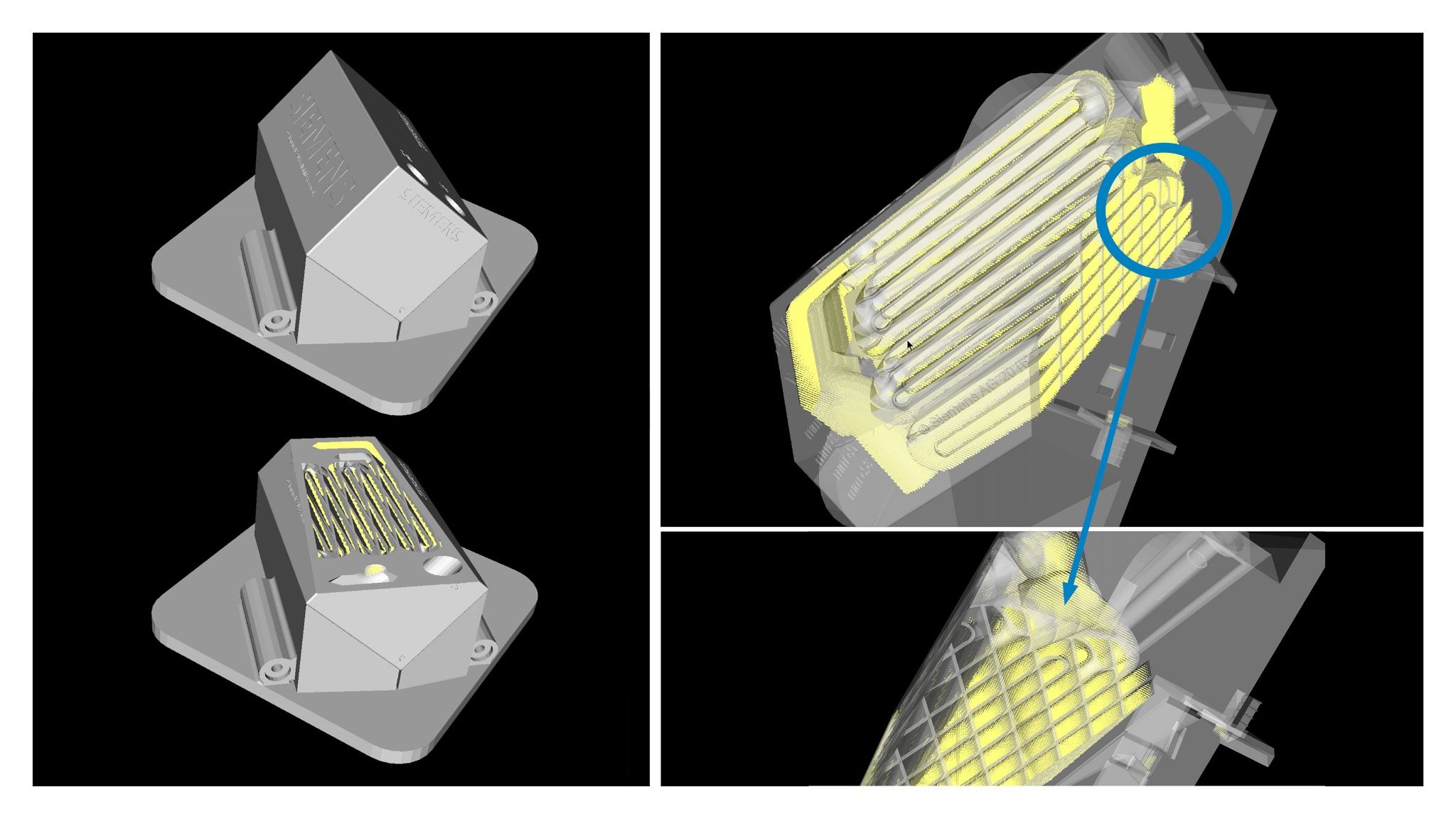
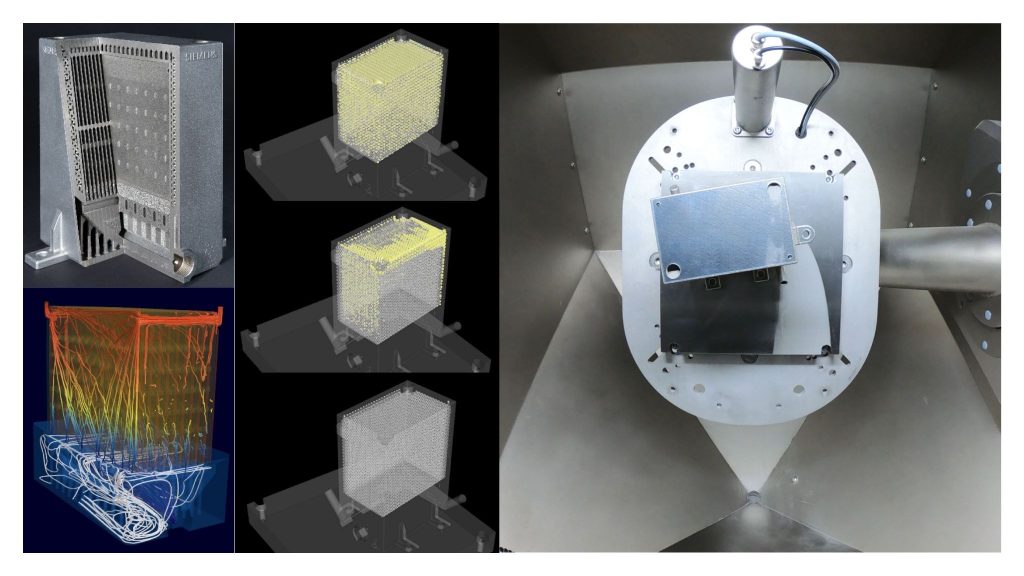
The third link in the chain is depowdering, a step many designers still treat as an afterthought. Solukon has launched SPR-Pathfinder PRO, an upgraded software package that plans and simulates powder removal from complex laser powder bed fusion parts. The PRO edition removes the previous voxel limit, boosts the particle-simulation count to one million, and lets engineers inspect internal powder movement before a part is printed. Earlier versions were capped at 2.4 million voxels, which restricted their ability to represent sub-millimeter channels and densely packed internal surfaces. Customers with components that exceeded these limits pushed the company to raise the ceiling. Now, increased simulation depth offers a clearer picture of how powder will move through narrow internal routes, making powder bed fusion simulation a design tool instead of a post-build guessing game.
Solukon explicitly describes this as Design for Depowdering, a necessary complement to traditional Design for Additive Manufacturing that looks beyond printability to whether unfused powder can be reliably removed. Cross-sectional views along X, Y, and Z axes and adjustable model transparency help teams spot bottlenecks and powder traps while the component is still digital. They can then modify channels, reposition outlets, or change orientation before committing to a build, reducing trial-and-error and scrap. Once simulation is complete, the movement program is transferred directly to a compatible depowdering system for execution, tying software to hardware in a genuinely automated workflow. The PRO package even estimates the time needed to calculate the movement program and carry out physical depowdering, giving manufacturers a tangible production-planning tool for scheduling equipment and forecasting total processing time.
From Point Solutions to a Software-Defined Metal AM Factory
Viewed together, PAAM, Phase3D’s NASA-backed monitoring, and SPR-Pathfinder PRO point toward a single conclusion: the future metal AM factory will be defined by software more than machines. Toolpath optimization turns scan strategies into a controllable lever for printability, part quality, productivity, and qualification awareness. Real-time inspection closes the evidence gap that has kept qualification timelines long and rejection rates high in mission-critical sectors. Depowdering simulation makes post-processing predictable and schedulable, cutting manual trial-and-error out of powder removal workflows. Each platform directly improves part quality, production speed, and cost efficiency, not as marketing rhetoric but as explicit changes to how risks are found and handled.
The opinion here is unapologetic: hardware advances alone will not make metal AM a mainstream production method. Providers who keep chasing more lasers and bigger build volumes while ignoring toolpath, monitoring, and depowdering software are choosing to scale chaos. In contrast, manufacturers that invest in these software-driven controls are building a coherent digital thread where every powder layer, scan path, and particle movement is part of a measurable system. Existing Solukon machine users can already request a free 30-day trial of SPR-Pathfinder, a clear nudge toward experimentation. Gravity Pull Systems is opening PAAM Diagnostic Benchmarks, and Phase3D is starting with Invar brackets as a proving ground. The smart move now is to treat these tools not as optional add-ons but as the backbone of manufacturing automation in metal AM. The factories that do so will be the ones that turn additive from a promising technology into a dependable industrial process.