

3D-Printed RF Hardware Moves From Experiment to Essential Infrastructure
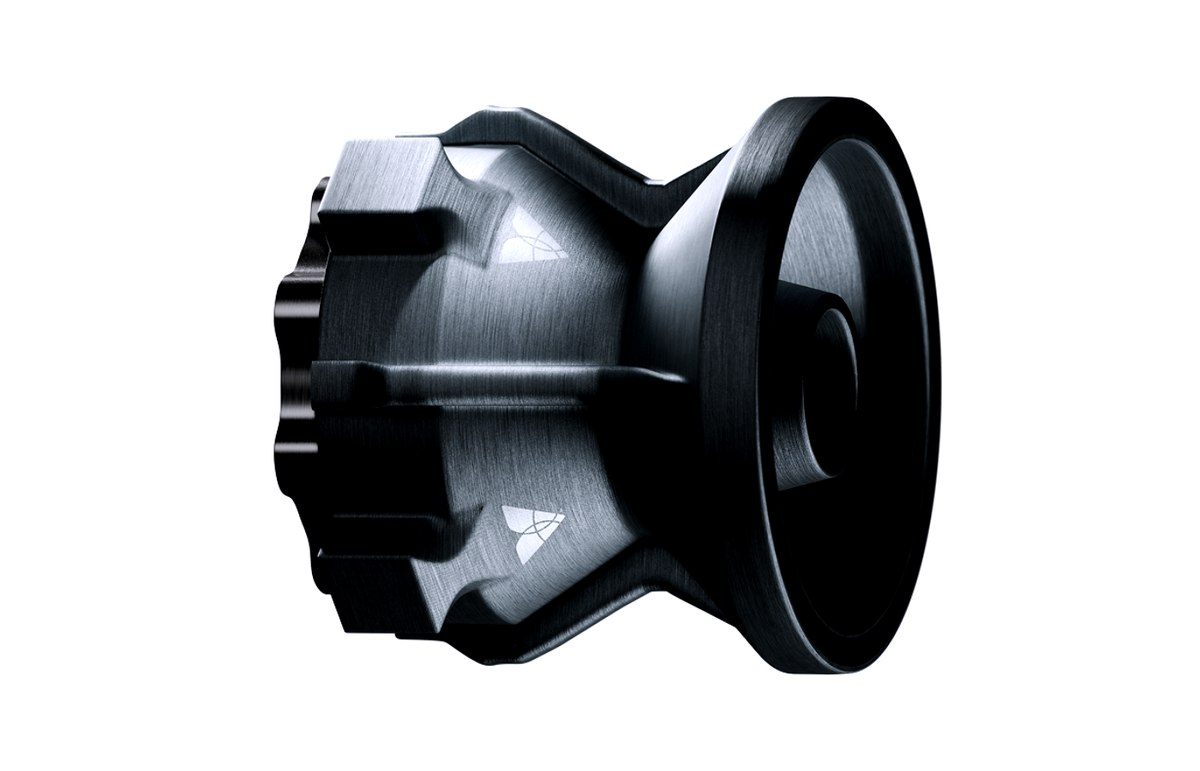
3D printing satellites, in this context, describes the use of proprietary additive manufacturing processes to produce complex radio frequency components and subsystems that form the payload and communications backbone of spacecraft, allowing satellite makers to scale aerospace manufacturing and RF component production faster and at lower cost than traditional machining and assembly routes. SWISSto12 closing a USD 70 million (approx. ₱3.9 billion) Series C round is not another speculative bet on space technology funding; it is a vote that printed RF hardware has graduated from niche experiment to essential infrastructure for multi-orbit satellite networks. The company already has more than 1,000 products in orbit and over 100 subsystems deployed on aircraft and ships, meaning investors are backing proven production, not moonshot prototypes. In a market where connectivity demand spans LEO, MEO and GEO at once, the ability to print flight-ready RF parts at scale is becoming the real competitive edge.

Funding as a Capacity Play, Not a Technology Proof
The most telling detail about SWISSto12’s latest raise is that the money is explicitly about turning backlog into hardware, not proving whether 3D printing works for satellites. With USD 140 million (approx. ₱7.8 billion) in 2025 revenue and more than USD 500 million (approx. ₱27.9 billion) in customer contracts, the company is already operating at commercial scale. One quotable statement captures this trajectory: “$140 million in revenue for 2025, more than $500 million in customer contracts, and an 110% compound annual growth rate since 2022.” That kind of growth would crush a conventional RF supply chain. By raising USD 70 million (approx. ₱3.9 billion), SWISSto12 is effectively admitting that demand for multi-orbit payloads has outpaced its current capacity—and that the bottleneck now lies in factory throughput, not in customer appetite or technical feasibility.
Proprietary 3D Printing as the Engine of RF Component Production
The company’s proprietary 3D printing technology is the quiet engine that makes this capacity play credible. SWISSto12 provides radio frequency products and subsystems to space firms, and those parts are enabled by in-house additive processes that deliver aerospace-grade RF geometries faster and cheaper than subtractive manufacturing. Additive manufacturing gives it a cost-and-speed edge, promising lighter parts, faster builds and lower launch costs—exactly the attributes that multi-orbit constellations need. This is not theory: over 2,000 HummingLink multi-orbit payload solutions are already deployed in orbit across active missions. When rivals are still qualifying printed RF components, SWISSto12 is printing and shipping at scale, including for its GEO HummingSat platform and HummingLink payloads used in diverse missions from direct-to-device connectivity to intersatellite relays. In practice, proprietary printing is the difference between responding to new orders in months instead of years.
Space Technology Funding Is Chasing Scalable Manufacturing
The USD 70 million (approx. ₱3.9 billion) Series C sits alongside public funding that is clearly aligned around scalable satellite manufacturing rather than isolated science projects. European Space Agency member states have awarded USD 84.8 million (approx. ₱4.7 billion) to the HummingSat ARTES partnership, backing development and in‑orbit validation of SWISSto12’s small GEO satellite platform. That public‑private stack says a lot: institutional actors now treat space as essential infrastructure and are willing to bankroll factories, not just payload demos. Similar raises by other satellite firms built around printed RF hardware show the same pattern—capital is moving toward technologies that can unlock mass-production economics in orbit. In this environment, investing in 3D printing satellites is less about novelty and more about fixing supply chain bottlenecks that are starting to slow down deployment of communications, broadcasting and sovereign infrastructure missions across multiple orbits.
Scaling for Any Payload, Any Platform, Any Orbit
What comes next will test whether additive manufacturing can keep its promises at industrial volumes. SWISSto12 plans to use the Series C to scale manufacturing and integration capacity for commercial and sovereign government customers, aiming to turn its USD 500 million (approx. ₱27.9 billion) order book into delivered multi-orbit payloads and GEO satellites while reaching positive EBITDA in 2026. The company has already secured seven contracts for its HummingSat GEO small satellite with operators such as SES and Viasat and is expanding HummingLink payloads into low Earth orbit constellation programs across Europe and APAC. As the CEO puts it, the goal is to meet demand “across any payload, any platform and any orbit.” If SWISSto12 can execute, its proprietary 3D printing approach will stand as one of the clearest proofs that advanced manufacturing is not just a cost saver in space—it is the only viable path to scale.