
From stock lenses to on‑demand optics
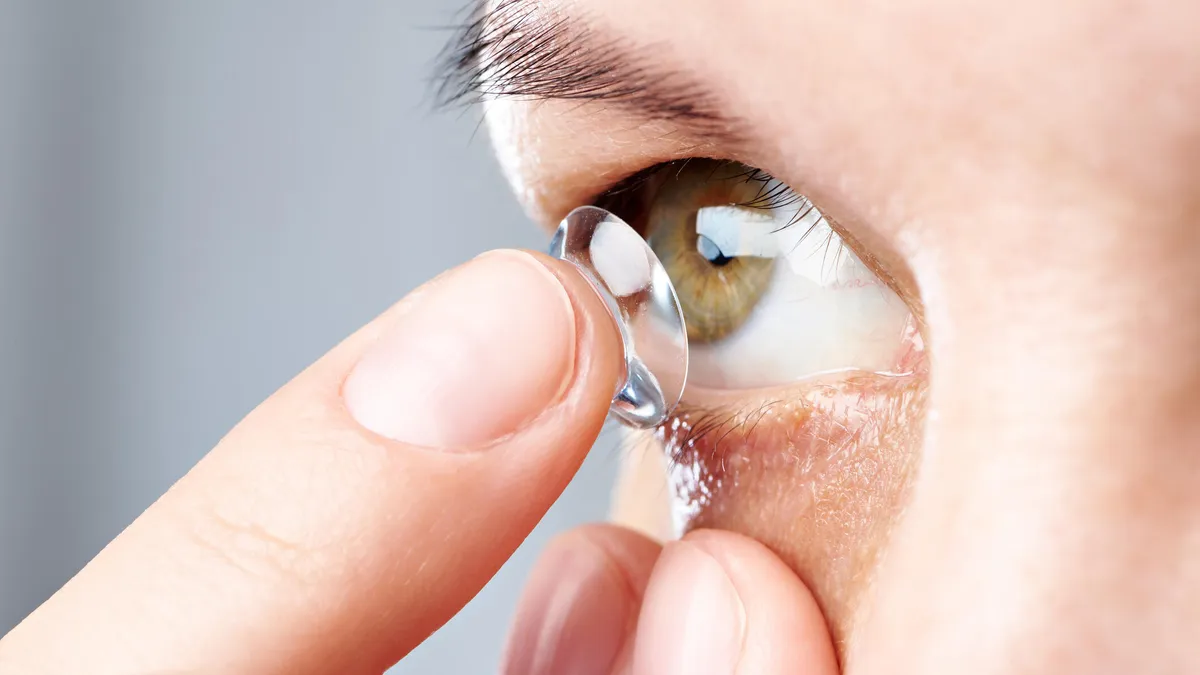
3D printed contact lenses are rigid lenses manufactured by digitally mapping each patient’s cornea and using a specialized 3D printing process and printable silicone to produce prescription‑specific optics in around 20 minutes, so clinics can design, fabricate, and dispense personalized vision correction on demand in a single visit.
The core shift here is brutally simple: custom vision correction no longer has to wait weeks. Researchers in a university chemistry department have built a digital manufacturing platform that prints patient‑specific hard lenses in as little as 20 minutes. Instead of forcing irregular corneas into a narrow range of stock sizes, the system starts with the individual eye as the default and mass production as the exception. That inversion matters. People with conditions like keratoconus or high astigmatism often endure multiple fittings over months; now, the promise is walk in with distorted vision, walk out with a lens tailored to your corneal topography. Rapid optics manufacturing stops being a buzzword and becomes a chairside service.
Why irregular corneas demand personalized eye care
Conventional contacts are designed for an average eye that does not exist. Most are made in limited stock sizes, not fitted to an individual cornea. For people with irregularly shaped corneas or severe refractive errors, that compromise is not cosmetic; it is the difference between usable vision and chronic blur. These patients are usually pushed toward rigid lenses, then left to endure a grind of trial‑and‑error fittings that can drag on for weeks or months.
The Waterloo system flips that experience. Custom software maps the clear, dome‑shaped corneal surface and generates lens geometry that matches its inner shape while building the outer surface to provide the required correction. What results is prescription‑specific, personalized contact lenses rather than rough approximations. In practice, this is personalized eye care in the literal sense: geometry, material and optics tuned to one cornea, not an abstracted population average. For patients whose vision cannot be adequately corrected with soft lenses—such as those with keratoconus, high or irregular astigmatism, corneal scarring or post‑surgical complications—this is not a niche luxury; it is overdue infrastructure.
How rapid optics manufacturing works in the clinic
The technical breakthrough is not only speed; it is speed without giving up what makes contact lenses safe and wearable. Silicone is popular in lenses because it is biocompatible and highly oxygen permeable, but standard formulations do not work with 3D printers. The team created a hydrophilic silicone designed for additive manufacturing that can be processed by vat photopolymerization and digital light processing while retaining oxygen flow suitable for the eye.
From there, software generates thickness maps to print a lens whose inner surface mirrors the mapped cornea and whose outer surface delivers the prescription. According to the researchers, “Our software designs a lens with an inner surface that precisely matches the patient’s cornea and an outer surface that provides the required vision correction.” Layer‑by‑layer printing usually leaves stair‑step artifacts that ruin optics, so the group added an ultra‑thin, non‑contact coating to smooth the surface without changing shape. Laboratory tests with human corneal epithelial cells confirmed the printed lenses are biocompatible, and the team now plans in vivo studies before clinical use.
On‑demand, one‑visit lenses and the cost question
Why does 20‑minute printing matter beyond technical pride? Because it compresses an entire supply chain into the exam room. The platform is designed so optometrists can design, manufacture and dispense specialized hard lenses in a single visit. That is genuine on‑demand manufacturing: the prescription, geometry and physical product are all created at the point of care. For patients, this means fewer appointments, faster relief from blur, and a fitting process that can adapt quickly if the first version is not perfect.
Cost is where this could quietly break open access. Today, customized rigid lenses—including fittings and follow‑up—often run from USD 500 to USD 1,500 (approx. ₱28,000–₱84,000). That price locks many people out of the best correction for their condition. The research team said they believe their technology can help democratize access by lowering costs and simplifying fittings. If clinics can print lenses onsite instead of ordering batches from distant manufacturers, personalized eye care starts to look less like a boutique service and more like a standard option for complex prescriptions.
Beyond industry: what this says about 3D printing’s future
This project is a quiet rebuke to the idea that 3D printing belongs mainly in factories and hobby labs. Here, precision 3D printing is solving a medical problem that traditional manufacturing never handled well: repeatable, affordable, patient‑specific optics. The team’s hydrophilic silicone, tailored for vat photopolymerization, and their non‑contact fluidization coating show how materials science and print process tuning can meet strict clinical demands instead of industrial tolerances alone.
The platform has already collected a Gold Medal at a major international inventions exhibition, and the group is working with a vision research center to push toward commercialization. They have filed a provisional patent on the silicone and are preparing a full application while planning in vivo trials. The more important signal is philosophical: when we treat 3D printers as tools for on‑demand healthcare, not toys or slow factories, new categories like rapid optics manufacturing appear. Personalized eye care could be the first proving ground where 20‑minute printed lenses make mass‑produced contacts look outdated.