
From Printing Dense Parts to Designing the Metal Inside
Laser control technology in metal additive manufacturing is the use of precisely programmed, multi-parameter beam control and synchronized toolpaths to shape a component’s thermal history during printing so that its microstructure, and therefore mechanical properties, can be locally tailored without relying on uniform post-processing heat treatment. That is the real story behind the latest advances in metal 3D printing: the bar has moved away from merely proving that a machine can print a material and produce a dense part; density and compatibility are now table stakes. The emerging differentiator is microstructure design—controlling grain morphology, phase balance, and local properties in the build itself. Instead of accepting whatever material behavior the process happens to produce, researchers are treating the beam as a fine manufacturing tool, turning thermal history into something designed rather than endured.
Beam Control Optimization: Why Metal AM Is Entering Its Second Phase
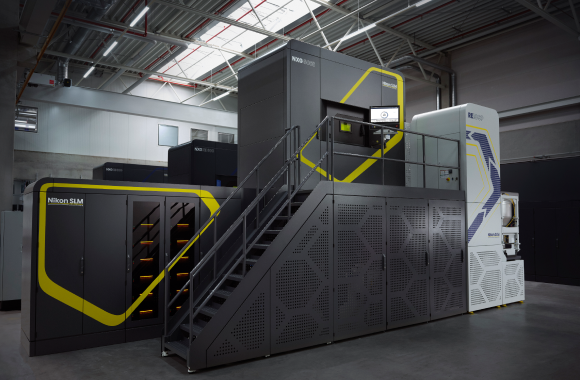
The industry spent its first phase chasing more lasers, larger build volumes, and faster throughput—culminating in machines like the EP‑M3050, with a build volume over three meters in X and Y and up to 256 lasers. Those gains matter, but they mostly answer productivity questions, not performance questions. The stronger view of metal additive manufacturing now is about process control. Beam dwell time, scan speed, focus, sequence, and local energy density are no longer secondary settings; they are the knobs that set melt pool shape, temperature gradients, cooling rate, and reheating behavior. Better beam control gives engineers a way to address hard problems in demanding applications: qualification confidence, thermal management, and material behavior in service. For difficult materials and expensive parts, this shift from “can we print it?” to “can we control it?” is poised to become a major advantage.
KU Leuven’s Dual-Laser Breakthrough: Turning the Second Beam into a Metallurgist
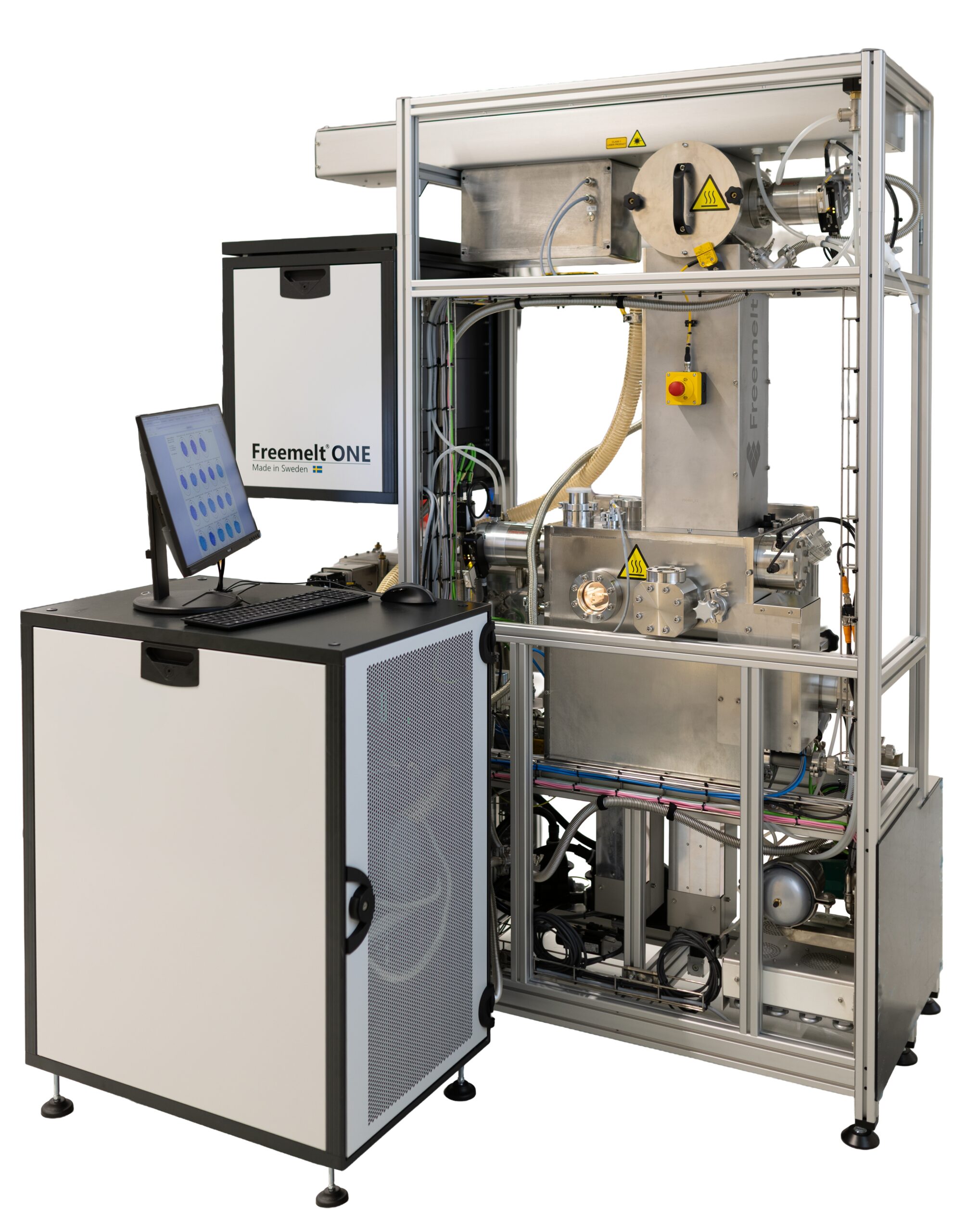
A research team at KU Leuven has demonstrated something the metal AM industry has pursued for years: localized microstructure influence within a single printed part during the build, without post-build furnace treatment. Their October 2025 study in Additive Manufacturing uses a dual-laser configuration on a Prima Additive PrintGenius 150, where the second laser trails the primary melt pool at a controlled offset and reheats the solidified metal into a critical 800–1200 °C window. In super duplex stainless steel, that window is where austenite nucleates and grows from the primary ferritic structure, allowing phase transformation in situ—no furnace required. By tuning the trailing laser’s power and offset, the team dialed austenite content from 0% under high-speed single-laser conditions to 48% with optimized dual-laser settings, a level of in-process microstructure control not previously shown in this alloy. “By tuning the trailing laser’s power and offset, the team could dial austenite content across the full range of practically relevant microstructures.”
Microstructure Design for Demanding Applications: From Uniform Parts to Localized Properties
Metal additive manufacturing has long advertised geometric freedom—near-net shapes, internal channels, topology-optimized structures—but geometry has never been the limiting factor in high-performance applications. Microstructure is what determines whether a metal part performs: strength, ductility, fatigue life, and corrosion resistance are material properties driven by thermal history, not by shape. Super duplex stainless steel makes this painfully clear. Its prized combination of strength and corrosion resistance depends on a balanced mix of ferrite and austenite, yet the high cooling rates in laser powder bed fusion suppress austenite formation, leaving a strong but brittle, corrosion-compromised ferritic part. A furnace heat treatment can restore the right microstructure, but only uniformly across the whole part, adding time, cost, distortion risk, and denying engineers the local property variation they actually need. With in-situ microstructure design through beam control optimization, those trade-offs start to disappear, and the process begins to match the complexity of real engineering requirements.
Software-Driven Beam Logic: Consistency, Repeatability, and the Road Ahead
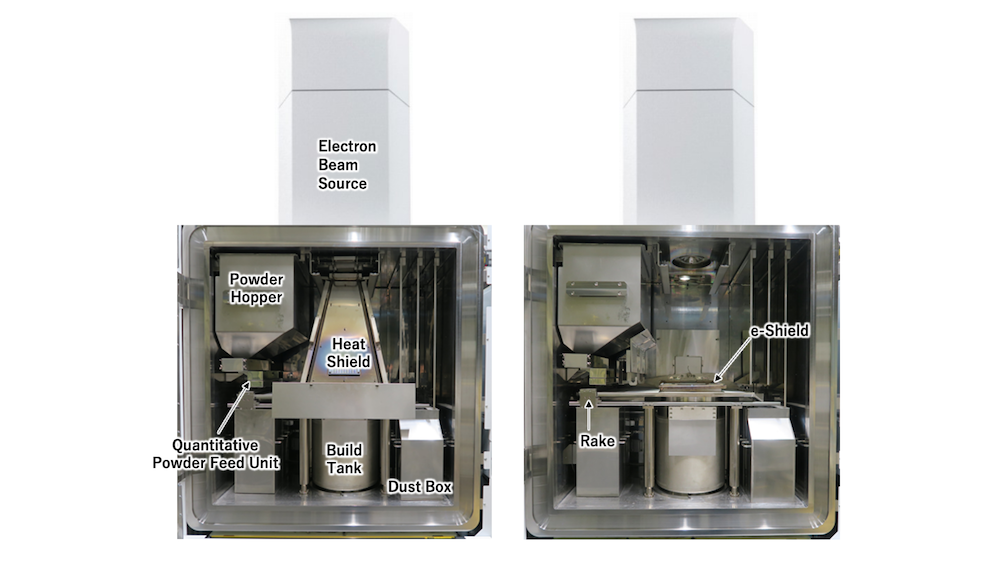
The KU Leuven work only succeeds because laser control is tightly integrated with toolpath optimization software. Fast control operations run on the Materialise Control Platform, which manages real-time laser coordination at the microsecond level and determines how the machine executes synchronized scan strategies. On top of that, the Materialise Build Processor SDK lets the team script fully custom dual-laser toolpaths: trailing-laser offsets, synchronized vector timing, and explicit dependencies between primary and secondary beam paths so that one beam can reliably follow the other. This kind of programmable beam logic is exactly the direction electron beam powder bed fusion is also moving, away from fixed scan paths and toward software-defined strategies that can tailor grain morphology, including transitions between columnar, equiaxed, and bimodal structures by changing local solidification behavior. As follow-up work explores how these advances reshape industrial adoption and qualification, the message is clear: metal AM’s future belongs to systems where beam physics and software are co-designed, not bolted together.