
From Central Warehouses to Distributed Manufacturing at Sea
Distributed 3D printing in naval operations is the practice of embedding additive manufacturing systems directly on ships and in forward logistics units so that crews can design and produce spare parts, tools, and mission-critical components at the point of need instead of relying on centralized depots and long, fragile resupply chains. This shift combines on-demand spare parts production with autonomous drone delivery to build a faster, more resilient military 3D printing supply chain that keeps vessels and equipment operational even in remote or contested waters. This is not a lab experiment anymore; it is happening underway. The Wasp-class amphibious assault ship USS Essex and Combat Logistics Battalion 13 are already using embarked 3D printers to manufacture replacement parts and tools rather than waiting weeks for the traditional supply pipeline to react. That single decision changes the power balance between operators and logisticians: instead of being hostages to lead times, crews gain direct control over how quickly they can recover from failures. In modern naval warfare and humanitarian response, that autonomy is the difference between mission delay and mission success.
USS Essex: A Floating Factory That Cuts Weeks off Lead Times
USS Essex is the clearest proof that distributed manufacturing naval operations are already transforming daily life at sea. Its embarked 3D printing team measures broken or obsolete parts, builds digital models, prints plastic prototypes to confirm fit, then produces final versions on board. This workflow strips away the layers of paperwork and waiting that define traditional procurement. As Supply Officer Cmdr. Jason Pirrallo points out, the capability means “the entire manufacturing process [can] occur on the ship, reducing administrative hurdles and the time from job submission to receipt of parts.” In practical terms, sailors and Marines no longer stare at broken equipment for a week or two hoping a replacement arrives; “instead of waiting a week or two for a replacement, we’re able to get our equipment operational right there,” says Gunnery Sgt. Samuel Margarini. On-demand spare parts production also matters for items that industry has abandoned: some components are no longer manufactured at all, and some suppliers no longer exist. The Essex team has already printed room thermostat covers and oxygen storage parts for its medical mission role, hinting at a future where even low-volume medical equipment can be produced locally and sterilized for patient care.
RIMPAC’s Autonomous Logistics Experiment: Drones Meet 3D Printers
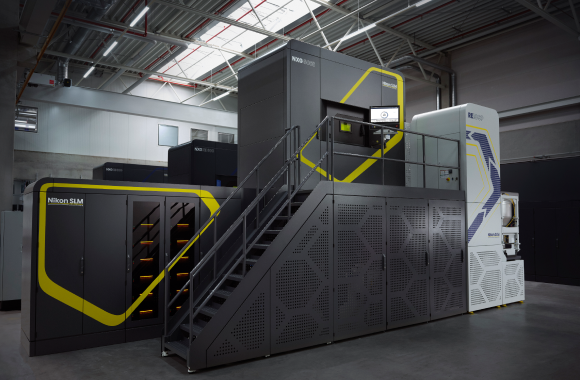
The ongoing RIMPAC 2026 exercise marks a turning point: it is the largest combined test of 3D printing and autonomous drone delivery ever run by the U.S. Department of Defense, pairing onboard manufacturing with unmanned resupply to cut turnaround time for replacement parts. Rear Admiral Michael Mattis calls it “the largest advanced manufacturing event across the Department of War ever held.” With 38 countries, 31 surface vessels, five submarines, more than 30,000 personnel and nearly 180 aircraft involved, this is not a niche trial; it is a system-wide stress test of new logistics. At sea, containerized printing platforms are proving their worth. Firestorm Labs’ xCell platform aboard USS Essex produced more than 1,000 parts for the Navy, Marines, Coast Guard and Army while underway, including in seas with waves up to 12 feet. Meanwhile, a portable, containerized 3D manufacturing platform capable of producing metal components has been placed aboard a carrier for the first time, on USS Theodore Roosevelt. On the delivery side, Splash Industries’ Typhoon water surface drone autonomously docked with Essex, handing over a needed component while the ship moved at about 10 knots and then returning with cargo. Another drone navigated 85 miles through “terrible seas at night” without a support vessel, staying out for close to 24 hours. Together, these systems are building the skeleton of resilient, decentralized production networks for future military operations.
On-Demand Hulls and Parametric Marine Spares: Redefining Readiness
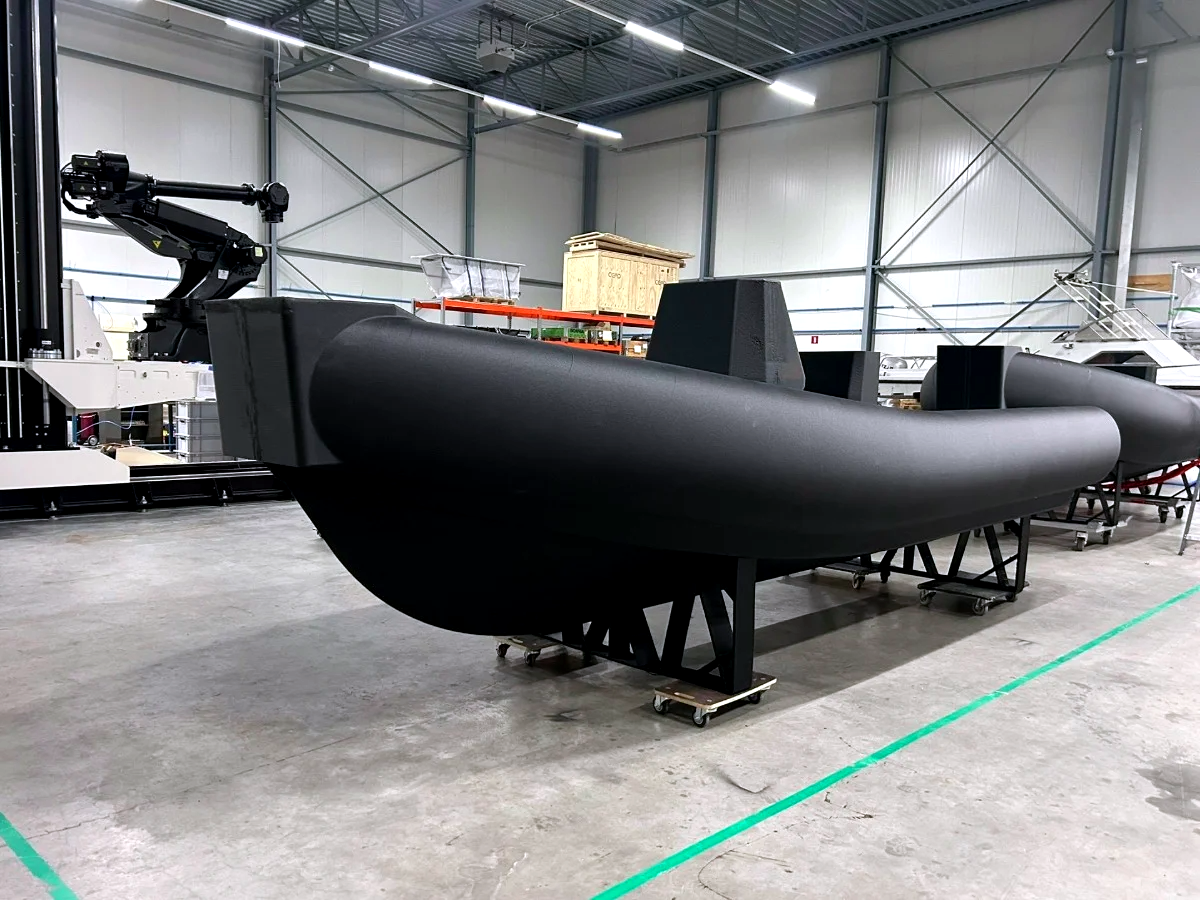
The logic behind distributed manufacturing naval operations becomes stark when you look at platforms like rigid hull inflatable boats. In the defence sector there is often no time to wait; supply chains with lead times of weeks or months create serious vulnerabilities when forward-deployed forces need replacement parts, systems, or vehicles. Voltage Vessels responds with a distributed manufacturing approach for RHIBs, using composite material reinforced with basalt fibre and additive manufacturing so six-metre hulls can be delivered on-demand and at the point of need. That is not a minor optimization; it turns a dependent, queue-based process into a local capability that can be spun up wherever a suitable printer and material stock exist. The same thinking applies to parametric marine spare parts. Components for ships and small craft often take weeks to arrive via conventional orders, if they are available at all. On-demand parametric 3D printing lets crews adjust designs to exact measurements, validate with quick plastic prototypes, then print functional components, shrinking those lead times dramatically and improving operational readiness. For units such as Navy SEALs that cannot afford slow timescales on critical equipment, the message is blunt: without distributed manufacturing, the supply chain is a liability.
The Strategic Upshot: Logistics Becomes a Combat Capability
What is emerging across Essex, Theodore Roosevelt, and the RIMPAC Joint Advanced Manufacturing Center is more than a clever tech stack; it is a new theory of military logistics. By pairing additive manufacturing with autonomous systems, navies are turning linear supply chains into adaptive networks where production and delivery are distributed among ships, shore nodes, and drones. Repair requests can be fielded at a central design hub, turned into printable files, manufactured either in containers aboard vessels or at nearby nodes, then delivered via unmanned platforms when printing at sea is not possible. This does not eliminate the traditional supply system, but it does supplement it in ways that blunt its worst weaknesses. Onboard printing cuts the workload tied to parts orders and reduces spending across departments, freeing funds for other priorities. Drones extend reach when seas are high or distances long. Planned expansion into medical equipment—where Essex already prints bespoke parts and hopes to manufacture pieces of gear for sterilized patient use—will turn logistics into a direct care enabler. The key takeaway is that logistics is no longer a back-office function; in distributed manufacturing naval operations, it is an operational capability that shapes whether missions can continue under pressure. Commands that treat it as such will have a decisive advantage over those that keep waiting for parts.