
From Prototype Plastic to Clinical-Grade Parts
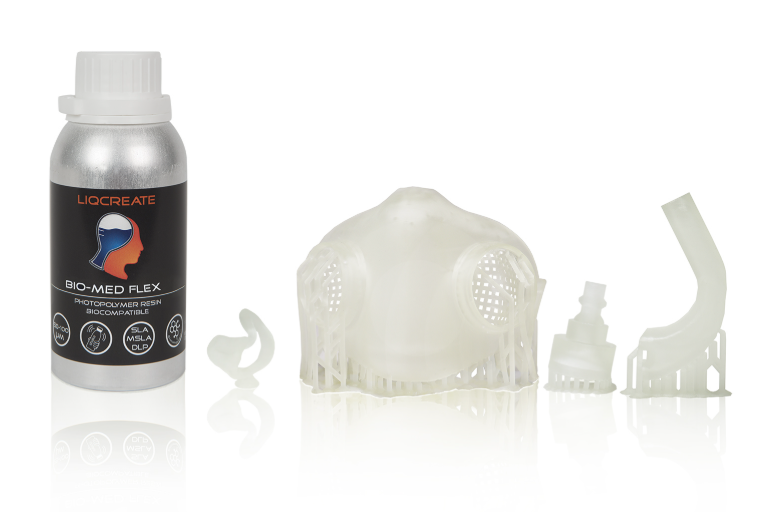
Biocompatible 3D printing resin for sterilizable medical devices is a class of photopolymer materials that can be digitally fabricated into custom parts, pass ISO biocompatibility tests, and survive common hospital sterilization or disinfection workflows, enabling on-demand medical manufacturing of surgical guides and other regulated devices instead of purely nonclinical prototypes. Today’s headline development is that these resins are no longer limited to rigid, brittle components. Digital manufacturing provider Protolabs has begun offering Medical White (MED-WHT 10), a biocompatible photopolymer, through its on-demand production services on Axtra3D’s high-speed Lumia X1 SLA systems, where it becomes the fifth production-ready material in that lineup. At the same time, Liqcreate’s new Bio-Med Flex resin delivers clear, flexible parts designed for sterilizable, biocompatible medical and biomedical applications. Together, they mark a shift from experimental 3D printed tools toward durable, certifiable clinical products.
Why Flexible and Sterilizable Matters for Real-World Care
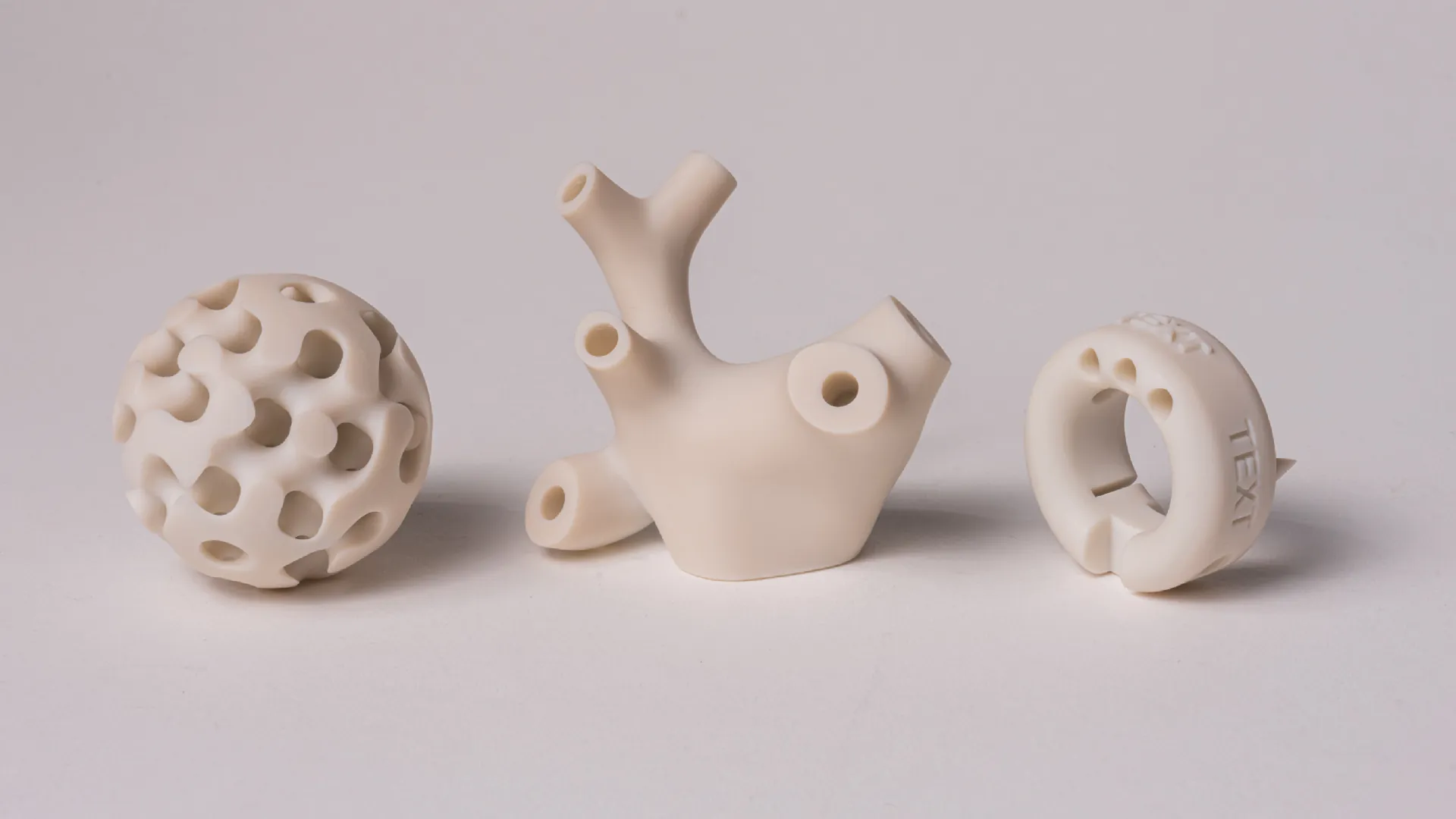
The medical value of these materials lies in the problems they solve, not in their chemistry alone. Rigid biocompatible resins have been available long enough to become routine in dental and surgical guide workflows, but they cannot address use cases that demand deformation without failure. Bio-Med Flex targets exactly that gap: it offers a Shore A hardness of 73, tensile strength of 5.0 MPa, elongation at break between 180 and 250%, and tear strength of 20–28 kN/m, describing a material that stretches substantially before it fails and resists ripping under load. In practice, that means flexible anatomical models, wearable sensor housings, and soft fixtures that bend without cracking can be printed in-house instead of outsourced to slow, expensive industrial elastomer production. Protolabs’ Medical White covers the complementary need for rigid parts where biocompatibility, sterilization compatibility, dimensional stability, and a clean visual finish are non-negotiable.
Enabling Custom Surgical Guides and On-Demand Workflows
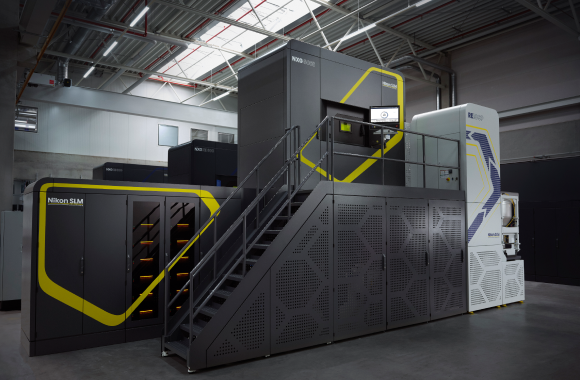
The strategic shift is that these resins are designed for end-use deployment, not just prototypes. Medical White targets parts such as surgical guides, splints, diagnostic components, anatomical models, dental parts, and even industrial hardware that must hold tight tolerances under heat. Paired with Axtra3D’s Hybrid PhotoSynthesis process on the Lumia X1, Protolabs claims commercial-scale output without sacrificing fine feature detail or accuracy to CAD geometry. That combination turns surgical guide production and similar applications into repeatable, on-demand medical manufacturing rather than sporadic bespoke projects. On the flexible side, Bio-Med Flex enables clinicians and device innovators to print soft components — from sensor housings to deformable fixtures — inside clinical prototyping labs, where previously they had to rely on rigid biocompatible materials or external elastomer suppliers that were slower and less adaptable. The clear takeaway: 3D printing is becoming a practical tool for custom, sterilizable medical devices.
Certification and Validated Workflows Lower Regulatory Friction
Regulatory friction has long kept 3D printed parts on the fringes of care. These new materials attack that barrier head-on. Medical White meets ISO 10993-5 requirements for cytotoxicity and ISO 10993-10 standards for sensitization and irritation, positioning it for regulated end-use production instead of prototyping alone. Bio-Med Flex is validated for cytotoxicity under ISO 10993-5:2009, sensitization under ISO 10993-10:2021, and irritation under ISO 10993-23:2021 when users follow Liqcreate’s specified post-processing workflow. The company has shown how the resin behaves through steam sterilization at 121°C and 134°C, with tensile strength, elongation, and Shore A hardness changing gradually, not catastrophically. One hard but important truth emerges: these certifications are workflow-dependent, not inherent to the liquid resin. Skip a cleaning or curing step and the printed part may lose its validated status, even if it looks identical. That forces manufacturers to treat process discipline as part of regulatory compliance, not an optional extra.
What Comes Next: Ecosystems, Not One-Off Materials
The most promising signal for the future is that both developments sit inside broader ecosystem strategies. For Axtra3D and Protolabs, Medical White extends a partnership where engineering teams co-identify applications, select resins from a network of suppliers, and validate entire production workflows before customers ever place an order. According to Axtra3D’s Rajeev Kulkarni, the Axtra Solutions model focuses on qualified workflows as the growth engine, not just new machines. On the resin side, Liqcreate publishes validated print profiles for Bio-Med Flex across multiple DLP, LCD, and SLA printers and updates them as new machines are qualified — often the difference between a material being used or left on a shelf. OEM partners can re-brand Bio-Med Flex and commission custom formulations for specific applications. The direction is clear: biocompatible 3D printing resin will be delivered as part of tightly controlled, sterilization-aware workflows, turning on-demand medical manufacturing into a mainstream option for clinical teams that need certified, custom parts fast.