
Large format 3D printers are no longer a luxury
Large format 3D printing is the use of fused filament machines with expanded build volumes to produce full-size functional parts and tools in-house, replacing outsourced fabrication with on-demand industrial scale printing for prototypes, jigs, fixtures, costumes, props, and small-batch products. That shift is happening now because affordable FDM systems with large envelopes and better process control are entering the hands of smaller manufacturers and serious hobbyists, who can suddenly print objects at scales that once demanded expensive, enterprise-only equipment.
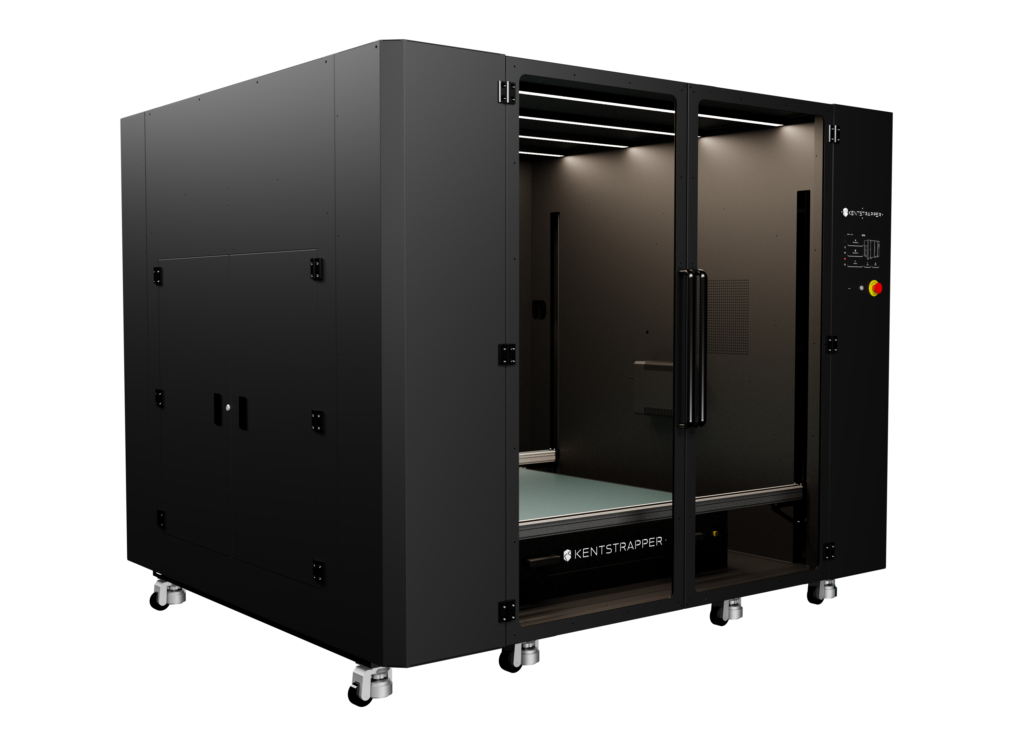
The headline change is blunt: a cubic meter build volume is no longer a seven-figure purchase. Kentstrapper’s Mille delivers a 1,000 × 1,000 × 1,000 mm build volume, giving users a full one-cubic-meter build space at a listed price of €40,000 (ex-VAT). At the other end of the market, Bambu Lab’s A2L offers a 330 × 320 × 325 mm build area, making it one of the largest machines in its open-frame class for under USD 500 (approx. ₱28,000). Together they signal the same message: the age of the gated, enterprise-only large format 3D printer is ending.
Kentstrapper Mille: A cubic meter of production for a fraction of past costs
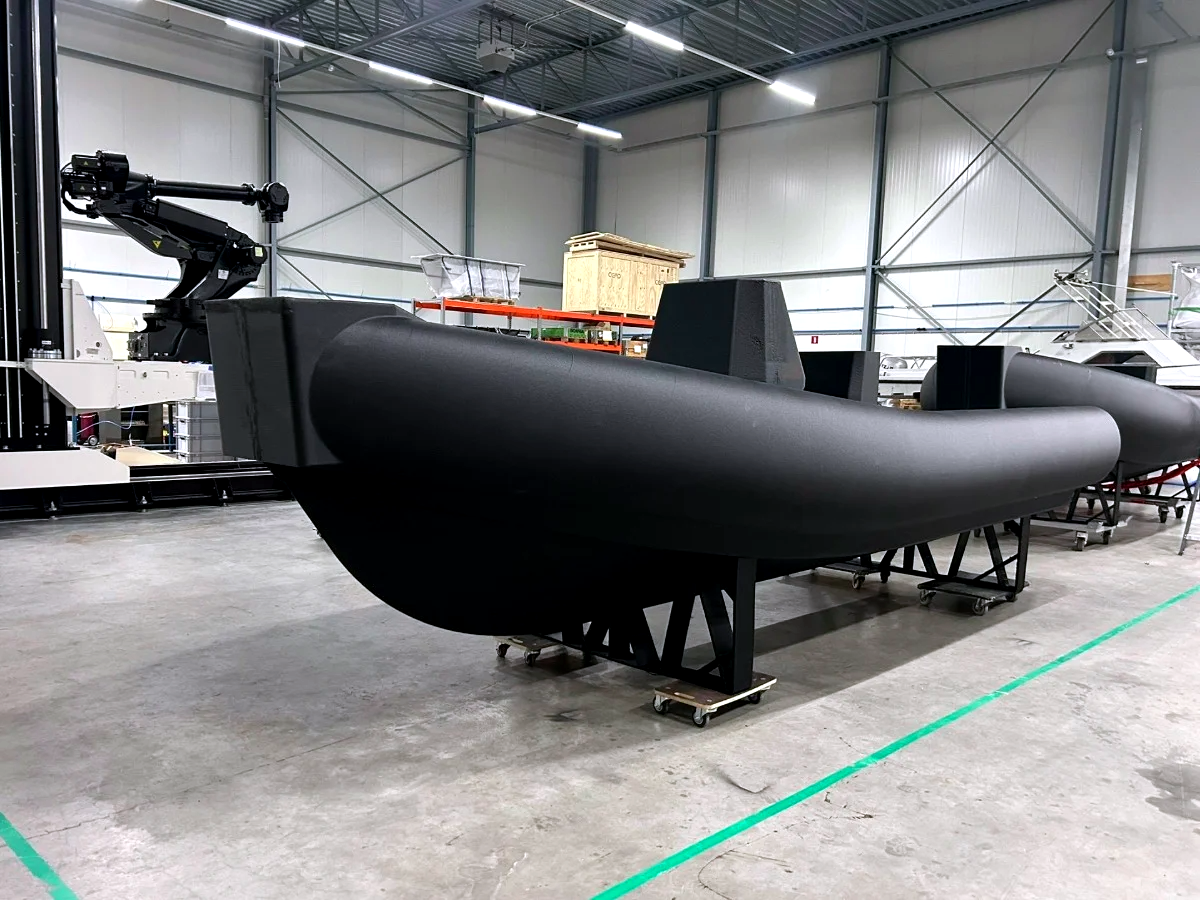
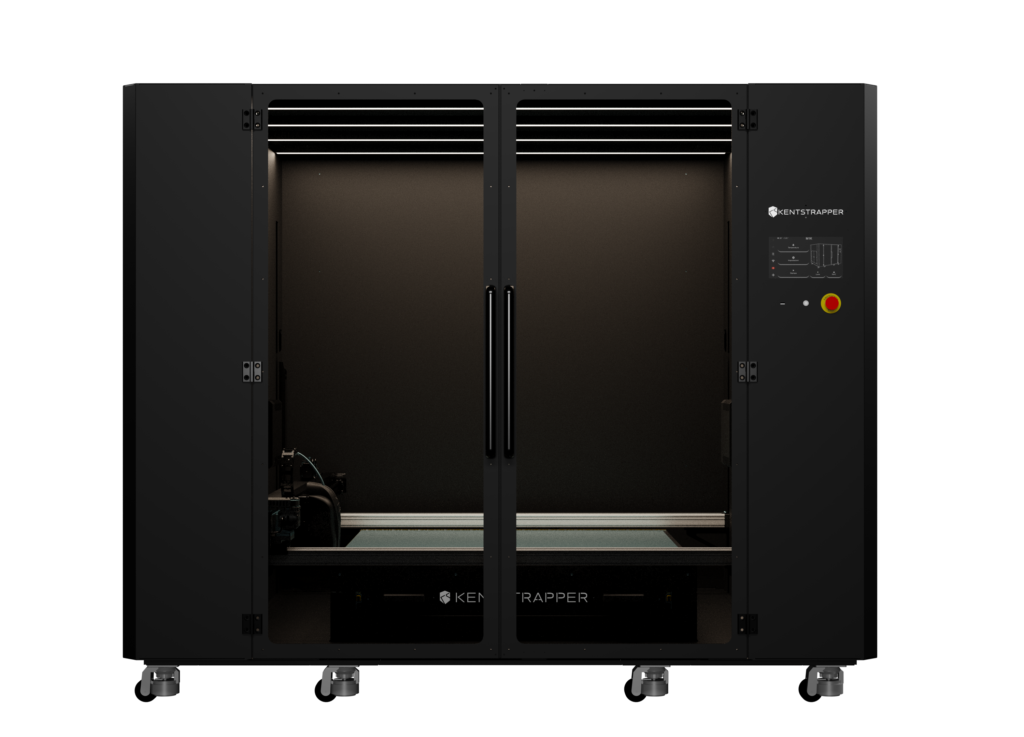
The Mille is not a concept piece; it is a workhorse aimed at tooling, automotive, defense, and marine users who need industrial scale printing but cannot justify legacy machine prices. Its 1,000 × 1,000 × 1,000 mm cubic meter build volume is actively heated by six independent pads across the build floor, while the chamber can reach 60°C and the bed 120°C. This combination is vital: on large parts, thermal gradients are what warp jobs off the plate. Controlled heat makes full-size fixtures and molds realistic instead of risky.
What makes the Mille disruptive is not only size but value. The company prices the made-in-Italy machine at €40,000 (ex-VAT), described as “very reasonable-sounding” for its class. It runs a magnetic extrusion system for tool-less printhead swaps and dual Mantis extruders so one can take over if the other clogs. That redundancy matters for multi-day runs. Good monitoring, easy model extraction via a sliding bed, and the ability to resolve clogs mid-print turn overnight cubic meter jobs from gambling into routine production.
Bambu Lab A2L: Large format for desks, print farms, and cosplay tables
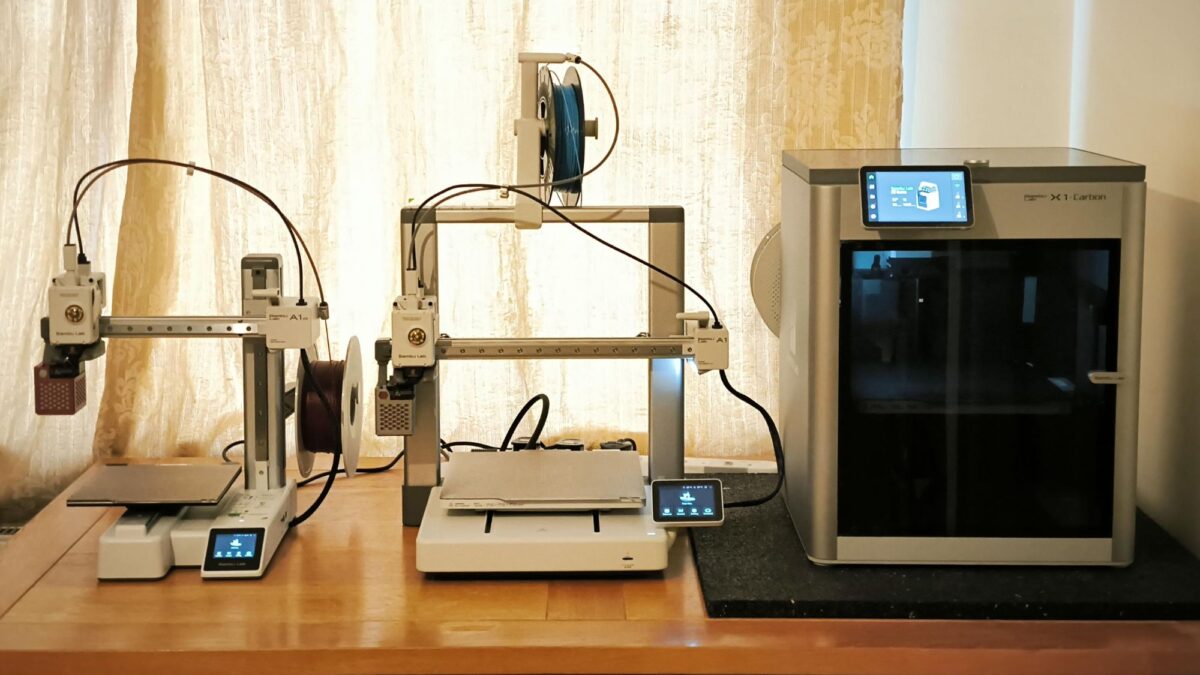
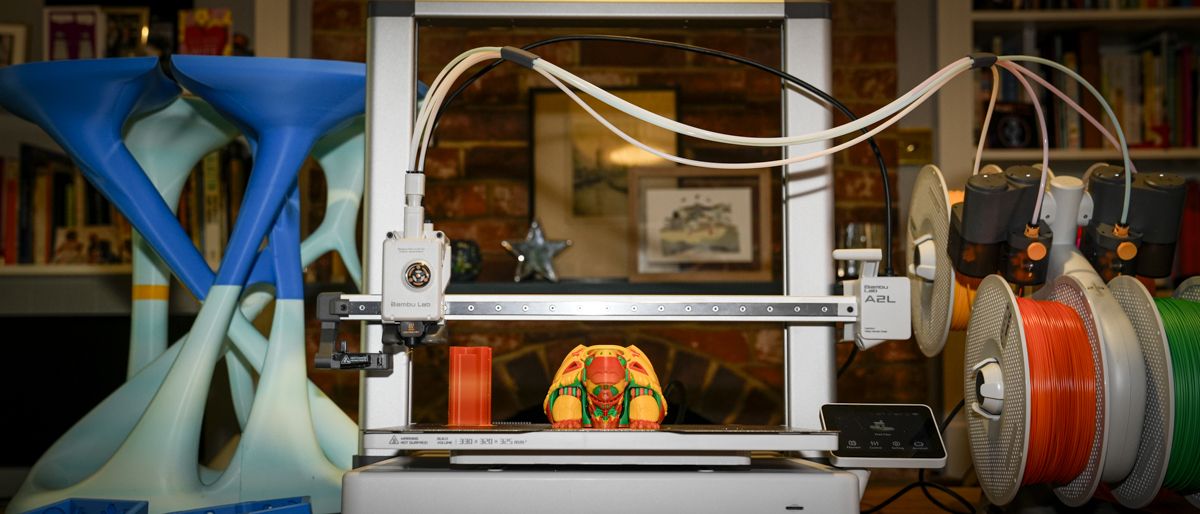
If the Mille drags factories into large-format FDM, the Bambu Lab A2L drags everyone else. It scales up the company’s smaller A1 into a large format 3D printer with a 330 × 320 × 325 mm build area, one of the largest in its open-frame tier. For less than USD 500 (approx. ₱28,000), users get a machine that can print multi-filament jobs out of the box. That is not a toy spec; it is enough volume to print full cosplay helmets, consolidated mechanical assemblies, or a tray of production brackets in a single run.
The A2L’s appeal is that it hides complexity while keeping scale. It upgrades to a closed-loop servo extrusion system for smoother, monitored extrusion and adds blob and clog detection to reduce failed prints on its larger platform. A more advanced motion stability system keeps the bigger frame accurate at speed. The open design limits engineering materials, but for PLA, PETG and basic TPU work, including print farms, the trade-off is fair. According to one review, “this is a machine designed to sit there and get on with the work out of the box” for home enthusiasts and commercial users alike.
From outsourced parts to in-house industrial scale printing
The real story is not any single printer; it is how these machines change the decision calculus around outsourcing. When a cubic meter build volume lives on your shop floor, entire tools, jigs, and fixtures that once meant a PO to a machine shop can be made in one go on an affordable FDM system. For large tools, the return on investment can be measured in months, because the machine can chug along producing value while engineers focus on design instead of vendor management.
On the smaller end, an A2L class machine opens similar freedom. If you are thinking about cosplay or prototyping larger objects, there is little at this price that matches its capacity to output full-size pieces and multi-part batches in a single build. Print farms can turn that into small-batch manufacturing, iterating designs overnight without waiting on external suppliers. The result is a quiet shift: industrial scale printing stops being an occasional outsourced service and becomes an everyday button press.
Heated chambers and extrusion intelligence make big prints boring—and that is progress
Large format 3D printing used to mean drama: curling corners, cracked shells, and failed jobs after days of printing. The newest wave of machines aims to make those big builds boring. On the Mille, the actively heated floor pads, 60°C chamber, and 120°C bed temperature attack the root cause of thermal failures on meter-scale parts. Pair that with tested compatibility across PLA, PETG, ASA, ABS, TPU, glass- and carbon-fiber reinforced PA and PPS, and you get industrial-grade part quality from material extrusion instead of exotic processes.
At the desktop scale, the A2L’s closed-loop servo extrusion, blob detection, and clog monitoring serve the same purpose: fewer surprises during long jobs on a large platform. Multi-day or overnight prints benefit even more when printers can recover from clogs or hand off extrusion, as with the Mille’s dual extruders. This reliability is why large-format tooling printers are starting to permeate more manufacturing sites, powered not by buzzwords but by the unglamorous fact that they “sit there and get on with the work” while parts pile up.